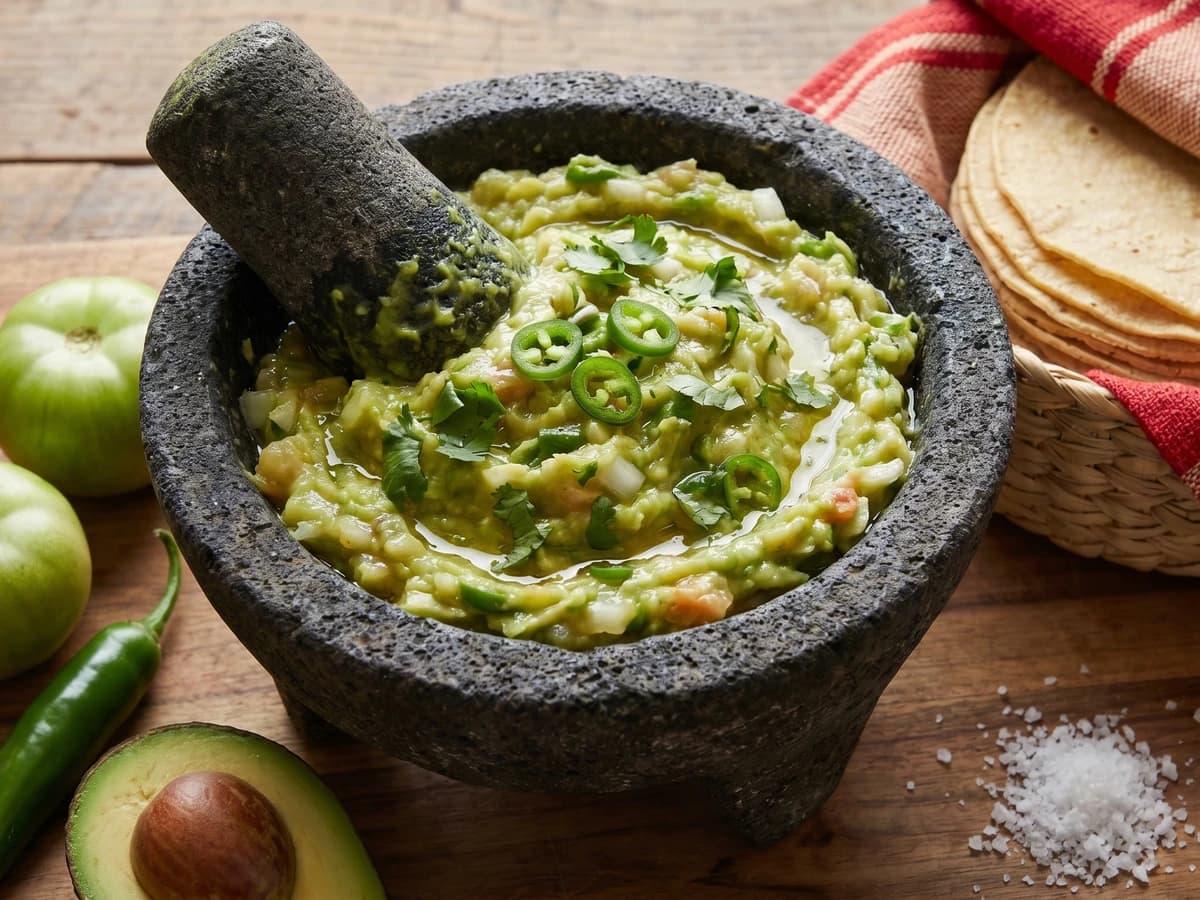
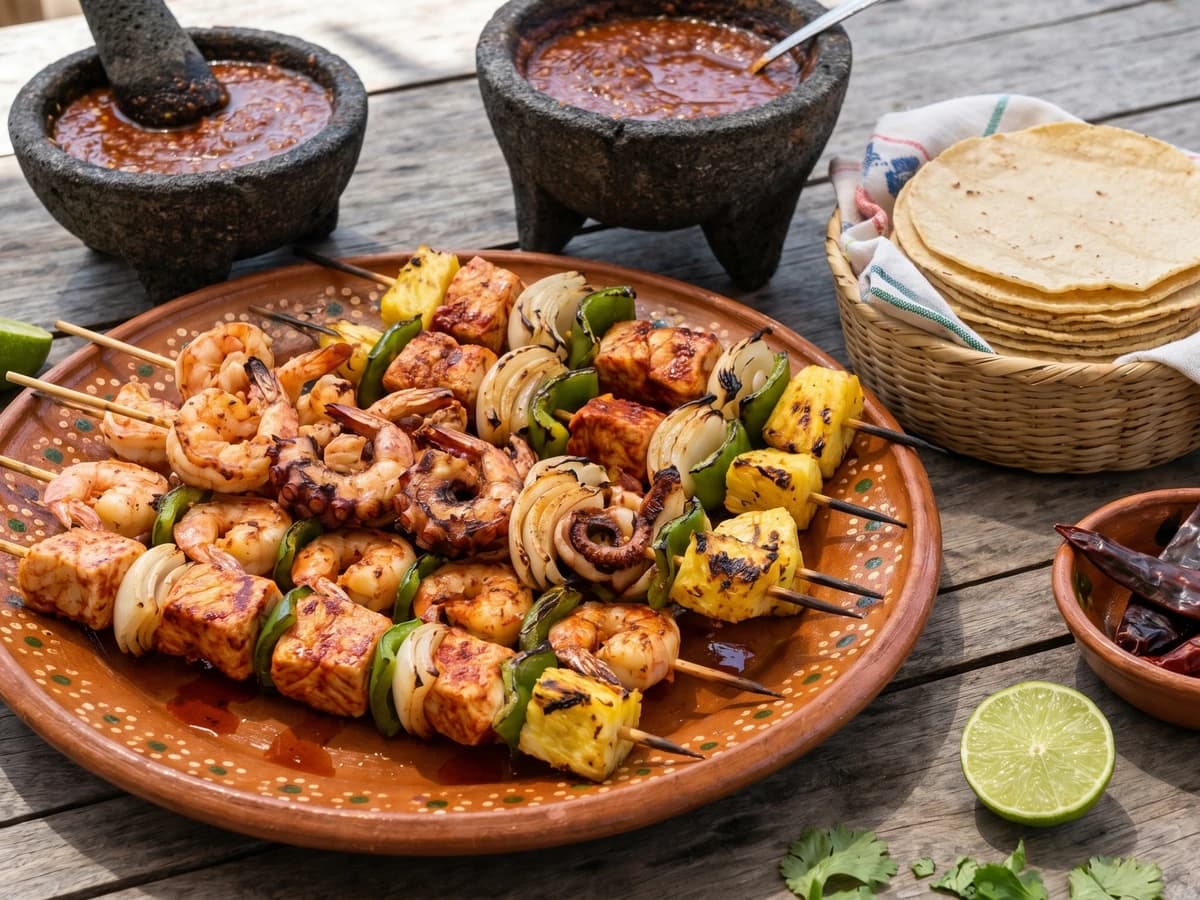
Hidalgo and Tlaxcala's chinicuiles, red maguey worms toasted crisp on a comal in pork lard, served with guacamole machacado in the molcajete and warm corn tortillas. The pulque belt's most prized seasonal botana.
Appetizers & Snacks
Mexican
Special Occasion
Dinner Party
20 min
Active Time
10 min cook•30 min total
Yield4 to 6 servings as a botana
This dish belongs to the altiplano. To Hidalgo, to Tlaxcala, to the eastern edge of the Estado de México, the pulque belt that runs across the dry highlands where the maguey has been cultivated since before the conquest. The chinicuil is the larva of a moth that feeds on the root of the maguey, and the campesinos who harvest pulque know exactly when to dig them out and how to clean them. Outside this region, most Mexicans have never tasted one. That is a tragedy this recipe is meant to correct.
Chinicuiles are seasonal. They appear with the rains, from May through September, depending on the altitude. In the mercados of Pachuca and Tlaxcala, you will see them sold by the gram, in small clay cazuelitas, alongside escamoles and gusanos de maguey blancos. The white ones are milder. The red chinicuiles, the ones in this recipe, are the prized ones, with a deeper, smokier flavor that comes from feeding on the maguey root rather than the leaves. If the temporada is wrong, do not substitute. Eat them when the campo is selling them. Cada estado, su propia cocina, and this one obeys a calendar that has nothing to do with what is convenient.
The preparation is direct. You do not need to do much to a chinicuil. Toast it on a hot comal with lard until it crisps, season with salt and lime, eat it folded into a warm tortilla with guacamole machacado in a molcajete. The flavor is its own argument: earthy, nutty, with a small bitter edge that the lime resolves and the avocado softens. This is pre-Columbian food. Older than Spain. Older than wheat. If it feels foreign to you, that is because the colonizers spent five centuries teaching us to be ashamed of it. No me vengas con atajos, and do not come to me asking if you can use shrimp instead. This is what the dish is.
My mother never cooked chinicuiles. She was from Jalisco and the maguey there is a different beast, the one that becomes tequila. The first time I ate them was at a roadside stand outside Apan in 1998, served exactly the way I have written here. The woman who sold them to me, doña Cleotilde, was eighty-one and had been gathering chinicuiles from her family's maguey since she was seven years old. Saber cocinar es saber vivir. Sometimes it is also saber recoger.
The consumption of insects, entomophagy, in Mexico predates the conquest by several thousand years, and the chinicuil (Comadia redtenbacheri) was documented in the Codex Florentino in the 16th century as a delicacy reserved for nobility in the Mexica court. The pulque belt of Hidalgo, Tlaxcala, and the Estado de México has cultivated maguey for at least three millennia, and the chinicuil's relationship to the plant is symbiotic with the harvest cycle of aguamiel: the campesinos who tap maguey for pulque are the same families who harvest the larvae from the roots. In 1950, the Mexican entomologist Julieta Ramos-Elorduy began documenting Mexican edible insects systematically, eventually cataloging over 500 species; her work helped restore institutional respect for a food tradition that the colonial and post-colonial periods had marginalized as primitive.
The technique, the tradition, and the story behind every dish.
chinicuiles (red maguey worms)fresh or frozen, cleaned
4 ounces
manteca de cerdo (pork lard)
2 tablespoons
coarse sea salt
1 teaspoon, plus more to taste
ripe Hass avocados
3
white onionfinely diced, divided
1/2 small
fresh chile serranostemmed and finely chopped (use 1 for less heat)
2
fresh cilantro leaveschopped, plus more for serving
1/3 cup
fresh limejuiced, plus wedges for serving
1
Roma tomato (optional)finely diced
1 small
coarse sea salt for the guacamole
1 teaspoon
hand-pressed corn tortillaswarm
12
salsa borracha de pulque (optional)
for serving
Equipment Needed
•Cast iron comal or heavy skillet
•Volcanic stone molcajete with tejolote
•Wooden spoon for moving the chinicuiles
•Small clay cazuelita for serving
•Tortilla warmer or hand-woven servilleta
Instructions
1
Inspect and clean the chinicuiles
Spread the chinicuiles on a clean dishcloth and look them over. Discard any that are broken open or have darkened past their natural red. If they came directly from a campesino in Hidalgo or Tlaxcala, they may have a little dirt or maguey fiber still on them. Rinse briefly under cold water and pat completely dry. Wet chinicuiles will not crisp on the comal. They will steam and turn rubbery, and rubbery chinicuiles are a waste of what these are.
Chinicuiles are seasonal. They appear from late spring through the rainy season, when the larvae are feeding inside the maguey roots. Outside those months, your only option is frozen, vacuum-sealed from a reliable proveedor in the pulque belt. Do not buy them dried and powdered for this dish. That is sal de gusano territory, a different product.
2
Make the guacamole first
Halve the avocados, remove the pits, and scoop the flesh into a molcajete. Add half of the diced white onion, the chopped serrano, the cilantro, the lime juice, and the salt. Mash with the tejolote until you have a rough texture, lumps still visible. Stir in the diced tomato now if you are using it. Taste for salt and lime. The guacamole should be assertive because the chinicuiles will arrive salty and intense. A timid guacamole disappears next to them.
If you do not have a molcajete, use a wide bowl and a fork. Do not use a food processor. Pureed avocado is baby food, not guacamole. The texture matters.
3
Heat the comal
Place a cast iron comal over medium-high heat. Let it heat for a full three minutes. A properly hot comal is the difference between a crisp chinicuil and a soggy one. Hold your hand four inches above the surface. You should not be able to keep it there for more than two seconds.
4
Render the lard and add the chinicuiles
Drop the lard onto the hot comal and let it melt into a shallow film. La manteca es el sabor. Add the chinicuiles in a single layer, spread out so they do not crowd each other. They will hiss the moment they hit the fat. Let them sit undisturbed for about 90 seconds. You want the bottom side to turn a deeper red and start to crisp before you move them.
5
Toast until crisp
Push the chinicuiles around the comal with a wooden spoon, keeping them moving for the next four to five minutes. They will tighten, darken to a deep brick red, and start to smell nutty and slightly smoky, like a chile pasilla that has been toasted too long but in a good way. The texture you want is crisp on the outside with a small bit of give in the center. Taste one. If it crunches and tastes clean and earthy, they are done. Pull them off the comal immediately. Overcooked chinicuiles turn bitter.
6
Season and serve at the table
Transfer the chinicuiles to a small clay cazuelita. Sprinkle with the remaining sea salt and a squeeze of lime. Set the cazuelita next to the molcajete of guacamole and a basket of warm corn tortillas. Each person builds their own taco: warm tortilla, a spoon of guacamole, a generous spoon of chinicuiles, a few drops of salsa borracha de pulque if you have it. Eat immediately. Chinicuiles lose their crisp within ten minutes off the heat. Así se hace y punto.
Chef Tips
•Source matters more here than in almost any other recipe. Find a proveedor who works directly with campesinos in Hidalgo or Tlaxcala. Mercado Hidalgo in Pachuca, Mercado Sanchez in Tlaxcala, or specialty vendors in Mercado de San Juan in Ciudad de México. If you are outside Mexico, vacuum-sealed frozen chinicuiles from a serious Mexican specialty importer are your only honest option. Pregúntale a las señoras del mercado about freshness.
•Do not wash the chinicuiles aggressively or for too long. They are delicate. A quick rinse and a thorough drying is all you need. Soaking them ruins the texture and washes out the flavor.
•Salsa borracha de pulque is the traditional accompaniment in Tlaxcala. It is made with pasilla chiles, garlic, salt, and pulque instead of water. If you can find fresh pulque, make it. If you cannot, a good salsa de chile pasilla with a splash of mezcal joven will get you close.
•If your guests are nervous about eating insects, do not apologize and do not push. Set the plate down, explain where the dish comes from, and let the food speak. Some will eat, some will not. Both responses are fine. What is not fine is treating chinicuiles like a circus dare. They are food.
Advance Preparation
•The guacamole can be made up to one hour ahead. Press plastic wrap directly onto the surface to slow oxidation. Past one hour, the bright green dulls and the flavor flattens.
•Chinicuiles cannot be made ahead. They must be toasted and eaten within minutes. The whole point is the crisp, and the crisp does not survive sitting.
Frequently Asked Questions
Nutrition Information
1 serving (about 250g)
Calories
460 calories
Total Fat
28 g
Saturated Fat
5 g
Trans Fat
0 g
Unsaturated Fat
21 g
Cholesterol
15 mg
Sodium
920 mg
Total Carbohydrates
43 g
Dietary Fiber
10 g
Sugars
3 g
Protein
11 g
Where cooking meets culture.
Culinary guides, cultural storytelling, and the editorial depth that makes cooking meaningful.