
Chef Lupita
Aguacatas de Tinguindin
Michoacan's Tinguindin aguacatas are flat, leaf-scored sweet breads made with harina de trigo, piloncillo, anise, and manteca de cerdo, shaped by hand for the wood oven.
A cooking platform built around craft, culture, and the stories behind what we eat.
Created by
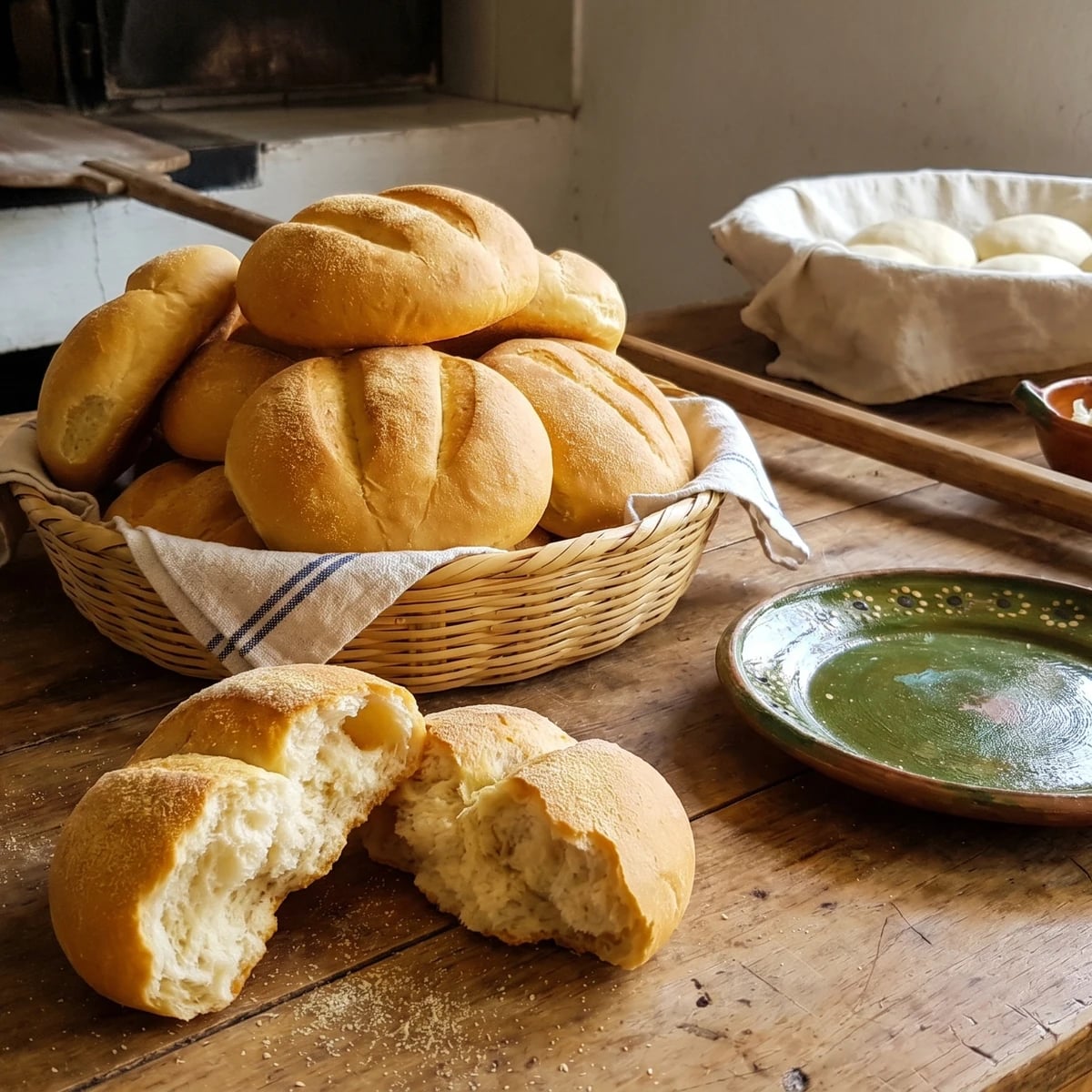
Jalisco's everyday torta roll, flatter and softer than a bolillo, pressed with two grooves down its back and built for lonches de pierna in Guadalajara.
Jalisco gives Guadalajara its bread language: birote salado for torta ahogada, telera tapatia for the everyday lonche. Do not confuse them. Birote is a sourdough with a firm crust and a salty bite. Telera is softer, flatter, and pressed into three lobes so it opens clean for pierna, frijoles, avocado, and salsa.
The dough is harina de trigo, a little manteca de cerdo, piloncillo for color and fermentation, and the Guadalajara pata, a stiff piece of old dough held back from yesterday's batch. That pata is the memory of the panaderia. It gives the roll a quiet depth without turning it into birote. No me vengas con atajos. If the dough rests overnight, let it rest overnight.
I learned this shape before dawn in a Guadalajara panaderia where the panadero pressed the grooves with a wooden rod dusted in harina de maiz so it would not tear the dough. He worked fast, not because he was showing off, but because bread waits for nobody. The table was covered with cloth-lined tinas, the horno de lena was already hot, and every roll looked touched by a hand, not stamped by a machine. Así se hace y punto.
Jalisco's wheat breads grew from colonial wheat cultivation in western Mexico, but Guadalajara's panaderias developed their own vocabulary by the 19th and 20th centuries: birote salado for the city's torta ahogada and softer teleras for daily lonches. The word telera appears across Mexico for three-lobed sandwich bread, yet the tapatia version is usually flatter and less crusty than a Mexico City telera, made to hold roasted pork leg and salsa without fighting the bite. The pata, a piece of fermented old dough saved from the previous batch, belongs to the practical sourdough traditions of Mexican bakeries long before commercial yeast became common.
Quantity
120 grams
Quantity
650 grams, plus more for dusting
Quantity
390 grams
divided
Quantity
35 grams
finely grated
Quantity
14 grams
Quantity
35 grams
softened
Quantity
3 grams
Quantity
2 tablespoons
for dusting the pressing rod and cloth
| Ingredient | Quantity |
|---|---|
| ripe pata or stiff masa madre de trigo | 120 grams |
| harina de trigo panadera | 650 grams, plus more for dusting |
| lukewarm waterdivided | 390 grams |
| piloncillofinely grated | 35 grams |
| fine sea salt | 14 grams |
| manteca de cerdosoftened | 35 grams |
| instant yeast | 3 grams |
| harina de maiz nixtamalizadafor dusting the pressing rod and cloth | 2 tablespoons |
The night before baking, break the pata or stiff masa madre into small pieces and mix it with 150 grams of the lukewarm water and 150 grams of the harina de trigo. Cover and leave at room temperature for 10 to 12 hours, until swollen, fragrant, and slightly domed. It should smell clean and wheaty, not sharp like vinegar.
In a large bowl, dissolve the piloncillo in the remaining 240 grams water. Add the ripe pata mixture, the remaining 500 grams harina de trigo, the salt, instant yeast, and manteca de cerdo. Mix until no dry flour remains. The dough will feel firm at first, then soften as the manteca works through it. La manteca es el sabor, even in bread.
Knead by hand for 10 to 12 minutes, or in a stand mixer on low for 6 to 7 minutes. The dough should become smooth, elastic, and slightly tacky, with enough strength to stretch without tearing immediately. If it feels dry, wet your hands and keep kneading before adding more water. Panaderos learn the dough with their palms, not with panic.
Place the dough in a lightly greased bowl, cover, and let it rise at room temperature for 2 to 2 1/2 hours, until increased by about half. It does not need to double. The pata is building flavor while the yeast gives lift. That balance is what keeps telera soft without making it taste empty.
Turn the dough onto a lightly floured table. Divide into 10 pieces of about 120 grams each. Shape each piece into a tight oval and cover with a cloth for 15 minutes. This rest matters. If you press grooves into tight dough, it will fight you and spring back like a bad student.
Dust a thin wooden dowel, chopstick, or the handle of a wooden spoon with harina de maiz nixtamalizada. Flatten each oval gently with your palm, then press two deep lengthwise grooves down the top, dividing the roll into three lobes. Press almost to the table without cutting through. The grooves must be decisive. A shy mark disappears in the oven.
Set the shaped teleras on parchment or a cloth-lined tray dusted lightly with harina de maiz. Cover with a clean kitchen cloth and proof for 60 to 75 minutes, until puffy and light but still holding the pressed grooves. If your kitchen is cold, give them time. Bread follows temperature, not your schedule.
Heat the oven to 425F with a baking stone or heavy sheet pan inside. In Guadalajara, these bake fast in a horno de lena after the morning fire has settled. At home, the stone gives you the closest heat. Place a small empty metal pan on the lower rack if you want a slightly thinner crust.
Slide the teleras onto the hot stone or sheet pan. Pour 1/2 cup hot water into the lower metal pan and close the door immediately. Bake 16 to 18 minutes, until pale golden with deeper color along the grooves and a soft, hollow sound when tapped underneath. They should not become hard like birote. Telera is bread for biting through, not wrestling.
Cool on a rack for at least 30 minutes before slicing. Tear one open and look at the crumb: soft, even, and flexible, with enough body to hold pierna and salsa. Use the same day for lonches, or rewarm tomorrow on a comal. Recetas probadas y garantizadas.
1 serving (about 110g)
Culinary guides, cultural storytelling, and the editorial depth that makes cooking meaningful.
Discover Culinary Explorer
Chef Lupita
Michoacan's Tinguindin aguacatas are flat, leaf-scored sweet breads made with harina de trigo, piloncillo, anise, and manteca de cerdo, shaped by hand for the wood oven.

Chef Lupita
From Ajijic on Lake Chapala, Pan Tachihual is a lightly sweet wedding loaf built with harina de trigo, harina de maiz, piloncillo, manteca, anise, and the old Guadalajara pata.

Chef Lupita
Jalisco's everyday bolillo is a crisp wheat roll with a soft white crumb, made for lonches, molletes, and the panaderia basket before the city has finished waking up.

Chef Lupita
The Altos de Jalisco give you a baked sweet gordita, dry on purpose, fragrant with anise, and built for the morning cup of cafe de olla.