Chef Freja
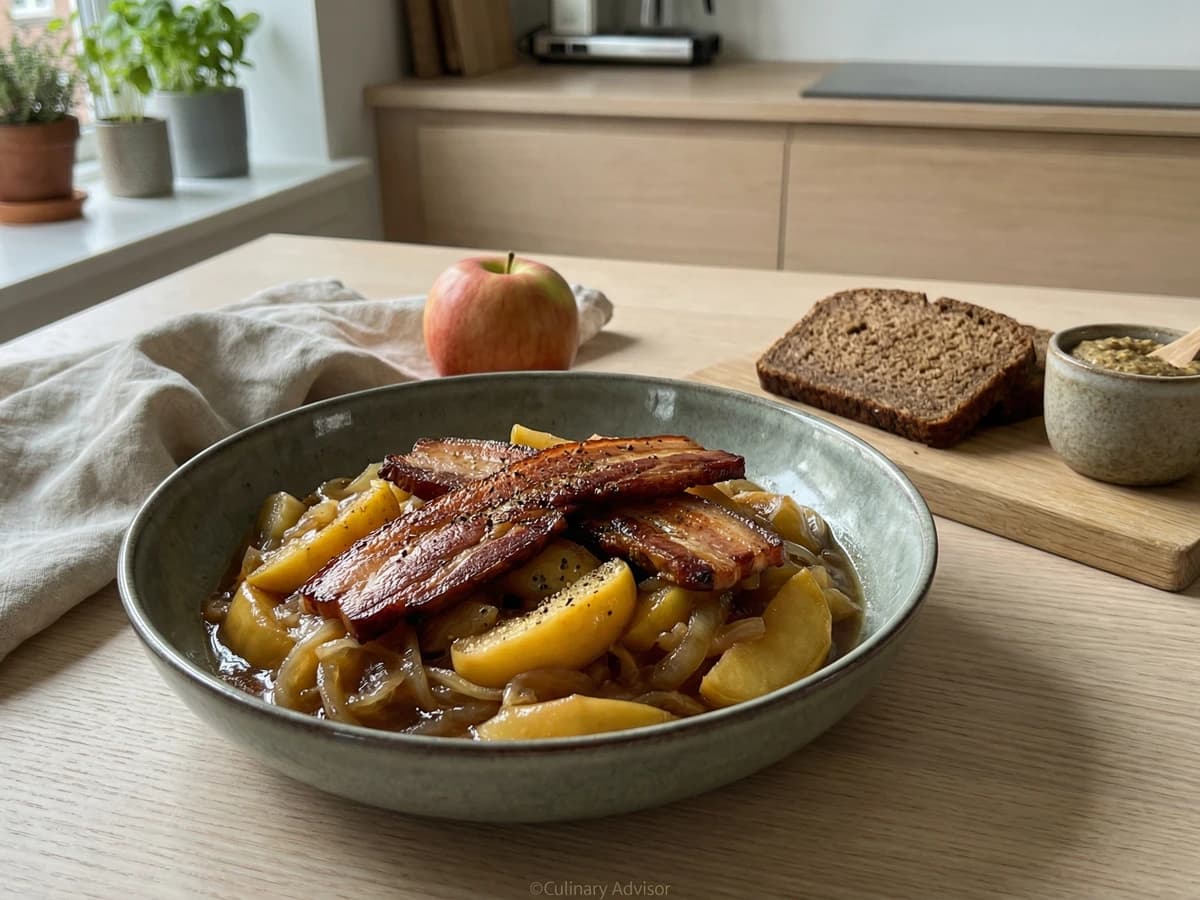
Aebleflaesk
The Fyn autumn supper where thick pork belly renders slowly into its own fat, then meets apples and onions that cook down into a deep amber tangle. Sweet, salt, and the oldest pairing in the Danish larder.
A cooking platform built around craft, culture, and the stories behind what we eat.
Created by Chef Freja
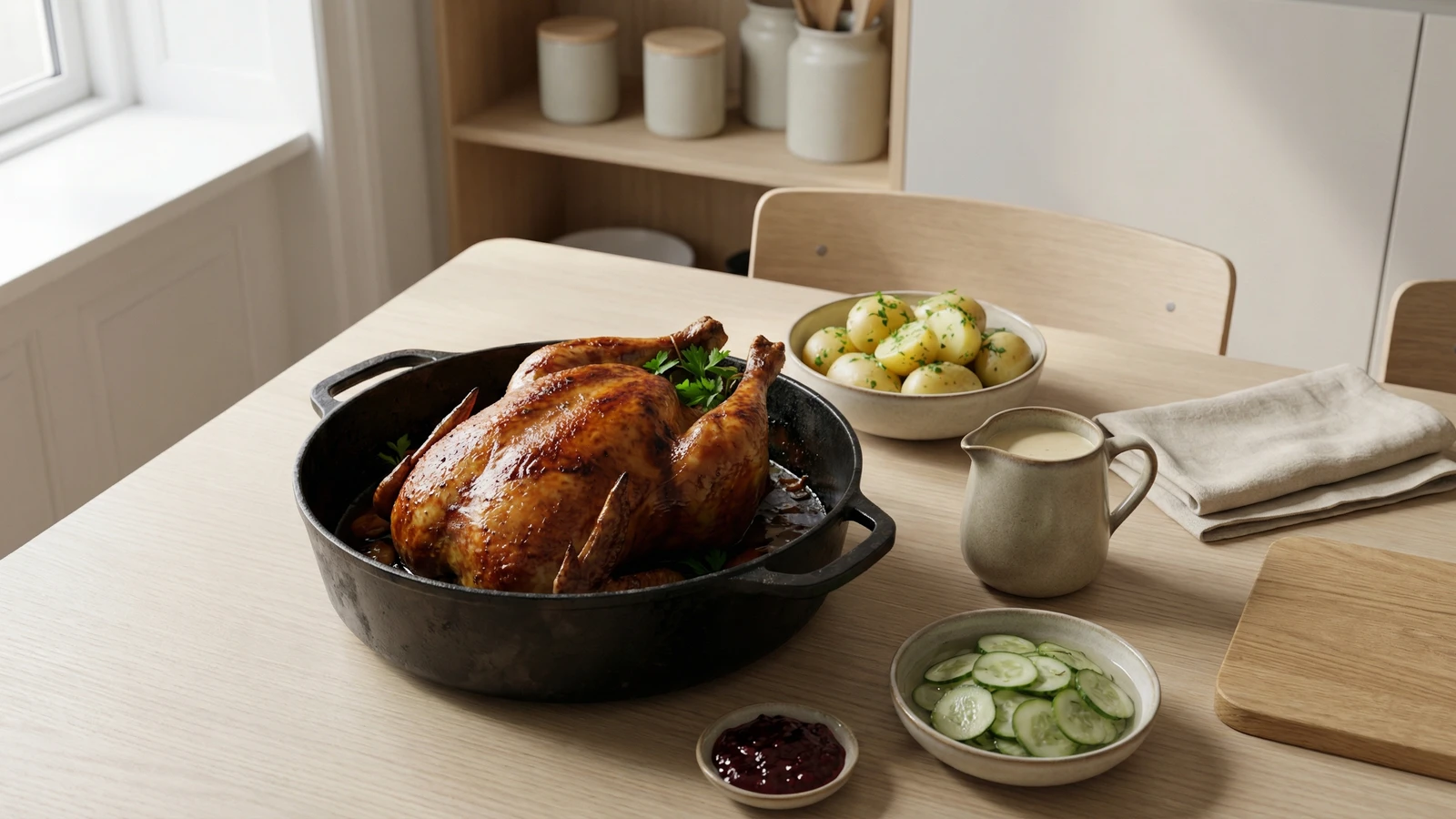
A whole chicken browned in butter and pot-roasted with parsley and its own juices, served with new potatoes, cucumber salad, and a cream gravy brightened with redcurrant jelly. The Danish Sunday dinner at its most complete.
There is a particular Sunday in early summer when the first real Danish chickens come to the butcher and the new potatoes are small enough to eat whole. This is when grydestegt kylling belongs. The windows are open, the light lasts until ten, and the smell of butter browning in a heavy pot travels through the whole house before anyone has sat down.
Grydestegt means pot-roasted, and that single word carries a lot of history. Danish home kitchens did not always have ovens large enough for a whole bird, so the heavy pot on the stovetop became the method. You brown the chicken carefully in butter, tuck a whole bunch of parsley and a few cubes of cold butter inside, and let it cook gently under a lid with a little stock beneath it. The result is a bird that tastes of butter and herbs all the way through, with skin the color of dark honey and meat that slides off the bone.
What matters most is the browning. Don't rush it. A chicken that goes pale into the pot comes out pale, and pale grydestegt kylling is a dish that has given up halfway. Take fifteen minutes, turn the bird on every side, and let the butter do what butter does. The other thing I want you to trust is the resting. Ten minutes between the pot and the carving board is not a delay, it is part of the cooking. You'll know when it's right, and the gravy you build from the juices afterwards is the reward for paying attention. Serve it with new potatoes, agurkesalat, and a small dish of lingonberry jam on the side. That's the full grammar of the Danish Sunday table, and it's yours now.
Grydestegt kylling became a fixture of the Danish Sunday dinner in the 1950s and 60s, when poultry moved from special-occasion meat to something a household could afford weekly. The pot-roasting method itself is older, going back to an era when most Danish home cooks worked with a single heavy kasserolle on a wood or coal stove and had no oven large enough for a whole bird. The classic accompaniment of brown gravy, boiled new potatoes, cucumber salad, and redcurrant or lingonberry jam comes from the same mid-century tradition that gave Denmark its idea of a complete hot meal: something salty, something starchy, something sharp, and something sweet, all on one plate.
Quantity
1, about 1.5kg
at room temperature
Quantity
to taste
Quantity
freshly ground, to taste
Quantity
1 large bunch
Quantity
75g
cold, cut into cubes
Quantity
2 tablespoons
Quantity
300ml
Quantity
150ml
Quantity
100ml
Quantity
1 tablespoon
Quantity
1 teaspoon, plus extra to serve
Quantity
a few drops
Quantity
to serve
Quantity
to serve
Quantity
to serve
| Ingredient | Quantity |
|---|---|
| whole chickenat room temperature | 1, about 1.5kg |
| fine sea salt | to taste |
| black pepper | freshly ground, to taste |
| fresh flat-leaf parsley | 1 large bunch |
| unsalted buttercold, cut into cubes | 75g |
| neutral oil | 2 tablespoons |
| good chicken stock | 300ml |
| whole milk | 150ml |
| double cream | 100ml |
| plain flour | 1 tablespoon |
| redcurrant jelly | 1 teaspoon, plus extra to serve |
| kulor (Danish browning sauce) (optional) | a few drops |
| boiled new potatoes | to serve |
| agurkesalat (Danish cucumber salad) | to serve |
| lingonberry or redcurrant jam | to serve |
Take the chicken out of the fridge at least an hour before you start. A cold chicken going into a hot pot will not brown properly and the meat will cook unevenly. Pat the skin completely dry with kitchen paper. Any moisture on the surface becomes steam, and steam is the enemy of a golden crust. Season the cavity and the skin generously with salt and pepper. Be more generous than you think. A whole chicken is a big piece of meat, and timid seasoning disappears.
Wash the parsley and dry it thoroughly. Stuff the whole bunch, stems and all, into the cavity of the chicken along with about 30g of the cold butter cut into cubes. The parsley perfumes the meat from the inside as it cooks, and the butter melts into the cavity and bastes the chicken from within. This is the quiet trick of grydestegt kylling. The flavor comes from within as much as from the pan.
Heat a heavy pot just large enough to hold the chicken over medium-high heat. Add the oil and 30g of the butter. When the butter is foaming and starting to smell of hazelnuts, lower the chicken in breast-side down. Don't move it for three or four minutes. You want a deep golden crust, and a crust only forms when the skin makes unbroken contact with the hot fat. Turn the chicken carefully onto each side and then onto its back, browning every surface to a rich mahogany. This takes about fifteen minutes in total, and it is not a step you rush. The color you build here is the color of the finished dish.
With the chicken breast-side up, pour in the stock around the bird, not over it. Pouring over the chicken washes away the crust you just worked for. Bring the liquid to a soft simmer, then lower the heat until the surface is barely trembling. Put the lid on, slightly ajar so steam can escape, and let the chicken cook gently for forty-five minutes to an hour. Baste it with the pan juices every fifteen minutes. The butter and fat that gather on top are your basting liquid, and each spoonful keeps the skin glossy and the breast from drying out. You'll know when it's right when the juices from the thigh run clear and a thermometer reads 74C at the thickest part.
Lift the chicken carefully out of the pot and onto a warm platter. Tip it slightly so any juices from the cavity run back into the pot. Cover loosely with foil and let it rest for at least ten minutes. Resting is not optional. If you carve it straight away, the juices run out and the meat goes dry. Ten minutes of patience is the difference between good and very good.
Put the pot with its juices back on medium heat. In a small bowl, whisk the flour into the milk until smooth. This is your thickener, and whisking off the heat keeps it from turning lumpy. Pour it into the simmering juices, whisking constantly. Add the cream and the teaspoon of redcurrant jelly. The jelly is the quiet Danish touch that rounds out the gravy with a faint sweetness. Simmer for three or four minutes until the sauce coats the back of a spoon. Taste and season with salt and pepper. If you want the classic deep brown color of brun sovs, add a few drops of kulor. Strain the gravy through a fine sieve into a warm jug.
Carve the chicken at the table if you can. Pull the parsley from the cavity and scatter some of it over the platter. Serve with boiled new potatoes, a bowl of cool agurkesalat, the warm gravy, and a small dish of lingonberry or redcurrant jam alongside. The jam goes on the plate, not on the chicken. You eat it with a forkful of meat and potato, and the sweetness lifts everything. Tak for mad.
1 serving (about 260g)
Culinary guides, cultural storytelling, and the editorial depth that makes cooking meaningful.
Discover Culinary ExplorerChef Freja
The Fyn autumn supper where thick pork belly renders slowly into its own fat, then meets apples and onions that cook down into a deep amber tangle. Sweet, salt, and the oldest pairing in the Danish larder.

Chef Freja
Warm Danish apple soup for the first cool evenings of autumn. Tart apples simmered with cinnamon and lemon peel, thickened to a soft gloss, and served with cold cream and buttery toasted oats.

Chef Freja
Danish white asparagus velouté with tiny veal meatballs, flour dumplings, and bright green tips scattered on the surface. The Easter soup of Copenhagen, built from five small pans of spring.
Chef Freja
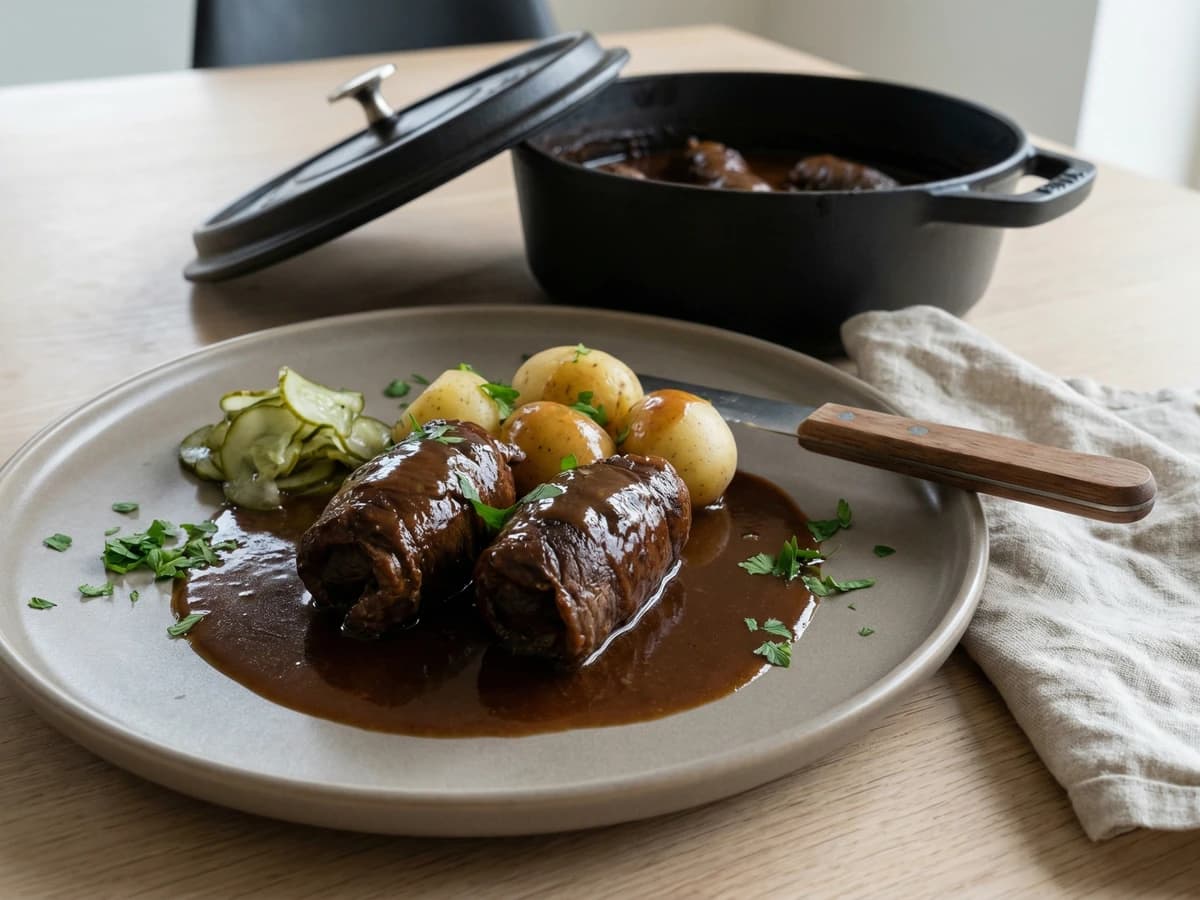
Thin beef slices rolled around bacon and onion, tied with string, and braised slowly in a dark glossy gravy finished with cream and redcurrant jelly. Danish Sunday dinner at its most comforting.