
Chef Freja
Aspargessuppe med Kødboller og Melboller
Danish white asparagus velouté with tiny veal meatballs, flour dumplings, and bright green tips scattered on the surface. The Easter soup of Copenhagen, built from five small pans of spring.
A cooking platform built around craft, culture, and the stories behind what we eat.
Created by Chef Freja
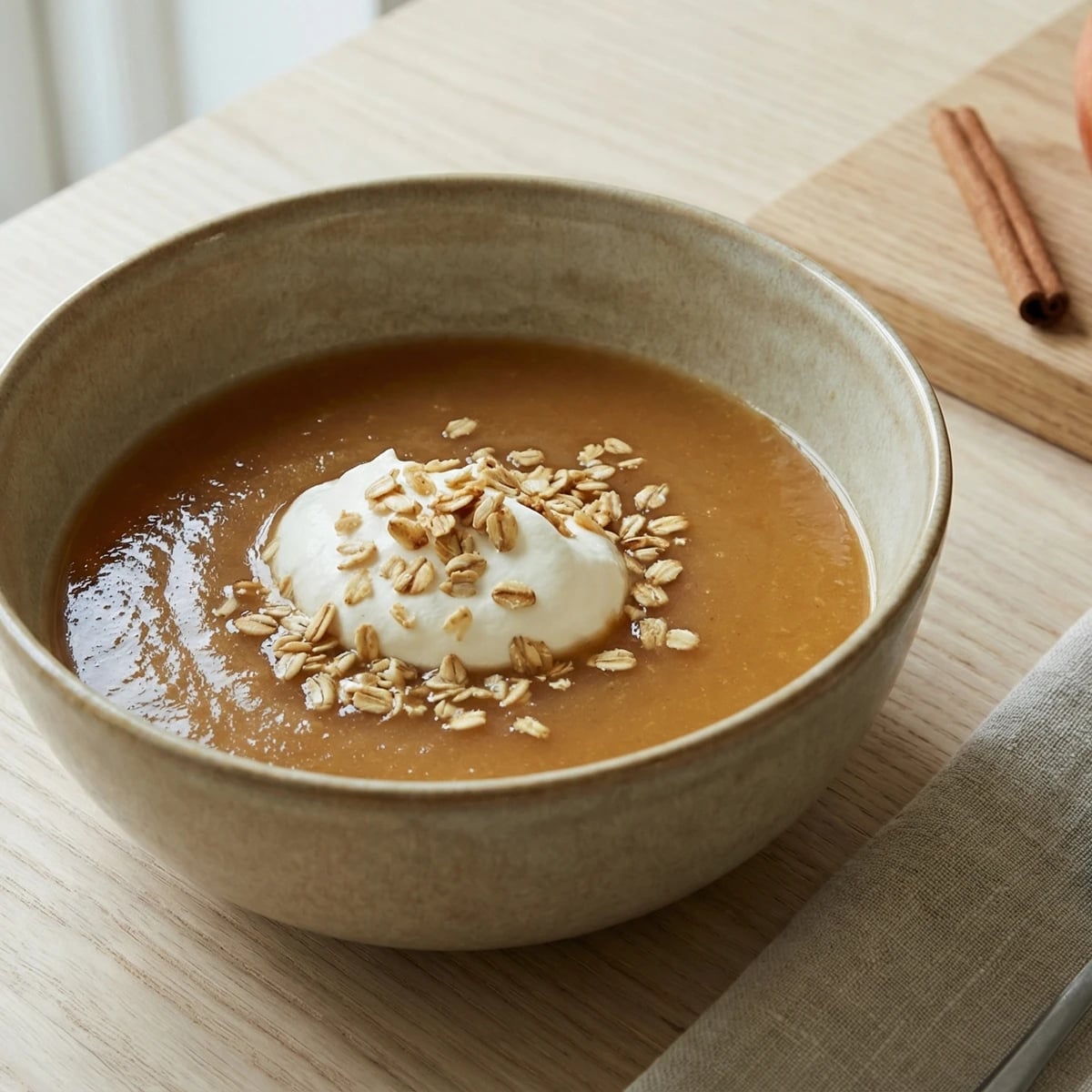
Warm Danish apple soup for the first cool evenings of autumn. Tart apples simmered with cinnamon and lemon peel, thickened to a soft gloss, and served with cold cream and buttery toasted oats.
There's a point in early October when the apple trees in Danish gardens bow low with fruit, and suddenly there's more than anyone knows what to do with. Windfalls pile up in the grass. The neighbors leave bags on your doorstep. This is when aeblesuppe comes out of the cupboard of the Danish kitchen, a soup that turned a glut into a pleasure long before anyone had a word for food waste.
Aeblesuppe sits in an older Scandinavian tradition of sweet fruit soups, bowls that blur the line between dessert and supper in a way that feels right for the season. You simmer tart apples with a cinnamon stick and a strip of lemon peel, strain the whole thing until it's silky, thicken it with a little potato starch, and serve it warm with cold cream and a spoonful of buttery toasted oats. It's simple. That's the point. The season decides what goes in the pot, and you just get out of the way.
I want you to pay attention to two things. First, the apples have to be tart. If you start with sweet eating apples, you'll end up with something flat and one-note, and no amount of lemon juice will fully rescue it. Second, don't skip the toasted oats. The soup alone is gentle and soft; the oats give you the crunch and the nutty edge that turns a pleasant bowl into one you remember. You'll know when it's right, because the first spoonful gives you warm and cold and crisp all at once, and the kitchen still smells like cinnamon half an hour later.
Sweet fruit soups have a long history across Scandinavia, dating back at least to the 1700s when they appeared as practical ways to use the autumn harvest before it spoiled. Aeblesuppe shows up in Danish household cookbooks from the mid-1800s, where it was served as a light supper course or a warm dessert, depending on the household and the hour. Potato starch became the thickener of choice in Denmark after the crop took hold in Jutland in the late eighteenth century, and it's the quiet detail that distinguishes a Danish fruit soup from its Swedish and Norwegian cousins, giving the finished bowl a cleaner, glossier finish than flour or cornstarch ever could.
Quantity
1kg
Ingrid Marie, Belle de Boskoop, or Bramley, cored and roughly chopped
Quantity
1 litre
Quantity
1
Quantity
2 strips
pared with a vegetable peeler
Quantity
80g, plus more to taste
Quantity
1 tablespoon
Quantity
2 tablespoons
Quantity
3 tablespoons
Quantity
50g
Quantity
20g
Quantity
1 tablespoon
Quantity
a small pinch
Quantity
150ml
lightly whipped, to serve
| Ingredient | Quantity |
|---|---|
| tart applesIngrid Marie, Belle de Boskoop, or Bramley, cored and roughly chopped | 1kg |
| water | 1 litre |
| cinnamon stick | 1 |
| lemon peelpared with a vegetable peeler | 2 strips |
| caster sugar | 80g, plus more to taste |
| fresh lemon juice | 1 tablespoon |
| potato starch | 2 tablespoons |
| cold water (for the slurry) | 3 tablespoons |
| rolled oats | 50g |
| unsalted butter | 20g |
| light brown sugar | 1 tablespoon |
| fine sea salt | a small pinch |
| double creamlightly whipped, to serve | 150ml |
Core the apples and chop them roughly into chunks about the size of a walnut. Don't bother peeling them. The skin carries pectin and color, and everything will be strained later anyway. Use tart apples if you possibly can. A sweet apple gives you flat, cloying soup. A tart apple gives you brightness, the edge that makes the whole bowl sing.
Put the apples into a heavy pot with the litre of water, the cinnamon stick, and the two strips of lemon peel. Bring to a gentle simmer over medium heat and let it cook, uncovered, for about twenty minutes. The apples should collapse into soft, shaggy pieces and the kitchen should smell like autumn itself. Don't let it boil hard. Hard boiling drives off the delicate apple aroma you're working to capture.
Fish out the cinnamon stick and the lemon peel and discard them. They've given what they had to give. Now press the apples through a fine sieve back into the rinsed pot, or blend everything smooth with a stick blender and then strain. You want a soup that is silky and clear in its texture, not chunky. Stir in the 80g of sugar and the lemon juice. Taste it. Adjust. The soup should be tart first, sweet second, never the other way around.
Whisk the potato starch with the three tablespoons of cold water until smooth. Bring the soup back to a bare simmer and pour in the slurry while stirring. Cook for one more minute, no longer. The soup will thicken and turn glossy, holding onto the back of a spoon in a soft coat. Potato starch is the traditional thickener and it gives a cleaner finish than cornstarch. If you cook it too long after thickening, it thins again and sulks. One minute is all it needs.
While the soup rests off the heat, melt the butter in a small frying pan over medium heat. Add the oats, the brown sugar, and the pinch of salt. Stir constantly for about four minutes until the oats turn deep golden and smell nutty and toasted. This is the texture counterpoint the soup needs. Without it, the bowl is all softness and no contrast. Tip the oats onto a plate to stop the cooking. If you leave them in the pan they keep browning and go bitter.
Ladle the warm soup into shallow bowls. Spoon a soft cloud of lightly whipped cream into the centre of each, then scatter the toasted oats generously over the top. Serve right away, while the cream is cold and the soup is warm and the oats are still crisp. The moment you bring the spoon to your mouth, you get three temperatures and three textures at once. That's the dish. Tak for mad.
1 serving (about 500g)
Culinary guides, cultural storytelling, and the editorial depth that makes cooking meaningful.
Discover Culinary Explorer
Chef Freja
Danish white asparagus velouté with tiny veal meatballs, flour dumplings, and bright green tips scattered on the surface. The Easter soup of Copenhagen, built from five small pans of spring.

Chef Freja
A Danish cauliflower cremesuppe pureed to velvet, crowned with crisp bacon and tiny North Sea shrimp. The kind of weeknight bowl that makes the whole evening feel cared for.

Chef Freja
A saffron-gold fish soup from Bornholm with cod, mussels, and cream, served with dark rugbrod from the island's smokehouse tradition. Baltic cooking at its most generous.

Chef Freja
The Danish spring soup made from the first green thing to push through the cold ground. Young nettle tops, potato, cream, and halved hard-boiled eggs floating on top. The taste of late March in a bowl.