
Chef Freja
Aeblesuppe
Warm Danish apple soup for the first cool evenings of autumn. Tart apples simmered with cinnamon and lemon peel, thickened to a soft gloss, and served with cold cream and buttery toasted oats.
A cooking platform built around craft, culture, and the stories behind what we eat.
Created by Chef Freja
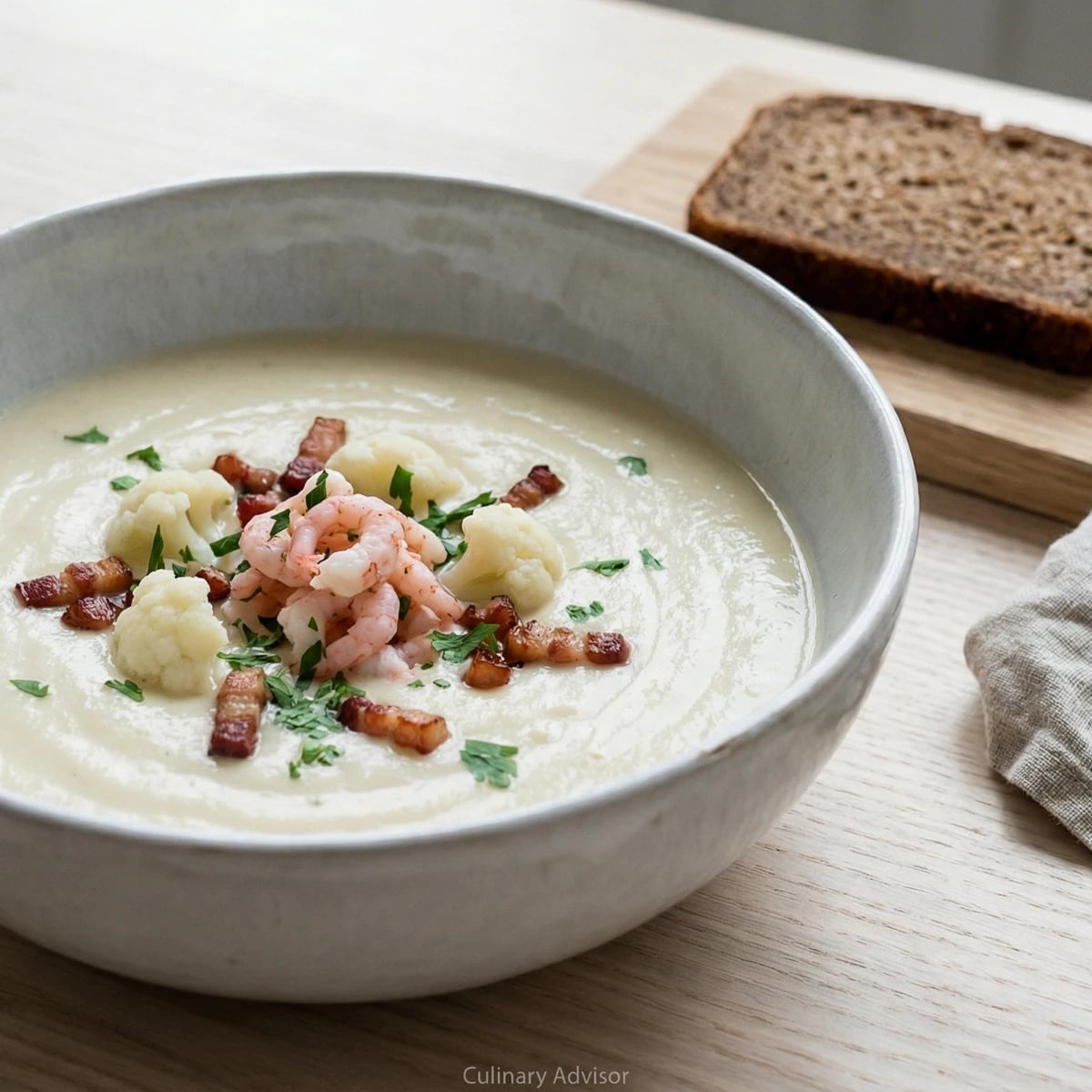
A Danish cauliflower cremesuppe pureed to velvet, crowned with crisp bacon and tiny North Sea shrimp. The kind of weeknight bowl that makes the whole evening feel cared for.
Cauliflower belongs to the back end of summer in Denmark. The market stalls along Torvehallerne start filling with tight white heads in August, and they hold through the autumn until the first hard frost. This is when blomkaalssuppe comes into its own. Not the thin, sad cauliflower soup of January, made with a tired head from the supermarket, but the proper version, made when the vegetable is at its sweetest and the evenings have just started to draw in.
Blomkaalssuppe is one of the great Danish cremesuppe, the family of velvet-textured soups that anchor the weeknight kitchen from late August onwards. The principle is simple: a single vegetable, good stock, a measured hand with the cream, and a topping that gives the soft soup something to push against. Here, that's the trio that makes this dish unmistakably Danish: crisp bacon, tiny pink rejer from the North Sea, and a green flash of parsley.
Two things matter most. The first is the cauliflower itself. Look for a head that feels heavy for its size, with leaves still tight and green at the base. If the curd is starting to spot or grey, the soup will taste dull no matter what you do. The second is restraint with the cream. Too much and you drown the cauliflower; too little and the soup feels thin. I'll show you the ratio that lets the vegetable stay the star, and I'll walk you through the small detail that turns this from a fine soup into one you'll come back to. Cooked with love and a quiet kitchen, this is exactly the kind of bowl that makes a Tuesday feel like a small occasion.
Cauliflower reached Denmark in the late 1600s by way of the royal kitchen gardens, where it was cultivated as a luxury vegetable for the Copenhagen aristocracy before slowly spreading to the islands of Funen and Sjaelland. By the 19th century, the great Danish cookbook author Madam Mangor had codified blomkaalssuppe as a fixture of the bourgeois household menu, a soup that signaled both refinement and seasonal awareness. The crowning of the bowl with rejer, the small sweet shrimp hand-peeled from the cold waters around Laeso and the Limfjord, dates from the same period, when fresh North Sea shrimp were considered one of Denmark's quiet culinary treasures and still are.
Quantity
1 large head, about 800g
broken into florets, tender stalk reserved
Quantity
1 medium
white and pale green parts, sliced
Quantity
1 small
peeled and diced
Quantity
40g
Quantity
900ml
Quantity
150ml
Quantity
100ml
Quantity
to taste
Quantity
to taste
Quantity
small pinch
Quantity
100g
cut into small lardons
Quantity
100g
cooked and peeled
Quantity
small bunch
finely chopped
Quantity
thick slices, to serve
| Ingredient | Quantity |
|---|---|
| cauliflowerbroken into florets, tender stalk reserved | 1 large head, about 800g |
| leekwhite and pale green parts, sliced | 1 medium |
| floury potatopeeled and diced | 1 small |
| unsalted butter | 40g |
| chicken or vegetable stock | 900ml |
| whole milk | 150ml |
| double cream | 100ml |
| fine sea salt | to taste |
| white pepper | to taste |
| freshly grated nutmeg | small pinch |
| streaky baconcut into small lardons | 100g |
| North Sea shrimp (rejer) (optional)cooked and peeled | 100g |
| flat-leaf parsleyfinely chopped | small bunch |
| rugbrod | thick slices, to serve |
Before you do anything else, break off a small handful of the smallest, prettiest florets and set them aside. These will go back into the finished soup as little white islands of texture. A pureed soup needs something to bite against, otherwise it goes soft and one-note in the mouth.
Melt the butter in a heavy pot over a gentle heat. Add the sliced leek with a small pinch of salt and stir it through. Put the lid on and let it sweat for about eight minutes. You want it soft and translucent, never browned. Browned leek tastes of caramel and bitterness, and that flavor will fight the cauliflower instead of supporting it. The cauliflower is the voice of this soup. Everything else is the room it sings in.
Add the rest of the cauliflower (keeping your reserved florets aside) along with the diced potato. Stir to coat them in the butter and let them cook with the leek for two or three minutes. The potato is your insurance. It gives the soup body without needing more cream, and it carries the cauliflower flavor instead of muting it the way too much dairy would.
Pour in the stock. Bring everything to a gentle simmer and cook for about twenty minutes, until the cauliflower and potato are completely soft. A knife should pass through a floret with no resistance at all. Any resistance and the soup will be grainy when you blend it. While it simmers, drop the reserved small florets into a separate small pan of salted boiling water and cook them for two minutes, just until tender. Drain them and set aside.
While the soup simmers, put the bacon lardons into a cold dry frying pan and set it over medium heat. Starting cold lets the fat render slowly, so the bacon ends up crisp all the way through instead of leathery on the outside and limp in the middle. Cook, stirring now and then, until the lardons are deep golden and crackling. Lift them out onto kitchen paper and leave the rendered fat in the pan for now.
Take the soup pot off the heat. Blend everything until completely smooth and velvety. A stick blender works directly in the pot, but if you want a true silk texture, use an upright blender and pass the soup through a fine sieve afterwards. Return it to the pot, stir in the milk and cream, and warm it gently. Don't let it boil after the cream goes in. Boiling cream loses its softness and the soup turns thin.
Season with salt, white pepper, and the smallest pinch of freshly grated nutmeg. White pepper is the right choice here, not black. Black pepper leaves dark specks across the pale surface and changes the look of the soup. Nutmeg and cauliflower are old friends in the Danish kitchen, but it's a whisper, not a statement. Taste, and adjust. You'll know when it's right. The soup should taste rounded and clean, with the cauliflower clearly out front.
Ladle the soup into deep bowls. Drop a few of the reserved cauliflower florets into the centre of each one, so they catch the light against the pale broth. Scatter generously with the crispy bacon and a small heap of the cold North Sea shrimp on top of that. Finish with a shower of finely chopped parsley. Serve at once with rugbrod alongside, and don't forget to say tak for mad when the bowls are empty.
1 serving (about 550g)
Culinary guides, cultural storytelling, and the editorial depth that makes cooking meaningful.
Discover Culinary Explorer
Chef Freja
Warm Danish apple soup for the first cool evenings of autumn. Tart apples simmered with cinnamon and lemon peel, thickened to a soft gloss, and served with cold cream and buttery toasted oats.

Chef Freja
Danish white asparagus velouté with tiny veal meatballs, flour dumplings, and bright green tips scattered on the surface. The Easter soup of Copenhagen, built from five small pans of spring.

Chef Freja
A saffron-gold fish soup from Bornholm with cod, mussels, and cream, served with dark rugbrod from the island's smokehouse tradition. Baltic cooking at its most generous.

Chef Freja
The Danish spring soup made from the first green thing to push through the cold ground. Young nettle tops, potato, cream, and halved hard-boiled eggs floating on top. The taste of late March in a bowl.