
Chef Takumi
Agedashi Tofu (揚げ出し豆腐)
Agedashi tofu looks like a fryer test. It is only drained tofu, potato starch, clean oil, and a hot dashi broth waiting nearby.
A cooking platform built around craft, culture, and the stories behind what we eat.
Created by
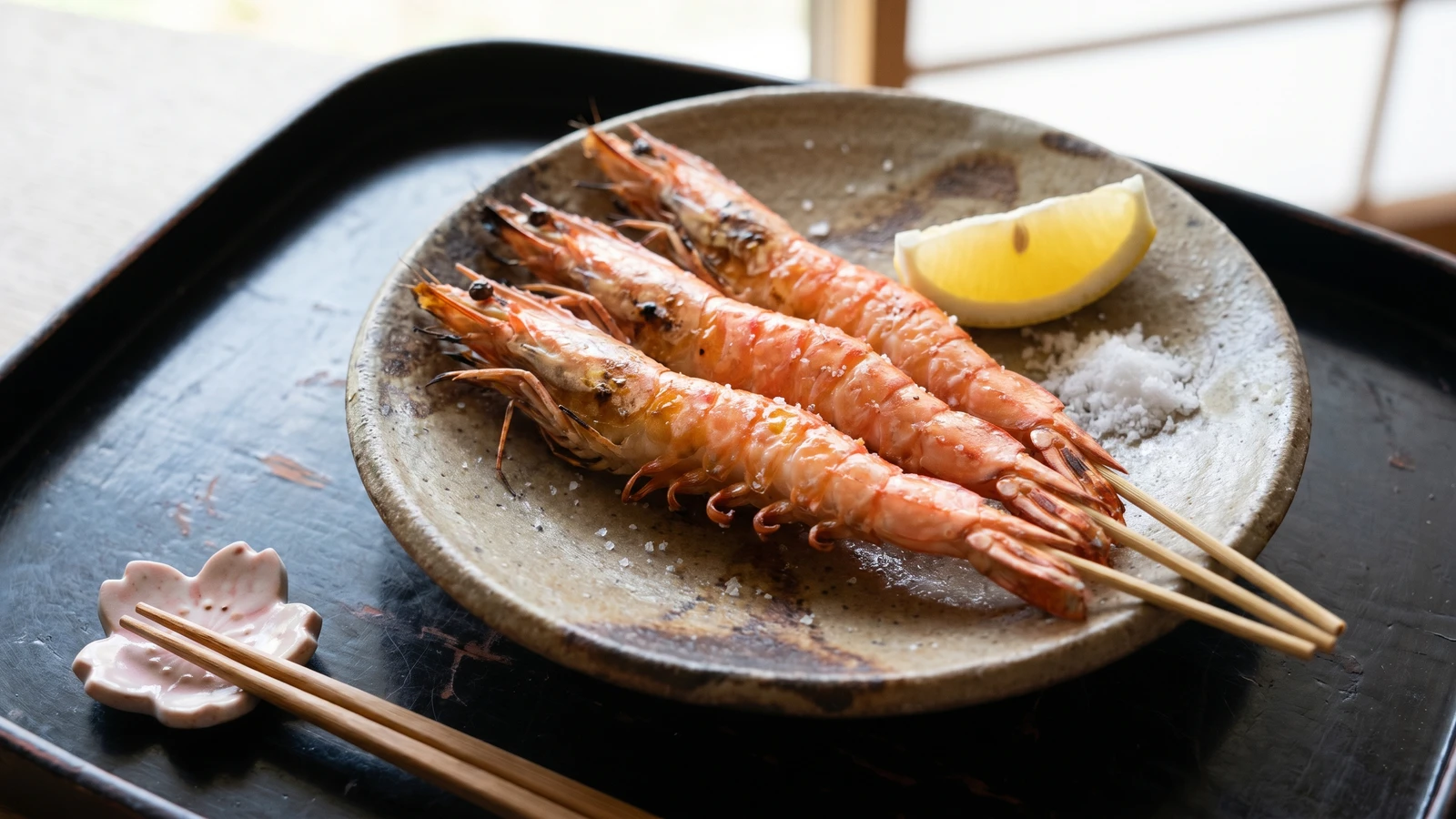
Head-on shrimp need very little help: a skewer to keep them straight, a hot grill to crisp the shell, and salt sharp enough to let the sweetness show.
The head is the part that makes people hesitate. Good. That means you're looking at the dish honestly. Ebi kushiyaki is whole shrimp, shell on, skewered tail to head and grilled until the shell crisps and the meat curls firm inside. No heavy sauce, no disguise. The shrimp must be glistening fresh, because there is nothing here to hide a tired one.
The one detail that decides it is the skewer. Thread it from the tail through the body and into the head, following the natural line of the shrimp. That keeps the shrimp long enough to cook evenly, holds the head in place, and lets the shell meet the grill instead of collapsing into itself. Soak bamboo skewers first or use metal ones. The rule is not ceremony, it's simply how we keep fire from eating the tool before it cooks the shrimp.
Salt before the grill, then again lightly at the end. The first salt seasons the shell and draws a little surface moisture so it crisps; the last salt wakes the sweetness once the meat is cooked. Lemon comes after the fire, never before, because acid sitting on raw shrimp toughens the surface and steals the clean sweetness you bought the shrimp for.
This is a small plate for a dinner party or a summer grill, not a heap. Three skewers on a dish, heads facing the same way, a cut lemon to the side, and enough empty clay showing that the shrimp can breathe. Eat the head whole if it is crisp. It gives you the deepest flavor, and after the first bite, the frightening part becomes the part everyone reaches for.
Kushiyaki means food grilled on skewers, a broad Japanese method that includes seafood, vegetables, and poultry rather than one fixed menu. Shrimp and other shellfish appear often in celebratory Japanese meals because their curved backs are associated with long life, an image especially visible in New Year dishes. In coastal markets and festival stalls, whole shell-on shrimp are commonly grilled simply with salt, a style known as shioyaki when salt is the main seasoning.
Quantity
12 (about 450g to 550g total)
Quantity
1 tablespoon, plus more for finishing
Quantity
1 tablespoon
Quantity
1 teaspoon
for oiling the grill grate
Quantity
1
cut into wedges
Quantity
12
soaked 30 minutes
| Ingredient | Quantity |
|---|---|
| large head-on shell-on shrimp | 12 (about 450g to 550g total) |
| fine sea salt | 1 tablespoon, plus more for finishing |
| sake | 1 tablespoon |
| neutral oilfor oiling the grill grate | 1 teaspoon |
| lemon or yuzucut into wedges | 1 |
| bamboo skewers (optional)soaked 30 minutes | 12 |
Choose large head-on shrimp with firm bodies, clear shells, and a clean sea smell. The heads should sit tight against the body, not sag or leak dark liquid. Sourcing first, always. This dish is salt and fire, so the shrimp itself must carry the flavor.
Rinse the shrimp quickly under cold water and pat them very dry. If you see a dark vein along the back, lift it out with a toothpick through the shell without cutting the shrimp open. Dry shells crisp; wet shells steam against the grill and turn leathery.
Hold one shrimp belly-side down. Push a skewer in near the tail, run it through the body, and guide the point into the head so the shrimp lies almost straight. Do not force it into a board-straight soldier. You only want enough length that it cooks evenly and the head stays attached.
Sprinkle the skewered shrimp lightly with the sea salt and sake, then rest them for 5 minutes while the grill heats. The salt seasons the shell and draws a little surface moisture; the sake keeps the aroma clean without turning the shrimp sweet. Pat away any beads of moisture before grilling.
Heat a charcoal grill, gas grill, or ridged grill pan until very hot. Oil the grate lightly. You want quick, direct heat so the shell crisps before the meat overcooks. A timid fire cooks the shrimp slowly and leaves the head soft.
Lay the skewers over direct heat and grill for 2 to 3 minutes on the first side, until the shell turns bright red and lightly blistered. Turn once and grill 2 to 3 minutes more. The meat should curl firm inside the shell, and the head should feel crisp when tapped with tongs.
Move the skewers to a plate, sprinkle with a little more salt, and serve at once with lemon or yuzu wedges. Squeeze citrus only at the table. Acid belongs at the end, where it sharpens the sweet shrimp instead of tightening it before the fire.
1 serving (about 95g)
Culinary guides, cultural storytelling, and the editorial depth that makes cooking meaningful.
Discover Culinary ExplorerChef Takumi
Agedashi tofu looks like a fryer test. It is only drained tofu, potato starch, clean oil, and a hot dashi broth waiting nearby.

Chef Takumi
Aspara-bacon is late-spring asparagus treated with common sense: thin bacon, hot grill, and a last brush of shōyu and mirin so the spear stays sweet while the wrap crisps.

Chef Takumi
This is Osaka street food at its plainest and best: good beef cut small, a thin batter, fine panko, hot beef tallow, and one clean dip in sauce.

Chef Takumi
Buta-bara is not a trick of the grill. Good pork belly, even cutting, steady heat, and the patience to let the fat turn glossy do most of the work.