
Chef Klaus
Badischer Wurstsalat
Baden's sharp, no-mayonnaise Vesper salad lives by the cut and the rest: fine Lyoner strips drinking vinegar and mustard before the oil softens the whole bowl.
A cooking platform built around craft, culture, and the stories behind what we eat.
Created by
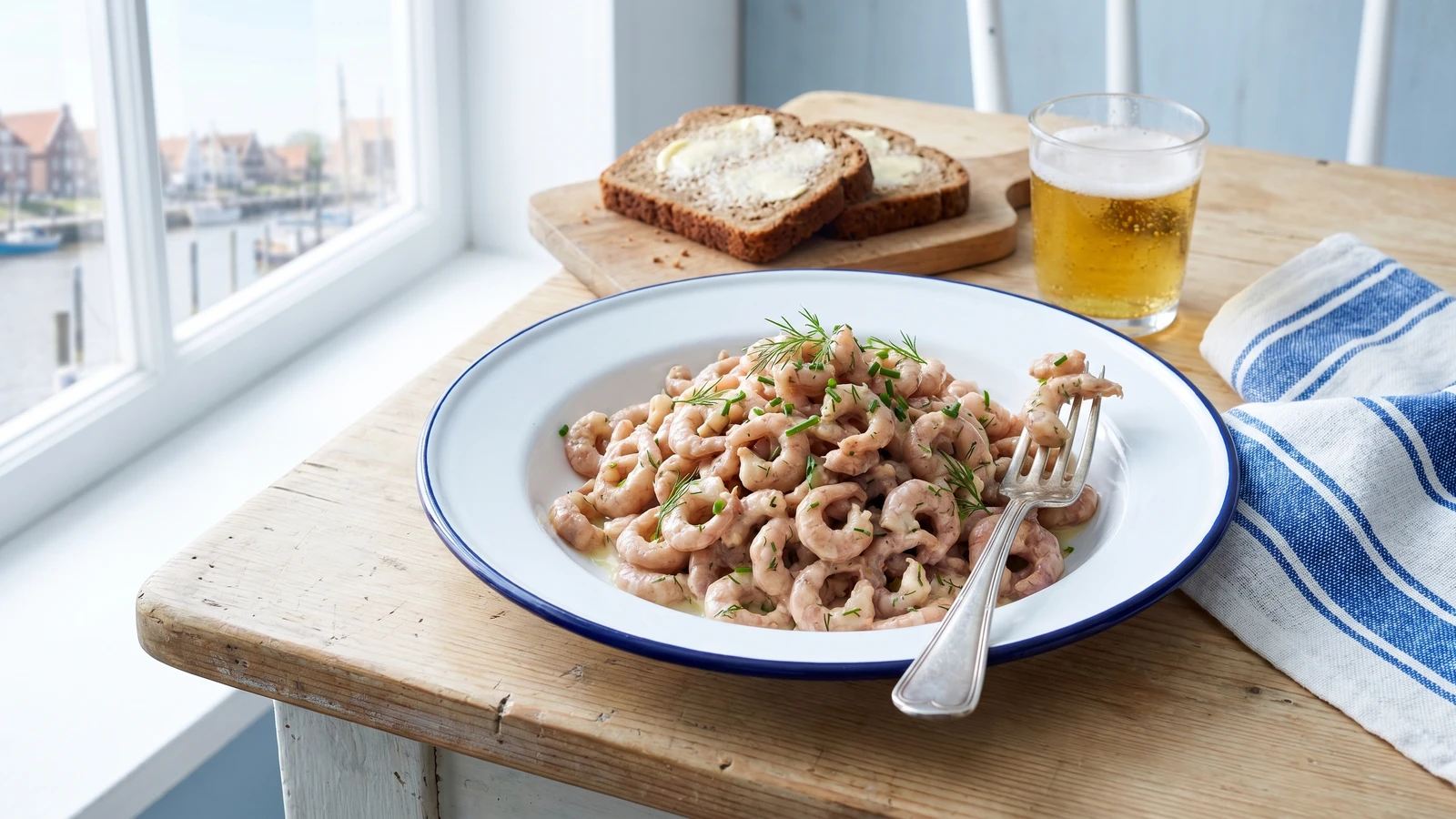
The East Frisian crab salad from the cutter harbour, built on sweet Nordseekrabben, a light lemon mayonnaise, and the discipline to stop before the dressing takes over.
Greetsieler Krabbensalat belongs to the East Frisian coast, to the cutter harbour, the fish counter, and the cold table when the North Sea shrimp are good. You set it down with buttered rye, boiled potatoes, or a simple green salad, and it works for a weeknight because there is no cooking, only care.
The regions split fast on this one. On the coast, the shrimp stay first: a little mayonnaise, lemon, chives, maybe dill. Further inland, people start adding egg, cucumber, apple, and enough dressing to hide the catch. Im Norden anders, im Süden anders, but in Greetsiel the Krabben are the point. Das ist kein Bierzelt.
The one technique is drying the peeled Nordseekrabben before they meet the dressing. They are already cooked and delicate; if they go in wet, the salad turns loose and milky, and the lemon mayonnaise loses its clean edge. Pat them dry, fold gently, then rest the bowl cold for twenty minutes so the lemon and herbs settle around the shrimp without swallowing them.
Nicht aus dem Glas. A spoon of made mayonnaise takes one minute and tastes of egg, oil, mustard, and lemon. Dress it lightly. The shrimp should still look like shrimp.
Greetsiel, on the East Frisian coast of Lower Saxony, grew around its Sielhafen, a sluice harbour first documented in the late Middle Ages and still known for its cutter fleet. The Nordseekrabbe, Crangon crangon, is a small brown shrimp from the Wadden Sea and North Sea shallows; it is cooked on board soon after landing, then peeled before sale. The dish sits in the same northern coastal larder as Matjes, smoked fish, rye bread, and potatoes, a table shaped by the Hanseatic fish trade and by what the sea could put on bread without ceremony.
Quantity
400g
cooked and well chilled
Quantity
1
very fresh
Quantity
1 teaspoon
Quantity
1 teaspoon
Quantity
150ml
Quantity
1 tablespoon
plus more to taste
Quantity
1 teaspoon
finely grated
Quantity
2 tablespoons
Quantity
2 tablespoons
finely snipped
Quantity
1 tablespoon
finely chopped
Quantity
1 small
very finely minced
Quantity
to taste
Quantity
to taste
freshly ground
Quantity
to serve
| Ingredient | Quantity |
|---|---|
| peeled Nordseekrabben (North Sea brown shrimp)cooked and well chilled | 400g |
| egg yolkvery fresh | 1 |
| medium-hot German mustard | 1 teaspoon |
| white wine vinegar | 1 teaspoon |
| neutral oil, such as rapeseed oil | 150ml |
| fresh lemon juiceplus more to taste | 1 tablespoon |
| lemon zestfinely grated | 1 teaspoon |
| crème fraîche or sour cream | 2 tablespoons |
| chivesfinely snipped | 2 tablespoons |
| dill (optional)finely chopped | 1 tablespoon |
| shallotvery finely minced | 1 small |
| fine sea salt | to taste |
| white pepperfreshly ground | to taste |
| dark rye bread or boiled new potatoes | to serve |
Spread the Nordseekrabben on a clean towel or kitchen paper and pat them dry, then keep them cold while you make the dressing. They are small and already cooked, so water is the enemy now; wet shrimp loosen the mayonnaise and leave the salad tasting thin instead of clean.
Whisk the egg yolk, mustard, vinegar, and a pinch of salt in a bowl until smooth, then add the oil drop by drop at first, whisking all the time. Once it thickens, pour the oil in a thin stream. Slow oil at the start lets the yolk hold the fat; rush it and the sauce splits before it has a spine.
Whisk in the lemon juice, lemon zest, crème fraîche, shallot, chives, dill if using, and a little white pepper. Taste before salting hard, because the shrimp carry their own sea salt. Würzen, Fett, Salz zum Schluss: the bright things and final salt come last, where you can still judge them.
Fold the dry, cold shrimp through just enough dressing to coat them lightly; you may not need every spoonful. Use a soft spatula and turn the bowl, not the shrimp, because broken Krabben turn a good salad into paste. Cover and chill for twenty minutes so the lemon settles without taking over.
Taste once more, then serve cold on buttered dark rye or beside boiled new potatoes. If the salad has tightened in the refrigerator, loosen it with one teaspoon of lemon juice, not more mayonnaise, because the shrimp should stay first.
1 serving (about 220g)
Culinary guides, cultural storytelling, and the editorial depth that makes cooking meaningful.
Discover Culinary ExplorerChef Klaus
Baden's sharp, no-mayonnaise Vesper salad lives by the cut and the rest: fine Lyoner strips drinking vinegar and mustard before the oil softens the whole bowl.

Chef Klaus
The capital's creamy potato salad, built on warm waxy potatoes that drink the dressing before mayonnaise binds the bowl, with pickle, onion, and egg doing the sharpening.

Chef Klaus
A Brandenburg country potato salad, lighter than Berlin's mayonnaise bowl: warm potatoes drinking hot broth and vinegar before the sausage, pickle, and egg go in.

Chef Klaus
The butcher-counter salad for Abendbrot and picnics: fine strips of Lyoner and pickled cucumber, bound lightly with tart mayonnaise, rested until the brine does its work.