Chef Elsa
Almjause (Alpine Hut Snack Board)
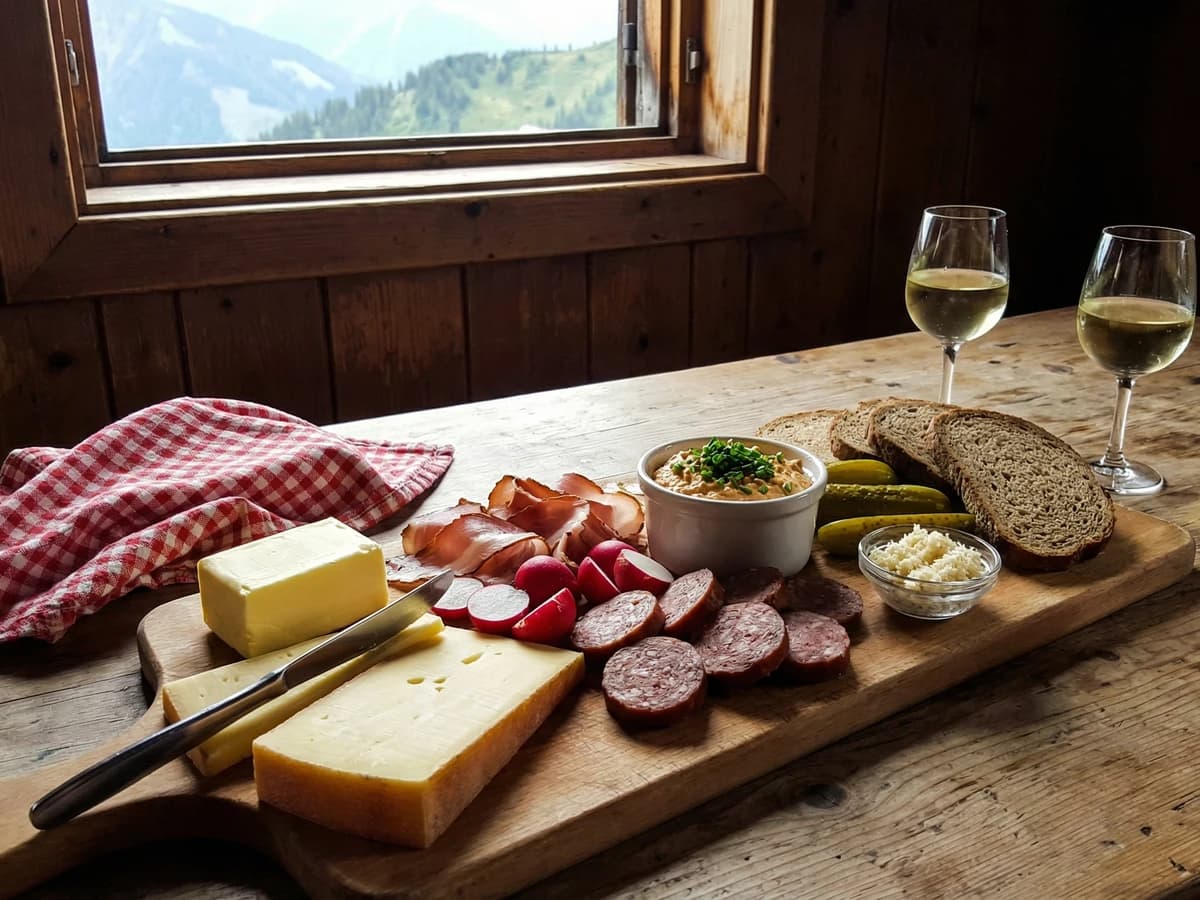
A wooden board loaded with mountain cheese, juniper-smoked Speck, air-dried Hauswürstel, handmade Liptauer, fresh Kren, and thick-cut Bauernbrot, the way Austrian Almhütten have fed hikers for generations.
A cooking platform built around craft, culture, and the stories behind what we eat.

Created by
Pork fat rendered low and slow until golden Grammeln crackle through the Schmalz, seasoned with onion, garlic, and marjoram, then spread thick on dark bread the way every Heuriger in Vienna has done it for generations.
The first time I understood Grammelschmalz, I was nine years old, sitting at a wooden table in a Heuriger garden outside Vienna with Gretel and my grandmother Eva. The owner brought a Brettljause to the table: sliced meats, pickled vegetables, bread, and a small earthenware crock of something pale and flecked with gold. Gretel spread it on a piece of dark rye bread so thick the bread nearly disappeared. She handed it to me and said, "This is how the Viennese say hello." It was cool and rich and salty, and the little crispy bits, the Grammeln, crunched against the dense bread. I didn't know what I was eating. I just knew I wanted more.
Grammelschmalz is rendered pork fat with its own cracklings stirred back through it, seasoned simply with onion, garlic, and marjoram. That's the whole recipe. There's nothing to hide behind. The fat has to be good, the rendering has to be patient, and the seasoning has to be right. When those three things come together, you get a spread that tastes like the Austrian countryside distilled into a crock.
Outside Austria, people sometimes flinch at the idea of eating pork fat on bread. Inside Austria, nobody flinches. This is Heuriger food, the kind of honest cooking that goes with a glass of Grüner Veltliner and an evening that doesn't need to end. You don't dress it up. You don't apologize for it. You spread it on good bread and you eat it with people you like.
Grammelschmalz belongs to Austria's tradition of Heuriger food, the simple cold spreads and platters served at seasonal wine taverns licensed since a 1784 decree by Emperor Joseph II allowing vintners to sell their own wine and food. The Grammeln (pork cracklings) reflect centuries of Austrian farmhouse economy where nothing from the autumn pig slaughter went to waste. Schmalz, whether from pork or goose, served as the primary cooking fat in Austrian kitchens well into the 20th century, and the tradition of seasoning it with marjoram links it specifically to Lower Austria and Vienna, where marjoram grows wild in the surrounding hills.
Quantity
500g
cut into 1cm cubes
Quantity
1 medium
finely diced
Quantity
2 cloves
finely minced
Quantity
1 tablespoon
Quantity
1 teaspoon
Quantity
1/2 teaspoon
Quantity
1/4 teaspoon
Quantity
for serving
| Ingredient | Quantity |
|---|---|
| pork back fat or leaf lardcut into 1cm cubes | 500g |
| onionfinely diced | 1 medium |
| garlicfinely minced | 2 cloves |
| dried marjoram | 1 tablespoon |
| fine sea salt | 1 teaspoon |
| freshly ground black pepper | 1/2 teaspoon |
| sweet Hungarian paprika | 1/4 teaspoon |
| dark Bauernbrot or Schwarzbrot | for serving |
Cut the pork fat into cubes no larger than one centimeter. Uniformity matters here. Pieces that are roughly the same size will render at the same rate, which means they'll all reach that golden, crispy state together instead of some burning while others sit there pale and flabby. If the fat is soft and hard to cut, put it in the freezer for twenty minutes first. A cold piece of fat holds its shape under the knife.
Place the cubed fat in a heavy-bottomed pot or deep pan. Add three tablespoons of water. This sounds wrong, putting water into a pan where you want to render fat, but the water creates a gentle buffer that prevents the cubes from scorching before the fat starts to melt. Set the heat to low. Not medium-low. Low. The water will evaporate in the first ten minutes, and by then there will be enough liquid fat in the pan to take over. You'll hear a quiet, steady murmur from the pot. If it sounds like frying, your heat is too high.
Let the fat render for about one hour, stirring every ten minutes or so. The cubes will shrink steadily as they give up their fat. The liquid in the pot will go from cloudy to clear. Don't rush this. If you crank the heat to speed things up, the outside of each cube will brown before the inside has rendered, and you'll get hard, greasy bits instead of light, crispy Grammeln. Patience is the only technique this recipe asks of you.
After about an hour, the cubes will have shrunk to roughly half their original size and turned a light gold. Now raise the heat just slightly to medium-low. Stir more frequently, every few minutes. Watch the color carefully. You're looking for the Grammeln to turn deep golden brown and feel dry and crisp when you tap one with a spoon. This final stage goes quickly, maybe fifteen minutes. The moment they look right, pull the pot off the heat. They'll carry on darkening from residual heat.
While the Grammeln are still in the hot fat, add the diced onion and stir. The residual heat will soften it just enough to take the raw edge off without cooking it to mush. Add the minced garlic, marjoram, salt, pepper, and paprika. Stir everything through. The marjoram will bloom in the warm fat, releasing that herbal, slightly floral scent that makes Grammelschmalz smell like a Heuriger garden in September. Taste the liquid fat with a small spoon and adjust the salt. It should be well seasoned. Remember that this will be eaten at room temperature on bread, and cold fat needs more salt than you think.
Pour the entire mixture, fat and Grammeln together, into an earthenware crock or a wide glass jar. Let it cool at room temperature for thirty minutes, then stir once to distribute the Grammeln evenly through the fat before it sets. If you skip this stir, all the cracklings sink to the bottom and you get a layer of plain Schmalz on top. Refrigerate until firm. Pull it out of the fridge twenty minutes before serving so it softens enough to spread.
Spread the Grammelschmalz generously on thick slices of dark Bauernbrot or Schwarzbrot. Don't be polite about it. A thin scraping is not the point. You want a proper layer, thick enough that you can see the golden Grammeln studded through the pale fat. A few flakes of coarse salt on top and you're done. Mahlzeit!
1 serving (about 67g)
Culinary guides, cultural storytelling, and the editorial depth that makes cooking meaningful.
Discover Culinary ExplorerChef Elsa
A wooden board loaded with mountain cheese, juniper-smoked Speck, air-dried Hauswürstel, handmade Liptauer, fresh Kren, and thick-cut Bauernbrot, the way Austrian Almhütten have fed hikers for generations.

Chef Elsa
Dark, spiced, and wickedly good: Blunzn mashed with onion, mustard, and marjoram into the kind of spread that disappears first from every Heuriger Brettl, scooped up on torn hunks of dark bread.

Chef Elsa
A silky potato and sour cream spread with raw onion and paprika, piled onto dark rye bread the way they serve it at every Heuriger in Lower Austria. No cheese, despite the name. Just good potatoes and honest cooking.
Chef Elsa
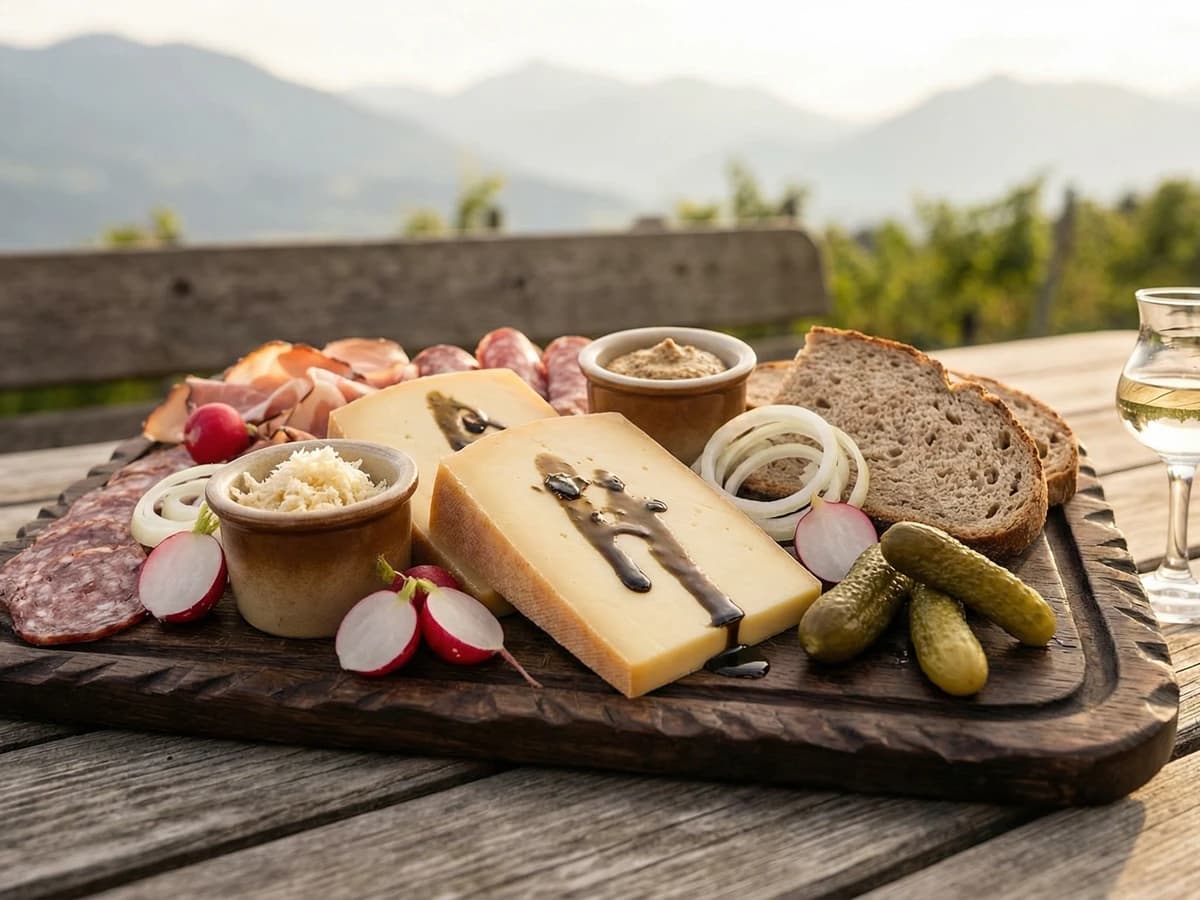
A proper Carinthian Brettljause built around PDO Gailtaler Almkäse, nutty raw-milk alpine cheese served with Speck, dark Bauernbrot, pickles, fresh horseradish, and everything you need for an afternoon on an Almhütte terrace.