
Chef Jeong-sun
Aehobak-bokkeum (Korean Stir-Fried Zucchini)
Tender Korean zucchini half-moons cooked quickly over real heat, seasoned with salted shrimp so the squash tastes deeper than oil and still clean enough for a weeknight table.
A cooking platform built around craft, culture, and the stories behind what we eat.
Created by
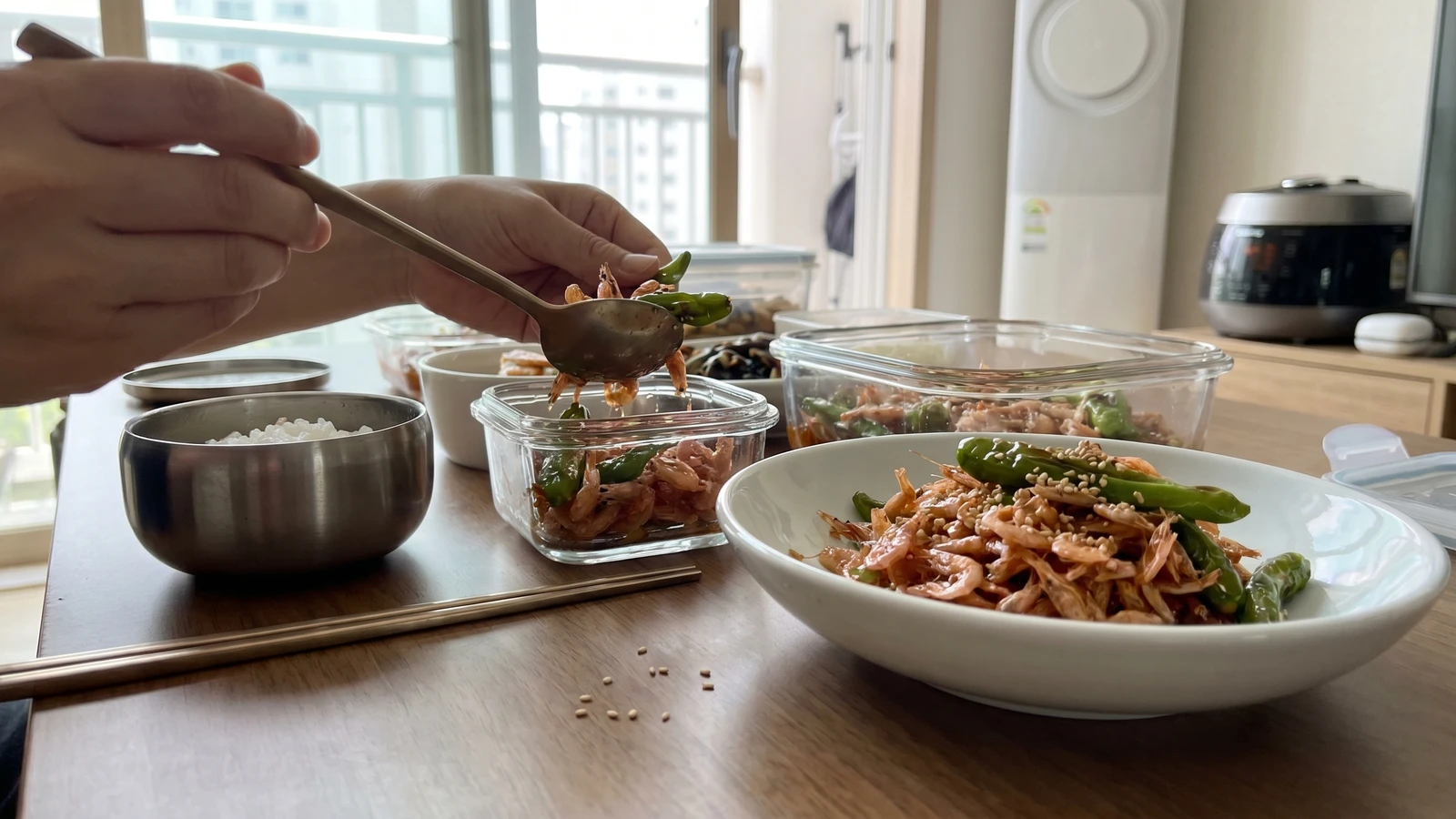
Tiny dried shrimp dry-toasted until crisp, then pulled through a soy and rice-syrup glaze with blistered kkwari-gochu, the weeklong banchan that makes plain rice feel cared for.
Geonsaeu-bokkeum lives or dies in the dry pan. If you pour sauce over dried shrimp straight from the bag, you get salt and chew. Toast them first, with no oil, and they wake up: nutty, crisp, clean enough that the soy glaze only has to dress them, not rescue them.
Master Seong-nyeo kept a jar of dried shrimp for the days when the table needed one more banchan and the market money was thin. She made us sift the powder out before any pan touched heat. "Dust tastes old," she said, which was the whole lesson and also not enough instruction for anyone who wasn't standing there. Notebook 12 says 75g shrimp, 1 tablespoon soy sauce, 1 tablespoon rice syrup. There. Now it can travel.
With kkwari-gochu (shishito peppers), this becomes a sharper, greener banchan, best from summer into early autumn when the peppers are thin-skinned and cheap. If you have them, blister them. If you don't, leave them out; don't replace them with vegetables that water the pan. Tonight this asks for speed and attention: sauce mixed before heat, medium heat, off heat while glossy. You are not making candy. You are making a small salty-sweet side dish that sits beside rice for a week, and it should still taste like shrimp.
Geonsaeu-bokkeum belongs to mitbanchan, the small, sturdy side dishes Korean households keep ready so rice can become a meal without starting from zero each time. Drying shrimp is an old coastal preservation habit, but the soy-glazed refrigerator version fits the twentieth-century lunch box and home-refrigerator table, when banchan needed to keep several days and travel well with rice. The kkwari-gochu version follows the summer and early-autumn market, when thin-skinned peppers are cheap enough to blister with a pantry shrimp.
Quantity
2 cups (75g)
picked over
Quantity
12 small
stems removed; large peppers halved on the diagonal
Quantity
1 tablespoon
Quantity
2 cloves
thinly sliced
Quantity
1 tablespoon
use 2 teaspoons if the shrimp taste very salty
Quantity
1 tablespoon
Quantity
1 tablespoon
Quantity
1 teaspoon
Quantity
1 teaspoon
Quantity
1 teaspoon
| Ingredient | Quantity |
|---|---|
| tiny dried shrimp (geonsaeu)picked over | 2 cups (75g) |
| shishito peppers (kkwari-gochu) (optional)stems removed; large peppers halved on the diagonal | 12 small |
| neutral oil | 1 tablespoon |
| garlicthinly sliced | 2 cloves |
| soy sauceuse 2 teaspoons if the shrimp taste very salty | 1 tablespoon |
| rice syrup (jocheong) or oligosaccharide syrup (oligodang) | 1 tablespoon |
| Korean cooking wine (matsul), mirin, or water | 1 tablespoon |
| water | 1 teaspoon |
| toasted sesame oil | 1 teaspoon |
| toasted sesame seeds | 1 teaspoon |
Pour the dried shrimp into a fine-mesh sieve and shake over the sink or a bowl until the powder and tiny shell crumbs fall away. Pick out any dark bits. Taste one shrimp. If it is clean and lightly salty, do not rinse it; water steals the crispness. If it tastes harshly salty or dusty, rinse for 5 seconds under cold water, drain hard, and spread on a towel for 10 minutes before you cook.
In a small bowl, stir together the soy sauce, rice syrup, cooking wine, and water. Keep it beside the stove. This pan moves fast, and if you measure over heat you will either burn the garlic or drown the shrimp.
Set a wide dry skillet over medium heat. Add the shrimp and stir constantly for 3 to 4 minutes, or 1 minute longer if you rinsed them, until they smell nutty, sound lighter against the pan, and one snaps cleanly under your teeth. Pour them onto a plate. This dry toast drives off stale moisture and keeps the finished banchan crisp instead of leathery.
Add the neutral oil to the same skillet over medium heat. Add the shishito peppers, if using, and stir-fry for 2 to 3 minutes, until blistered in spots but still green. Add the garlic and cook for 20 seconds, just until fragrant. If you are making the plain version, warm the oil and garlic for only those 20 seconds before moving on. The peppers give bitterness and color; they are not there to fill the pan with water.
Lower the heat to medium-low. Pour in the glaze and let it bubble for 15 to 20 seconds, just until the syrup loosens and the raw soy smell softens. Return the shrimp to the pan and toss for 45 to 60 seconds, until every piece shines and no sauce pools on the bottom. Stop there. Keep cooking and the syrup hardens, the sweetness takes over, and the shrimp turn tough.
Turn off the heat. Stir in the sesame oil and sesame seeds. Spread the banchan on a plate in a shallow layer and let it cool for 10 minutes before packing. Closing it hot makes condensation, and condensation steals the crispness you just worked for. Serve at room temperature with rice.
1 serving (about 31g)
Culinary guides, cultural storytelling, and the editorial depth that makes cooking meaningful.
Discover Culinary ExplorerChef Jeong-sun
Tender Korean zucchini half-moons cooked quickly over real heat, seasoned with salted shrimp so the squash tastes deeper than oil and still clean enough for a weeknight table.

Chef Jeong-sun
Tender Korean summer zucchini softened gently in the pan with saeujeot for salt and depth, finished with sesame so the vegetable stays sweet, green, and plainly itself.

Chef Jeong-sun
A bittersweet spring green from the southern shore, blanched just until pliant, then seasoned lightly so its clean coastal bitterness stays alive on the rice table.

Chef Jeong-sun
Torn king oyster or shiitake mushrooms, browned until their own water disappears, then finished with soy, garlic, sesame oil, and onion for a quiet banchan that earns its place.