Culinary Explorer

A cooking platform built around craft, culture, and the stories behind what we eat.
Discover Culinary Explorer
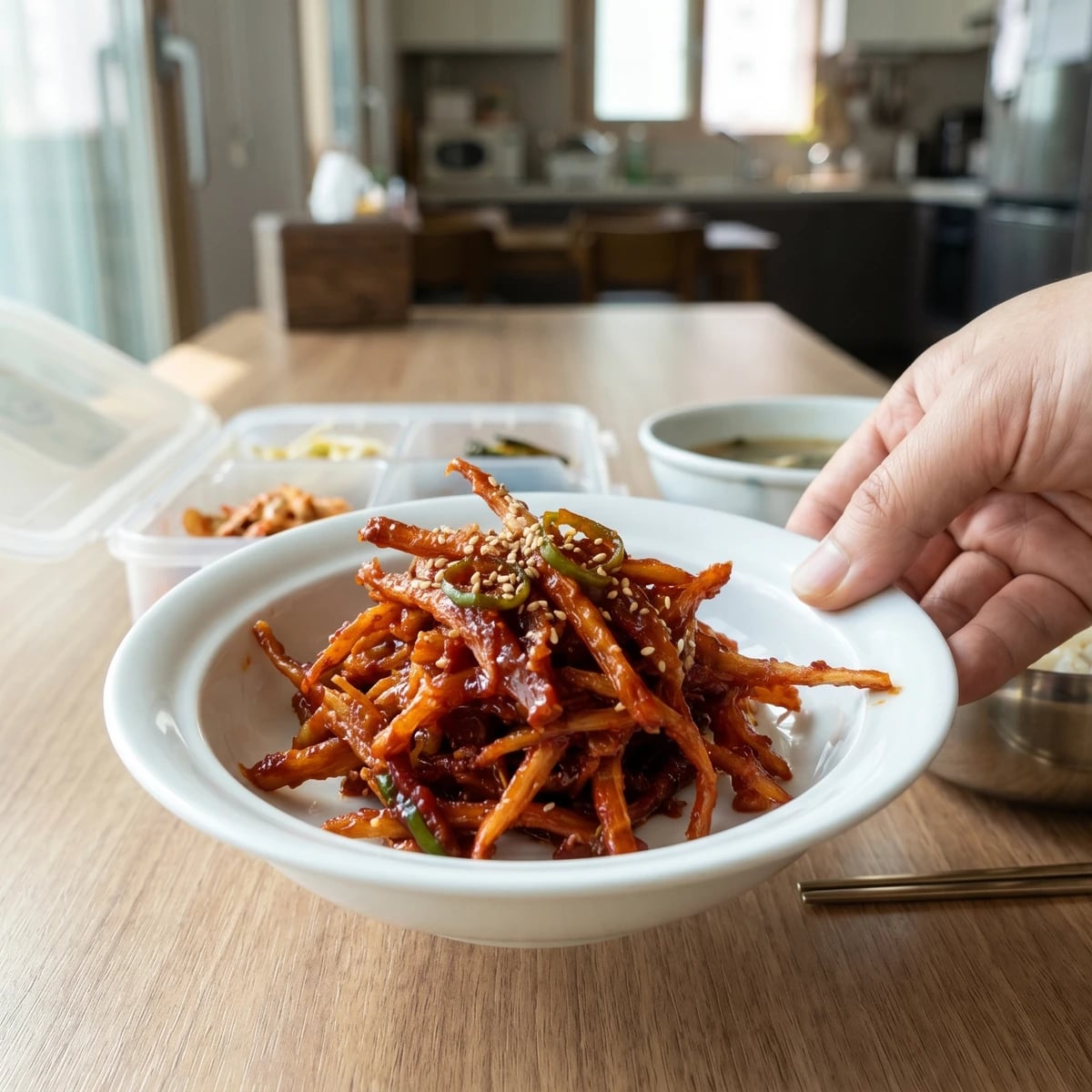
Bugeopo-gochujang-muchim (Spicy Dried Pollack)

Bugeopo-gochujang-muchim (Spicy Dried Pollack)

Created by

A no-cook keeping banchan from dried pollack, softened just enough to chew, then dressed in a restrained gochujang seasoning that deepens in the refrigerator.

Side Dishes
Korean
Meal Prep
Make Ahead
Comfort Food
20 min
Active Time
0 min cook50 min total
Yield6 to 8 side-dish servings

Bugeopo-muchim lives or dies by the soak. Too little water and the fish stays stiff. Too much and you wash away the dried pollack's clean, savory backbone, then blame the seasoning for tasting flat. My teacher made us time it with a clock, not a feeling: 5 minutes in cool water, then squeeze it as if you mean to keep the fish, not the water.

This is banchan for a working kitchen. You make it once, pack it tight, and the table has something red, chewy, and salty-sweet for rice all week. It belongs beside plain soup, rolled into gim (roasted seaweed), or tucked into a lunch box where a softer side dish would give up before noon.

Do not bury it under gochujang. Dried pollack has its own taste, mild but stubborn, and the seasoning should cling to it like a coat, not drown it like soup. 손맛 is real; I measure it anyway. That is how this small dish can leave one kitchen and still arrive properly in another.

Dried pollack, called bugeo, has long been a practical Korean pantry fish because drying made lean pollack light, storable, and useful through winter. Gangwon-do, especially the high, cold drying areas around Inje and Daegwallyeong, became known for hwangtae, pollack repeatedly frozen and thawed by mountain wind until the flesh turned pale and tender. Bugeopo-gochujang-muchim is an everyday keeping banchan, not a court dish: its importance is the home refrigerator, the lunch box, and the bowl of rice it helps finish.

The technique, the tradition, and the story behind every dish.

Discover Culinary Explorer

Ingredients

shredded dried pollack (bugeopo or hwangtaechae)

Quantity

80g

cool water

Quantity

3 cups

for soaking

gochujang (Korean red chili paste)

Quantity

2 tablespoons

fine gochugaru (Korean chili flakes)

Quantity

1 tablespoon

rice syrup or corn syrup

Quantity

1 1/2 tablespoons

soy sauce

Quantity

1 tablespoon

rice vinegar

Quantity

1 tablespoon

toasted sesame oil

Quantity

2 teaspoons

garlic

Quantity

2 teaspoons

minced

sugar

Quantity

1 teaspoon

scallion

Quantity

1 tablespoon

finely sliced

toasted sesame seeds

Quantity

1 tablespoon

toasted sesame oil

Quantity

1/2 teaspoon

for finishing

Equipment Needed

  • Large mixing bowl
  • Small seasoning bowl
  • Disposable food-safe glove
  • Airtight glass or stainless container

Instructions

  1. 1

    Sort the pollack

    Put the dried pollack in a wide bowl and run your fingers through it. Pull out any hard bones, dark skin patches, or pieces thicker than your thumb. Tear long strips into 2-inch lengths so the seasoning can reach every piece and the finished banchan is easy to pick up with chopsticks.

  2. 2

    Soften briefly

    Pour 3 cups cool water over the pollack and press it under with your hand. Soak 5 minutes only, tossing once halfway through. The pieces should bend easily but still feel springy. Longer soaking makes them watery and takes away the dried fish taste this dish needs.

  3. 3

    Squeeze it dry

    Drain the pollack, then squeeze it firmly by the handful until no water streams out. Spread it in the bowl and loosen the strands. This squeezing is not roughness; it is the difference between a seasoning that clings and a red puddle at the bottom of the container.

    If the pollack still feels wet after squeezing, press it for a minute in a clean kitchen towel. Do not rinse again.
  4. 4

    Mix the seasoning

    In a separate bowl, stir together the gochujang, gochugaru, rice syrup, soy sauce, vinegar, 2 teaspoons sesame oil, garlic, and sugar until smooth and glossy. Taste the paste before it touches the fish. It should be salty, lightly sweet, and sharp enough from the vinegar to wake up the dried pollack, not so sweet that it tastes like candy.

  5. 5

    Dress by hand

    Add the squeezed pollack to the seasoning and mix with a gloved hand, rubbing the paste into the strands rather than stirring from the edges. Work for a full minute. The red coating should be even, with no pale dry pockets and no loose sauce pooling in the bowl.

  6. 6

    Finish and rest

    Fold in the scallion, toasted sesame seeds, and final 1/2 teaspoon sesame oil. Let the muchim rest 30 minutes before serving so the seasoning settles into the fish. It is good today, better tomorrow, and still useful weeks later if kept cold and handled cleanly.

Chef Tips

  • Buy pale, clean-smelling shredded pollack, not pieces that smell harsh or look dark yellow at the edges. Good bugeopo smells like dried fish and cold air, not oil gone old.
  • If using very soft hwangtaechae, soak only 3 minutes. If using tough, thick bugeopo, soak 7 minutes, then squeeze hard. The clock changes with the fish, but the target does not: flexible strands that still taste of pollack.
  • The safe corner to cut is buying pre-shredded pollack. The corner not to cut is squeezing it dry. Skip that and the dish cannot keep properly because the seasoning loosens and the container turns wet.
  • For a less sweet version, reduce the syrup to 1 tablespoon. Do not remove it entirely, because a little gloss helps the gochujang coat the dry fish evenly.

Advance Preparation

  • This banchan is made for advance preparation. Pack it into a clean airtight container and refrigerate at least 30 minutes before serving, or overnight for a deeper taste.
  • Stored cold and handled only with clean chopsticks or a clean spoon, it keeps 3 to 4 weeks. If it smells sour in a spoiled way, grows mold, or releases a lot of cloudy liquid, throw it away without bargaining.
  • Stir once after the first day, because the seasoning settles. After that, press it flat in the container so less air reaches the surface.

Frequently Asked Questions

Nutrition Information

1 serving (about 50g)

Calories
110 calories
Total Fat
3 g
Saturated Fat
1 g
Trans Fat
0 g
Unsaturated Fat
2 g
Cholesterol
40 mg
Sodium
400 mg
Total Carbohydrates
9 g
Dietary Fiber
1 g
Sugars
6 g
Protein
12 g

Note: Chef personas and recipes are created with AI assistance. Cook with care: follow safe food-handling practices, check doneness with a thermometer when needed, and adapt for allergies and your kitchen.

Where cooking meets culture.

Culinary guides, cultural storytelling, and the editorial depth that makes cooking meaningful.

Discover Culinary Explorer

More from Mitbanchan: Jorim, Bokkeum & Egg

Browse the full collection