
Chef Jeong-sun
Aehobak-bokkeum (Korean Stir-Fried Zucchini)
Tender Korean zucchini half-moons cooked quickly over real heat, seasoned with salted shrimp so the squash tastes deeper than oil and still clean enough for a weeknight table.
A cooking platform built around craft, culture, and the stories behind what we eat.
Created by
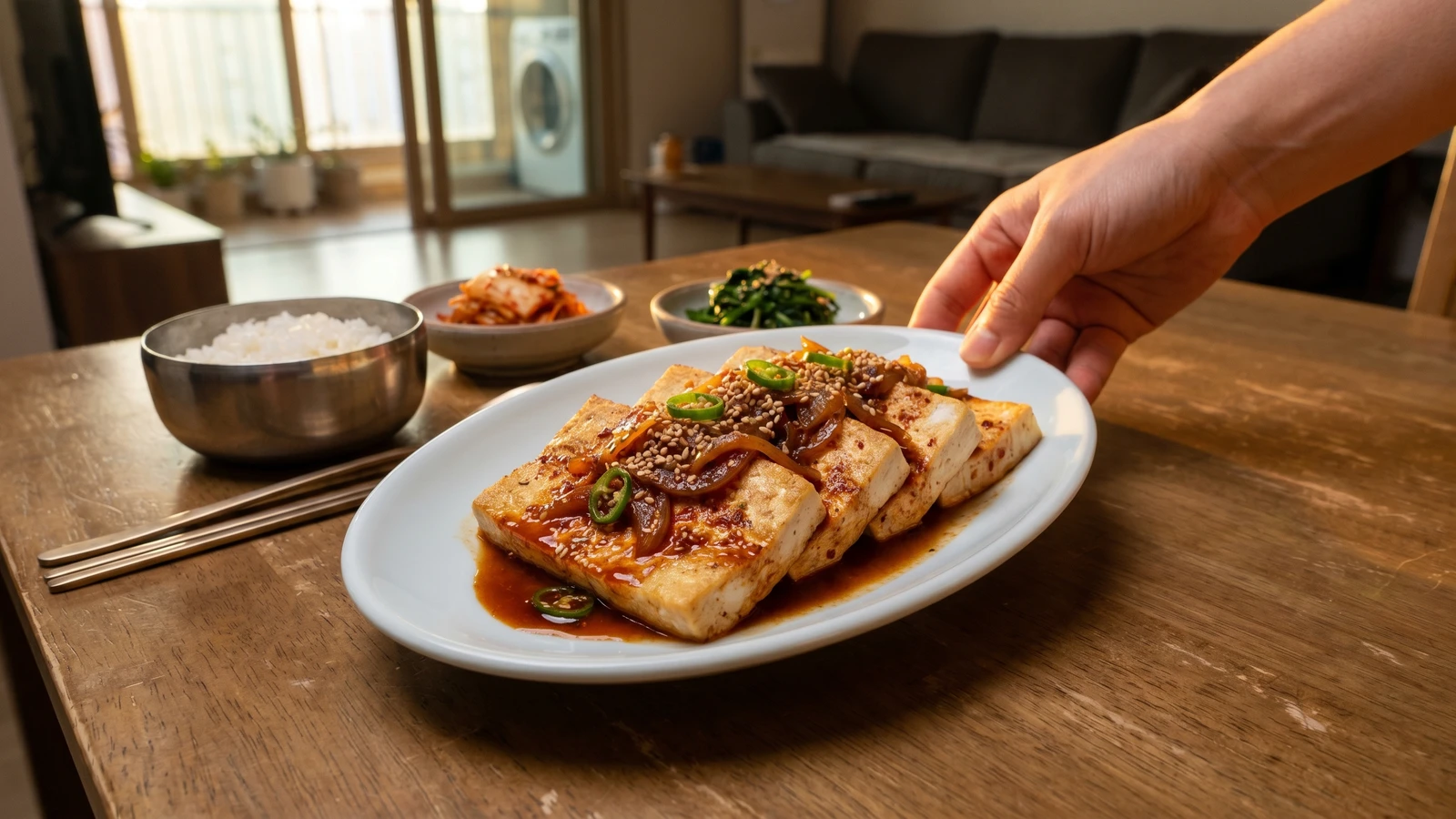
Firm tofu, browned first so it will not crumble, then braised with soy, garlic, scallion, and gochugaru until the sauce clings like a proper weeknight banchan.
Dubu-jorim lives or dies before the sauce touches it. Tofu is mostly water, so if you slice it and rush it into the pan, it sticks, tears, and breaks into curds. Press it for ten minutes, salt it lightly, pat it dry, then brown both faces. That browned skin is what lets a cheap block of tofu behave like dinner.
My mother made this when the rice was already done and the table needed one more dish with strength in it. Not meat, not a feast, just soy sauce, garlic, scallion, and gochugaru reduced until every slice shone red-brown at the edges. It is banchan, a side dish, but it can carry a lunchbox and it keeps better than many dishes that cost three times as much.
Notebook 58 says 4 tablespoons soy sauce for a 450 g block of firm tofu, and no more unless your tofu is larger. Too much sauce makes the tofu salty before it becomes savory. Spoon the braising liquid over the slices, reduce it until it clings, and stop while the tofu still tastes like tofu. 손맛 is real. I still measure it, so it can be handed on.
Tofu, dubu, entered Korean cooking through the broader East Asian soybean tradition by the Goryeo period and became especially important in Buddhist temple kitchens and ordinary homes where meat was not daily food. Dubu-jorim belongs to the everyday jorim family, foods simmered down in a seasoned liquid until the seasoning concentrates; its red color is a later household form, since chili peppers reached Korea from the Americas after the late sixteenth century and became common in kimchi and banchan over the following centuries.
Quantity
1 block (400 to 450g)
drained
Quantity
1/2 teaspoon
Quantity
2 tablespoons
such as grapeseed or canola
Quantity
1/2 small (about 80g)
thinly sliced
Quantity
4 tablespoons
Quantity
1/2 cup
Quantity
1 tablespoon
Quantity
3 cloves
minced
Quantity
1 teaspoon sugar, or 2 teaspoons maesil-cheong
Quantity
2 teaspoons
divided
Quantity
2
thinly sliced, whites and greens separated
Quantity
1
thinly sliced
Quantity
1/8 teaspoon
Quantity
1 teaspoon
| Ingredient | Quantity |
|---|---|
| firm tofudrained | 1 block (400 to 450g) |
| kosher salt | 1/2 teaspoon |
| neutral oilsuch as grapeseed or canola | 2 tablespoons |
| onionthinly sliced | 1/2 small (about 80g) |
| Korean soy sauce (jin-ganjang) | 4 tablespoons |
| water or anchovy-kelp broth | 1/2 cup |
| gochugaru (Korean chili flakes) | 1 tablespoon |
| garlicminced | 3 cloves |
| sugar or maesil-cheong (Korean green plum syrup) | 1 teaspoon sugar, or 2 teaspoons maesil-cheong |
| toasted sesame oildivided | 2 teaspoons |
| scallionsthinly sliced, whites and greens separated | 2 |
| green chili (optional)thinly sliced | 1 |
| freshly ground black pepper | 1/8 teaspoon |
| toasted sesame seeds | 1 teaspoon |
Wrap the tofu in a clean kitchen towel and set a small plate or light pan on top for 10 minutes. You are not trying to crush it, only to pull out the surface water that makes tofu spit in the pan and break when turned. Cut the block into 10 even slabs, each about 1/2 inch thick, then season both sides with the salt and pat them dry again.
In a small bowl, stir together the soy sauce, water or broth, gochugaru, garlic, sugar or maesil-cheong, 1 teaspoon of the sesame oil, scallion whites, black pepper, and the optional green chili. The sauce will taste too strong on its own. That is correct. It has to season the tofu and reduce in the pan, not behave like a soup.
Heat a 10 to 12 inch skillet over medium heat and add the neutral oil. Lay the tofu in a single layer, leaving a little space between pieces, and cook 3 to 4 minutes per side until each face is golden and lightly crisp at the edges. Do not keep poking at it. Tofu releases more cleanly once it has browned.
Scatter the sliced onion between the tofu pieces, then pour the sauce around and over the tofu. Bring it to a lively simmer over medium heat. Use a spoon to baste the tops instead of stirring; stirring treats tofu like meat, and tofu will punish you for that.
Simmer uncovered for 6 to 8 minutes, spooning the sauce over the tofu every minute or so. Shake the pan gently if anything catches. Stop when the onion is soft and only 2 to 3 tablespoons of glossy sauce remain in the pan, clinging to the tofu instead of pooling like broth. This reduction is the difference between dubu-jorim and tofu sitting in salty liquid.
Turn off the heat. Drizzle over the remaining 1 teaspoon sesame oil, scatter the scallion greens and toasted sesame seeds on top, and let the tofu sit 5 minutes before serving. Eat it warm, at room temperature, or cold from the refrigerator with rice. Chill leftovers within 2 hours and keep them covered for up to 4 days.
1 serving (about 165g)
Culinary guides, cultural storytelling, and the editorial depth that makes cooking meaningful.
Discover Culinary ExplorerChef Jeong-sun
Tender Korean zucchini half-moons cooked quickly over real heat, seasoned with salted shrimp so the squash tastes deeper than oil and still clean enough for a weeknight table.

Chef Jeong-sun
Tender Korean summer zucchini softened gently in the pan with saeujeot for salt and depth, finished with sesame so the vegetable stays sweet, green, and plainly itself.

Chef Jeong-sun
A bittersweet spring green from the southern shore, blanched just until pliant, then seasoned lightly so its clean coastal bitterness stays alive on the rice table.

Chef Jeong-sun
Torn king oyster or shiitake mushrooms, browned until their own water disappears, then finished with soy, garlic, sesame oil, and onion for a quiet banchan that earns its place.