
Chef Jeong-sun
Aehobak-guk (애호박국, Korean Zucchini Soup)
A clean summer soup of Korean zucchini and salted shrimp, built on quick anchovy-kelp broth and finished before the half-moons lose their shape on a weeknight table.
A cooking platform built around craft, culture, and the stories behind what we eat.
Created by
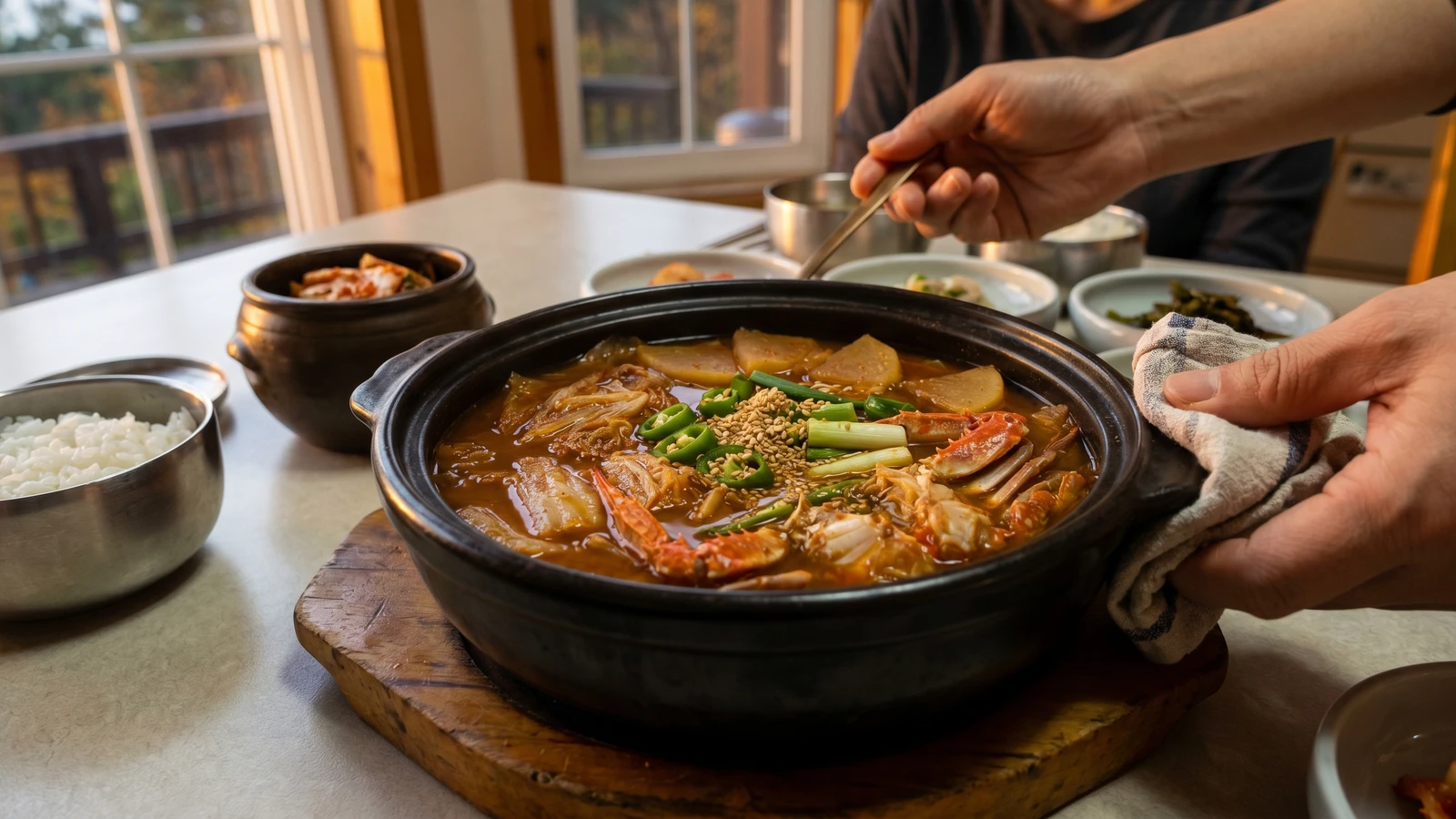
A Chungcheong coast stew of old kimchi, radish greens, crab brine, and blue crab, simmered until the cabbage turns soft and the broth tastes unmistakably of the sea.
Gegukji belongs to the western coast, where a house with crab on the table did not waste the brine left behind. That brine was food too. It went into tired kimchi, outer cabbage leaves, radish greens from kimjang, and a pot was made from what another kitchen might throw away.
Do not confuse this with an ordinary kimchi-jjigae that happens to have crab in it. The crab brine is the spine. It seasons the cabbage from inside, bringing salinity and shellfish depth before the stew ever boils. Use too much and the pot turns harsh. Use too little and it tastes like kimchi stew with a visitor. Notebook 41 says 1/2 cup brine to 5 cups liquid for four people, then taste before salt touches the pot.
Tonight this dish asks for restraint and patience. Rinse nothing unless your kimchi is painfully sour, cut the greens large enough to survive the simmer, and add the crab only after the cabbage has softened. Blue crab gives quickly. Boil it too long and you lose the sweetness you paid for. 손맛 is real, the hand-taste your grandmother trusted, and I still measure it, so it can be handed on.
Gegukji is a regional stew of Chungcheongnam-do's west coast, especially around Taean and Seosan, where blue crab, salt, and kimjang leftovers met in practical home cooking. The name is commonly understood through local speech: ge means crab, and gukji refers to kimchi or a kimchi-like preparation of salted greens. It was not a palace dish, but a coastal household dish shaped by thrift, fermentation, and the crab season.
Quantity
2 small, about 700g total
cleaned and cut in half
Quantity
450g
cut into 2-inch pieces
Quantity
150g
blanched and cut into 3-inch lengths
Quantity
1/2 cup
Quantity
5 cups
Quantity
1 piece, about 4 inches square
Quantity
6 large
heads and guts removed
Quantity
1 cup
cut into 1/2-inch thick half-moons
Quantity
1/2 medium
sliced thick
Quantity
2 tablespoons
Quantity
1 tablespoon
Quantity
1 tablespoon
Quantity
1 teaspoon
minced
Quantity
1 teaspoon
grated
Quantity
1 teaspoon, only if needed
Quantity
1 small
sliced on the diagonal
Quantity
2
cut into 2-inch lengths
Quantity
1/2 teaspoon
| Ingredient | Quantity |
|---|---|
| fresh blue crabscleaned and cut in half | 2 small, about 700g total |
| well-fermented napa cabbage kimchicut into 2-inch pieces | 450g |
| radish greens or outer napa cabbage leavesblanched and cut into 3-inch lengths | 150g |
| crab brine from ganjang-gejang or salted crab brine | 1/2 cup |
| water or light anchovy-kelp broth | 5 cups |
| dried kelp (dasima) (optional) | 1 piece, about 4 inches square |
| dried anchovies (myeolchi) (optional)heads and guts removed | 6 large |
| Korean radishcut into 1/2-inch thick half-moons | 1 cup |
| onionsliced thick | 1/2 medium |
| kimchi juice | 2 tablespoons |
| gochugaru (Korean chili flakes) | 1 tablespoon |
| doenjang (fermented soybean paste) | 1 tablespoon |
| garlicminced | 1 teaspoon |
| gingergrated | 1 teaspoon |
| fish sauce or soup soy sauce (optional) | 1 teaspoon, only if needed |
| green chilisliced on the diagonal | 1 small |
| scallionscut into 2-inch lengths | 2 |
| toasted sesame seeds (optional) | 1/2 teaspoon |
Scrub the blue crabs under cold running water. Lift off the top shell, remove the gills and mouth parts, and cut each body in half. Keep the shells if they are clean, because the shell gives the broth its clean crab flavor. If the crab smells strongly fishy instead of sweet and briny, cook something else today.
If you are starting with water, put 5 cups water, the kelp, and the cleaned anchovies in a pot. Bring it just to a simmer, then pull the kelp out before it turns the broth slick and bitter. Simmer the anchovies 8 minutes more and remove them. You want a light base, because the crab brine will do the heavy seasoning.
Put the kimchi, blanched radish greens or cabbage leaves, crab brine, kimchi juice, gochugaru, doenjang, garlic, and ginger in a bowl. Mix by hand until the leaves are coated, then let them stand 10 minutes. This short rest matters: the brine seasons the thick greens before the pot dilutes it.
Set the seasoned kimchi mixture, radish, and onion in a wide pot. Pour in the broth. Bring it to a lively simmer, then lower the heat and cook uncovered for 22 to 25 minutes, until the cabbage turns soft and the radish is almost tender. Do not add the crab yet. Cabbage needs time; crab does not.
Nestle the crab pieces into the pot, shell side down where you can. Spoon broth over them and simmer 10 to 12 minutes, just until the shells turn bright and the meat is cooked through. Taste the broth after 8 minutes. Add the fish sauce or soup soy sauce only if it tastes flat, 1 teaspoon at a time. Crab brine is already salty, and a careless hand ruins this stew fast.
Scatter the green chili and scallions over the stew and simmer 1 minute more. Turn off the heat and let the pot sit 3 minutes before serving, so the broth settles and the crab is not boiling hard at the table. Finish with sesame seeds only if you like them; they are a small accent, not a blanket.
Serve straight from the pot with hot rice and a clean spoon for the broth. The cabbage should be soft enough to fold over the rice, the crab sweet, and the broth salty, sour, and oceanic without tasting muddy.
1 serving (about 520g)
Culinary guides, cultural storytelling, and the editorial depth that makes cooking meaningful.
Discover Culinary ExplorerChef Jeong-sun
A clean summer soup of Korean zucchini and salted shrimp, built on quick anchovy-kelp broth and finished before the half-moons lose their shape on a weeknight table.
Chef Jeong-sun
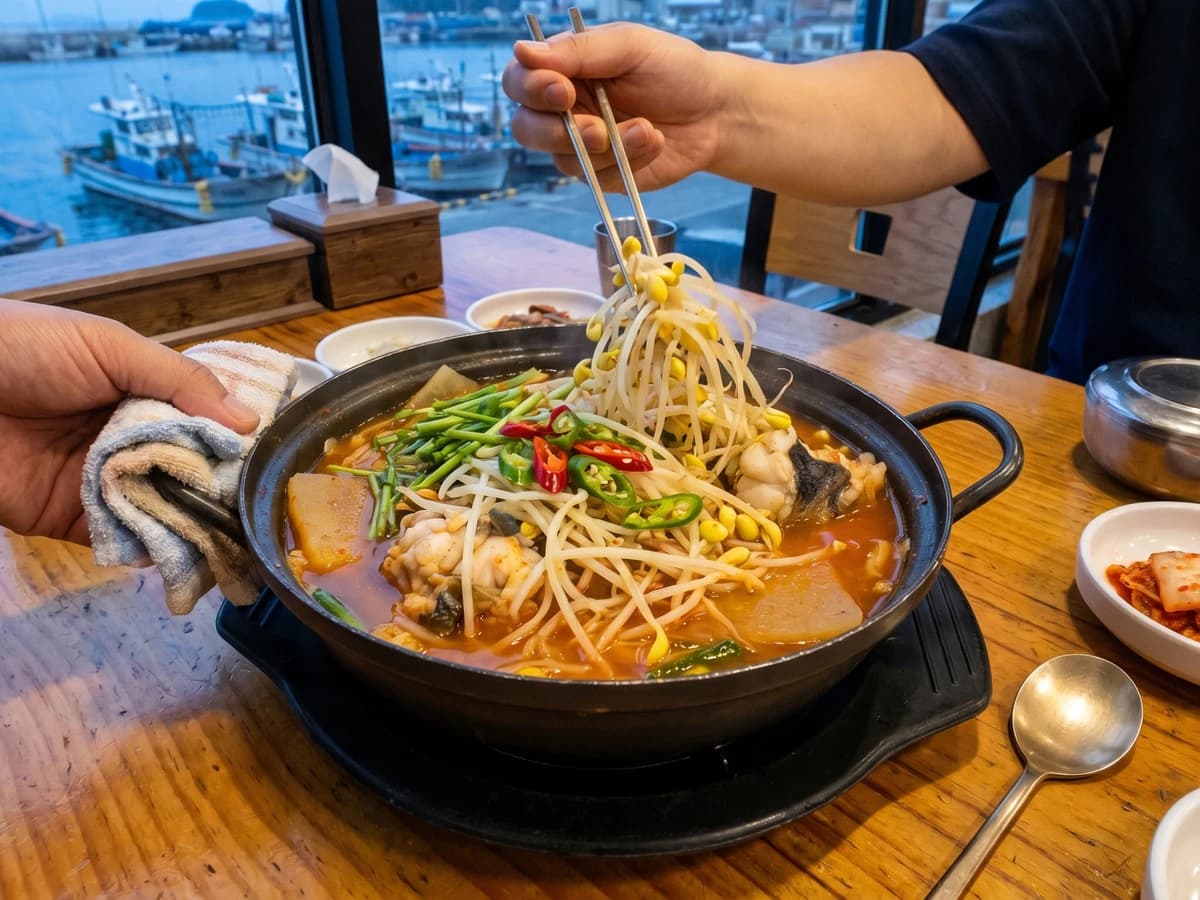
A Masan coast monkfish stew with firm white meat, gelatin at the bones, soybean sprouts for crunch, and a red broth seasoned to carry the fish, not bury it.

Chef Jeong-sun
A weeknight fish roe stew with radish and crown daisy in a clean spicy broth, where the whole success depends on adding the roe late enough that it sets tender, not chalky.

Chef Jeong-sun
Late-summer mallow leaves rubbed with salt until the bitter green water runs off, then simmered in a clean doenjang broth with dried shrimp, the quiet soup a Korean weeknight deserves.