Chef Elsa
Almjause (Alpine Hut Snack Board)
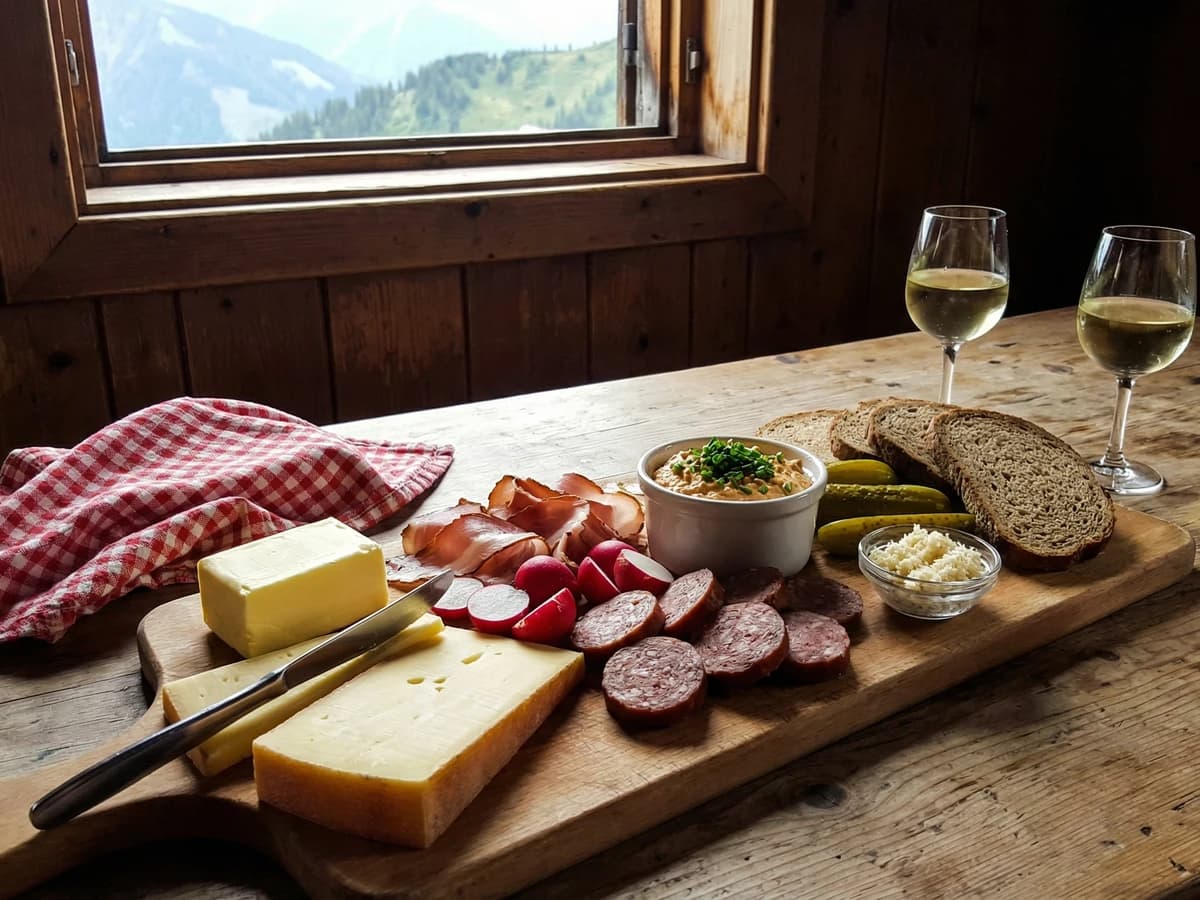
A wooden board loaded with mountain cheese, juniper-smoked Speck, air-dried Hauswürstel, handmade Liptauer, fresh Kren, and thick-cut Bauernbrot, the way Austrian Almhütten have fed hikers for generations.
A cooking platform built around craft, culture, and the stories behind what we eat.

Created by
Whole Camembert in a shattering golden crust, fried fast in Butterschmalz and served with a cold spoonful of Preiselbeeren and thick slices of dark bread. The Austrian Gasthaus appetizer that nobody can resist.
Every Austrian ski hut, every Heuriger wine tavern, every Gasthaus with a handwritten Speisekarte has this on the menu somewhere. Gebackener Camembert. A whole wheel of cheese, coated in flour, egg, and fine breadcrumbs, then fried in Butterschmalz until the outside is shatteringly crisp and the inside is just starting to go soft and warm. You cut into it at the table and the cheese sighs.
I first had this as a child on one of our trips to Austria with Gretel and my grandmother Eva. We were somewhere in the Salzkammergut, sitting at a wooden table outside a Gasthaus, and my plate arrived with this golden disc on it, a little heap of dark Preiselbeeren on the side, and two thick slices of Bauernbrot. I didn't know what it was. I cut into it and the cheese inside was warm and yielding, not quite melted, just on the edge of giving way. The tartness of the Preiselbeeren cut right through the richness. I was maybe eight years old and I remember thinking: this is the best thing I've ever eaten.
The technique is the same three-step breading you use for Wiener Schnitzel: flour, egg, breadcrumbs. The difference is speed. You're frying cheese, not meat, so you need your Butterschmalz properly hot and your timing tight. Too long in the pan and the cheese melts through the crust and you've lost it. Too short and the coating is pale and sad. Two minutes a side. That's all you get. Have everything ready before you start, because once the cheese hits the fat, you're committed.
The Austrian tradition of breading and frying foods in the Wiener Panierung (Viennese breading) likely arrived through northern Italian influence during the Habsburg era, with the flour-egg-breadcrumb technique becoming the country's most recognizable culinary method. Gebackener Camembert emerged as a Gasthaus and Beisl appetizer in the mid-20th century, borrowing the Schnitzel's breading technique and applying it to cheese. It became a fixture of Heuriger menus and Alpine hut kitchens, where hearty, quick-to-prepare appetizers suited the drinking and skiing culture equally well.
Quantity
2 (125g each)
well chilled
Quantity
50g
Quantity
2 large
beaten
Quantity
100g
Quantity
approximately 500ml
for frying
Quantity
pinch
Quantity
4 tablespoons
Quantity
4-6 thick slices
Quantity
small handful
for garnish
| Ingredient | Quantity |
|---|---|
| whole Camembert wheelswell chilled | 2 (125g each) |
| plain flour | 50g |
| eggsbeaten | 2 large |
| fine dried breadcrumbs (Semmelbrösel) | 100g |
| Butterschmalz (clarified butter)for frying | approximately 500ml |
| fine salt | pinch |
| Preiselbeeren (lingonberry preserves) | 4 tablespoons |
| dark rye bread (Bauernbrot) | 4-6 thick slices |
| fresh curly parsley (optional)for garnish | small handful |
Make sure your Camembert wheels are cold. Straight from the fridge, ideally chilled for at least two hours or even put in the freezer for fifteen minutes before you start. This is the single most important thing in the whole recipe. Cold cheese holds its shape in hot fat. Room-temperature cheese melts through the breading and you end up with an empty golden shell and a pan full of molten Camembert. Don't skip this.
Line up three shallow bowls. Flour in the first, beaten eggs with a pinch of salt in the second, fine Semmelbrösel in the third. This is the Wiener Panierung, the same three-step coating that makes Schnitzel what it is. The flour gives the egg something to grip. The egg glues the breadcrumbs on. The breadcrumbs become the crust. Every step matters.
Take one cold Camembert wheel and dust it all over with flour. Turn it in your hands, making sure every surface is lightly coated, including the edges. Shake off the excess. Dip it into the beaten egg, turning to coat completely. Let the excess drip off for a second, then lay it in the breadcrumbs. Press the crumbs on gently but firmly with your hands, covering the top, bottom, and all around the rim. No bare spots. If you can see white cheese through the coating, the Butterschmalz will find that gap and the cheese will escape. Repeat the egg and breadcrumb step a second time for a double coating.
Pour Butterschmalz into a deep, heavy pan to a depth of at least three centimeters. You need enough that the Camembert floats, not sits on the bottom. Heat over medium-high until the fat reaches about 170°C. If you don't have a thermometer, drop a small cube of bread in. It should sizzle immediately and turn golden in about thirty seconds. If it burns, your fat is too hot. If it just sits there quietly, you're not ready yet.
Carefully lower one breaded Camembert into the hot Butterschmalz using a slotted spoon. It should sizzle the moment it touches the fat. Fry for about two minutes on the first side until deep golden, then flip it gently with the spoon and fry the second side for another minute and a half to two minutes. The whole process takes under four minutes. Watch the color, not the clock. You want a rich, even gold all over, like the crust on a good Schnitzel. Lift it out and let it drain on a wire rack for thirty seconds. Fry the second wheel immediately.
Place each fried Camembert on a wooden Brettl or a warm plate. Spoon a generous mound of Preiselbeeren alongside. The tartness of the lingonberries is not decoration. It cuts through the richness of the cheese and the fried crust the same way it works next to Schnitzel or roast game. Add thick slices of dark Bauernbrot and a few sprigs of parsley if you like. Bring it to the table whole and let people cut into it themselves. The first cut, when the warm cheese starts to ooze out through the crisp golden shell, is half the pleasure. Mahlzeit!
1 serving (about 370g)
Culinary guides, cultural storytelling, and the editorial depth that makes cooking meaningful.
Discover Culinary ExplorerChef Elsa
A wooden board loaded with mountain cheese, juniper-smoked Speck, air-dried Hauswürstel, handmade Liptauer, fresh Kren, and thick-cut Bauernbrot, the way Austrian Almhütten have fed hikers for generations.

Chef Elsa
Dark, spiced, and wickedly good: Blunzn mashed with onion, mustard, and marjoram into the kind of spread that disappears first from every Heuriger Brettl, scooped up on torn hunks of dark bread.

Chef Elsa
A silky potato and sour cream spread with raw onion and paprika, piled onto dark rye bread the way they serve it at every Heuriger in Lower Austria. No cheese, despite the name. Just good potatoes and honest cooking.
Chef Elsa
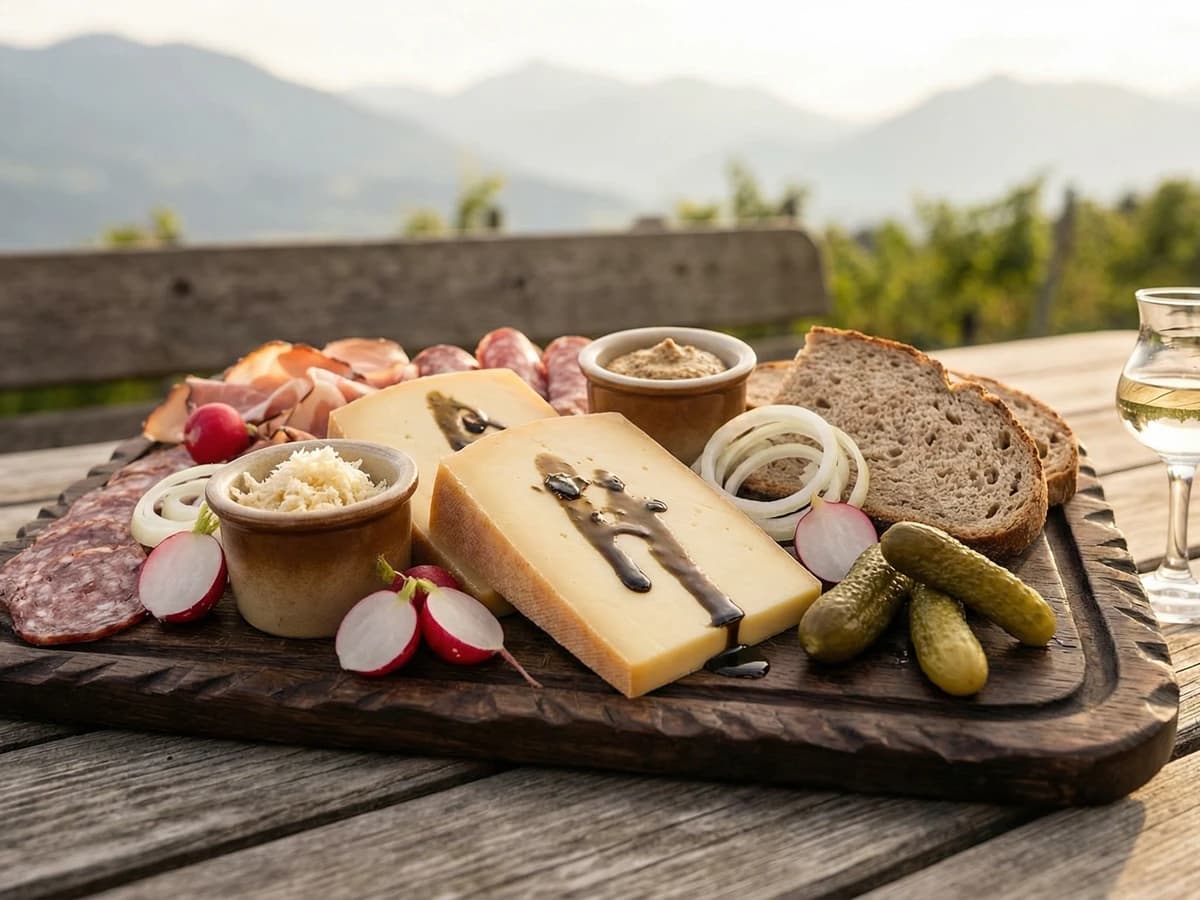
A proper Carinthian Brettljause built around PDO Gailtaler Almkäse, nutty raw-milk alpine cheese served with Speck, dark Bauernbrot, pickles, fresh horseradish, and everything you need for an afternoon on an Almhütte terrace.