
Chef Makoa
Baked ʻUlu Coconut Pudding (Hawaiian Ripe Breadfruit Custard)
Very ripe Hawaiian ʻulu, the canoe-crop breadfruit, mashed soft with coconut milk and sugar, then baked until the middle sets like a quiet custard.
A cooking platform built around craft, culture, and the stories behind what we eat.
Created by
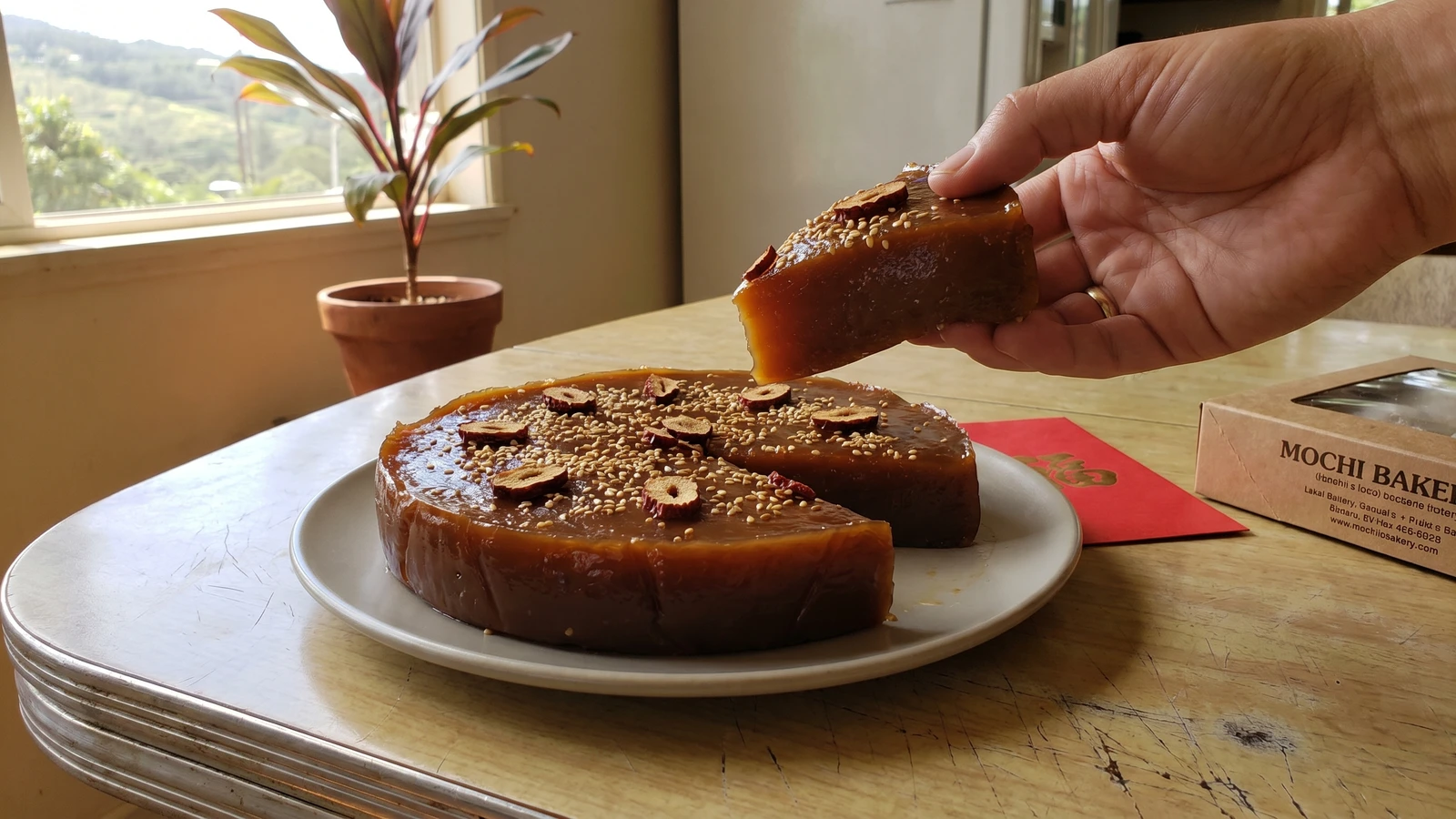
A Hawaiʻi Local Chinese New Year cake, dark with brown sugar and steamed until sticky, glossy, and sliceable. Gau holds the family close, one sweet square at a time.
The old people say the sticky cake keeps the family stuck together, and I like that. Not every food on a Hawaiʻi table comes from the loʻi, the taro patch, or the imu, the earth oven. Some came in lunch tins and bakery boxes, in plantation camps and town shops, carried by Chinese, Japanese, Okinawan, Portuguese, Filipino, Korean, Puerto Rican, and other hands until Hawaiʻi made a Local table big enough to hold them all.
Gau is Hawaiʻi's Chinese New Year cake, our island way with nian gao, the steamed glutinous rice cake eaten for Lunar New Year. This is Hawaiʻi, and the hand is Chinese. Dark brown sugar, mochiko, water, sometimes coconut milk, steamed until the whole thing shines like polished wood and pulls under the knife. It isn't Kanaka Maoli deep food, and no need pretend. It's Local food, and Local food has its own truth.
Across the Triangle, the deep starches have their own names and their own hands: poi and paʻiʻai in Hawaiʻi, poʻe in Tahiti, popoi in the Marquesas, taro and breadfruit pounded and shared island by island. Gau is not one of those canoe-crop elder foods, but it sits beside them now in the real Hawaiʻi kitchen, next to mochi, malasadas, and butter mochi in the same way plate lunch sits beside laulau. Keeper, not gatekeeper.
So steam it steady and let it cool fully. The stickiness is the meaning and the texture both. Slice it small, share it wide, fry the leftovers if you get lucky enough to have leftovers. Eat what you have, and keep the family close.
Gau is Hawaiʻi's Local form of Chinese nian gao, a Lunar New Year rice cake brought by Chinese immigrants who began arriving in the islands in large numbers during the nineteenth-century sugar plantation era. In Chinese New Year food grammar, the name nian gao carries the sound of rising higher year by year, while the sticky texture stands for family bonds holding close. In Hawaiʻi it became part of the Local sweets register, not Kanaka Maoli deep food, sitting honestly beside mochi-shop sweets, malasadas, and bakery cakes on an island table shaped by many immigrant hands.
Quantity
1 pound
Quantity
2 cups
packed
Quantity
1 cup
chopped, or 1 additional cup packed dark brown sugar
Quantity
2 1/2 cups
Quantity
1 can (13.5 ounces)
Quantity
2 tablespoons
plus more for the pan
Quantity
1/2 teaspoon
Quantity
2 tablespoons
for the top
Quantity
4 to 6
pitted and thinly sliced
| Ingredient | Quantity |
|---|---|
| mochiko, glutinous sweet rice flour | 1 pound |
| dark brown sugarpacked | 2 cups |
| Chinese brown sugar slabs or piloncillochopped, or 1 additional cup packed dark brown sugar | 1 cup |
| water | 2 1/2 cups |
| full-fat coconut milk | 1 can (13.5 ounces) |
| neutral oilplus more for the pan | 2 tablespoons |
| fine sea salt | 1/2 teaspoon |
| toasted sesame seedsfor the top | 2 tablespoons |
| dried red dates (optional)pitted and thinly sliced | 4 to 6 |
Oil a 9-inch round cake pan or two 8-inch foil pans. Line the bottom with parchment and oil that too. Gau is sticky because it's supposed to be sticky, yeah, but you still want it to come home from the pan in one piece.
In a saucepan, combine the brown sugar, chopped Chinese brown sugar, water, coconut milk, oil, and salt. Warm over medium heat, stirring until the sugar dissolves and the liquid turns dark and glossy. Do not boil hard. Let it cool until warm, not hot, so it doesn't seize the rice flour.
Put the mochiko in a large bowl. Pour in the warm sugar liquid a little at a time, whisking from the center outward until the batter is smooth, thick, and pourable, like heavy cream with weight to it. If you see lumps, pass it through a fine sieve. No shame. Smooth batter makes clean gau.
Pour the batter into the prepared pan, leaving at least a half inch of headroom. Tap the pan gently to settle bubbles. Scatter sesame seeds over the surface and lay on the red date slices if you're using them.
Set the pan in a steamer over steadily simmering water, cover the lid with a clean towel to catch drips, then cover tight. Steam 1 hour 15 minutes to 1 hour 30 minutes, until the surface is set, dark, glossy, and a tester comes out with sticky crumbs but no wet batter. Keep the water gentle and refill with hot water if it runs low.
Lift the pan out and let the gau cool all the way, at least 4 hours, overnight if you can. Hot gau cuts rough and drags on the knife. Cooled gau firms into that good sticky chew, the kind that pulls a little before it lets go.
Run an oiled knife around the edge, unmold if you like, and cut into small wedges or squares. Serve plain, or pan-fry slices in a little oil until the edges go crisp and the middle turns soft again. That's the day-after joy.
1 serving (about 130g)
Culinary guides, cultural storytelling, and the editorial depth that makes cooking meaningful.
Discover Culinary ExplorerChef Makoa
Very ripe Hawaiian ʻulu, the canoe-crop breadfruit, mashed soft with coconut milk and sugar, then baked until the middle sets like a quiet custard.

Chef Makoa
A chewy, golden Hawaiʻi Local square from mochiko, butter, and coconut milk, baked in one pan until the edges pull crisp and the middle stays tender.

Chef Makoa
Soft squares of Hawaiʻi Local chichi dango, pale pink and white from the mochi-shop counter, baked with mochiko, milk, and coconut milk, then dusted until every sticky edge turns friendly.
Chef Makoa
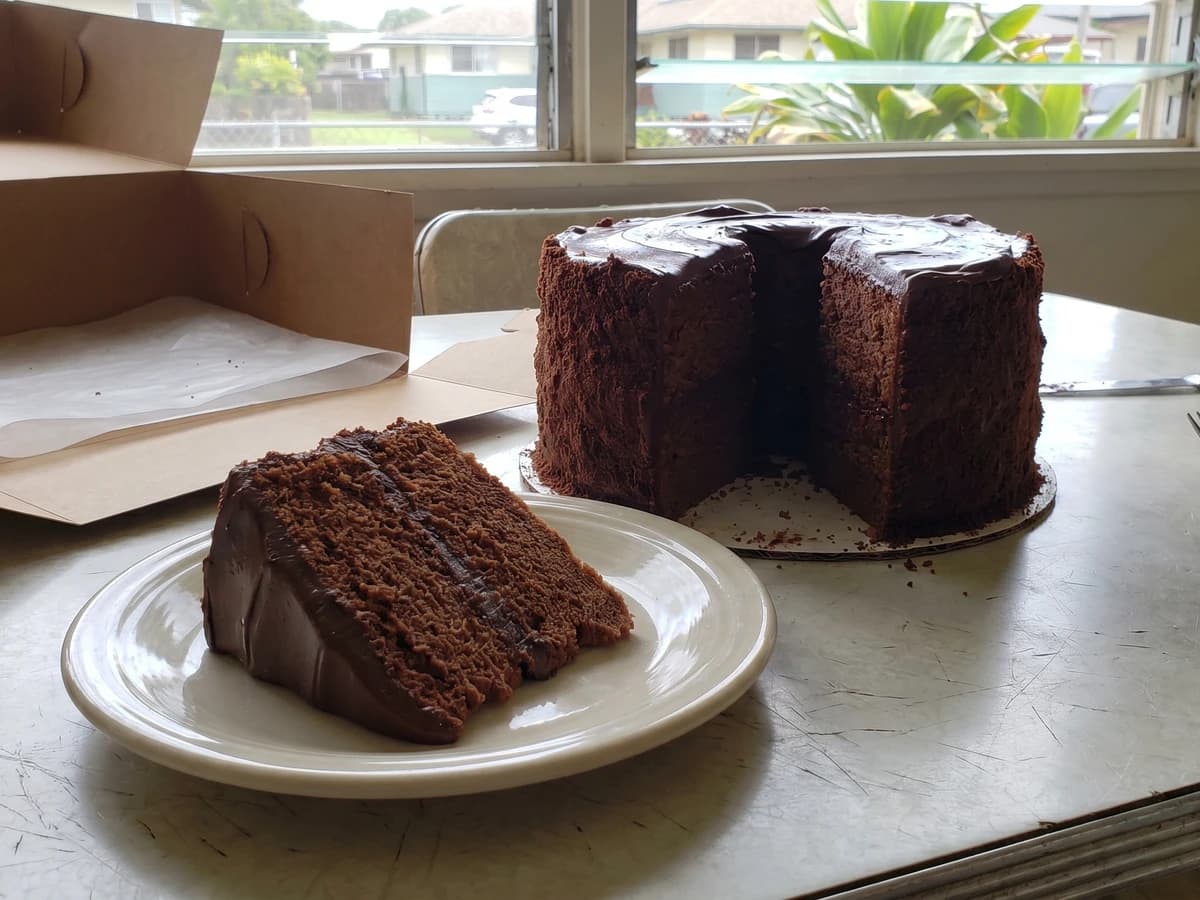
A Hawaiʻi Local chocolate-on-chocolate birthday cake: soft chiffon, cooked pudding icing, and cake crumbs pressed around the sides like the bakery case knew you were coming.