
Chef Jeong-sun
Aehobak-guk (애호박국, Korean Zucchini Soup)
A clean summer soup of Korean zucchini and salted shrimp, built on quick anchovy-kelp broth and finished before the half-moons lose their shape on a weeknight table.
A cooking platform built around craft, culture, and the stories behind what we eat.

Created by
Doenjang cooked tight with anchovy broth, summer vegetables, tofu, and chili until it turns thick and glossy, ready to stain rice or sit inside a lettuce wrap.
Gangdoenjang is not doenjang-jjigae that forgot to be soup. That is the misunderstanding. It is cooked thick on purpose, more jang than broth, so it can cling to hot rice and sit inside a lettuce leaf without running down your wrist.
In summer, when the market has small zucchini, perilla leaves, lettuce, cucumbers, and green chilies, this is a lunch that makes a little rice feel like enough. My mother put the pot in the center with a basket of leaves and everyone built their own wraps. Nobody called it special. That is how you know a dish belongs to the home table.
The work tonight is small knife work and patience at the end. Cut the vegetables finely so each spoonful holds a little onion, zucchini, mushroom, and tofu; then reduce the pot until a spoon leaves a path through it. Notebook 31 says 3 tablespoons doenjang to 1 cup broth and 2 packed cups of finely cut vegetables. 손맛 (hand-taste) is real. I still measure it, so it can be handed on.
Gangdoenjang belongs to the plain ssambap table, rice wrapped in lettuce, perilla, or cabbage leaves with a salty fermented paste to carry it. The name is practical: gang-doenjang means doenjang boiled down strong and tight, with little liquid, closer to a table relish than a soup. It has no palace record to borrow; its history is the rural home table, the summer leaf basket, and the onggi crock of doenjang that seasoned the year's meals.
Quantity
1 1/2 cups
Quantity
1 piece, about 3 inches square
Quantity
6 large
heads and guts removed
Quantity
1 teaspoon
Quantity
1/2 medium (about 100g)
finely diced
Quantity
1 small (about 150g)
diced 1/4 inch
Quantity
4 shiitake or 100g oyster mushrooms
finely diced
Quantity
2 cloves
minced
Quantity
3 tablespoons
Quantity
1 teaspoon
Quantity
1/2 teaspoon
Quantity
150g
drained and crumbled small
Quantity
1
finely chopped
Quantity
1
thinly sliced
Quantity
1 teaspoon
Quantity
1 teaspoon
Quantity
4 bowls
Quantity
16 to 20 leaves
Quantity
to serve
| Ingredient | Quantity |
|---|---|
| water | 1 1/2 cups |
| dried kelp (dasima) | 1 piece, about 3 inches square |
| dried anchovies (myeolchi)heads and guts removed | 6 large |
| perilla oil or neutral oil | 1 teaspoon |
| onionfinely diced | 1/2 medium (about 100g) |
| Korean zucchini (aehobak) or regular zucchinidiced 1/4 inch | 1 small (about 150g) |
| fresh shiitake mushrooms or oyster mushroomsfinely diced | 4 shiitake or 100g oyster mushrooms |
| garlicminced | 2 cloves |
| doenjang (fermented soybean paste) | 3 tablespoons |
| gochujang (Korean chili paste) (optional) | 1 teaspoon |
| gochugaru (Korean chili flakes) (optional) | 1/2 teaspoon |
| firm tofudrained and crumbled small | 150g |
| green chili or Cheongyang chilifinely chopped | 1 |
| scallionthinly sliced | 1 |
| toasted sesame oil | 1 teaspoon |
| toasted sesame seeds | 1 teaspoon |
| cooked short-grain rice (optional) | 4 bowls |
| lettuce, perilla, or steamed cabbage leaves (optional) | 16 to 20 leaves |
| raw cucumber spears and mild green chilies (optional) | to serve |
Dice the onion, zucchini, and mushrooms no larger than 1/4 inch. Mince the garlic and crumble the tofu into small, uneven bits. Gangdoenjang is spooned into ssam (leaf wraps), not sipped, so the pieces need to sit with the rice. Big chunks tear the leaf and make every bite uneven.
Put the water, kelp, and anchovies in a small ttukbaegi (earthenware pot) or heavy saucepan over medium heat. Pull the kelp out as soon as the water reaches a steady simmer, because kelp left too long turns the broth slick and bitter. Simmer the anchovies 8 minutes more, then strain. Measure 1 cup broth; if you have less, add water to reach 1 cup.
Wipe the pot clean and set it over medium heat. Add the perilla oil, onion, zucchini, and mushrooms. Cook 4 minutes, stirring often, until the vegetables look glossy and have given off some of their water. Add the garlic and cook 30 seconds. This step matters because raw vegetable water thins the paste later; drive it off now and the stew thickens cleanly.
Stir the doenjang, gochujang if using, and gochugaru if using with 3/4 cup of the measured broth in a small bowl until loose, then scrape it into the vegetables. Mixing it first keeps salty paste from hitting the pot in one lump and scorching before the vegetables can season. Add the remaining 1/4 cup broth only if the pot is too dry to stir.
Add the crumbled tofu and simmer uncovered over medium-low heat for 8 to 10 minutes, stirring every minute and scraping the bottom. The tofu drinks up salt and gives the stew body; adding it before the final reduction makes the paste thick without turning harsh. Stop when no watery ring sits at the edge and a spoon dragged through the pot leaves a clear path for about 2 seconds. Taste one spoonful with rice, not alone. It should be too strong by itself and correct with rice and leaves.
Turn off the heat and stir in the chopped chili, scallion, toasted sesame oil, and sesame seeds. Let the pot stand 3 minutes so the paste settles and thickens one last little bit. Serve with hot rice, ssam leaves, cucumber, and mild green chilies. For one good wrap, use one leaf, 1 tablespoon rice, and about 1 teaspoon gangdoenjang. More is not generosity; it is salt.
1 serving (about 450g)
Culinary guides, cultural storytelling, and the editorial depth that makes cooking meaningful.
Discover Culinary ExplorerChef Jeong-sun
A clean summer soup of Korean zucchini and salted shrimp, built on quick anchovy-kelp broth and finished before the half-moons lose their shape on a weeknight table.
Chef Jeong-sun
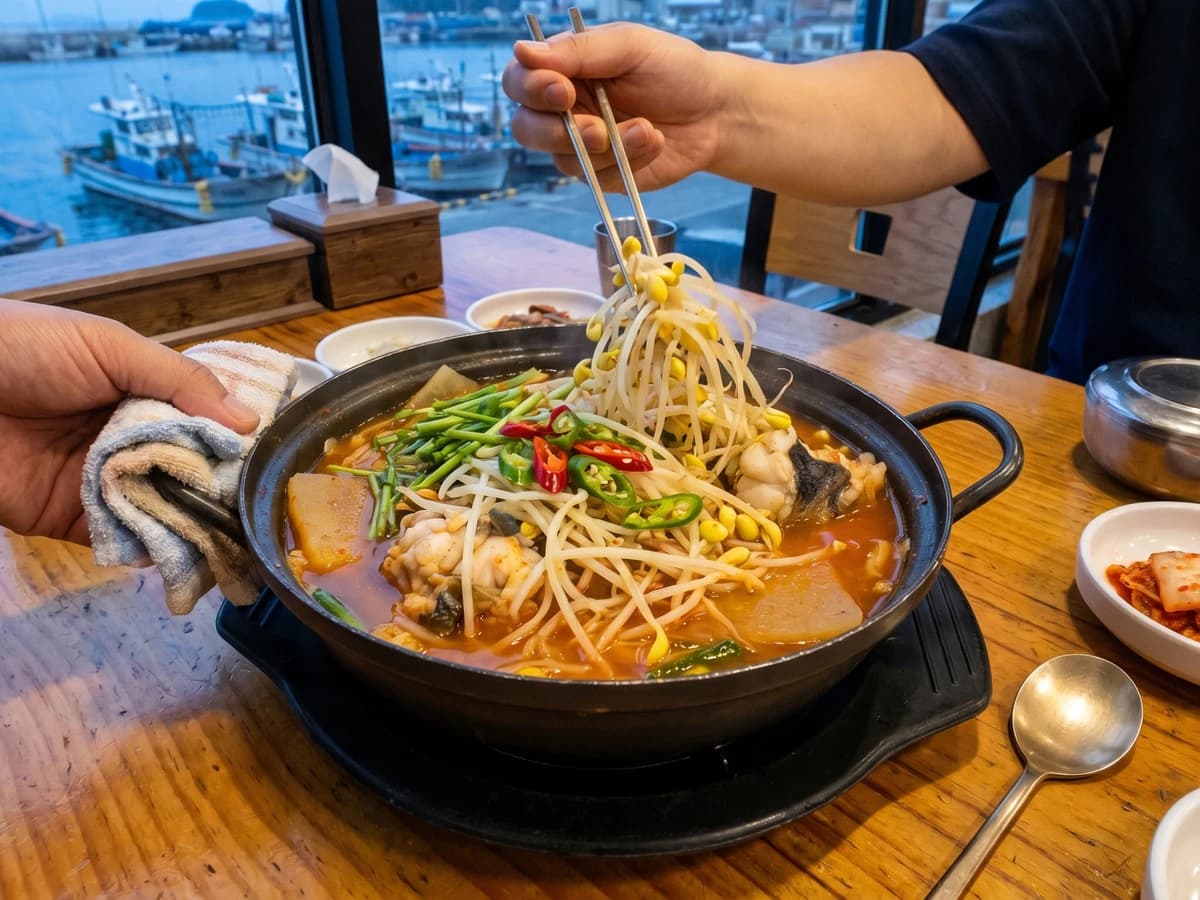
A Masan coast monkfish stew with firm white meat, gelatin at the bones, soybean sprouts for crunch, and a red broth seasoned to carry the fish, not bury it.

Chef Jeong-sun
A weeknight fish roe stew with radish and crown daisy in a clean spicy broth, where the whole success depends on adding the roe late enough that it sets tender, not chalky.

Chef Jeong-sun
Late-summer mallow leaves rubbed with salt until the bitter green water runs off, then simmered in a clean doenjang broth with dried shrimp, the quiet soup a Korean weeknight deserves.