
Chef Isabel
Berenjenas Fritas con Miel de Caña
Berenjenas fritas con miel de caña are Andalusian: thin aubergine slices fried crisp and finished with dark cane syrup, where the trick is dry aubergine, hot oil, and no crowding.
A cooking platform built around craft, culture, and the stories behind what we eat.
Created by
Madrid's verbena offal, lamb gallinejas and entresijos, asks for a dry hand, a slow first fry to render the fat, and a hotter finish so the edges crisp without toughening.
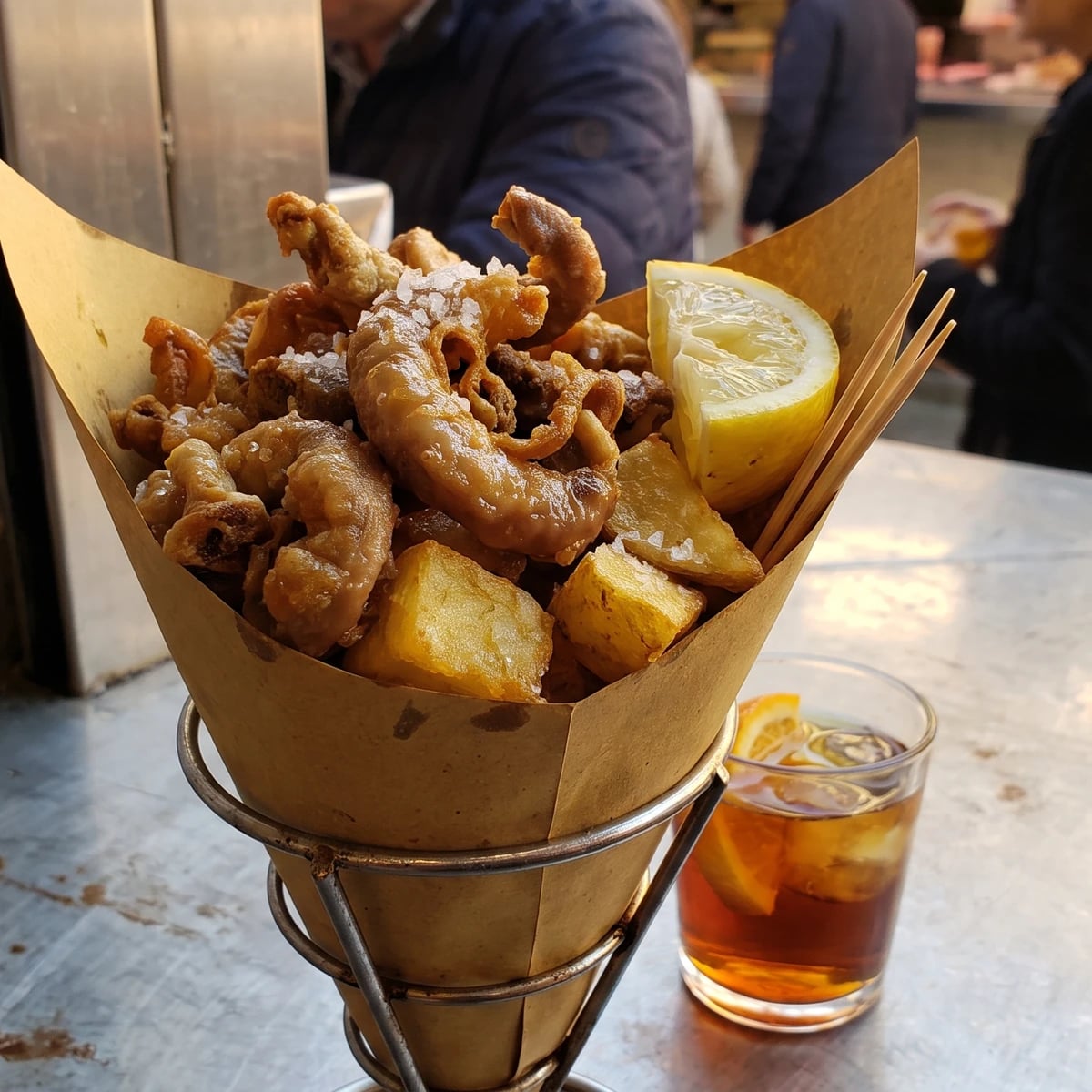
Gallinejas y entresijos are Madrid's, de Madrid castizo: cleaned lamb small intestine and the fatty mesentery around it, fried until the edges crisp and the middle stays tender. What makes the dish itself is the pairing, the lamb fat, the salt, and the verbena way of eating it hot from paper, usually with potatoes. It is not a polite little plate. It is the old city's casquería, offal cookery, doing its work plainly.
The method that decides it is the first twenty minutes. Dry the pieces well, start the entresijos low enough to render their fat, then add the gallinejas and let them fry gently before you ask for crisp edges. Start fiercely and the outside darkens before the inside turns tender. Keep it timid forever and they drink oil. The right heat gives you the Madrid thing: brown, nutty, a little crisp, still juicy inside.
If you're far from Madrid, ask a whole-animal or halal butcher for cleaned lamb chitterlings and lamb caul or mesenteric fat. Pork chitterlings are not the substitute; they taste heavier, need a longer cook, and belong to another plate. No hace falta haber pisado España, but you do need fresh, clean lamb offal and the nerve to keep the heat steady. The Margin beside this one says only: dry first. Siempre sale, si lo sigues.
Gallinejas y entresijos belong to Madrid's castizo casquería, the offal cookery of the old city, where lamb parts from nearby slaughterhouses became cheap fair food for verbenas such as San Isidro and La Paloma. Gallinejas are the cleaned small intestines of lamb, while entresijos are the fatty mesentery that sits between them; the confusing name gallineja has nothing to do with chicken. Their place is the freiduría and the paper cone, a way of making the larder go all the way to the last edible fold.
Quantity
500g
rinsed, patted very dry, cut into 6-8cm lengths
Quantity
350g
cut into 4-5cm pieces
Quantity
80g
for starting the fry
Quantity
600g
peeled and cut into 1cm batons
Quantity
400ml
for frying the potatoes
Quantity
8g
divided
Quantity
to taste
to finish
Quantity
1
cut into wedges
| Ingredient | Quantity |
|---|---|
| cleaned lamb gallinejas (small intestine)rinsed, patted very dry, cut into 6-8cm lengths | 500g |
| cleaned lamb entresijos (lamb mesentery and fat)cut into 4-5cm pieces | 350g |
| rendered lamb fat or mild olive oilfor starting the fry | 80g |
| potatoes (optional)peeled and cut into 1cm batons | 600g |
| olive oil (optional)for frying the potatoes | 400ml |
| fine saltdivided | 8g |
| coarse saltto finish | to taste |
| lemon (optional)cut into wedges | 1 |
Keep the offal cold until you work. Rinse the gallinejas and entresijos quickly under cold running water, then drain and pat them very dry with kitchen paper. Trim away any dark clots or hard nodules. Sprinkle with 4g of the fine salt and leave them on a rack over a tray in the refrigerator for 20 minutes while you set up the oil. Moisture is the enemy here: it spits, steams the surface, and keeps the edges from crisping.
If serving potatoes, heat the 400ml olive oil in a separate wide pan to 160C. Dry the potato batons well, lower them in, and fry gently for 8 to 10 minutes until tender but pale. Raise the heat to 180C and fry 3 to 5 minutes more until golden at the edges. Drain on paper and salt lightly. Keep them close; they will go into the cone with the offal at the end.
Put the rendered lamb fat, or the mild olive oil if that is what you have, in a wide heavy frying pan over medium-low heat. Add the entresijos first. Cook 10 to 12 minutes, turning often, until they shrink, give up fat, and the pan begins to shine with it. This slow beginning is what makes the dish work. The fat has to come out before the gallinejas can fry properly.
Add the dried gallinejas and the remaining 4g fine salt. Keep the heat at a lively medium-low and fry 18 to 22 minutes, turning with tongs. At first they release water and hiss. Then the sound changes to a cleaner sizzle, the pieces tighten, and the smell turns nutty instead of raw. Cut one thick piece if you are unsure; it should be opaque all the way through and tender to the bite.
Raise the heat to medium-high for the last 4 to 6 minutes, turning the pieces so the ridges and edges brown and crisp without blackening. Lift them out with a spider or slotted spoon, drain for a minute, and finish while hot with coarse salt. Pile the gallinejas, entresijos, and potatoes into paper cones or onto a plain plate. Add lemon only if you like that sharp edge. Eat at once; this is not a dish that waits politely.
1 serving (about 240g)
Culinary guides, cultural storytelling, and the editorial depth that makes cooking meaningful.
Discover Culinary Explorer
Chef Isabel
Berenjenas fritas con miel de caña are Andalusian: thin aubergine slices fried crisp and finished with dark cane syrup, where the trick is dry aubergine, hot oil, and no crowding.

Chef Isabel
A Catalan potato bomb from Barcelona's old dock quarter: creamy mash wrapped around slow-cooked spiced meat, fried crisp, and finished with allioli and brava sauce.

Chef Isabel
Borrajas rebozadas are Aragón's quiet winter fry: young borage leaves washed well, dried hard, dragged through a thin egg batter, and fried until the leaf goes crisp and the center stays green.

Chef Isabel
Buñuelos de Bacalao Catalanes are Lenten fritters, desalted cod loosened through a garlic-parsley batter and fried by the spoonful until they puff, crisp at the edges, and stay soft in the middle.