
Chef Jeong-sun
Agwi-jjim (Braised Monkfish with Bean Sprouts)
Firm monkfish buried under crisp soybean sprouts, minari, and a red gochugaru sauce thickened at the end; Masan's market dish asks for heat, timing, and a steady hand.
A cooking platform built around craft, culture, and the stories behind what we eat.
Created by
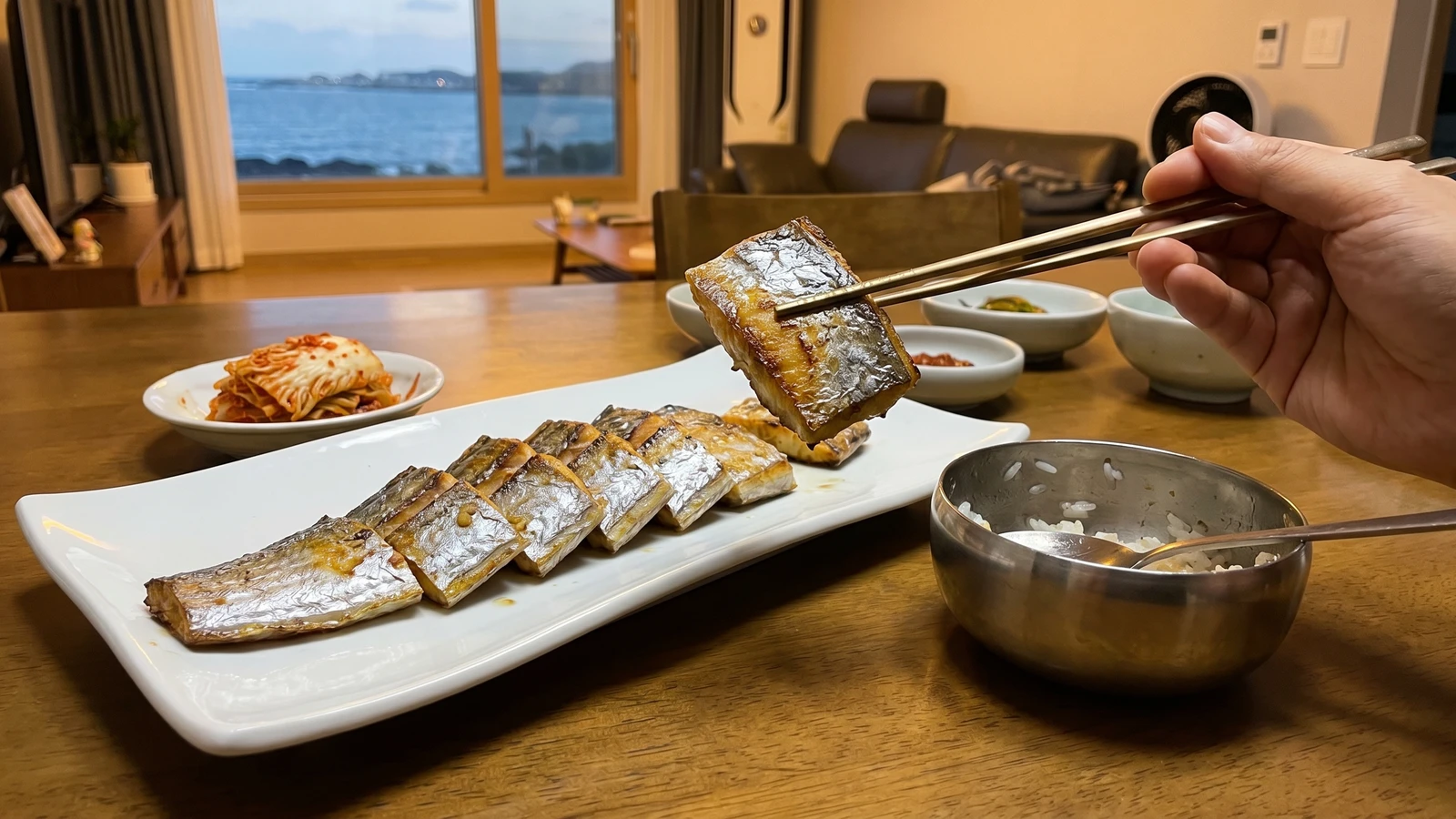
Thick-cut Jeju hairtail, salted and pan-grilled without oil until its own fat crisps the silver skin, the weeknight fish that asks only for heat, patience, and rice.
At Jeju's autumn fish stalls, the good galchi doesn't need shouting. It lies silver and firm in thick cross-cuts, and the seller knows to ask whether you want it for gui (grilled fish) or jorim (braised fish). For this one, choose gui. Cook the month you're standing in; if you can find autumn hairtail, this is when the fish has enough fat to cook in its own skin.
This dish lives or dies by restraint. Notebook 38 says: 700g fish, 6g salt, no garlic, no soy sauce, no oil. That looks too plain to people who think Korean food must always announce itself in red. It doesn't. Galchi-gui should taste like the fish first, with salt doing only the work salt must do: firming the flesh, pulling out surface moisture, and helping the cut sides brown cleanly.
The cook's work tonight is simple, but not careless. Buy firm fish, clean the blood from the bone line, dry it harder than you think, salt it evenly, and then leave it alone in the pan until it releases. Move it too early and the flesh tears. Add oil and you mute the clean fat of the fish. A plain dish has fewer places to hide lazy hands.
Serve it with rice, kimchi, and one quiet namul. Pick the flesh from the center bone at the table. This is weeknight food, but weeknight food is where a house proves itself.
Hairtail, called galchi (갈치) in Korean, takes its common name from its long sword-like body, and Korean coastal records including Jeong Yak-jeon's 1814 Jasan Eobo place it among the familiar marine catch of the peninsula. Jeju became especially known for silver hairtail because the island's surrounding waters land it in quantity, and autumn fish are prized for the fat that makes simple galchi-gui work without a heavy sauce. At the Korean table it appears most often as gui (grilled with salt) or jorim (braised with radish and soy), two everyday preparations that need no borrowed grandeur.
Quantity
700g
cleaned and cut crosswise into 7 to 8 cm pieces
Quantity
6g (about 1 teaspoon)
Quantity
to serve
Quantity
to serve
| Ingredient | Quantity |
|---|---|
| fresh hairtail (galchi)cleaned and cut crosswise into 7 to 8 cm pieces | 700g |
| fine sea salt | 6g (about 1 teaspoon) |
| steamed short-grain rice | to serve |
| kimchi and simple namul (optional) | to serve |
Buy hairtail that is firm, bright silver, and clean-smelling, with flesh that springs back when pressed. If you are buying it whole, ask the fish seller to clean it and cut it crosswise into 7 to 8 cm pieces. Thick pieces stay juicy; thin pieces dry before the cut sides can brown.
Rinse the pieces quickly under cold running water. With your fingertip or a small spoon, rub away any dark blood near the backbone and any black membrane inside the cavity. Do not scrub off the silver skin. That skin protects the flesh and carries the fat that will crisp in the pan.
Pat every piece very dry with paper towels. Sprinkle 6g fine sea salt evenly over the fish, about a pinch on each cut face and a little along the silver skin. Rest the fish on a rack for 20 minutes at cool room temperature, or 30 minutes in the refrigerator if the kitchen is warm. This measured salt seasons the flesh and draws out surface moisture so the fish browns instead of sticking wetly to the pan.
Blot away the moisture that rises on the surface. Be gentle, but be thorough. Wet galchi tears, and then people blame the pan. The salt has already entered the fish; the liquid on the outside has finished its work and should not go into the skillet.
Set a heavy nonstick skillet or Korean fish grill pan over medium heat for about 3 minutes. Do not add oil. The pan should give a quiet sizzle when the first piece touches it, not smoke or scorch. If you are using stainless steel, this no-oil method is not the right vessel; use nonstick or a fish grill pan and keep the technique honest.
Lay the fish pieces cut-side down with space between them. Cook without moving for 4 to 5 minutes, until the underside is golden and the flesh has turned opaque halfway up the side. If a piece sticks when you try to lift it, leave it another 30 seconds. Fish releases when the crust is ready, not when you are impatient.
Turn each piece with a thin spatula and cook the second cut side for 3 to 4 minutes. For very thick pieces, stand them briefly on the silver skin edge for 30 to 45 seconds so the skin tightens and crisps. The fish is done when the flesh pulls from the center bone in moist flakes, or when the thickest part reaches 63C or 145F.
Move the galchi to a warm plate and let it settle for 2 minutes. Serve at once with hot rice, kimchi, and a quiet vegetable side. The bones are clean but sharp, so lift the flesh away from the center bone with chopsticks and eat slowly. A dish this plain rewards attention.
1 serving (about 385g)
Culinary guides, cultural storytelling, and the editorial depth that makes cooking meaningful.
Discover Culinary ExplorerChef Jeong-sun
Firm monkfish buried under crisp soybean sprouts, minari, and a red gochugaru sauce thickened at the end; Masan's market dish asks for heat, timing, and a steady hand.

Chef Jeong-sun
A quick Korean rice bowl built on contrast: warm rice, cold popping flying-fish roe, chopped vegetables, gim, sesame oil, and the crisp rice bottom a hot stone bowl gives you.
Chef Jeong-sun
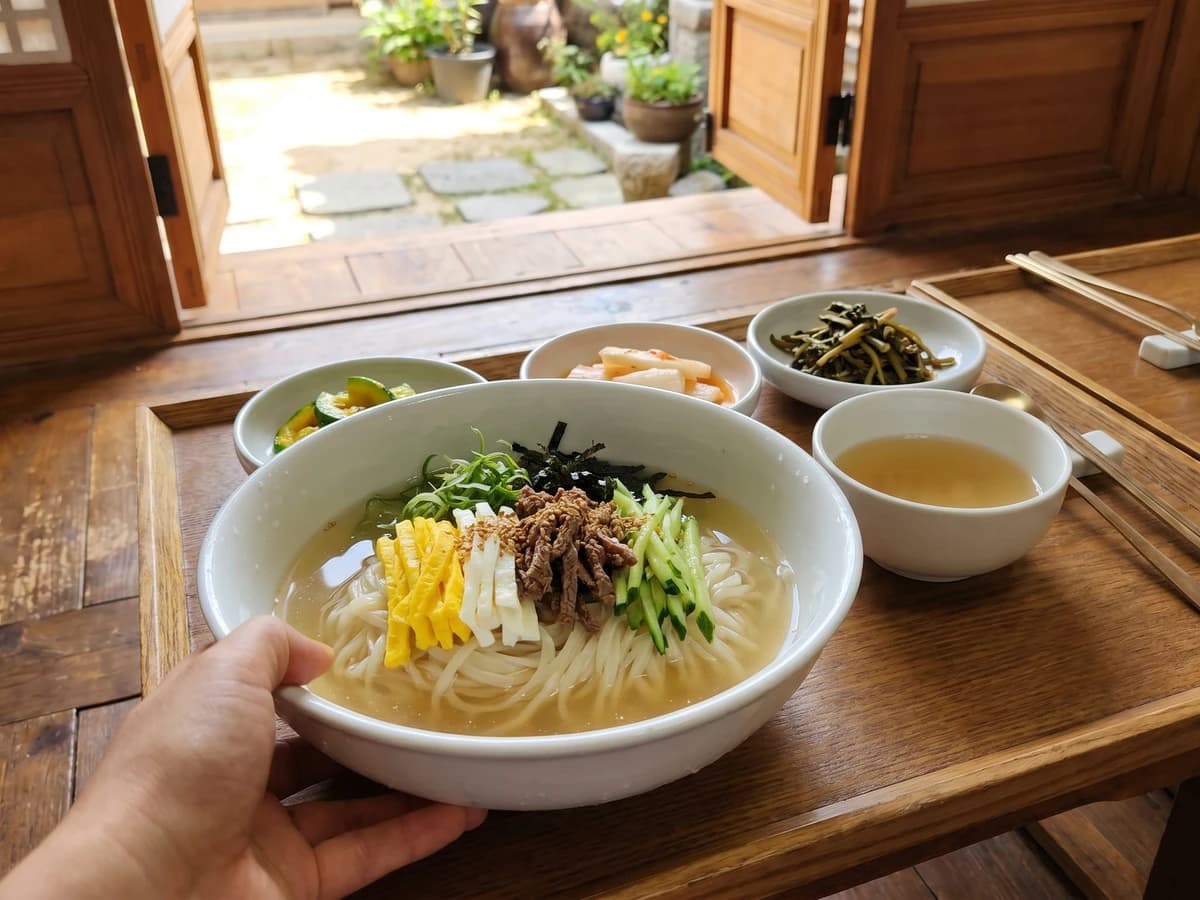
Andong's guest noodles, wheat and roasted soybean flour rolled thin, boiled and rinsed cold, then set in a clear chilled anchovy broth with careful strips of beef, egg, and cucumber.

Chef Jeong-sun
Andong's ritual-table rice served on an ordinary day: separate soy-sesame namul, warm rice, and clear radish soup, mixed without gochujang so every vegetable keeps its own voice.