
Chef Graziella
Asparagi al Forno con Parmigiano
Roasted asparagus finished with aged Parmigiano-Reggiano from the same region that grows the best spears. Four ingredients. No complications. Nothing to hide behind.
A cooking platform built around craft, culture, and the stories behind what we eat.
Created by
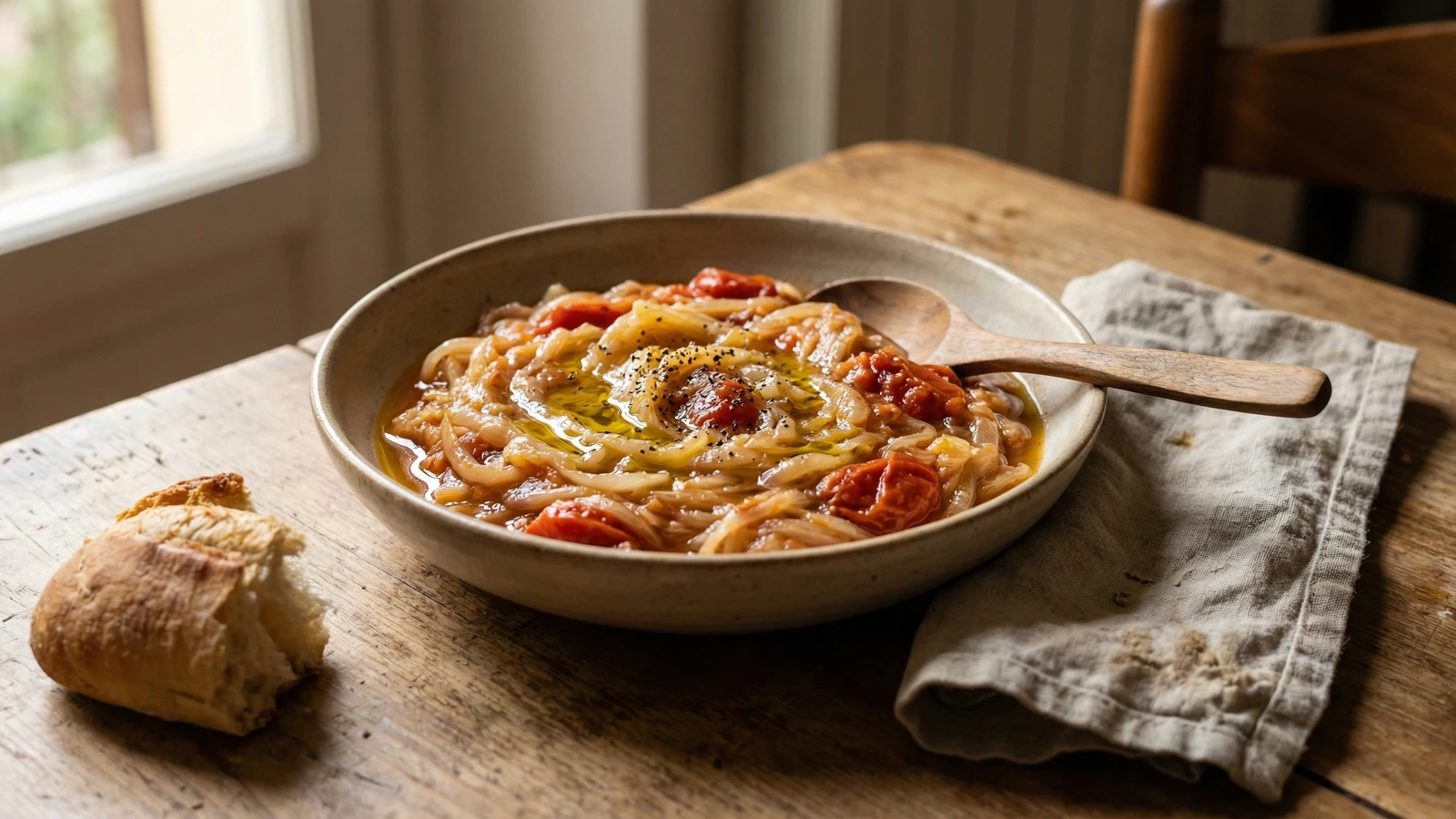
The humblest contorno of Bologna, where white onions and tomatoes melt together over low heat until they become something almost indistinguishable from each other, sweet and yielding.
Friggione is not pretty. It is not elegant. It is a muddle of soft onions and collapsed tomatoes that looks like something went wrong. This is precisely what should happen. The name comes from friggere, to fry, though what occurs in the pan is closer to a gentle dissolution than any frying.
In Bologna, this is peasant food of the first order. You take the cheapest ingredients, onions and summer tomatoes, and you cook them so slowly that they surrender completely. The onions lose their bite and become sweet. The tomatoes give up their structure and merge with the onions until you cannot say where one ends and the other begins. What emerges tastes like neither ingredient, and like both.
Bolognese families serve friggione alongside bollito misto, the great boiled dinner of Emilia-Romagna, or with cotechino sausage during the holidays. It cuts the richness of fatty meats. But I have been known to eat it on bread, warm from the pan, as a meal unto itself. When your ingredients are this simple, your technique must be sound. There is nowhere to hide.
Friggione has been made in the kitchens of Bologna since at least the 17th century, when contadini discovered that slow-cooking onions with tomatoes created something greater than either ingredient alone. The dish belongs to the category of cucina povera, the cooking of poverty that produced some of Italy's most profound flavors. It remains a fixture on the menus of traditional Bolognese trattorias, unchanged.
Quantity
2 pounds (about 4 large)
halved and sliced thin
Quantity
1/4 cup
Quantity
1 can (28 ounces)
crushed by hand
Quantity
1 teaspoon, plus more to taste
Quantity
to taste
freshly ground
| Ingredient | Quantity |
|---|---|
| white onionshalved and sliced thin | 2 pounds (about 4 large) |
| extra virgin olive oil | 1/4 cup |
| whole peeled San Marzano tomatoescrushed by hand | 1 can (28 ounces) |
| kosher salt | 1 teaspoon, plus more to taste |
| black pepperfreshly ground | to taste |
Halve the onions through the root end, then slice them into half-moons about one-quarter inch thick. Do not dice them. The slices will melt into long, soft strands as they cook. This shape matters.
Place the olive oil and sliced onions in a wide, heavy pan or Dutch oven. Set over medium-low heat. Stir to coat the onions with oil. Add the salt. Cover the pan and let the onions sweat for 15 minutes, stirring once or twice. They should become translucent and soft, releasing their liquid. They must not brown.
Crush the tomatoes by hand directly into the pan, letting the juices fall in as well. Discard the hard cores. Stir to combine the tomatoes with the softened onions. The mixture will look watery. This is correct.
Reduce the heat to low. Cook uncovered, stirring occasionally, for one hour to one hour and fifteen minutes. The liquid will slowly evaporate. The onions and tomatoes will collapse into each other. The color will deepen from bright red to a muted terracotta. By the end, the mixture should be thick and jammy, with no pooling liquid in the pan.
Taste for salt. Add more if needed. Grind black pepper over the top. Remove from heat and let rest for ten minutes before serving. Friggione is best warm, not hot. The flavors settle and become more coherent as it cools slightly.
1 serving (about 200g)
Culinary guides, cultural storytelling, and the editorial depth that makes cooking meaningful.
Discover Culinary ExplorerChef Graziella
Roasted asparagus finished with aged Parmigiano-Reggiano from the same region that grows the best spears. Four ingredients. No complications. Nothing to hide behind.

Chef Graziella
Swiss chard from the kitchens of Emilia-Romagna, wilted in butter until tender, then showered with Parmigiano-Reggiano that melts into the warm greens. Three ingredients. Nothing more.
Chef Juliette
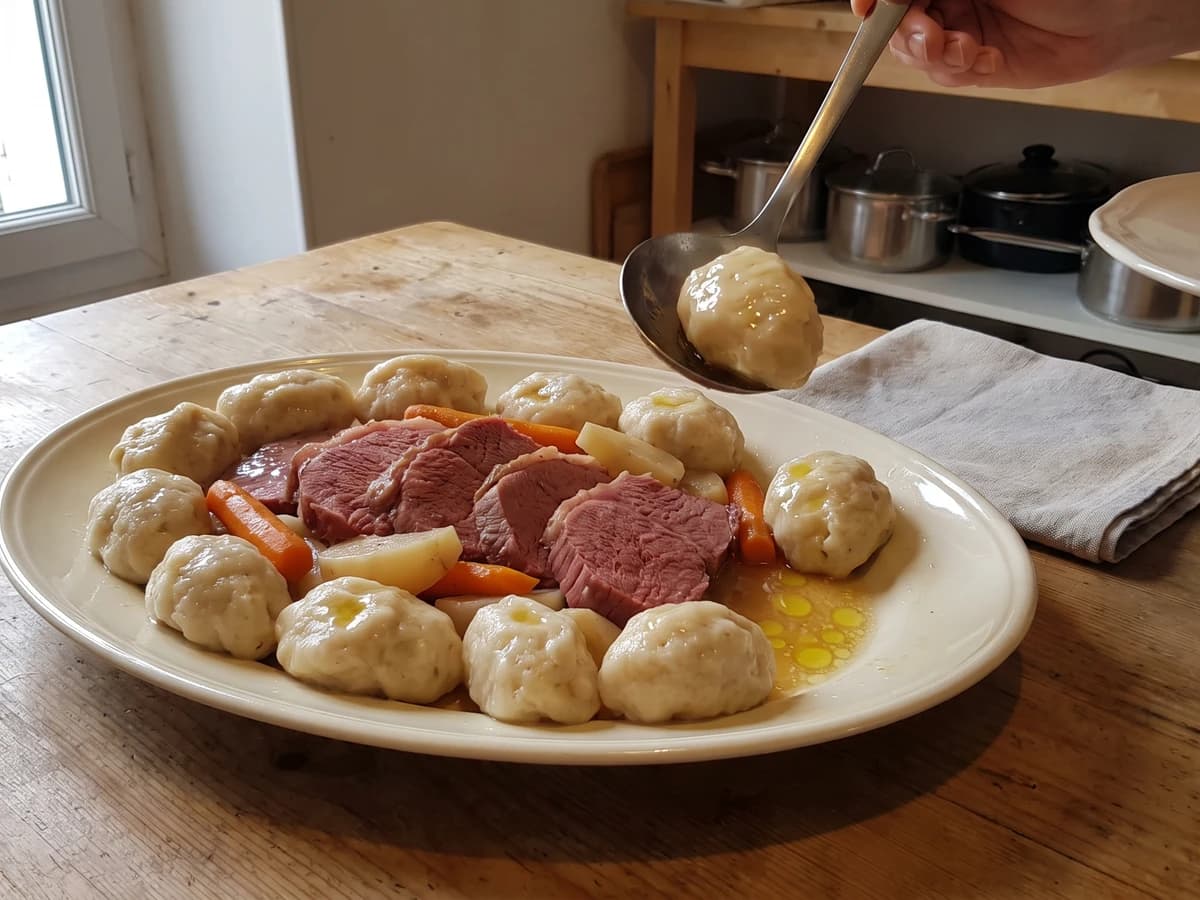
Boulettes au suif, poached beside salt beef, turn equal weights of flour and finely chopped suet into tender, rich dumplings. Keep the beef liquor at a bare tremble and the old garnish works beautifully at home.

Chef Juliette
Bread, flour, frangipane, and rice become four cool, supple panades for binding forcemeats, each changing body and flavor while preserving tenderness. The finest Mousselines need none, and knowing that distinction is the lesson.