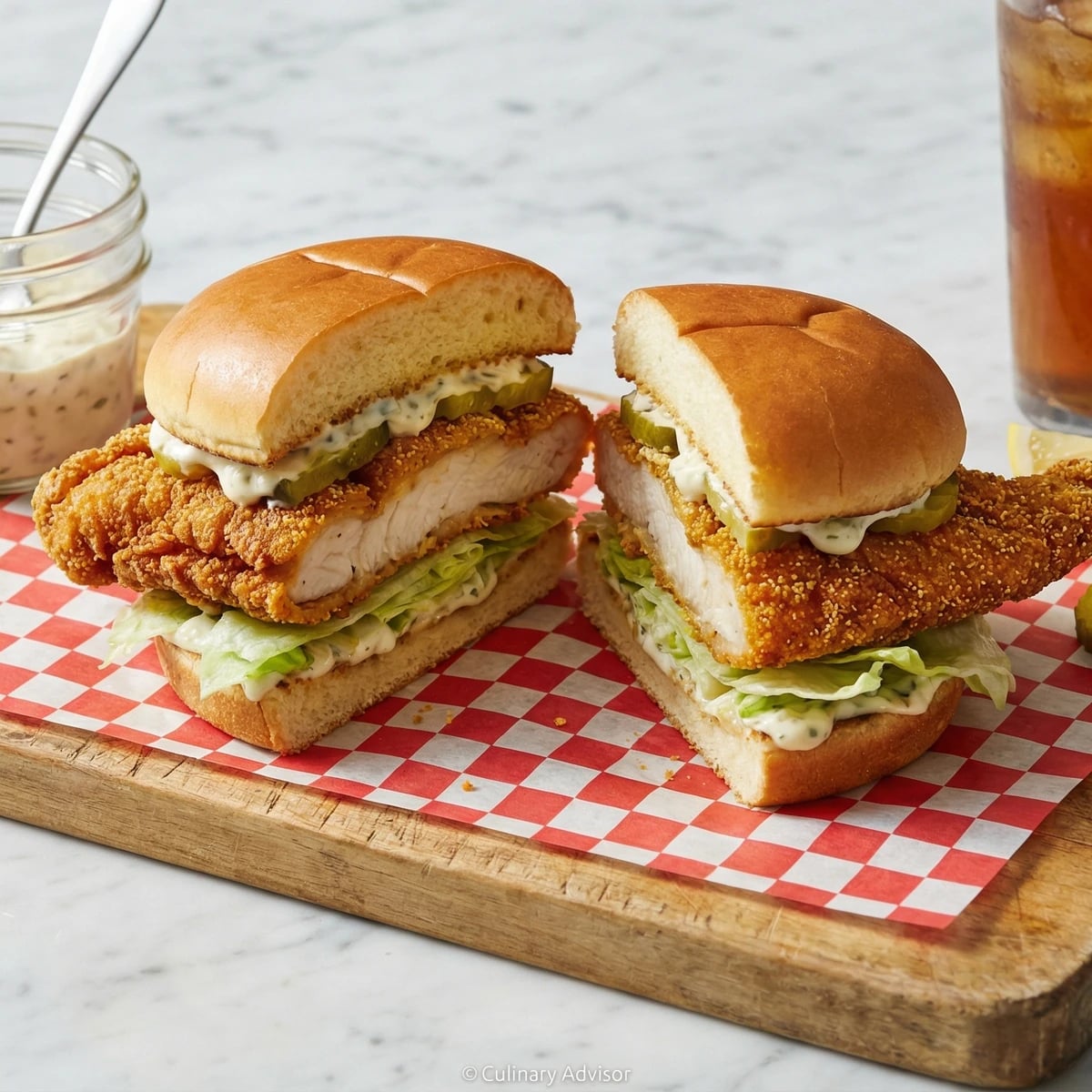
A Mississippi Delta classic built on cornmeal-crusted catfish fried to a shattering golden crust, layered with cool tartar sauce and briny pickles on a soft buttered bun that yields to every bite.
Sandwiches & Wraps
Southern
Weeknight
Budget Friendly
25 min
Active Time
15 min cook•40 min total
Yield4 sandwiches
The catfish sandwich tells the story of the American South as clearly as any dish in our regional canon. Catfish was the fish of the rivers, the farm ponds, the backwater bayous. It fed families when nothing else would. In the Delta, where poverty and ingenuity walked hand in hand, cooks learned to treat this humble fish with respect, dredging it in cornmeal and frying it in rendered pork fat until it emerged gold and crackling.
This is not delicate food. A proper catfish sandwich arrives with the fillet overlapping the bun, the cornmeal crust audible when you bite through. The tartar sauce should be tangy enough to stand up to the richness, and the pickles are not negotiable. They cut through the fat, resetting your palate for the next bite.
I've eaten catfish sandwiches at roadside stands in Clarksdale, at church fish fries in Memphis, and at diners so old the menus haven't changed since Eisenhower. The best share a common philosophy: don't complicate what doesn't need complicating. Good fish, good crust, honest accompaniments. The sandwich speaks for itself.
The technique, the tradition, and the story behind every dish.
Stir together the mayonnaise, pickle relish, lemon juice, Dijon mustard, capers, and fresh dill in a small bowl. Season with salt and pepper to taste. The sauce should be bright and assertive, with enough acid to cut through the richness of fried fish. Refrigerate for at least fifteen minutes to let the flavors marry. This step can be done a day ahead.
Good tartar sauce has texture. Don't puree the relish or capers into oblivion. You want little bursts of brine in each bite.
2
Prepare the buttermilk soak
Whisk together the buttermilk and hot sauce in a shallow dish. The hot sauce isn't about heat. It's about flavor and acidity, which tenderizes the fish and helps the coating adhere. Submerge the catfish fillets and let them soak while you prepare the breading, at least ten minutes.
3
Mix the cornmeal coating
Combine the cornmeal, flour, salt, black pepper, cayenne, garlic powder, and onion powder in a wide shallow bowl or pie dish. Whisk thoroughly to distribute the seasonings evenly. The ratio here matters: mostly cornmeal for crunch, with just enough flour to help it cling. Taste the mixture. It should be noticeably seasoned.
Fine cornmeal creates a tighter, more delicate crust. Coarse cornmeal gives you more texture and crunch. I prefer fine for sandwiches because it compresses better in the bun.
4
Heat the frying oil
Pour oil into a large cast iron skillet to a depth of about half an inch. Heat over medium-high until a pinch of cornmeal sizzles immediately on contact and the oil registers 350°F on a thermometer. This temperature is critical. Too cool and the coating absorbs grease; too hot and it burns before the fish cooks through. The surface should shimmer but not smoke.
5
Bread the catfish
Remove one fillet from the buttermilk, letting excess drip off for a few seconds. Press it firmly into the cornmeal mixture, coating both sides completely. Shake off loose meal. The coating should look even, with no bare patches. Set the breaded fillet on a wire rack while you coat the remaining fish. Let them rest two or three minutes before frying. This brief pause helps the coating set.
Use one hand for the wet ingredients and one for the dry. Keeps you from developing what my students call 'claw hands' where the breading cakes onto your fingers.
6
Fry until golden
Carefully slide two fillets into the hot oil, laying them away from you to prevent splashing. Don't crowd the pan. The temperature will drop when the fish hits the oil, so adjust your flame to maintain 325°F to 350°F. Fry undisturbed for three to four minutes until the bottom is deeply golden. The edges will look lacy and dark. Flip gently and fry another three to four minutes until the second side matches and the fish flakes easily when tested with a fork.
Resist the urge to move the fish around. Each time you disturb it, you risk breaking the crust. Patience creates that shattering texture.
7
Drain and season
Transfer fried fillets to a wire rack set over a sheet pan. Season immediately with a light sprinkle of salt while the surface is still glistening. Salt sticks best in the first thirty seconds after frying. Let rest briefly while you fry the remaining fillets, adjusting oil temperature between batches.
8
Toast the buns
Split the potato rolls and spread the cut sides with softened butter. Toast in a dry skillet over medium heat until golden brown, about ninety seconds. The contrast matters here: soft exterior of the bun against the crisp interior that won't go soggy when dressed with sauce.
9
Assemble the sandwiches
Spread a generous spoonful of tartar sauce on both cut sides of each bun. Layer a crisp lettuce leaf on the bottom, then place the fried catfish directly on top. The lettuce creates a moisture barrier between the hot fish and the bread. Crown with dill pickle slices. Don't be stingy. Their acidity balances the richness of the fried fish and creamy sauce. Press the top bun down gently and serve immediately with lemon wedges alongside.
Chef Tips
•Farm-raised catfish has a cleaner, milder flavor than wild-caught, which can taste muddy. Look for American catfish raised in clean pond water. Vietnamese imports are acceptable but check freshness carefully.
•The bread matters as much as the fish. Soft potato rolls compress without crumbling, absorbing juices and sauce without falling apart. Avoid crusty rolls that fight back when you bite and push ingredients out the other side.
•The ideal ratio is three parts fish to one part everything else. The fillet should dominate the sandwich. Sauce and pickles are supporting players, not co-stars.
•For transporting to picnics or potlucks, pack components separately: fried fish in a paper-lined container to stay crisp, sauce in a jar, buns in a bag. Assemble on site. A soggy fried fish sandwich is a tragedy.
•Leftover catfish reheats beautifully in a 400°F oven for five minutes. The crust re-crisps and the fish stays moist. Never microwave fried food.
Advance Preparation
•Tartar sauce improves overnight in the refrigerator. Make it up to three days ahead.
•Catfish can soak in the buttermilk mixture for up to four hours refrigerated. Longer makes the flesh too soft.
•The cornmeal breading mixture keeps indefinitely in an airtight container. Make a double batch and store it for next time.
•Fried catfish is best served within fifteen minutes of frying. If you must hold it, keep fillets on a rack in a 200°F oven for up to thirty minutes.
Frequently Asked Questions
Nutrition Information
1 serving (about 450g)
Calories
1770 calories
Total Fat
91 g
Saturated Fat
24 g
Trans Fat
0.5 g
Unsaturated Fat
63 g
Cholesterol
145 mg
Sodium
820 mg
Total Carbohydrates
124 g
Dietary Fiber
8 g
Sugars
2 g
Protein
62 g
Where cooking meets culture.
Culinary guides, cultural storytelling, and the editorial depth that makes cooking meaningful.