
Chef Lupita
Acitrón de Cidra Conventual
Puebla's convent-style acitrón, made from cidra peel instead of endangered biznaga, built through repeated syrup soakings until the cubes turn firm, translucent, and ready for rosca or chiles en nogada.
A cooking platform built around craft, culture, and the stories behind what we eat.
Created by
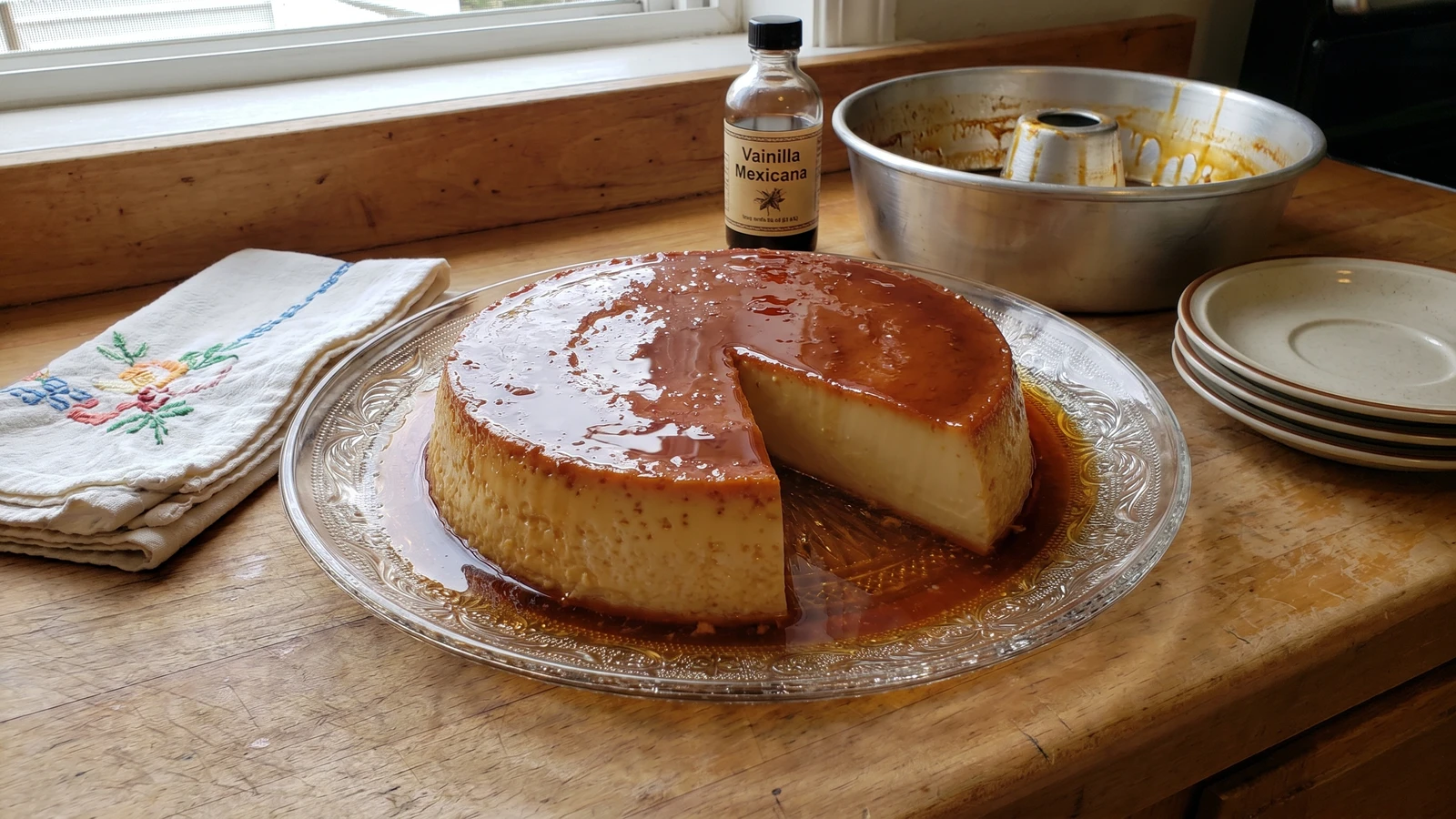
Ciudad de Mexico's celebration flan, dense from cream cheese and canned milks, baked in a water bath until it slices clean and carries a bitter amber crown of caramel.
Ciudad de Mexico, in the Valle de Mexico, made flan napolitano its party dessert. You see it at birthdays, baptisms, Christmas tables, and Sunday comida where the mole is gone but people still expect something cold and sweet from the refrigerator.
This is not the lighter Spanish flan that trembles like barely set cream. The Mexican napolitano is denser because of cream cheese, condensed milk, and evaporated milk. Those cans tell you something about the city: modern pantry cooking, practical, reliable, made by women who knew how to feed twenty people from a small kitchen without pretending dessert needed to be delicate.
The caramel is where most cooks fail. They stop too early because they fear bitterness. No. You cook the sugar until it is deep amber, almost the color of piloncillo syrup, then pour it into the mold before it hardens. Pale caramel tastes like sugar. Dark caramel tastes like dessert. Recetas probadas y garantizadas.
My mother kept this one in her notebook under 'flan de fiesta.' She wrote only one warning in the margin: 'water bath, always.' She was right. The baño Maria protects the custard so it sets smooth, without bubbles and without that scrambled egg texture people try to excuse. No me vengas con atajos.
Flan came to Mexico through Spanish colonial cooking, itself descended from older European egg custards that were refined with cane sugar after sugar production expanded in New Spain during the 16th century. Flan napolitano became widely identified with 20th-century Mexican home cooking after canned condensed milk, evaporated milk, and cream cheese entered urban pantries, especially in Ciudad de Mexico. The name 'napolitano' does not mean the dish is from Naples in any serious regional sense; in Mexico it signals the richer custard style made with dairy beyond milk and eggs.
Quantity
1 cup
for the caramel
Quantity
1 can (14 ounces)
Quantity
1 can (12 ounces)
Quantity
8 ounces
softened
Quantity
5
at room temperature
Quantity
1 tablespoon
Quantity
1/4 teaspoon
Quantity
as needed
for the water bath
| Ingredient | Quantity |
|---|---|
| granulated sugarfor the caramel | 1 cup |
| sweetened condensed milk | 1 can (14 ounces) |
| evaporated milk | 1 can (12 ounces) |
| cream cheesesoftened | 8 ounces |
| large eggsat room temperature | 5 |
| Mexican vanilla extract | 1 tablespoon |
| kosher salt | 1/4 teaspoon |
| hot waterfor the water bath | as needed |
Heat the oven to 350F. Set a 9-inch round cake pan, flanera, or metal mold near the stove. Place a folded kitchen towel inside a roasting pan. The towel keeps the mold from rattling in the water bath and protects the custard from harsh bottom heat.
Put the sugar in a dry heavy saucepan over medium heat. Let the edges melt first, then swirl the pan gently as the sugar liquefies. Do not stir with a spoon once it starts melting or you may crystallize it. Cook until the caramel is deep amber, the color of dark honey moving toward piloncillo. Pour it immediately into the mold and tilt to coat the bottom. Work quickly. Caramel waits for nobody.
In a blender, combine the condensed milk, evaporated milk, softened cream cheese, eggs, vanilla, and salt. Blend on low first, then medium, just until smooth. Do not whip air into it. Flan should be dense and clean, not full of little holes like a kitchen sponge.
Strain the custard through a fine-mesh sieve directly into the caramel-lined mold. This catches bits of egg and cream cheese that the blender missed. Tap the mold once on the counter to release large bubbles, then cover tightly with foil.
Set the covered mold on the towel inside the roasting pan. Pour hot water into the roasting pan until it comes halfway up the sides of the mold. Bake for 60 to 70 minutes, until the edges are set and the center still gives a gentle wobble when nudged. The baño Maria is not decoration. It is what keeps the eggs from curdling.
Lift the mold from the water bath and remove the foil. Cool at room temperature for one hour, then refrigerate at least six hours, preferably overnight. Do not unmold it warm. Warm flan breaks. Cold flan slices.
Run a thin knife around the edge of the flan. Set a rimmed platter over the mold and flip in one confident motion. Wait a few seconds before lifting the mold so the caramel can fall over the custard. Serve cold, in thick slices, with the caramel spooned over the top. Así se hace y punto.
1 serving (about 140g)
Culinary guides, cultural storytelling, and the editorial depth that makes cooking meaningful.
Discover Culinary ExplorerChef Lupita
Puebla's convent-style acitrón, made from cidra peel instead of endangered biznaga, built through repeated syrup soakings until the cubes turn firm, translucent, and ready for rosca or chiles en nogada.

Chef Lupita
Ciudad de México's Tulyehualco alegría is popped huautli folded into piloncillo honey, pressed with peanuts, pepitas, and raisins, then cut into the rectangular bars that built a pueblo's identity.

Chef Lupita
Oaxaca's pre-Columbian amaranth bar, popped on a hot comal and bound with piloncillo, honey, and the sacred Zapotec grain that the Spanish tried, and failed, to outlaw.

Chef Lupita
Querétaro's mercado candy of popped amaranto pressed with dark piloncillo syrup, pepitas, pecans, and cacahuate, a Bajío sweet that respects the seed before it decorates the table.