Chef Isabel
Acedías Fritas de Cádiz
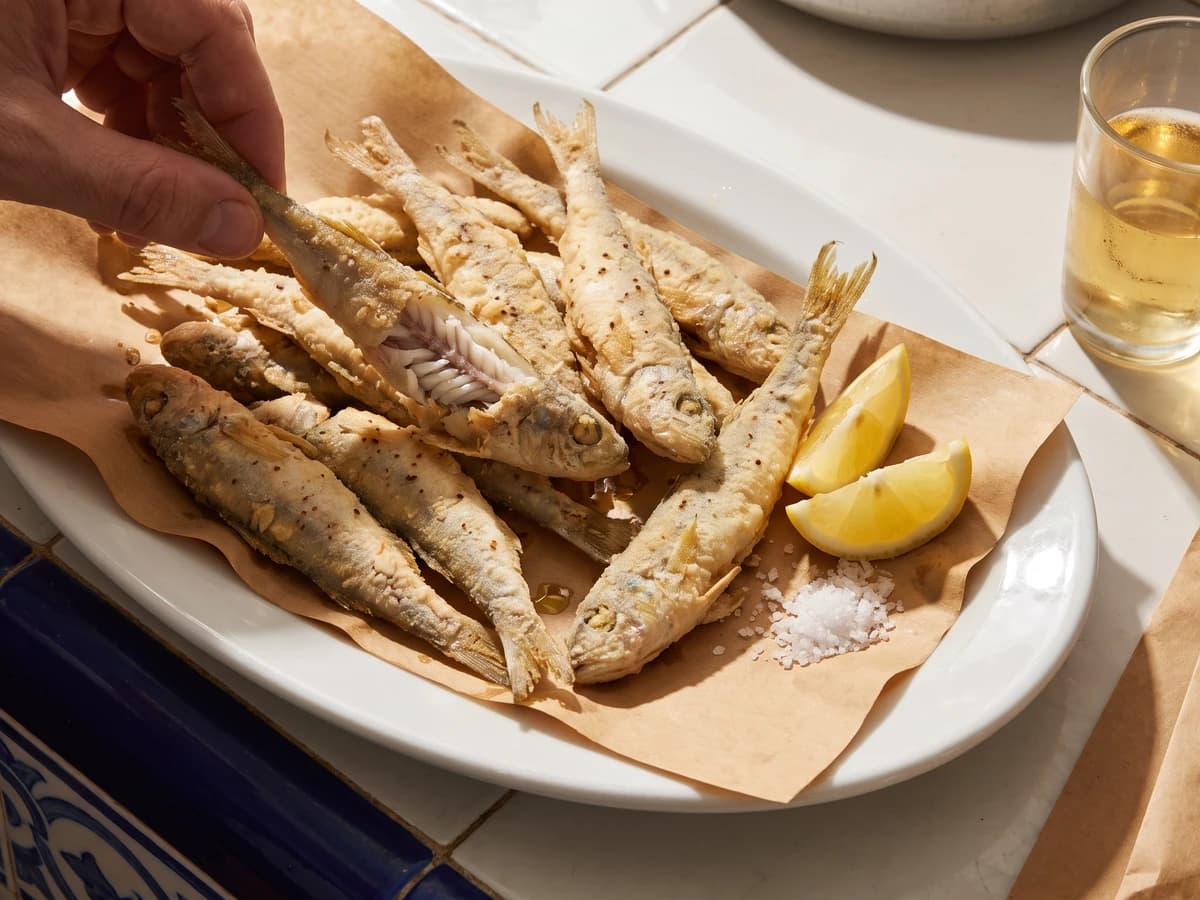
Acedías fritas belong to Cádiz: tiny wedge sole, salted, dusted in frying flour, and dropped into very hot olive oil so the rims crisp while the fish stays tender.
A cooking platform built around craft, culture, and the stories behind what we eat.

Created by
Flamenquín de Córdoba is Andaluz comfort food with a Cordoban surname: pork loin beaten thin, rolled around jamón serrano, breaded cleanly, and fried until the crust turns golden and the inside stays juicy.
Flamenquín de Córdoba is Andaluz, and more exactly Cordoban: a long roll of pork loin wrapped around jamón serrano, breaded, and fried until the outside is golden and the meat inside stays tender. What makes it this dish and not just a breaded cutlet is the tight roll, long and firm, with the jamón hidden in the middle and its salt seasoning the pork from within.
The method that decides it is the pounding and rolling. Beat the pork thin enough to bend without tearing, overlap the slices if you need the length, then roll tightly from one end and chill it before breading. A loose flamenquín opens in the oil. A tight one fries cleanly, cuts neatly, and gives you that line of jamón through the center.
If you can't find jamón serrano where you are, use a dry-cured ham like prosciutto, but know what changes: it is usually softer and sweeter, so use less salt on the pork and keep the slice thin. No hace falta haber pisado España. You need decent pork loin, good dry-cured ham, and the patience to close the roll well. Siempre sale, si lo sigues.
Flamenquín belongs to Córdoba and the surrounding Andalusian countryside, where pork loin and cured ham from the household larder were turned into a filling fried dish that could feed generously without costly ingredients. Its origin is often argued between Cordoban towns and nearby Jaén, but the Cordoban version is the one most closely tied to the long pork-and-jamón roll served in tabernas and home kitchens. Later versions add cheese, peppers, or other fillings, but the plain lomo and jamón roll is the dish's old backbone.
Quantity
8 (about 70g each)
trimmed of thick fat
Quantity
8 thin slices (about 120g total)
Quantity
6g
Quantity
1g
Quantity
1 large clove
finely grated
Quantity
1 tablespoon
Quantity
60g
Quantity
2
beaten
Quantity
120g
Quantity
600ml
for frying
Quantity
4
| Ingredient | Quantity |
|---|---|
| thin pork loin cutletstrimmed of thick fat | 8 (about 70g each) |
| jamón serrano | 8 thin slices (about 120g total) |
| fine salt | 6g |
| freshly ground black pepper | 1g |
| garlicfinely grated | 1 large clove |
| lemon juice | 1 tablespoon |
| plain flour | 60g |
| large eggsbeaten | 2 |
| fine dry breadcrumbs | 120g |
| olive oil or mild olive oilfor frying | 600ml |
| lemon wedges (optional) | 4 |
Lay the pork cutlets between two sheets of baking paper and beat them with a meat mallet or rolling pin until they are about 3mm thick. Work from the center outward, gently. You want wide, flexible pieces that roll without tearing, not ragged meat full of holes.
Mix the salt, pepper, grated garlic, and lemon juice. Rub a very little over the pork, mostly on the outside faces. Go gently with the salt because the jamón will season the inside as it fries. Pésalo, no lo adivines: too much salt is the one mistake you can't undo.
Lay one slice of jamón over each flattened pork cutlet, trimming or folding it so it stays inside the edges. Roll from the short end into a tight cylinder, tucking as you go. Set the rolls seam-side down on a tray, cover, and chill for 30 minutes so they hold their shape in the oil.
Put the flour, beaten eggs, and breadcrumbs in three shallow dishes. Roll each flamenquín first in flour, shaking off the excess, then in egg, then in breadcrumbs. Press the crumbs on firmly, especially over the seam and the ends. A closed crust keeps the pork juicy and the oil clean.
Heat the oil in a deep frying pan to 175C. Fry the flamenquines two at a time, turning often, until evenly golden and cooked through, 5 to 6 minutes. The oil should bubble steadily, not rage. If the crust darkens too fast, lower the heat and give the pork time to finish.
Lift the rolls to a rack or paper-lined tray and let them rest for 3 minutes. Cut on a slight angle if serving as a snack, or leave whole with fried potatoes and a little salad. The crust should be crisp under the knife, the pork juicy, and the jamón visible in a clean rose line through the middle.
1 serving (about 240g)
Culinary guides, cultural storytelling, and the editorial depth that makes cooking meaningful.
Discover Culinary ExplorerChef Isabel
Acedías fritas belong to Cádiz: tiny wedge sole, salted, dusted in frying flour, and dropped into very hot olive oil so the rims crisp while the fish stays tender.
Chef Isabel
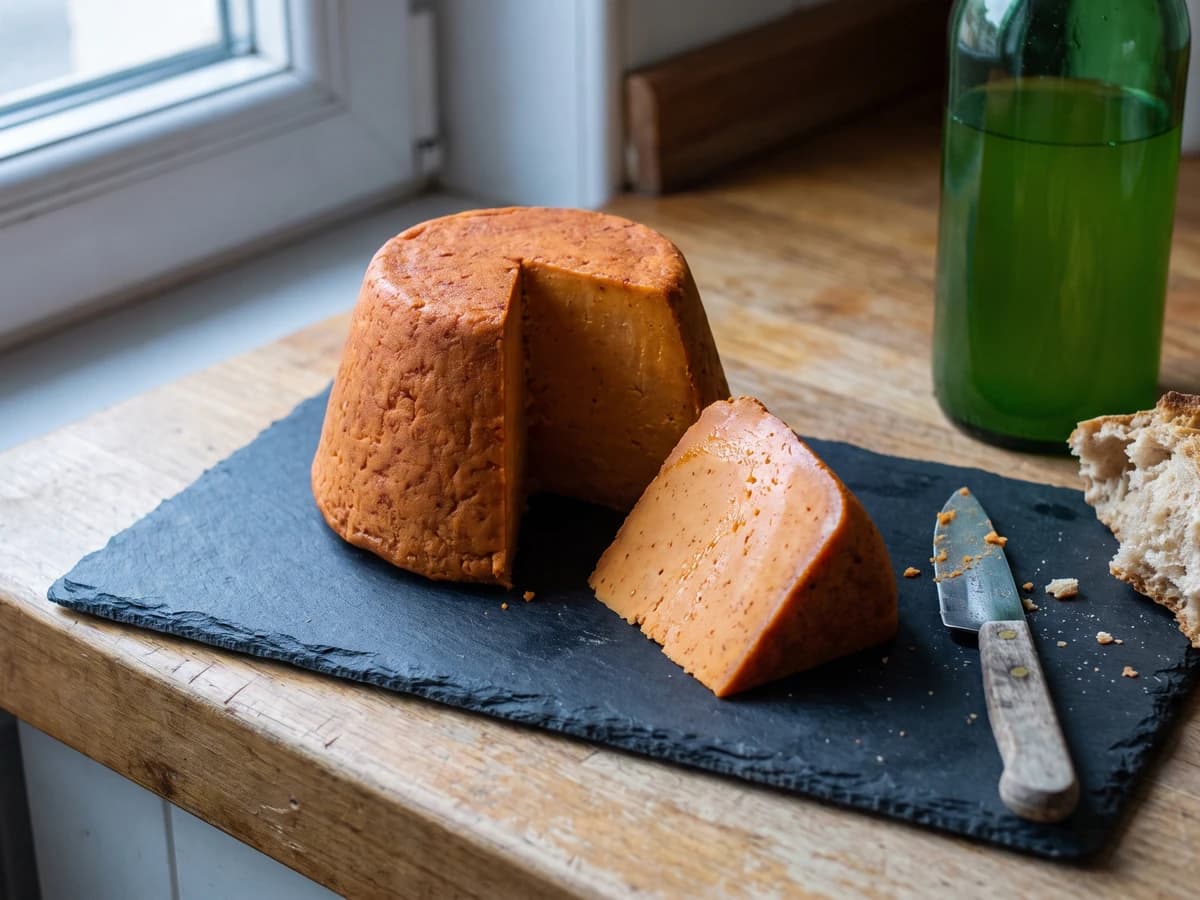
Afuega'l Pitu Roxu is Asturias in a small cheese: cow's milk set slowly to a dense curd, drained without squeezing, then kneaded with pimentón until it turns orange and grips the throat.
Chef Isabel
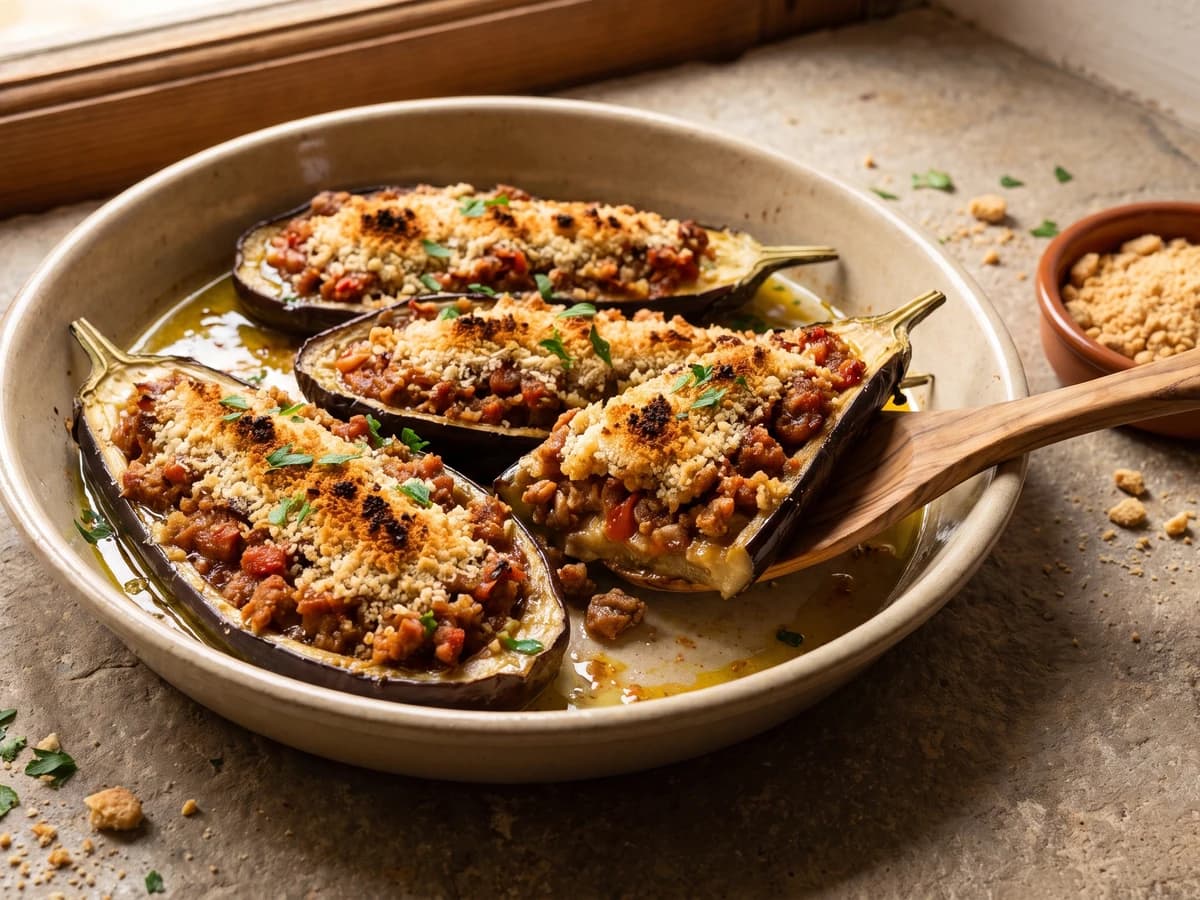
Albergínies farcides are Mallorca's summer stuffed aubergines: tender boiled shells, a slow pork sofrito with moraduix, and a plain breadcrumb cap baked until the top turns crisp and golden.

Chef Isabel
Carxofes farcides are Catalan stuffed artichokes: tender hearts filled with jamón, slow sweet onion, and breadcrumbs, then baked in a light creamy sauce until the tops turn golden.