Chef Juliana
Abobrinha Refogada
You think you'll turn zucchini into mush. Fine. Anota aí: high heat, wide pan, salt at the end, and suddenly this little green side starts solving dinner.
A cooking platform built around craft, culture, and the stories behind what we eat.
Created by
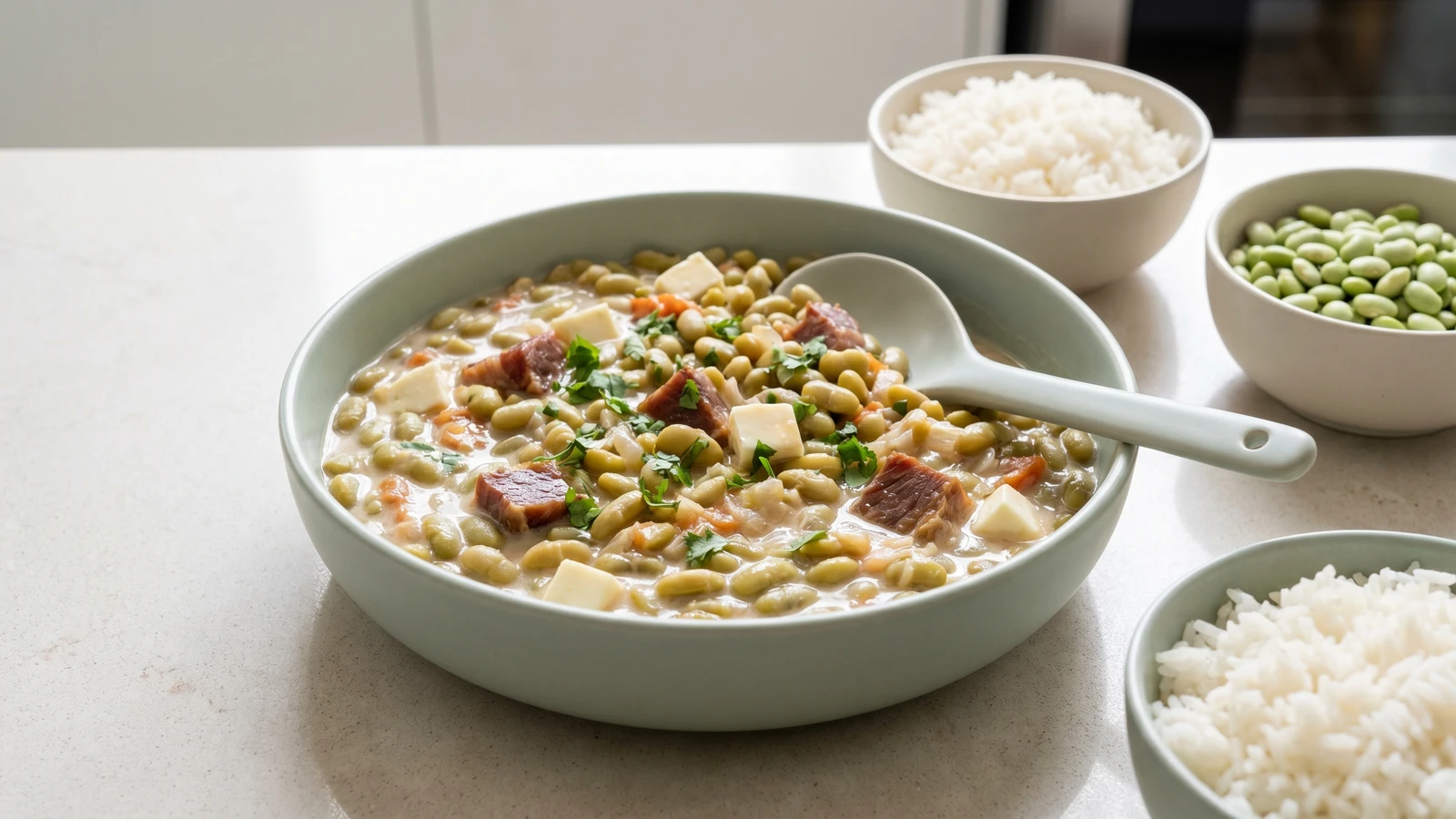
You don't need a grandmother whispering secrets over your shoulder. Fresh feijão, a real refogado, and nata folded in at the end give you Ceará's creamy side without powder, drama, or fear.
You hear "isso não é pra mim" before the pot even comes out. I know that voice. Mine used to show up right when an onion hit hot fat, very confident for someone who had once burned onions black and still called it learning.
Anota aí: cozinhar não é dom, é um aprendizado. This pot is Ceará on a weekday table, but the method is ordinary in the best way. Fresh feijão verde cooks faster than dried beans. A real refogado gives it a backbone. Nata goes in at the end so the cream stays creamy and the beans stay beans, not a pale mush that makes everyone quiet for the wrong reason.
On a pê-efe, rice, beans, a piece of meat or egg if that's what you have, and something green, this is the side that starts behaving like the main event. It stretches the plate without making it feel stretched. That is sertão intelligence, cure, dry, pound, stretch, use what lasts and make it generous. The people who carry that tradition don't need me pretending I invented it. I teach the home kitchen version, with cups and spoons, because receitas que funcionam are how a gente gets dinner solved.
No packet. No powder. You will cook the beans until tender, build the flavor in onion and garlic, mash a ladle so the caldo thickens itself, then fold in nata gently. That's comida de verdade. Not magic. Dinner.
In Ceará and across much of the Nordeste, feijão verde usually means fresh cowpeas harvested before they dry, not the green snap beans many English speakers picture. Because the beans are fresh, they cook quickly and keep a pale green tenderness, which is why they sit naturally beside baião de dois, arroz, carne de sol, and weekday prato feito plates. Carne de sol, when it joins the pot, is lightly salted and briefly cured, often air-dried, softer than carne seca or charque, which are more heavily salted and dried for longer.
Quantity
3 cups
picked over and rinsed
Quantity
5 cups
Quantity
1
Quantity
1 1/2 teaspoons, divided, plus more to taste
Quantity
2 tablespoons
or 1 tablespoon butter plus 1 tablespoon neutral oil
Quantity
1 cup
diced small
Quantity
1 medium, about 1 cup
finely chopped
Quantity
3 cloves
minced
Quantity
1 small
seeded and finely chopped
Quantity
1 cup
or fresh heavy cream if nata is unavailable
Quantity
1/2 cup
diced
Quantity
1/4 teaspoon
Quantity
2 tablespoons
chopped
| Ingredient | Quantity |
|---|---|
| fresh shelled feijão verde (green cowpeas)picked over and rinsed | 3 cups |
| water | 5 cups |
| bay leaf (optional) | 1 |
| salt | 1 1/2 teaspoons, divided, plus more to taste |
| manteiga de garrafaor 1 tablespoon butter plus 1 tablespoon neutral oil | 2 tablespoons |
| dessalted carne de sol (optional)diced small | 1 cup |
| onionfinely chopped | 1 medium, about 1 cup |
| garlicminced | 3 cloves |
| tomatoseeded and finely chopped | 1 small |
| nataor fresh heavy cream if nata is unavailable | 1 cup |
| queijo coalho (optional)diced | 1/2 cup |
| black pepper | 1/4 teaspoon |
| coentro or cheiro-verdechopped | 2 tablespoons |
Pick over the fresh feijão verde and rinse it in a bowl of cool water, rubbing gently until the water loses any grit. Fresh beans are already hydrated, so don't give them the overnight soak meant for dried beans. If you're using dried feijão-de-corda instead, soak 1 1/2 cups in plenty of water for 8 hours so they cook evenly and sit easier, then expect a longer simmer.
Put the rinsed beans in a heavy pot with the water and bay leaf, if using. Bring to a boil, lower to a gentle simmer, and cook with the lid slightly ajar until the beans are tender enough to crush against the roof of your mouth but still hold their shape, about 25 to 35 minutes. Stir in 1 teaspoon salt during the last 5 minutes. Save 1 1/2 cups of the cooking liquid, then drain off the rest, because too much loose water turns nata into soup.
Set the pot back over medium-high heat and warm the manteiga de garrafa. If using carne de sol, pat it dry and brown it in one loose layer until the edges turn deep amber, 3 to 4 minutes. Work in batches if your pot is small. Pile it all in and the meat releases water, the heat drops, and you're steaming grey cubes instead of dourando flavor into them. Scoop the browned carne de sol onto a plate.
Lower the heat to medium. Add the onion to the fat left in the pot and cook, stirring now and then, until it goes soft, sweet, and see-through, about 5 minutes. Add the garlic for 1 minute, just until you smell it, then add the tomato and 1/2 teaspoon salt. Cook until the tomato collapses and the fat shines at the edges. This is the refogado, the place where flavor starts. A packet can make salt. It cannot make this.
Return the beans to the pot with the carne de sol, if using, and 1/2 cup of the reserved cooking liquid. Scoop a ladle of beans against the side of the pot and mash them with a spoon or fork until they turn creamy, then stir them back through. Add more cooking liquid a few spoonfuls at a time only if the pot looks dry. The mashed beans are what make the caldo creamy instead of watery, no powder pretending to do a bean's job.
Turn the heat to low and stir in the nata and black pepper. Add the queijo coalho, if using, and warm gently for 2 to 3 minutes, stirring with care, until the sauce is ivory, glossy, and clinging to the beans. Don't boil it hard. Nata can split, and fresh beans can collapse into mush if you bully them. Taste for salt, fold in the coentro or cheiro-verde, and serve with arroz soltinho and something green.
1 serving (about 260g)
Culinary guides, cultural storytelling, and the editorial depth that makes cooking meaningful.
Discover Culinary ExplorerChef Juliana
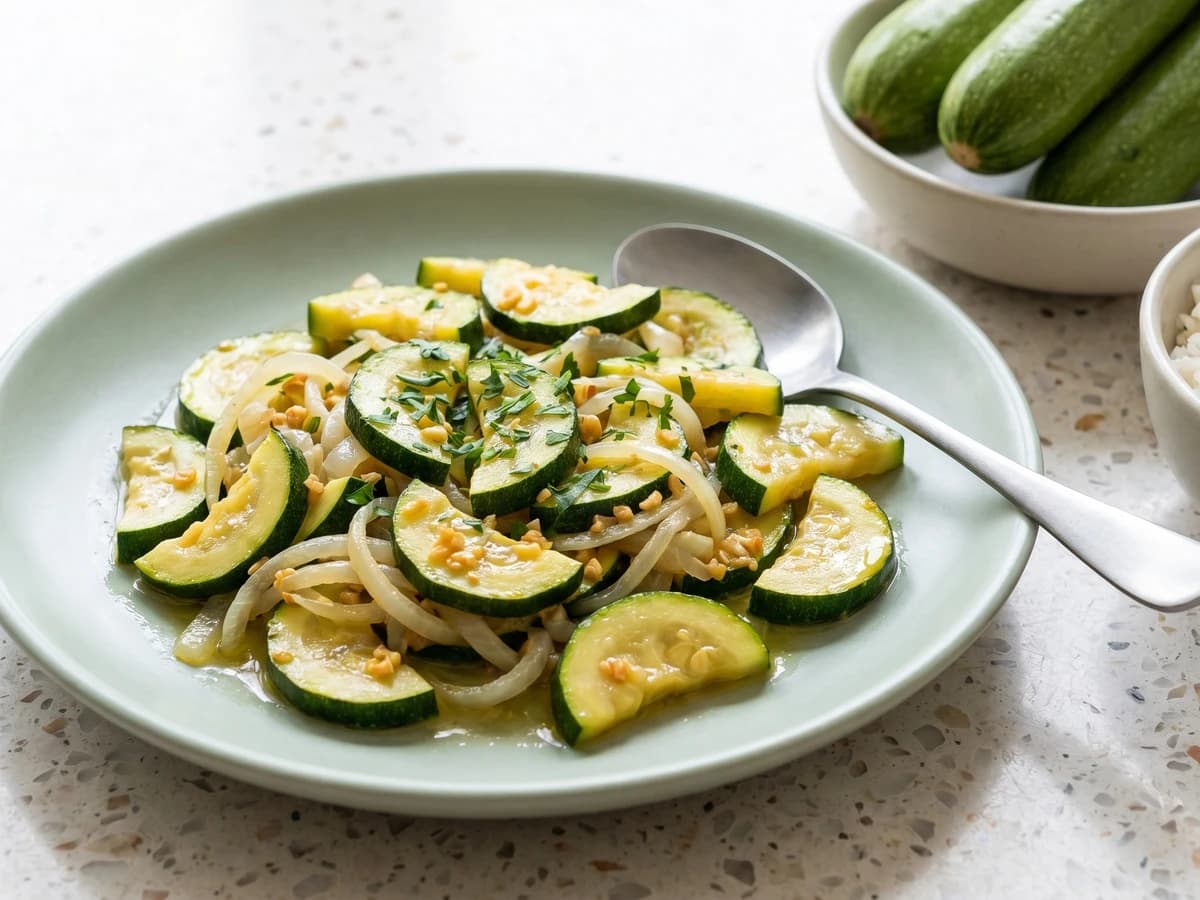
You think you'll turn zucchini into mush. Fine. Anota aí: high heat, wide pan, salt at the end, and suddenly this little green side starts solving dinner.

Chef Juliana
You think this is sacred enough to be impossible. It isn't. Acaçá is patience, stirring, and ponto, taught plainly, with respect for the terreiros that carry it.
Chef Juliana
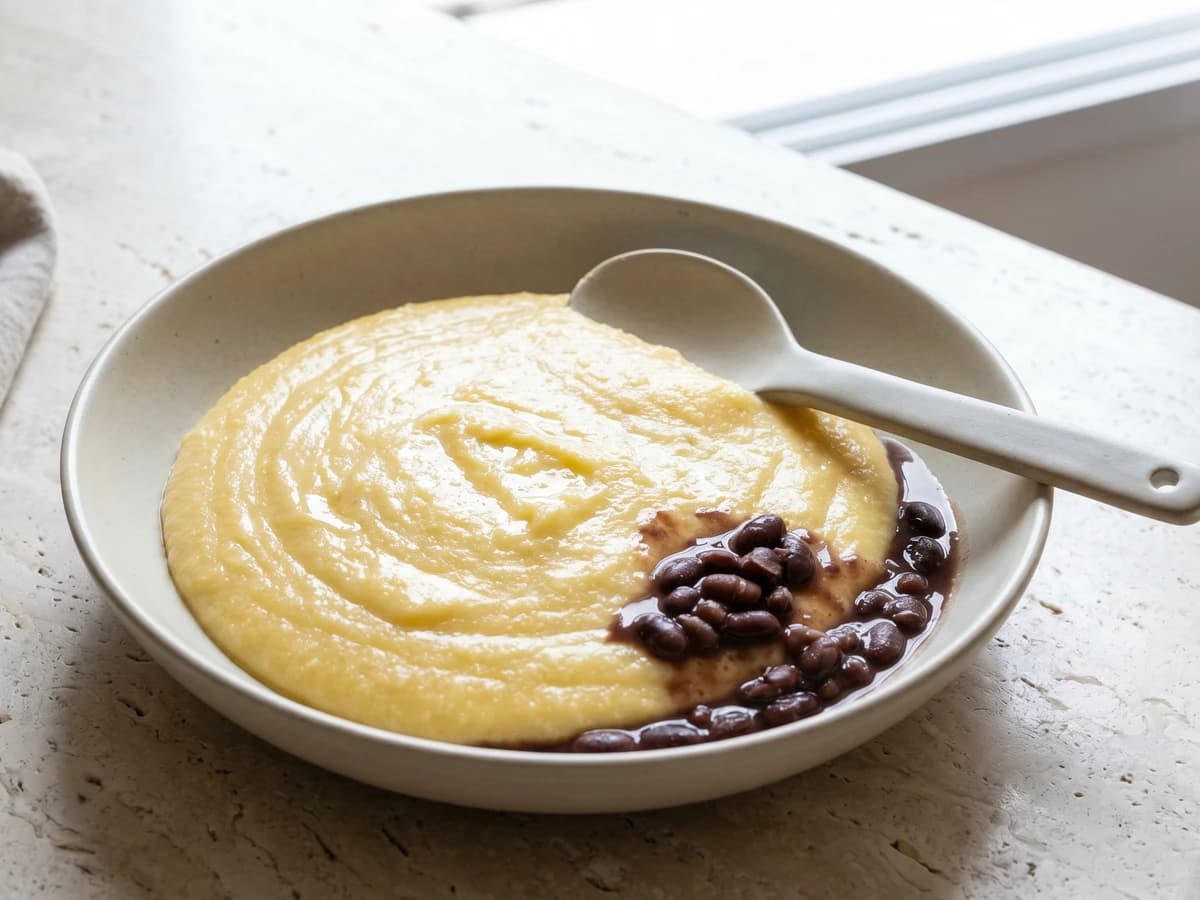
You think cornmeal will turn into lumps and shame. It won't. Cold water first, patient stirring, and a real garlic base give you angu that solves dinner.
Chef Juliana
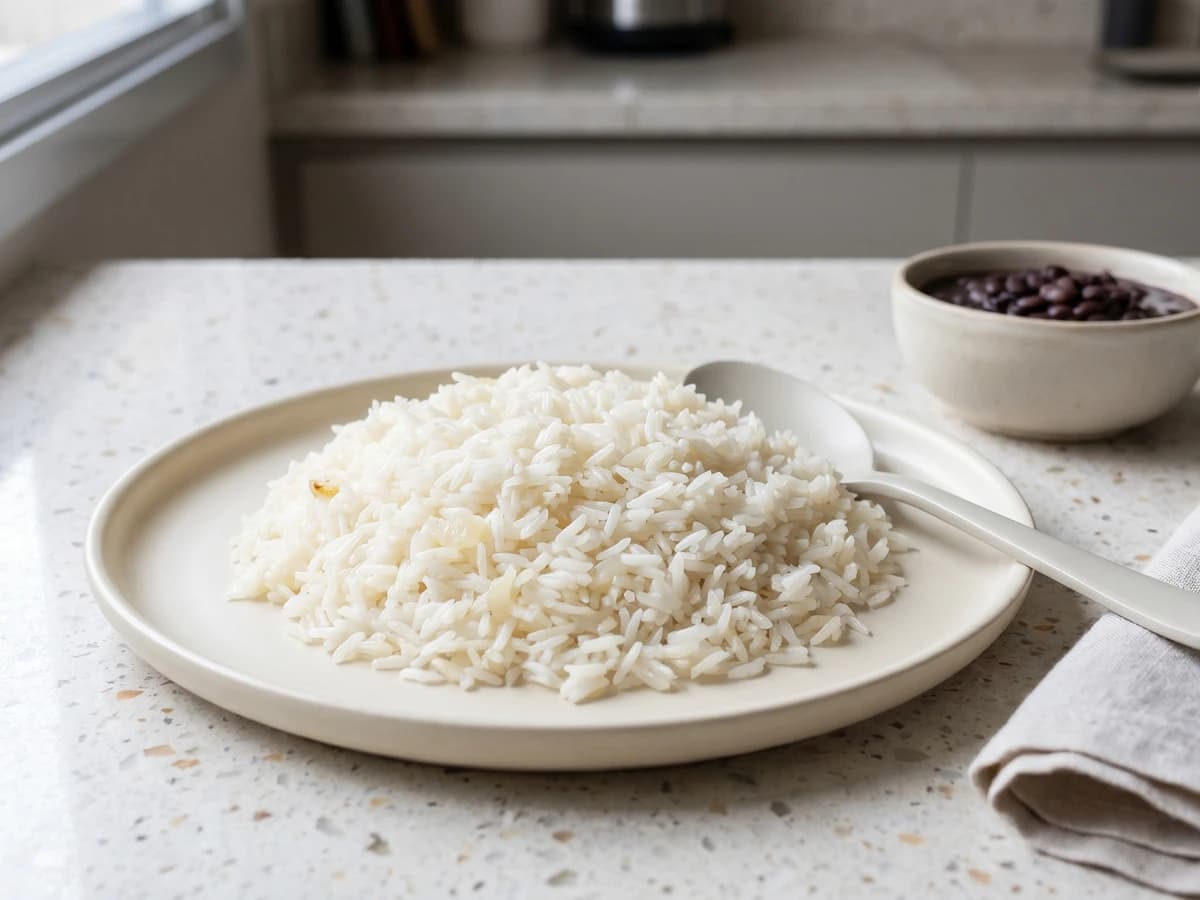
Everyone swears they can't make good rice. They're wrong. Refogue onion and garlic, use two parts water to one rice, then close the lid and leave the poor thing alone.