
Chef Juliana
Bode Assado com Macaxeira
You think roast goat is for someone else's kitchen. It's not. Marinate it overnight, roast it low and patient, and let macaxeira catch the pingo like it was born for the job.
A cooking platform built around craft, culture, and the stories behind what we eat.
Created by
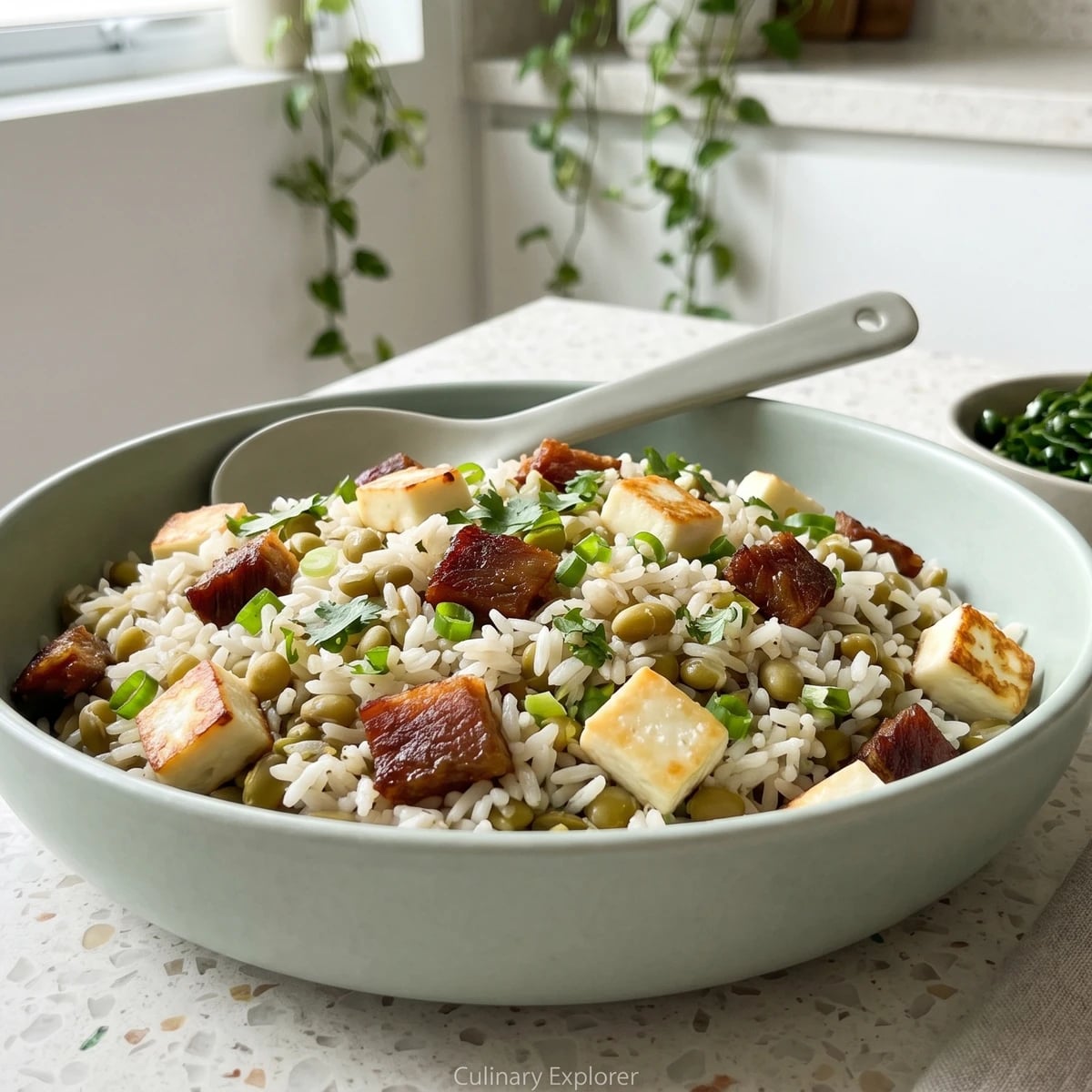
You think this is Nordeste magic. It's not. It's rice, beans, carne de sol, queijo coalho, and a pot taught in the right order.
You look at a pot like this and hear that little voice: isso não é pra mim. Too regional, too much history, too many things with names you didn't grow up buying. I know that voice. Mine used to say the same nonsense while I stood in front of a stove like it might ask me a math question.
Baião de dois is the pê-efe pulled into one pot: rice, beans, meat, and something green if you have the good sense to serve couve or a sharp salad beside it. It solves dinner because the structure is already Brazilian. Nothing here is a trick. You cook the feijão verde until tender, build a real refogado, brown the carne de sol properly, cook the rice in the bean caldo, then fold in queijo coalho so it softens without disappearing. Anota aí: cozinhar não é dom, é um aprendizado.
The why matters. Soak the beans so they cook evenly and sit easier. Mash a small ladle of cooked beans into the refogado so the caldo turns creamy instead of watery. Brown the meat in batches because a crowded pan makes grey steamed meat, and nobody came here for sadness in cubes. No packet, no powder, no imitation flavor wearing a clever hat.
This is comida de verdade with sertão intelligence in it: cure, dry, stretch, feed the table. I teach the home kitchen version, with respect to the sertanejos who carry the tradition. You don't need mystique. You need a pot, a spoon, and someone refusing to let you quit before dinner gets good.
Baião de dois is strongly tied to Ceará and the broader Nordeste, where rice and beans were cooked together to stretch ingredients, feed households, and make a complete meal from what kept well in difficult climates. The name is commonly linked to baião, the Northeastern music rhythm made famous nationally in the 1940s by Luiz Gonzaga and Humberto Teixeira, a useful reminder that the dish traveled with migration, radio, and memory. Carne de sol is lightly salted and sun or air dried, carne seca is drier and saltier, and charque is saltier still and made for longer keeping; those differences matter because each one asks for a different amount of soaking.
Quantity
1 1/2 cups
soaked overnight
Quantity
7 cups, plus more as needed
Quantity
2
Quantity
450 g
cut into 2 cm cubes and soaked if salty
Quantity
2 tablespoons, plus 1 tablespoon if needed
Quantity
1 medium
finely chopped
Quantity
4 cloves
minced
Quantity
1 small
finely chopped
Quantity
1 medium
seeded and chopped
Quantity
1 1/2 cups
rinsed and drained
Quantity
1 teaspoon, plus more to taste
Quantity
1/2 teaspoon
Quantity
1 cup
cut into small cubes
Quantity
1/2 cup
chopped
Quantity
2
thinly sliced
Quantity
1 tablespoon
for finishing
| Ingredient | Quantity |
|---|---|
| dried feijão verde or dried black-eyed peassoaked overnight | 1 1/2 cups |
| water | 7 cups, plus more as needed |
| bay leaves | 2 |
| carne de solcut into 2 cm cubes and soaked if salty | 450 g |
| oil or manteiga de garrafa | 2 tablespoons, plus 1 tablespoon if needed |
| onionfinely chopped | 1 medium |
| garlicminced | 4 cloves |
| green bell pepperfinely chopped | 1 small |
| tomatoseeded and chopped | 1 medium |
| long-grain white ricerinsed and drained | 1 1/2 cups |
| salt | 1 teaspoon, plus more to taste |
| freshly ground black pepper | 1/2 teaspoon |
| queijo coalhocut into small cubes | 1 cup |
| cilantro or parsleychopped | 1/2 cup |
| green onionsthinly sliced | 2 |
| manteiga de garrafa (optional)for finishing | 1 tablespoon |
Put the feijão verde in a bowl, cover with plenty of water, and soak overnight, at least 8 hours. If your carne de sol is very salty, put the cubes in a separate bowl of cold water for 2 to 4 hours, changing the water once. Taste a tiny cooked or seared corner later before salting the pot. Soaking the beans helps them cook evenly and sit easier, and soaking the meat gives you seasoning instead of a salt attack.
Drain the soaked beans and put them in a heavy pot with 7 cups water and the bay leaves. Bring to a boil, then lower to a gentle simmer with the lid partly open. Cook until the beans are tender but still holding their shape, about 30 to 45 minutes. Bite one. It should give without turning to paste. You want beans that can finish with the rice instead of collapsing into mud.
Drain the beans through a sieve set over a bowl and save 4 cups of the cooking liquid. Pull out the bay leaves. Keep the beans separate for now. That greenish bean caldo is not dirty water, it's flavor and body for the rice, and throwing it away would be paying for dinner twice.
Pat the carne de sol dry with a towel. Warm 2 tablespoons oil or manteiga de garrafa in the same pot over medium-high heat and brown the meat in two or three batches, 3 to 4 minutes per batch, until the edges turn deep amber. Take each batch out to a plate. Don't crowd the pan. Packed meat releases water, the heat drops, and you steam it grey instead of dourar it properly.
Lower the heat to medium. If the pot looks dry, add 1 more tablespoon oil. Add the onion and bell pepper and cook, stirring and scraping the browned bits from the bottom, until the onion goes soft and see-through, about 5 minutes. Add the garlic for 1 minute, just until you smell it, then add the tomato and cook until it slumps and looks glossy, about 3 minutes. This is the refogado doing its job: turning ordinary aromatics into the base of the whole pot.
Add one ladle of the cooked beans to the refogado and mash them against the side of the pot with your spoon. Stir until the refogado looks thick and a little creamy. This is not decoration, it's structure. The mashed beans thicken the caldo naturally, so the final baião tastes joined together instead of like rice and beans that met five minutes ago.
Add the rinsed, drained rice and stir for 1 to 2 minutes, until the grains look shiny and separate. This quick refogar coats the rice in fat and flavor, which helps it cook soltinho instead of clumping. Add the browned carne de sol back to the pot and stir once.
Add 3 cups of the reserved bean caldo, the salt, and the black pepper. Stir once, taste the liquid, and adjust carefully because the carne de sol may still bring salt. Bring to a lively simmer, then lower the heat, cover, and cook for 15 minutes. Don't stir while the rice cooks. Stirring breaks the grains and wakes up starch, and then you wonder why your arroz soltinho turned sticky.
After 15 minutes, scatter the cooked beans over the rice, cover again, and cook 5 more minutes, adding up to 1/2 cup more bean caldo only if the pot is dry and the rice is still hard. The rice should be tender, the beans whole, and the bottom moist without being soupy. Let the pot tell you. A recipe is a map, not a bossy aunt.
Turn off the heat and let the pot rest, covered, for 10 minutes. Then fold gently with a fork, not a heavy hand, so the grains stay separate. Stir in the queijo coalho, cilantro or parsley, green onions, and the optional spoon of manteiga de garrafa. The cheese should soften and turn glossy in little salty pockets, not melt into a sauce. Serve with sautéed couve or a simple green salad, because the pê-efe likes something green beside all this comfort.
1 serving (about 400g)
Culinary guides, cultural storytelling, and the editorial depth that makes cooking meaningful.
Discover Culinary Explorer
Chef Juliana
You think roast goat is for someone else's kitchen. It's not. Marinate it overnight, roast it low and patient, and let macaxeira catch the pingo like it was born for the job.

Chef Juliana
You think goat stew belongs to somebody else's kitchen. It doesn't. Brown the pieces well, build a proper refogado, and let time do the tenderness while you make rice and beans.

Chef Juliana
You think this is the dish for someone else. It isn't. Clean it well, season it hard, cook it slow, and serve it with rice, beans, and something green.

Chef Juliana
You think curing beef at home is not for you. Anota aí: salt, air, patience, and a hot pan. This is carne de sol taught for a real home kitchen.