
Chef Juliana
Açaí com Camarão do Pará
You think açaí belongs with banana and granola because that's the version that traveled. In Pará, thick unsweetened açaí sits beside shrimp, rice, and farinha. Anota aí: same fruit, different meal.
A cooking platform built around craft, culture, and the stories behind what we eat.
Created by
You think goat stew belongs to somebody else's kitchen. It doesn't. Brown the pieces well, build a proper refogado, and let time do the tenderness while you make rice and beans.
You look at a bag of goat pieces and hear that little voice, isso não é pra mim. I know that voice. Mine used to arrive the second a pot looked serious, before the caderno, before the ruined onions, before I learned the annoying and liberating truth: cozinhar não é dom, é um aprendizado.
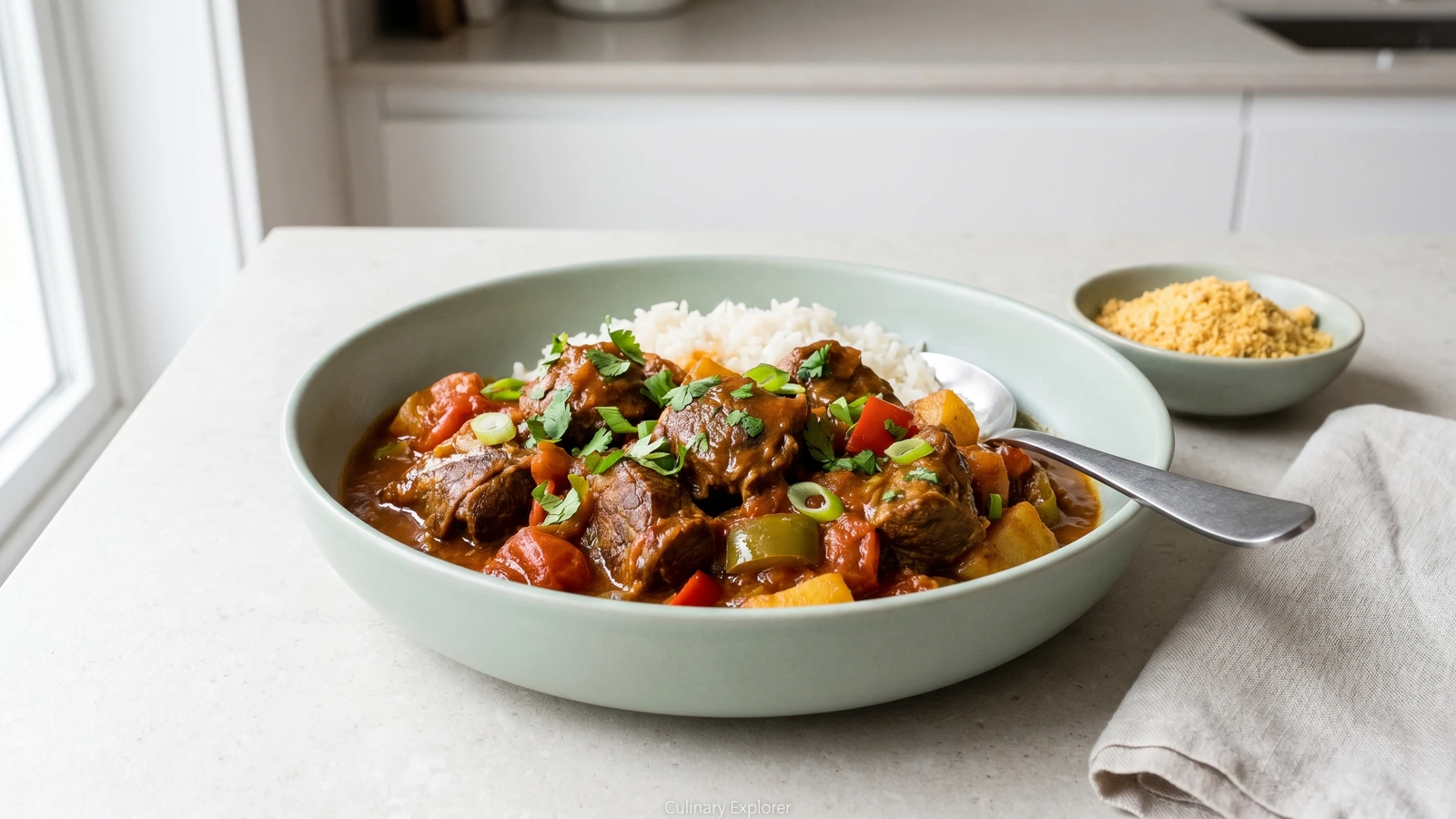
On the plate, this stew knows exactly what job it has. Rice catches the molho, beans make the plate generous, couve or another green gives a clean bitter edge, and the meat sits there rich and tender, not showing off. That's the pê-efe, the everyday Brazilian formula, rice, beans, meat, something green. Not filler. Not nostalgia. Dinner that quietly keeps a country itself.
I don't claim Pernambuco's sertão as my kitchen. The sertanejos who carry bode as daily food know its deeper grammar, and a gente respects that. What I'm teaching here is the home-kitchen version you can reproduce in a heavy pot or slow cooker: season the goat, dry it, brown it in batches, refogar onion and garlic with colorau, then cook it low until the fork goes through.
Anota aí: the method is plain, but it is not optional. Crowd the pan and the goat steams grey. Rush the refogado and the molho tastes thin. Skip the final rest and the sauce won't settle around the meat. Do each small thing for its reason, and you get comida de verdade, deep brown, glossy, spooned over rice like it belongs there. Because it does.
Goat has been practical in Pernambuco's sertão and agreste for centuries because the animals handle the dry caatinga better than cattle, turning scrubby pasture into meat, milk, and household income. In Petrolina, the Bodódromo restaurant complex opened in 2000 and made bode assado and guisado a public symbol of the São Francisco Valley, but the stew itself is older than the sign, built from fresh goat, refogado, tomatoes, peppers, herbs, and time. This is adjacent to the sertão's cure-dry-pound-stretch intelligence, but it is not carne de sol, carne seca, or charque: those are salted and dried meats with different levels of cure and drying, and the people of the interior are the ones to trust on the fine lines.
Quantity
3 pounds
shoulder or leg, cut into 1 1/2- to 2-inch pieces
Quantity
2 tablespoons
Quantity
2 1/2 teaspoons, plus more to taste
Quantity
1 teaspoon
Quantity
1 teaspoon
Quantity
2 teaspoons
divided
Quantity
4 tablespoons
divided
Quantity
2 medium
finely chopped
Quantity
6 cloves
minced
Quantity
1 medium
diced small
Quantity
2
chopped
Quantity
1 pimenta-de-cheiro or 1/2 dedo-de-moça
minced
Quantity
1
Quantity
2 1/2 cups, plus more as needed
Quantity
2 medium
peeled and cut into large chunks
Quantity
1/2 cup
chopped
Quantity
1/2 cup
sliced
Quantity
1 tablespoon
for finishing
Quantity
for serving
Quantity
for serving
Quantity
for serving
| Ingredient | Quantity |
|---|---|
| bone-in goat stew piecesshoulder or leg, cut into 1 1/2- to 2-inch pieces | 3 pounds |
| lime juice or white vinegar | 2 tablespoons |
| fine salt | 2 1/2 teaspoons, plus more to taste |
| freshly ground black pepper | 1 teaspoon |
| ground cumin | 1 teaspoon |
| colorau (ground urucum)divided | 2 teaspoons |
| neutral oil or larddivided | 4 tablespoons |
| onionsfinely chopped | 2 medium |
| garlicminced | 6 cloves |
| green bell pepperdiced small | 1 medium |
| ripe tomatoeschopped | 2 |
| pimenta-de-cheiro or dedo-de-moça chile (optional)minced | 1 pimenta-de-cheiro or 1/2 dedo-de-moça |
| bay leaf | 1 |
| hot water | 2 1/2 cups, plus more as needed |
| potatoes (optional)peeled and cut into large chunks | 2 medium |
| cilantrochopped | 1/2 cup |
| scallionssliced | 1/2 cup |
| lime juice or white vinegar (optional)for finishing | 1 tablespoon |
| arroz branco soltinho (optional) | for serving |
| feijão de corda, feijão verde, or carioca beans (optional) | for serving |
| couve refogada and farofa (optional) | for serving |
Put the goat pieces in a large bowl. Add the lime juice or vinegar, salt, black pepper, cumin, and 1 teaspoon of the colorau, then toss with your hands until every piece is stained red-orange. Let it sit 30 minutes while you chop. The acid brightens the meat and the salt starts moving inward, but don't leave it on the counter longer than that. If you're seasoning ahead, cover and refrigerate.
Pat the goat pieces dry where they look wet, then heat 2 tablespoons of the oil or lard in a heavy 5-liter pot over medium-high heat. Brown the goat in batches, about 3 to 4 minutes per side, until the edges are deep brown and the pot has dark stuck bits on the bottom. Move each batch to a plate. Do not crowd the pan. Crowd it and the meat releases water, the heat drops, and you're steaming grey goat instead of building flavor.
Lower the heat to medium and add the remaining 2 tablespoons oil or lard if the pot looks dry. Add the onions with a small pinch of salt and refogar, stirring often, until they go soft, sweet-smelling, and golden at the edges, 6 to 8 minutes. Add the garlic and cook for 1 minute, just until you smell it. Stir in the remaining 1 teaspoon colorau for 30 seconds, until the fat turns brick-red. Colorau blooms in fat; burn it and it tastes dusty and bitter.
Add the bell pepper, tomatoes, and chile, if using. Cook until the tomatoes collapse, the pimentão softens, and the mixture looks thick and shiny, about 5 to 7 minutes. Scrape the bottom of the pot as the tomatoes release their juice. Those brown bits are not dirt, pelo amor. They're the flavor from the goat, and the tomato pulls them into the molho.
Return the goat and any juices on the plate to the pot. Add the bay leaf and 2 1/2 cups hot water, enough to come about halfway up the meat, not drown it. Bring to a boil, then lower to a gentle simmer with the lid slightly ajar. Cook 1 1/2 to 2 hours, turning the pieces now and then and adding water 1/2 cup at a time if the pot gets dry, until a fork slides through the thickest piece. Low, steady heat gives the connective tissue time to soften. A hard boil tightens the meat and bullies the molho.
If you're using potatoes, add them when the goat is almost tender, usually for the last 25 minutes. Push them down into the molho, cover again, and cook until a knife goes through without a fight. Add them too early and they dissolve into the sauce; add them too late and the meat waits around while the potatoes catch up.
Uncover the pot and simmer 10 to 15 minutes if the molho looks thin, until it coats a spoon and leaves a glossy trail when stirred. Turn off the heat, stir in the cilantro, scallions, and the final tablespoon of lime juice or vinegar if the stew tastes heavy. Rest 10 minutes before serving. The herbs stay fresh this way, and the rest lets the sauce settle around the meat instead of running all over the plate.
Serve the bode with arroz branco soltinho, beans, couve refogada, and farofa. Spoon the molho over the rice because rice was made for this kind of work. If you're making beans from scratch for the pê-efe, soak them overnight so they cook evenly and sit easier, then mash a ladle of cooked beans into their refogado so the caldo turns creamy instead of watery. That's not extra theory. That's dinner behaving.
1 serving (about 600g)
Culinary guides, cultural storytelling, and the editorial depth that makes cooking meaningful.
Discover Culinary ExplorerChef Juliana
You think açaí belongs with banana and granola because that's the version that traveled. In Pará, thick unsweetened açaí sits beside shrimp, rice, and farinha. Anota aí: same fruit, different meal.

Chef Juliana
You think savory açaí is not for you. I understand. Then you taste the cold, dark bowl beside hot fried fish, rice, greens, and farinha, and dinner gets very quiet.

Chef Juliana
You think salted beef and rice sound like trouble. Anota aí: soak the charque, brown it properly, build the refogado, and this one pot resolves dinner.

Chef Juliana
You think a Maranhão green rice belongs to somebody else's clever hands. It doesn't. Wilt the vinagreira, build the refogado, fold it through arroz soltinho, and dinner gets bright, coastal, and yours.