Chef Juliana
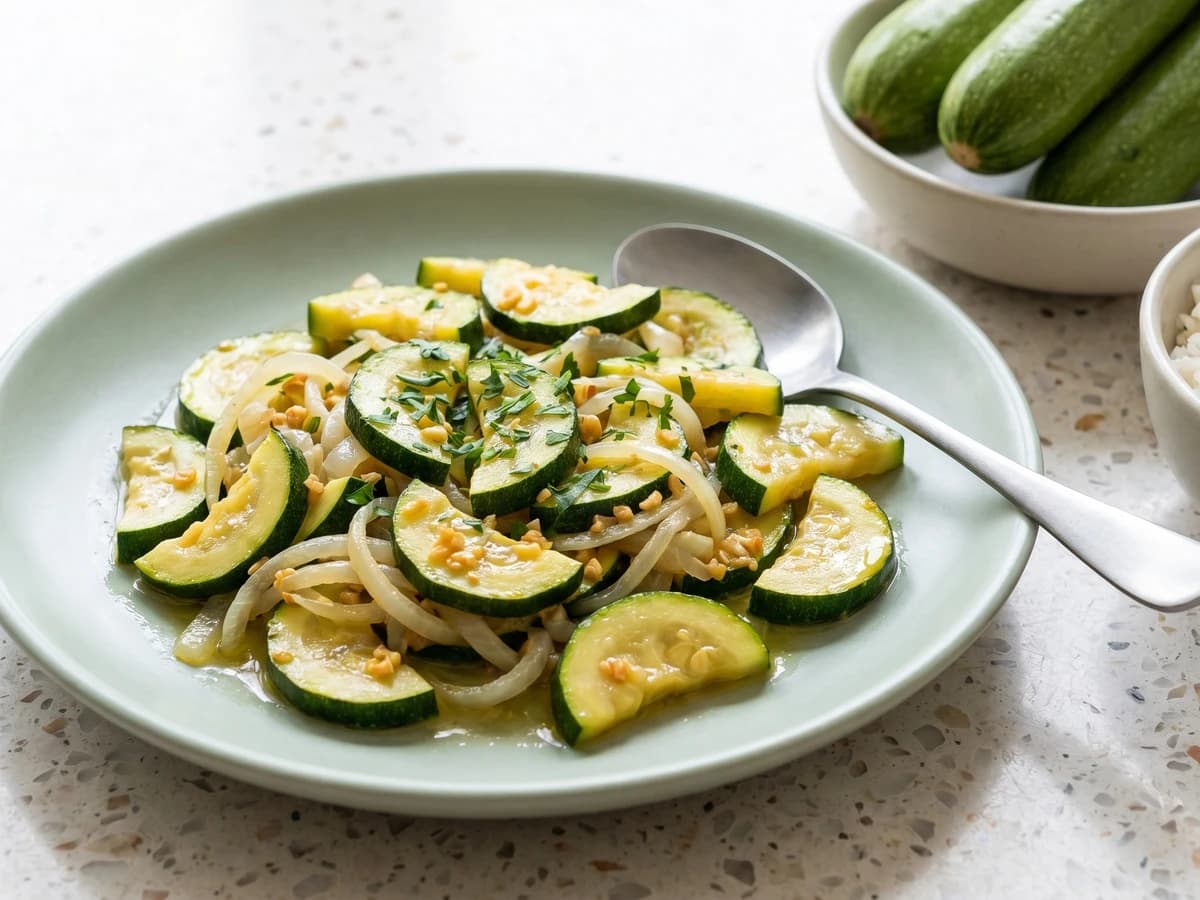
Abobrinha Refogada
You think you'll turn zucchini into mush. Fine. Anota aí: high heat, wide pan, salt at the end, and suddenly this little green side starts solving dinner.
A cooking platform built around craft, culture, and the stories behind what we eat.

Created by
You think the bean pot is not for you. Good. We'll prove that wrong with water, time, onion, garlic, and one mashed ladle that makes the caldo creamy.
You have that little voice, don't you? Isso não é pra mim. Beans are for someone who grew up knowing the pan by smell, who had a mother, an aunt, a neighbor saying, lower the flame now, child. I didn't. I learned late, with a cheap caderno open on the counter and a lot of onions ruined in public silence.
So anota aí: cozinhar não é dom, é um aprendizado. Feijão carioca is not a test of your soul. It's beans, water, time, and an honest refogado. You soak the beans so they cook more evenly and sit easier in the body. You simmer them until they crush softly. You refogar onion and garlic in good fat until the kitchen smells like dinner. Then you mash a ladle of cooked beans into that base, because the bean itself knows how to thicken its caldo. Powder has no business here.
This pot is one of the foundations of the pê-efe, rice, beans, an egg or a piece of meat, and something green. Ordinary? Yes. Small? Never. This is the plate that quietly keeps a country itself, one Tuesday at a time.
By the end, you won't have conquered a mystery. Better. You'll have learned a method. Thick, glossy feijão, arroz soltinho beside it, couve if you have it, dinner solved.
Carioca beans, the speckled beige beans often called feijão carioquinha, became the daily bean across much of Brazil in the twentieth century because they cook into a pale, creamy caldo and pair easily with white rice. Despite the name, they are not the same as Rio de Janeiro's classic black-bean pot; in many homes outside Rio, carioca beans are the weekday default. The Brazilian rice-and-beans plate is a national habit with regional variations, black beans in some places, brown or carioca beans in others, but the structure is shared from everyday kitchens north to south.
Quantity
2 cups
picked over and soaked overnight
Quantity
8 cups, plus more as needed
Quantity
2
Quantity
3 tablespoons
Quantity
1 medium
finely chopped
Quantity
4 cloves
minced
Quantity
1 1/2 teaspoons, plus more to taste
Quantity
1/2 teaspoon
| Ingredient | Quantity |
|---|---|
| dried carioca beanspicked over and soaked overnight | 2 cups |
| water | 8 cups, plus more as needed |
| bay leaves | 2 |
| neutral oil, lard, or bacon fat | 3 tablespoons |
| onionfinely chopped | 1 medium |
| garlicminced | 4 cloves |
| salt | 1 1/2 teaspoons, plus more to taste |
| freshly ground black pepper (optional) | 1/2 teaspoon |
Pick through the beans and pull out any stones or tired-looking beans. Cover with plenty of water and soak at least 8 hours or overnight. They should swell and wrinkle a little. This is not ceremony. Soaking helps the beans cook more evenly and sit easier after dinner, which matters if you plan to keep making them.
Drain the soaked beans and put them in a heavy pot with 8 cups fresh water and the bay leaves. Bring to a boil, then lower to a gentle simmer with the lid slightly open. You want small bubbles, not a furious boil, because boiling hard breaks the beans before the inside is tender.
Simmer until a bean crushes easily against the roof of your mouth, about 1 to 1 1/2 hours, adding hot water if the level drops below the beans. Don't salt yet. Old beans can take longer, because beans also have opinions. The checkpoint is softness, not the clock.
Warm the oil, lard, or bacon fat in a small pan over medium heat. Add the onion and cook, stirring now and then, until it murcha, softens, and turns see-through, about 5 minutes. Add the garlic and cook for 1 minute, just until it smells good. Burnt garlic is bitter and bossy, and it'll take over the whole pot.
Scoop 1 full ladle of tender beans with some liquid into the refogado. Mash the beans right in the pan with a spoon or fork until the mixture looks thick and creamy. This is the part people skip and then wonder why the caldo is watery. The mashed beans give the broth body. No packet. No powder. The bean does the work.
Scrape the refogado and mashed beans back into the main pot. Add the salt and black pepper, if using, and simmer 10 to 15 minutes, stirring now and then, until the caldo turns glossy and coats the spoon for a second before sliding off. Taste and adjust the salt. Pull out the bay leaves.
Serve with arroz branco soltinho, something from the pan like an egg, chicken, or beef, and something green, couve if Tuesday was kind to you. For batch cooking, cool the beans quickly in shallow containers before refrigerating or freezing. Feijão gets thicker as it rests, so loosen it later with a splash of water and a pinch of salt if needed.
1 serving (about 250g)
Culinary guides, cultural storytelling, and the editorial depth that makes cooking meaningful.
Discover Culinary ExplorerChef Juliana
You think you'll turn zucchini into mush. Fine. Anota aí: high heat, wide pan, salt at the end, and suddenly this little green side starts solving dinner.

Chef Juliana
You think this is sacred enough to be impossible. It isn't. Acaçá is patience, stirring, and ponto, taught plainly, with respect for the terreiros that carry it.
Chef Juliana
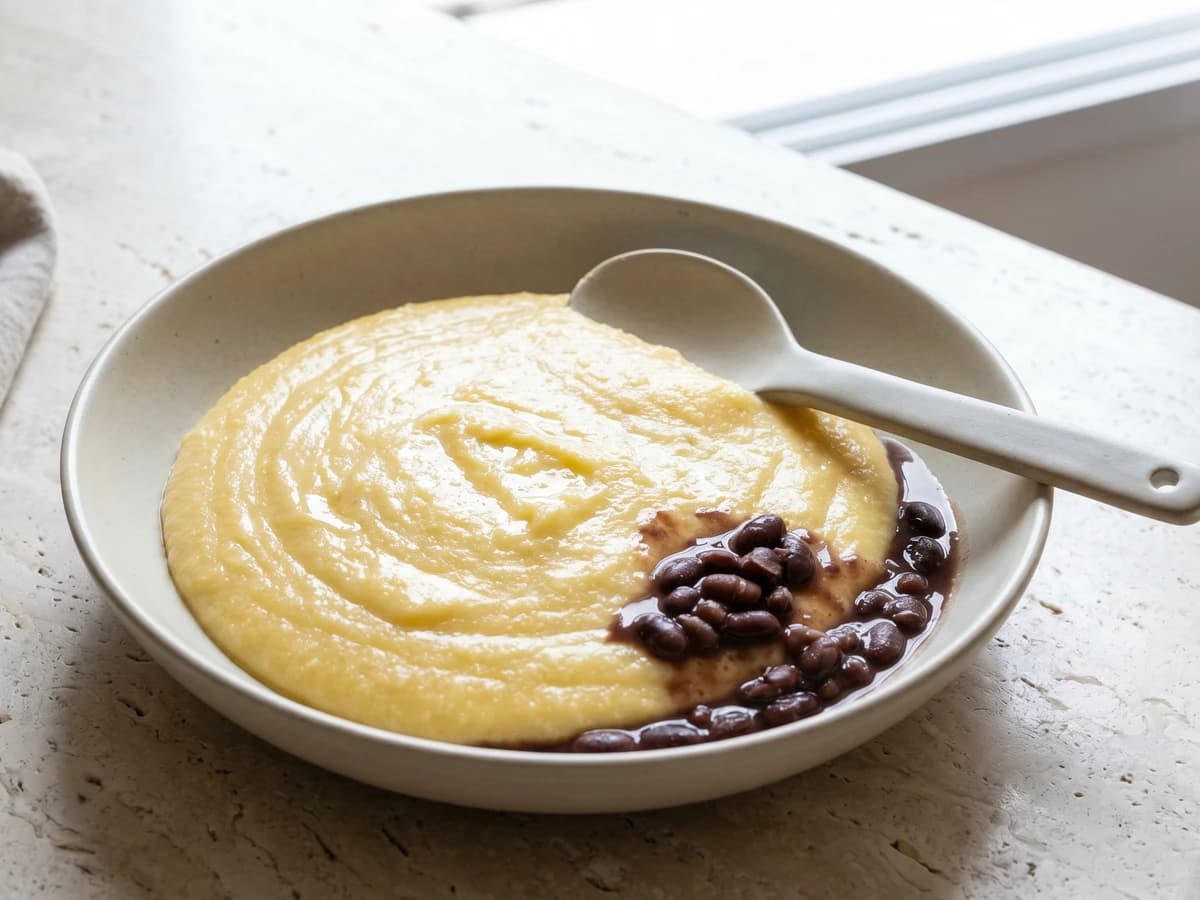
You think cornmeal will turn into lumps and shame. It won't. Cold water first, patient stirring, and a real garlic base give you angu that solves dinner.
Chef Juliana
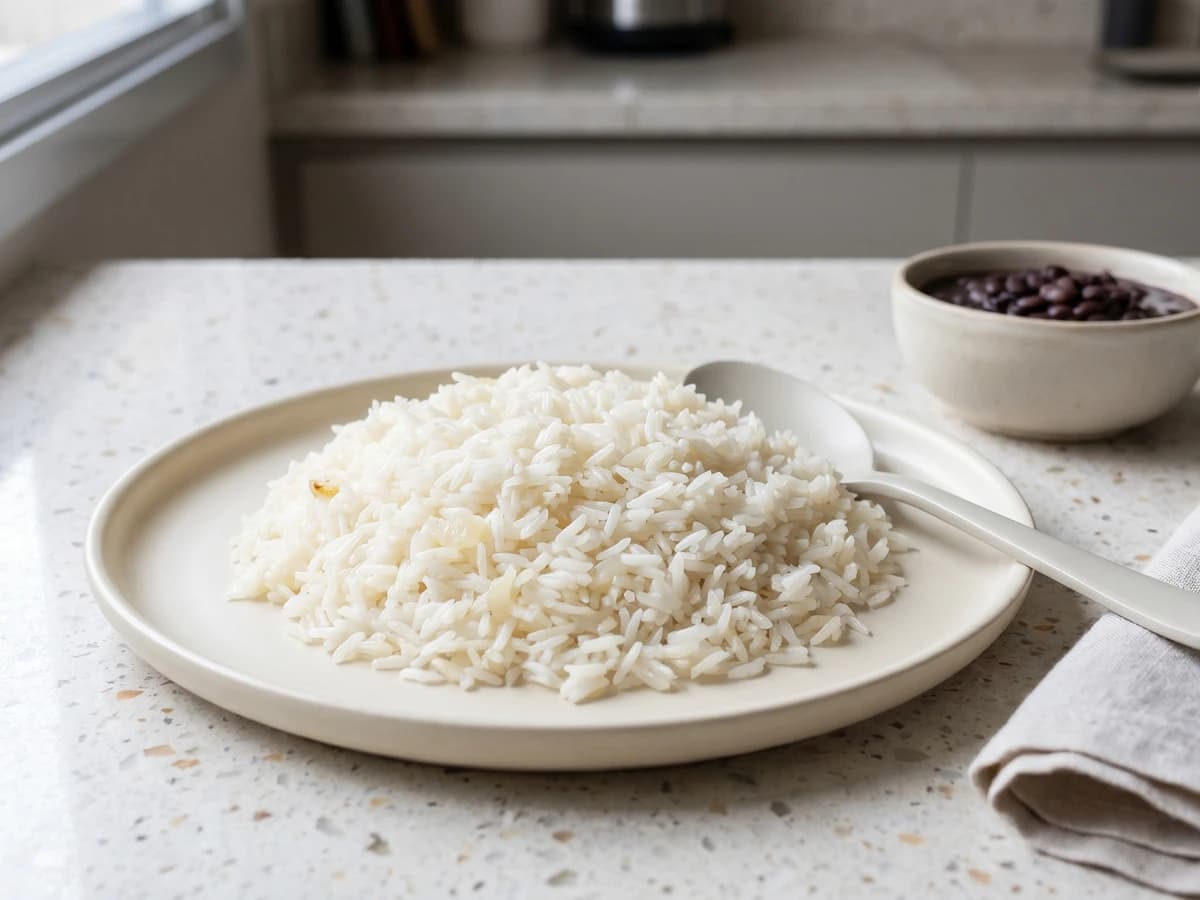
Everyone swears they can't make good rice. They're wrong. Refogue onion and garlic, use two parts water to one rice, then close the lid and leave the poor thing alone.