
Chef Isabel
Aguaillo de la Sierra de Cadiz
Aguaillo is from the Sierra de Cadiz: cold water, stale bread, garlic, oil and vinegar, closer to a field drink than a bowl of soup, and sharp enough to wake you in the heat.
A cooking platform built around craft, culture, and the stories behind what we eat.
Created by
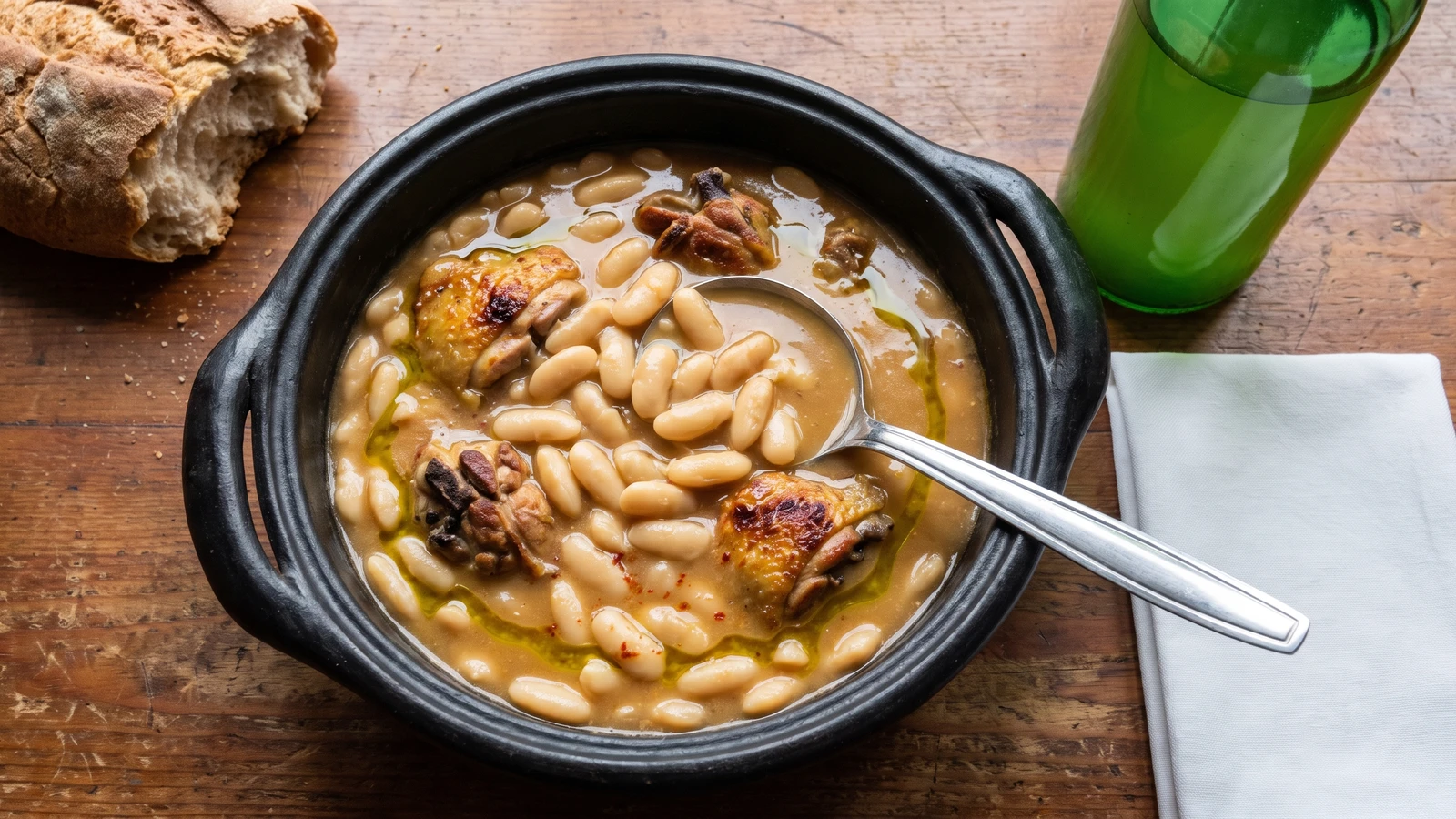
Asturias puts its Sunday bird into the bean pot here: creamy fabes de la granja, browned pitu de caleya, and a low trembling simmer that gives a deep broth without breaking the beans.
Fabes con pitu de caleya is Asturian, a Sunday bean stew where the fabes de la granja carry the broth and the pitu de caleya, the rangy free-range bird raised along the lanes, gives it its deep, clean meat flavour. Esto es de Asturias, no de "España" a secas. It isn't fabada with the compango swapped out. The dish belongs to the same bean country, but the flavour comes from a tough bird browned first, then asked to simmer until it gives in.
The step that decides it is the low simmer after the sofrito, the slow onion base, has gone dark gold and sweet. A hard boil breaks the fabes before the bird is tender, and a pale rushed sofrito leaves you with thin broth. Keep it at the barest tremble and shake the pot instead of stirring. That is the trick, if trick is not too grand a word for patience.
A real pitu de caleya is hard to find far from Asturias. Use a stewing hen, capon, or the best free-range legs and thighs you can buy, and know what changes: the broth will be lighter and the meat may be ready sooner. No hace falta haber pisado España. Use dried big white beans, soak them properly, and follow the heat. Siempre sale, si lo sigues.
In Asturias, caleya means the narrow country lane, and pitu de caleya names the slow-grown household chicken that scratched and walked rather than fattened quickly in a shed. Birds like this were too valuable for daily food, so they appeared in Sunday and feast stews, often with fabes de la granja, the large white bean at the heart of Asturian cocina de cuchara, spoon food. Pairing the bird with fabes gives a lighter cousin to fabada: the same patient bean craft, but the broth comes from poultry, sofrito, cider, and time instead of the matanza pork.
Quantity
500g
soaked 12 to 14 hours
Quantity
1 bird, 1.5 to 1.8kg
cut into 10 pieces
Quantity
14g, divided, plus more to adjust
Quantity
60ml
Quantity
250g
finely chopped
Quantity
120g
white and pale green part only, finely chopped
Quantity
100g
finely chopped
Quantity
20g
finely chopped
Quantity
150g tomato or 15g paste
tomato grated
Quantity
3g
Quantity
0.1g
lightly crushed
Quantity
1
Quantity
50ml
Quantity
200ml
Quantity
2.1L, plus small splashes as needed
| Ingredient | Quantity |
|---|---|
| dried fabes de la granjasoaked 12 to 14 hours | 500g |
| pitu de caleya or stewing hencut into 10 pieces | 1 bird, 1.5 to 1.8kg |
| fine sea salt | 14g, divided, plus more to adjust |
| extra virgin olive oil | 60ml |
| yellow onionfinely chopped | 250g |
| leekwhite and pale green part only, finely chopped | 120g |
| green pepperfinely chopped | 100g |
| garlicfinely chopped | 20g |
| ripe tomato or plain tomato pastetomato grated | 150g tomato or 15g paste |
| sweet pimentón | 3g |
| saffron threadslightly crushed | 0.1g |
| bay leaf | 1 |
| brandy de Jerez or coñac | 50ml |
| dry Asturian sidra natural, dry hard cider, or dry white wine | 200ml |
| cold water | 2.1L, plus small splashes as needed |
Put the fabes in a large bowl and cover them with plenty of cold water, at least three fingers above the beans. Leave them 12 to 14 hours, then drain them and discard any that float stubbornly. The soak lets the centres cook through before the skins split. Pésalo, no lo adivines: 500g is the right amount for this bird and this pot.
Pat the pitu de caleya dry and season it with 8g of the salt. Heat 40ml of the olive oil in a heavy 6 to 7 litre olla or Dutch oven over medium heat. Brown the bird in batches, skin side down first, until the pieces are deep gold with darker edges, about 4 to 5 minutes per side. Lift them to a plate. You are not cooking the meat through yet; you are building the flavour the broth will carry later.
Lower the heat and add the remaining 20ml olive oil to the same pot. Add the onion, leek, green pepper, and a small pinch of the remaining salt. Cook low and slow, scraping up the browned bits, until the vegetables are dark gold, soft, and jammy, 25 to 30 minutes. This sofrito, the slow onion base, is where the sweetness comes from. Rush it and the broth tastes thin.
Stir in the garlic and cook for 2 minutes, just until it smells sweet. Add the grated tomato and cook until it loses its raw smell and thickens into the sofrito, 8 to 10 minutes. Pull the pot off the heat, stir in the pimentón, saffron, and bay leaf, then return it to low heat. Pimentón burns fast and turns bitter, so give it warmth, not punishment.
Return the browned pitu and its juices to the pot. Pour in the brandy and let it bubble for 1 minute, then add the sidra natural. Simmer until the liquid has reduced by about half and smells sharp and savoury, 5 to 7 minutes. Use dry cider, not sweet cider. Sweet cider gives you a flat, sugary stew, and Asturias did not ask for that.
Add the drained fabes around the chicken pieces, then pour in 2.1L cold water. The beans should be covered by about 3cm. Bring the pot up slowly over medium-low heat, 30 to 40 minutes, skimming off the grey foam that rises. Start cold and climb slowly; it keeps the fabes whole instead of shocking the skins open.
Once the pot is barely bubbling, lower the heat and keep it at the gentlest tremble for 2 1/2 to 3 hours. Do not stir with a spoon. Shake the pot by the handles now and then so the beans move without breaking. If the liquid drops too far, add a small splash of cold water, asustar las fabes, to settle the boil and keep the skins intact. After 2 hours, add the remaining salt and start tasting: the beans should be creamy all the way through, and the pitu should yield at the bone.
Turn off the heat and let the stew rest 20 to 30 minutes. Skim a little fat if you like, but leave enough gloss on the broth. If the liquid is too loose, crush two spoonfuls of beans against the side of the pot and shake the pot gently to thicken it. Serve deep bowls with fabes, broth, and a piece of pitu in each one. Siempre sale, si lo sigues.
1 serving (about 650g)
Culinary guides, cultural storytelling, and the editorial depth that makes cooking meaningful.
Discover Culinary ExplorerChef Isabel
Aguaillo is from the Sierra de Cadiz: cold water, stale bread, garlic, oil and vinegar, closer to a field drink than a bowl of soup, and sharp enough to wake you in the heat.

Chef Isabel
Ajilimojili is Jaen's tomato-free cold soup: potato, roasted red pepper, garlic, olive oil, and vinegar pounded into a cool, silky spoonful.

Chef Isabel
Ajo carretero is Soriano, from the pine country of Soria: lamb cooked in a plain garlicky broth, then served the old way, meat first and bread-soaked soup after.

Chef Isabel
Ajoblanco Extremeño is the poor-kitchen cold soup of Extremadura: bread, garlic, oil, egg yolk, vinegar, and icy water, with no almonds. Whisk it slowly and serve it bien fresquito.