
Chef Jeong-sun
Agwi-jjim (Braised Monkfish with Bean Sprouts)
Firm monkfish buried under crisp soybean sprouts, minari, and a red gochugaru sauce thickened at the end; Masan's market dish asks for heat, timing, and a steady hand.
A cooking platform built around craft, culture, and the stories behind what we eat.

Created by
Buttery sablefish set over thick Korean radish and braised gently in a soy, gochugaru, garlic, and ginger sauce until the fish stays silky and the radish drinks deeply.
Eundaegu asks for restraint because the fish is already rich. That is the first lesson. Black cod, or sablefish, has so much fat in its flesh that it forgives a busy cook, but forgiveness is not permission to be careless. Boil it hard and the flakes still taste good, but the sauce turns muddy and the radish never learns the fish properly.
At the market I look for thick center-cut pieces, skin on, flesh pale and glossy, not yellowing at the edges. This is not the cheapest fish for a weeknight, so Korean homes often bring it out when someone is coming, or when the table needs comfort without a great show. The radish goes underneath, cut thick enough to keep its shape, because it becomes the second main ingredient. People think the fish is the prize. Half the table will fight quietly over the radish.
The sauce is soy, gochugaru (Korean chili flakes), garlic, ginger, a little sugar, and rice wine. Not too sweet. Not buried in gochujang. Let it taste like itself: buttery fish, sweet radish, a clean red-brown reduction. Spoon the sauce over as it cooks instead of stirring the pot to pieces. Notebook 41 says 20 minutes covered, then 8 to 10 minutes uncovered, and that is enough for thick fillets without bullying them.
손맛 is real. I still measure it, so it can be handed on. Taste the sauce at the end and write down whether your soy sauce needed another teaspoon of sugar or another tablespoon of water. The next bottle will not be the same.
Jorim is a Korean braising method used for fish, tofu, and vegetables, built around a seasoned soy-based liquid reduced until it clings rather than remaining soupy. Eundaegu, sold in English as black cod or sablefish, reflects the modern Korean seafood table shaped by cold-chain markets and imported North Pacific fish, not an old palace dish. The preparation borrows the older home grammar of saengseon-jorim (braised fish), especially the pairing of fatty fish with thick Korean radish that soaks up the sauce.
Quantity
700g
skin on, cut into 4 thick pieces
Quantity
450g
peeled and cut into 1/2-inch thick half-moons
Quantity
1/2 medium
sliced 1/2 inch thick
Quantity
2
cut into 2-inch lengths
Quantity
1
sliced on the diagonal
Quantity
1
sliced on the diagonal
Quantity
1 cup
Quantity
5 tablespoons
Quantity
2 tablespoons
Quantity
1 tablespoon
Quantity
1 tablespoon
Quantity
2 teaspoons
Quantity
1 tablespoon
minced
Quantity
1 teaspoon
minced
Quantity
2 teaspoons
Quantity
1 teaspoon
Quantity
1/4 teaspoon
freshly ground
| Ingredient | Quantity |
|---|---|
| black cod or sablefishskin on, cut into 4 thick pieces | 700g |
| Korean radish (mu)peeled and cut into 1/2-inch thick half-moons | 450g |
| onionsliced 1/2 inch thick | 1/2 medium |
| scallionscut into 2-inch lengths | 2 |
| green chili (optional)sliced on the diagonal | 1 |
| red chili (optional)sliced on the diagonal | 1 |
| anchovy-kelp broth or water | 1 cup |
| soy sauce | 5 tablespoons |
| gochugaru (Korean chili flakes) | 2 tablespoons |
| rice wine or mirin | 1 tablespoon |
| maesil-cheong (green plum syrup) (optional) | 1 tablespoon |
| sugar (optional) | 2 teaspoons |
| garlicminced | 1 tablespoon |
| gingerminced | 1 teaspoon |
| toasted sesame oil | 2 teaspoons |
| toasted sesame seeds | 1 teaspoon |
| black pepperfreshly ground | 1/4 teaspoon |
Rinse the black cod quickly under cold water and pat it very dry. Check for stray scales near the skin and any pin bones. Dry fish takes the seasoning cleanly; wet fish waters the sauce before the braise has even begun.
In a bowl, stir together the soy sauce, gochugaru, rice wine, maesil-cheong or sugar, garlic, ginger, sesame oil, sesame seeds, and black pepper. This amount seasons 700g fish and 450g radish without turning the dish salty. The sauce should taste strong now because the radish and fish will give back water as they cook.
Lay the radish in a wide shallow pot in one snug layer and scatter the onion over it. Pour in the anchovy-kelp broth or water and bring it to a steady simmer over medium heat. Cover and cook 10 minutes, until the radish begins to turn translucent at the edges. Radish goes first because it needs time to soften before the fish joins it.
Place the black cod pieces skin side down over the radish. Spoon the sauce evenly over the fish and around the pot. Do not stir. The fish is fatty and tender, and stirring breaks what you paid for. Cover and simmer gently for 18 to 20 minutes, spooning sauce over the top every 5 minutes.
Uncover the pot and simmer 8 to 10 minutes more, spooning the sauce over the fish until it turns glossy and red-brown and lightly coats a spoon. If the pan looks dry before the radish is tender, add 2 tablespoons water at a time. If the sauce is thin, keep it uncovered a little longer. Reduction is the difference between jorim and fish sitting in soup.
Scatter the scallions and sliced chilies over the top for the last 2 minutes, just long enough for them to soften but still keep their color. Taste the sauce, not the fish, and adjust only if needed: 1 teaspoon soy sauce for salt, 1 teaspoon sugar for balance, or 1 tablespoon water if it has tightened too much. Serve from the pot with rice, giving each person fish, radish, and enough sauce to spoon over the rice.
1 serving (about 310g)
Culinary guides, cultural storytelling, and the editorial depth that makes cooking meaningful.
Discover Culinary ExplorerChef Jeong-sun
Firm monkfish buried under crisp soybean sprouts, minari, and a red gochugaru sauce thickened at the end; Masan's market dish asks for heat, timing, and a steady hand.

Chef Jeong-sun
A quick Korean rice bowl built on contrast: warm rice, cold popping flying-fish roe, chopped vegetables, gim, sesame oil, and the crisp rice bottom a hot stone bowl gives you.
Chef Jeong-sun
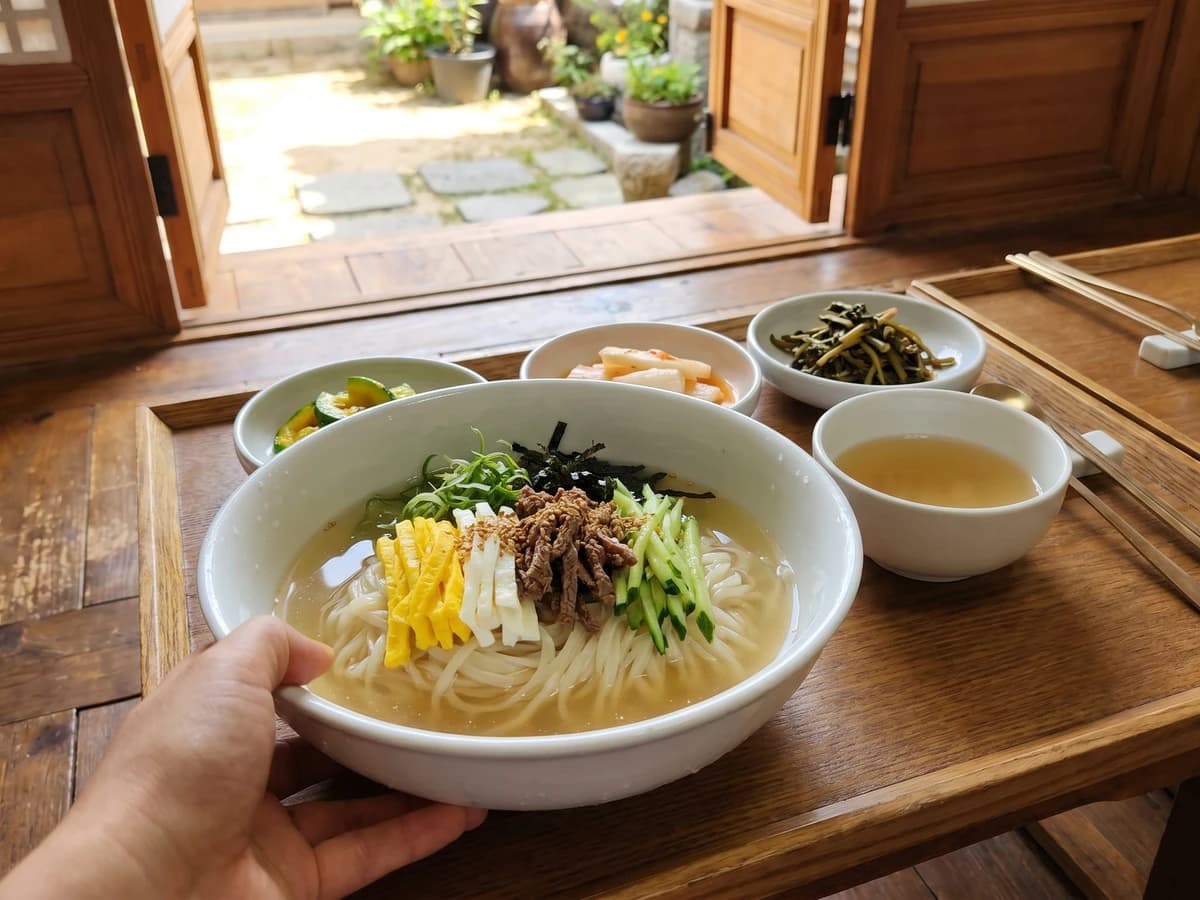
Andong's guest noodles, wheat and roasted soybean flour rolled thin, boiled and rinsed cold, then set in a clear chilled anchovy broth with careful strips of beef, egg, and cucumber.

Chef Jeong-sun
Andong's ritual-table rice served on an ordinary day: separate soy-sesame namul, warm rice, and clear radish soup, mixed without gochujang so every vegetable keeps its own voice.