
Chef Dimitra
Arkatena Omodous (Αρκατένα Ομόδους)
Omodos arkatena are Cypriot chickpea-leavened rusks, pale inside and sesame-studded, baked once as little rings and again until they crack clean under the tooth and keep beautifully.
A cooking platform built around craft, culture, and the stories behind what we eat.
Created by
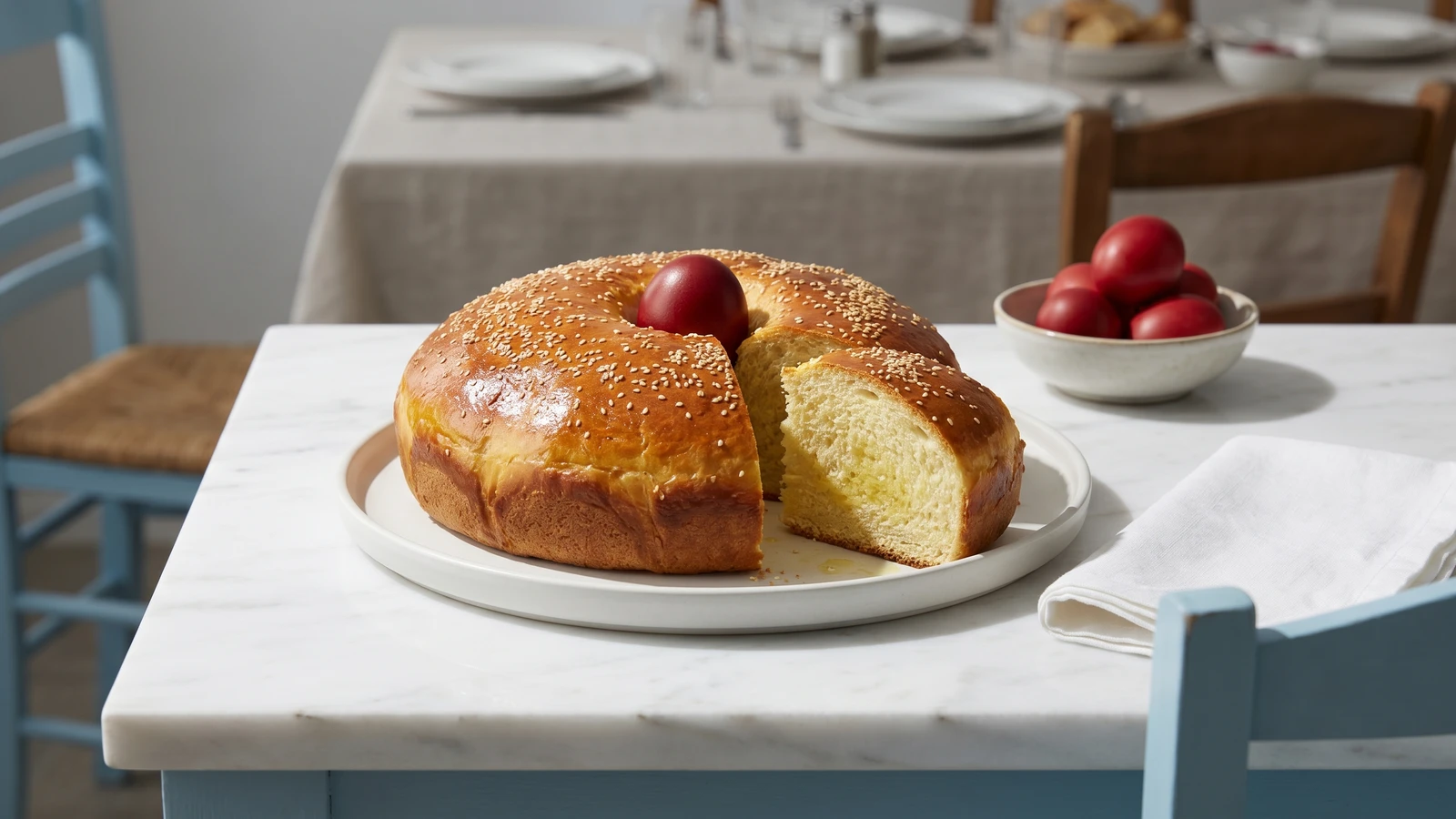
Epirus gives Easter bread a quieter hand: a round, lightly sweet loaf, fragrant with mahlepi and orange, crowned with the red egg of the Resurrection.
Lambropsomo of Epirus is the round Easter loaf of the mountain table, less sweet than tsoureki and steadier in the hand. It is enriched with eggs, milk, butter, and a little olive oil, scented lightly, then shaped whole and crowned with a red egg. The region is the dish's surname.
What makes it itself is the roundness. This is not a braid for display, but a family loaf, gathered into one circle for the Resurrection table. The bread should pull apart in soft slices, not in cottony strands, and the sweetness should sit behind the wheat and the butter.
The kneading matters most. Enriched dough asks for time before it becomes elastic, because fat and eggs make it tender while slowing the gluten. Work it until it stretches smoothly, then leave it alone to rise at its own pace. Your hands will know when the dough stops being merely sticky and starts becoming bread.
I keep the red egg pressed into the crown, not buried and not perched like decoration. It belongs there. A recipe written down is a recipe saved, and this one should come out of an ordinary home oven looking like Easter in Epirus, not like a pastry-shop imitation.
Lambropsomo takes its name from Lampri, the bright feast of Easter, and in Epirus it belongs to the household breads made for the Resurrection meal after the long Lenten fast. Unlike the sweeter, braided tsoureki associated with urban pastry shops, the Epirote loaf keeps the older round form, with the red egg marking Christ's blood and the family's wholeness at the table. Similar Easter breads appear across Greece under names such as lambrokouloura, but the Epirote version is plainer, more bread than sweet.
Quantity
500g
plus a little more for shaping
Quantity
7g
Quantity
80g
Quantity
10g
Quantity
200ml
lukewarm
Quantity
2
room temperature
Quantity
80g
melted and cooled until warm
Quantity
30ml
Quantity
1 teaspoon
Quantity
1/2 teaspoon
Quantity
zest of 1 orange
finely grated
Quantity
1
hard-boiled and dry
Quantity
1 egg yolk plus 1 tablespoon milk
beaten together
Quantity
1 tablespoon
| Ingredient | Quantity |
|---|---|
| strong bread flourplus a little more for shaping | 500g |
| instant yeast | 7g |
| sugar | 80g |
| fine sea salt | 10g |
| whole milklukewarm | 200ml |
| large eggsroom temperature | 2 |
| unsalted buttermelted and cooled until warm | 80g |
| extra virgin olive oil | 30ml |
| ground mahlepi | 1 teaspoon |
| ground mastic (optional) | 1/2 teaspoon |
| orange zestfinely grated | zest of 1 orange |
| red-dyed Easter egghard-boiled and dry | 1 |
| egg yolk and milk glazebeaten together | 1 egg yolk plus 1 tablespoon milk |
| sesame seeds | 1 tablespoon |
Put the flour, yeast, sugar, salt, mahlepi, mastic if using, and orange zest in a large bowl and stir them together. Whisk the lukewarm milk with the eggs, then pour it in with the melted butter and olive oil. Mix until no dry flour remains and the dough feels sticky, soft, and a little heavy from the enrichment.
Knead for 10 to 12 minutes by hand, or 7 to 8 minutes in a mixer on low speed, until the dough turns smooth and elastic. This is the method that decides the bread: the dough must be worked long enough to stretch without tearing, because the butter and eggs make it tender but also slow it down. Stop too early and the loaf bakes dense.
Shape the dough into a ball, set it in a lightly oiled bowl, cover it, and leave it in a warm place until doubled, 1 1/2 to 2 hours. It won't race like plain bread. Good olive oil, eggs, butter, and patience.
Turn the dough onto a lightly floured surface and press it gently into a round. Pull the edges under to make a tight, smooth loaf, then set it seam-side down on a baking sheet lined with parchment. Press the red egg into the center of the crown, deep enough that the dough grips it.
Cover the loaf loosely and let it rise again until puffy, 45 to 60 minutes. Heat the oven to 180C. Brush the loaf carefully with the egg-yolk glaze, working around the red egg, and scatter the sesame seeds over the top.
Bake for 40 to 45 minutes, until the loaf is deep golden and sounds hollow when tapped underneath. If the top colors too quickly, tent it lightly with foil for the last 10 minutes. Cool on a rack at least 1 hour before cutting, so the crumb settles instead of tearing under the knife.
1 serving (about 100g)
Culinary guides, cultural storytelling, and the editorial depth that makes cooking meaningful.
Discover Culinary ExplorerChef Dimitra
Omodos arkatena are Cypriot chickpea-leavened rusks, pale inside and sesame-studded, baked once as little rings and again until they crack clean under the tooth and keep beautifully.

Chef Dimitra
Attica's Clean Monday lagana is lean, sesame-heavy, and deeply dimpled, made to be torn beside taramosalata before the bread goes stale by morning.

Chef Dimitra
Crete's eftazymo rises from a ground-chickpea ferment kept warm and still, then bakes into a fragrant sesame loaf with sweet-sour crumb and a faint whisper of mastic.

Chef Dimitra
Cypriot flaounes are Easter cheese breads with a sesame crust, fragrant dough, and a firm halloumi-anari filling that must rest before it bakes.