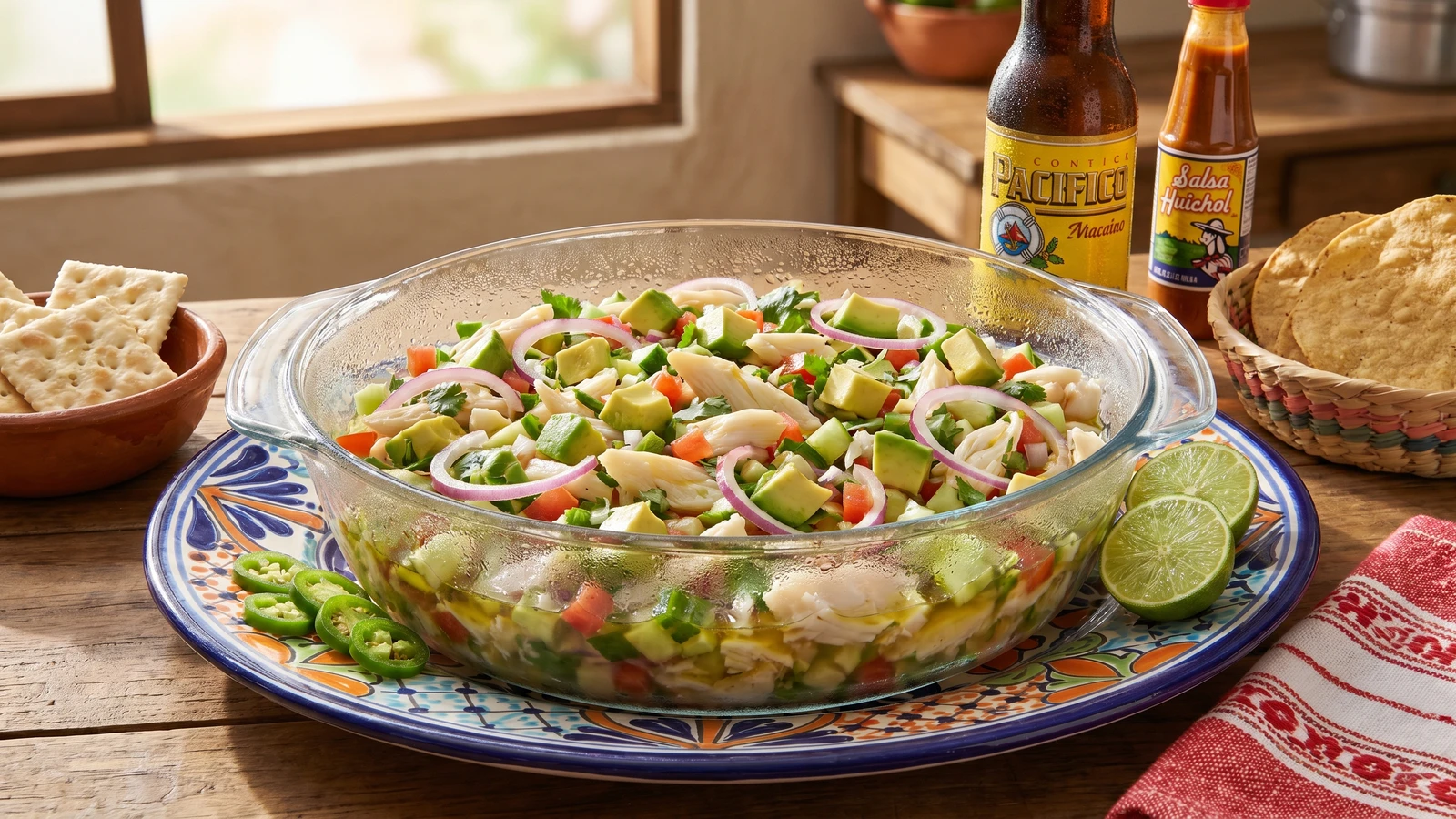
Mazatlan's Pacific crab salad in the lighter vinagreta style, shredded jaiba dressed in lime, olive oil, cilantro, cucumber and red onion. Cold, bracing, and built for a hot afternoon by the sea.
Salads
Mexican
Dinner Party
Outdoor Dining
Special Occasion
30 min
Active Time
15 min cook•45 min total
Yield6 servings as a starter, 4 as a main
This is from Sinaloa. Specifically from Mazatlan, the Pacific port where jaiba, blue crab, comes off the boats every morning and the marisquerias along the malecon turn it into a dozen different cold dishes by noon.
There are two ensaladas de jaiba in Mazatlan and people will fight you about which is correct. The creamy version, dressed with mayonnaise, is what most tourists eat because it gets piled into avocado halves and photographed. The vinagreta version is what the locals eat. Lime, olive oil, raw red onion, cucumber, tomato, cilantro, a little serrano, salt. That is the whole dish. The crab has nowhere to hide, which is why the crab has to be good. No me vengas con atajos. Imitation crab is a costume, not a substitute.
Sinaloa is a serious seafood state. The Sea of Cortes on one side, the Pacific on the other, and a fishing tradition that built marisquerias into a dining format that the rest of Mexico copied. What Mazatlan understands that other places do not is that fresh shellfish does not need to be dressed up. The vinagreta is there to lift the crab, not cover it. If your crab is sweet and clean, the salad is sweet and clean. Saber cocinar es saber vivir, and in Mazatlan that means knowing when to let the ingredient speak and when to step out of its way.
Mazatlan's marisquerias emerged as a recognized dining category in the early 20th century, when the city's fishing fleet expanded and dockside cooks began building cold seafood preparations to serve in the heat without a working kitchen. The vinagreta dressing reflects the Mediterranean influence carried by Spanish and Italian immigrants who settled along Sinaloa's coast in the late 1800s, layered onto an indigenous Cahita and Mayo tradition of curing seafood with citrus and chile. Sinaloa today supplies the majority of Mexico's commercial crab catch, and the state's two principal preparations of jaiba salad, the mayonnaise-based and the vinagreta, are both protected as part of the state's culinary patrimony in tourism documentation but remain fiercely defended as separate dishes by the cooks who make them.
The technique, the tradition, and the story behind every dish.
preferably a mix of lump and claw, picked over for shell
fresh lime juice
Quantity
1/2 cup (about 6 to 8 Mexican limes), divided
extra virgin olive oil
Quantity
1/3 cup
good quality
red onion
Quantity
1 small
sliced into very thin half-moons
English cucumber
Quantity
1
peeled in stripes and diced small
plum tomatoes
Quantity
2
seeded and diced small
fresh chile serrano
Quantity
1
stemmed and finely minced
fresh cilantro leaves and tender stems
Quantity
1/2 cup
roughly chopped
ripe but firm Hass avocado
Quantity
1
diced just before serving
kosher salt
Quantity
1 1/2 teaspoons, plus more to taste
dried Mexican oregano
Quantity
1/2 teaspoon
crumbled between your fingers
freshly ground black pepper
Quantity
to taste
Salsa Huichol or Tamazula
Quantity
1 dash, plus more for serving
saltine crackers or tostadas (optional)
Quantity
for serving
lime halves (optional)
Quantity
for serving
Ingredient
Quantity
fresh-picked blue crab meat (jaiba)preferably a mix of lump and claw, picked over for shell
1 pound
fresh lime juice
1/2 cup (about 6 to 8 Mexican limes), divided
extra virgin olive oilgood quality
1/3 cup
red onionsliced into very thin half-moons
1 small
English cucumberpeeled in stripes and diced small
1
plum tomatoesseeded and diced small
2
fresh chile serranostemmed and finely minced
1
fresh cilantro leaves and tender stemsroughly chopped
1/2 cup
ripe but firm Hass avocadodiced just before serving
1
kosher salt
1 1/2 teaspoons, plus more to taste
dried Mexican oreganocrumbled between your fingers
1/2 teaspoon
freshly ground black pepper
to taste
Salsa Huichol or Tamazula
1 dash, plus more for serving
saltine crackers or tostadas (optional)
for serving
lime halves (optional)
for serving
Equipment Needed
•Wide white plate or sheet pan for picking the crab clean
•Glass or ceramic mixing bowl (do not use metal with this much lime)
•Sharp paring knife for the cucumber and tomato
•Wide chilled glass cazuela or shallow ceramic platter for serving
Instructions
1
Pick the crab clean
Spread the crab meat on a wide white plate or sheet pan. Run your fingers through it slowly, looking for shell and cartilage. Even the best lump from a good fishmonger has a few pieces hiding in it. A shell fragment in your salad ruins the dish for whoever finds it. Take the time. Si no conoces el mercado, no conoces la cocina, and the same goes for the meat after it leaves the market.
If you can find live blue crabs, steam them yourself with salt and a few bay leaves for 12 to 15 minutes, cool them, and pick the meat. The flavor is honest in a way pre-picked containers cannot match. The pasteurized refrigerated tubs from a Sinaloa or Gulf supplier are the next best thing. Imitation crab is not crab and has no place in this salad.
2
Soak the red onion
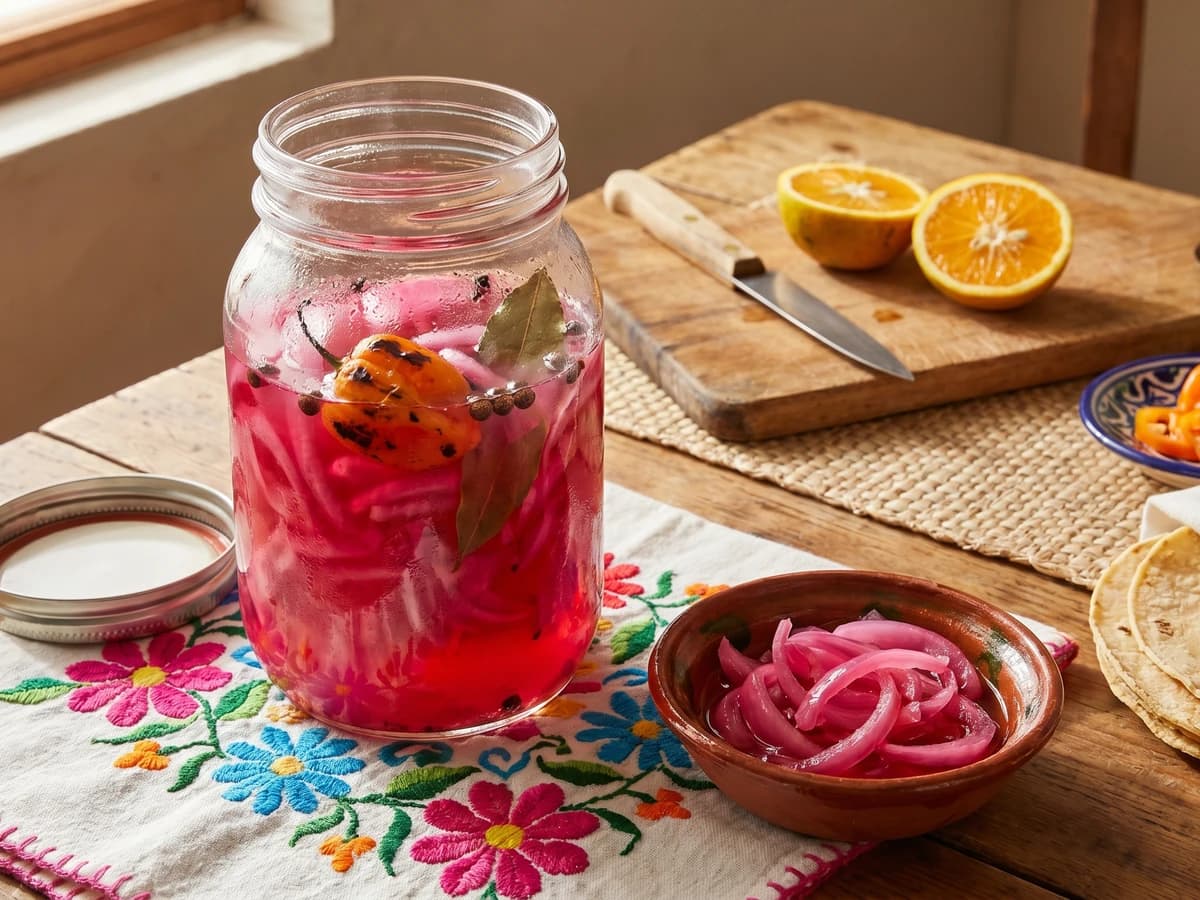
Place the sliced red onion in a small bowl and cover with cold water and a tablespoon of the lime juice. Let it sit for 10 minutes while you prep the rest. This pulls the harsh sulfur edge out of the onion without killing the bite. The marisquerias along the Mazatlan malecon do this. The home cooks do this. Skip it and you will taste raw onion before you taste crab.
3
Build the vinagreta
In a wide glass bowl, whisk together the remaining lime juice, the olive oil, the salt, the crumbled oregano, several grinds of black pepper, and the dash of Salsa Huichol. Taste it. It should be sharp, faintly bitter from the olive oil, and salty enough to season the crab without help. The lime carries the dish. If your limes are weak, use one more. Mexican limes are smaller and more acidic than Persian limes, and they are what Mazatlan cooks use.
4
Combine the vegetables
Drain the onion well and add it to the vinagreta along with the diced cucumber, tomato, minced chile serrano, and chopped cilantro. Toss gently with a wooden spoon. Let it sit for five minutes. The vegetables release a little water and the dressing sharpens. This is your base.
5
Fold in the crab
Add the picked crab meat to the bowl. Fold it in with a light hand, lifting from underneath rather than stirring. Lump crab breaks if you mistreat it, and broken crab in this salad reads as canned tuna. Taste for salt and lime. The salad should be bright and assertive, not shy. If it tastes flat, more salt before more lime. La cocina no es decoracion, es trabajo, and the seasoning is the work.
6
Rest and finish with avocado
Cover the bowl loosely and refrigerate for at least 15 minutes and up to one hour. The flavors marry, the cucumber gets cold, and the dressing settles into the crab. Just before serving, dice the avocado and fold it in last so it stays in clean cubes. Avocado folded in early turns the salad muddy.
7
Serve cold and immediately
Spoon the salad generously into a wide chilled glass cazuela or onto small plates. Serve with saltines or tostadas, lime halves, and the bottle of Salsa Huichol on the table for whoever wants more heat. This is a dish for an outdoor table on a hot day, eaten with cold beer in the shade. Asi se hace y punto.
Chef Tips
•The crab is the dish. Buy fresh-picked or pasteurized refrigerated lump crab from a fishmonger you trust. Frozen crab in tubs from the freezer aisle has too much water and the meat goes stringy when it thaws. Imitation surimi crab is not crab. It is fish paste with red dye, and putting it in this salad is an insult to Mazatlan.
•Mexican limes (limones criollos), the small green ones, are not optional in this dish. Persian limes are softer and sweeter and will give you a flatter vinagreta. If you can only find Persian limes, use a little extra and finish with a small splash of fresh lime juice at the table.
•Some Mazatlan cooks add a tiny dice of celery for crunch and a few drops of Maggi or English Worcestershire. Both are traditional. Neither is required. If you are going to add them, add a quarter cup of finely diced celery and a half teaspoon of Worcestershire to the vinagreta in step three. Do not add both Maggi and Worcestershire. Pick one.
•This salad does not survive overnight. The cucumber waters down, the cilantro turns dark, and the crab loses its sweetness. Make it the day you eat it, within four hours of dressing the crab.
Advance Preparation
•The vinagreta can be whisked together up to four hours ahead and refrigerated. The flavors round out and the lime mellows slightly.
•The crab can be picked clean and refrigerated covered for up to one day before dressing.
•Once the crab meets the vinagreta, eat the salad within four hours. The avocado must always go in at the last moment.
Frequently Asked Questions
Nutrition Information
1 serving (about 225g)
Calories
235 calories
Total Fat
17 g
Saturated Fat
2 g
Trans Fat
0 g
Unsaturated Fat
13 g
Cholesterol
60 mg
Sodium
640 mg
Total Carbohydrates
8 g
Dietary Fiber
2 g
Sugars
2 g
Protein
14 g
Where cooking meets culture.
Culinary guides, cultural storytelling, and the editorial depth that makes cooking meaningful.