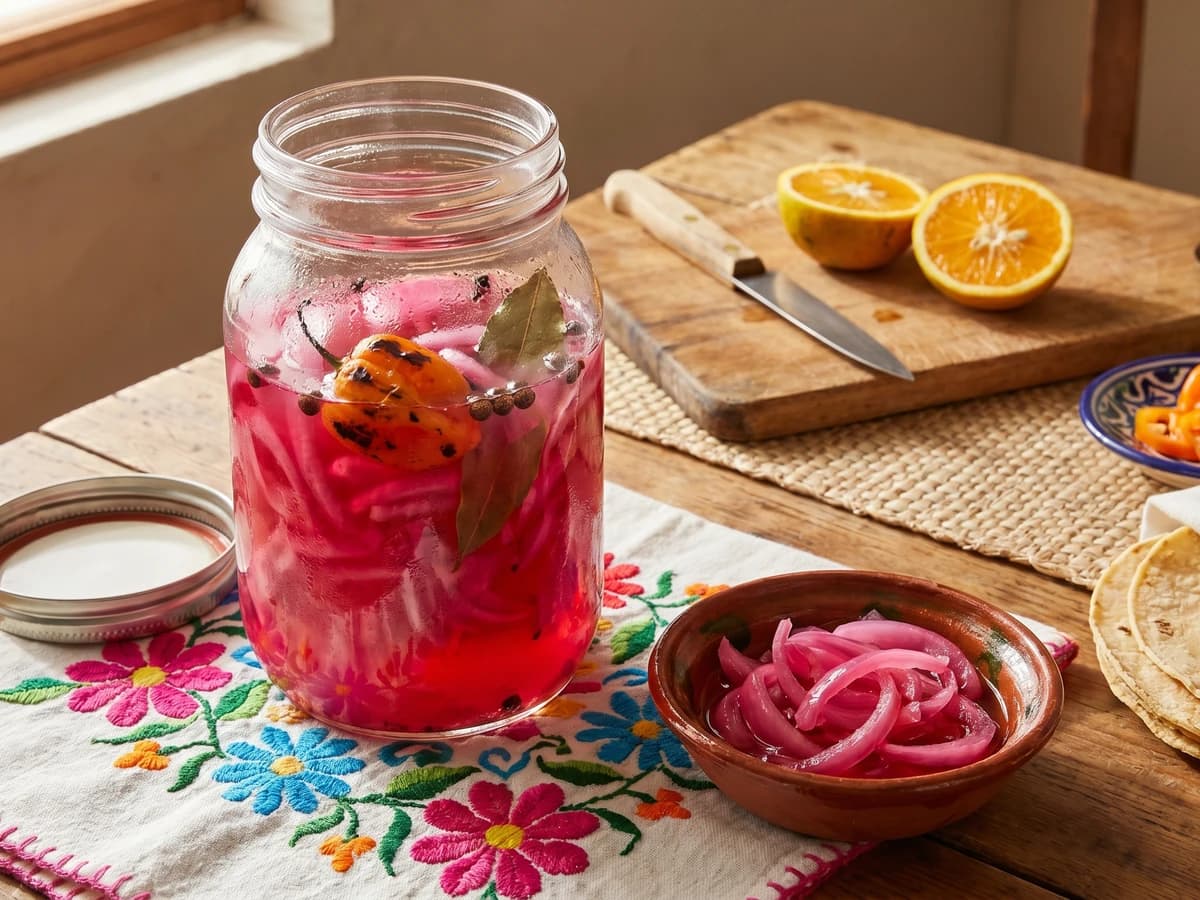
Yucatán's milpa salad of blanched chaya, toasted pepita, naranja agria, and habanero, finished with shaved queso de bola and pickled red onion. The green of the gods, treated with the respect it demands.
Salads
Mexican
Weeknight
Comfort Food
Budget Friendly
20 min
Active Time
10 min cook•30 min total
Yield4 to 6 servings
This is from the Yucatán Peninsula. Mérida, Valladolid, Tizimín, the small towns of the milpa where chaya grows in courtyards like a tree and where the Maya have been eating its leaves for a thousand years. Chaya is not spinach. The Maya called it the tree of life and they were not exaggerating. The leaves are richer in iron, calcium, and protein than almost any green you can name. But you cannot eat them raw. The leaves carry hydrocyanic glycosides that have to be cooked out. Five minutes in boiling water and they become one of the most generous greens in Mexico. Less than that and you have a problem. La cocina no es decoración, es trabajo.
Yucatecan salads are not lettuce-and-dressing affairs the way the rest of the country sometimes pretends. They are built on what the peninsula grows: jícama, cabbage, radish, betabel, cucumber, ibes, the small native lima bean. They are dressed with naranja agria, the bitter Seville-style orange that does the work vinegar does in other kitchens. They are finished with chile habanero, raw and minced, because habanero is to Yucatán what serrano is to Jalisco and chile de árbol is to Sinaloa. Cada estado, su propia cocina.
I collected this version from a señora in a courtyard kitchen in Mérida who had a chaya tree growing right outside her door and who told me, very directly, that anyone who blanches chaya for less than five minutes does not know what they are doing. She crumbled queso de bola over the top, that hard waxed Edam the Yucatecans inherited from Dutch sailors centuries ago and made their own, and she set the bowl down between a stack of warm tortillas and a glass jar of cebollas moradas. That is how the dish lives. Naranja agria, habanero, pepita, queso de bola. No me vengas con atajos.
Chaya (Cnidoscolus aconitifolius) was a staple of the ancient Maya diet, cultivated in dooryard gardens across the Yucatán Peninsula and documented in colonial-era manuscripts including the 16th-century Diccionario Maya Cordemex, where it appears under the name 'chay.' The plant's hydrocyanic glycosides, neutralized through boiling, made it an ingredient that survived alongside the post-Conquest introductions of citrus, Edam cheese (brought by Dutch merchants trading through Caribbean ports in the 17th and 18th centuries), and the chile habanero, which despite its name arrived in Yucatán from Cuba and the Caribbean rather than from Havana itself. The pairing of indigenous milpa ingredients with these colonial additions defines modern Yucatecan cuisine and distinguishes it sharply from the cooking of central or northern Mexico.
The technique, the tradition, and the story behind every dish.
or a blend of 2 tablespoons lime juice, 2 tablespoons orange juice, and 1 tablespoon grapefruit juice
chile habanero
Quantity
1
stemmed and finely minced, seeds removed if you want less heat
extra-virgin olive oil
Quantity
3 tablespoons
small garlic clove
Quantity
1
finely grated
kosher salt
Quantity
1 teaspoon, plus more to taste
dried Yucatecan oregano
Quantity
1/2 teaspoon
crumbled between your palms
cooked ibes (Maya lima beans)
Quantity
1 cup
cooled, or substitute small white lima beans
small red radishes
Quantity
4
sliced paper-thin
queso de bola (Edam)
Quantity
2 ounces
shaved into thin curls
lime wedges (optional)
Quantity
for serving
hand-pressed corn tortillas (optional)
Quantity
for serving
warmed
Ingredient
Quantity
fresh chaya leavesthick stems removed
1 pound
raw hulled pepitas (pumpkin seeds)
1/2 cup
small red onionsliced into very thin half-moons
1/2
fresh naranja agria juiceor a blend of 2 tablespoons lime juice, 2 tablespoons orange juice, and 1 tablespoon grapefruit juice
1/3 cup
chile habanerostemmed and finely minced, seeds removed if you want less heat
1
extra-virgin olive oil
3 tablespoons
small garlic clovefinely grated
1
kosher salt
1 teaspoon, plus more to taste
dried Yucatecan oreganocrumbled between your palms
1/2 teaspoon
cooked ibes (Maya lima beans)cooled, or substitute small white lima beans
1 cup
small red radishessliced paper-thin
4
queso de bola (Edam)shaved into thin curls
2 ounces
lime wedges (optional)
for serving
hand-pressed corn tortillas (optional)warmed
for serving
Equipment Needed
•Large stainless steel or enameled pot (never aluminum) for blanching the chaya
•Cast iron comal or heavy skillet for toasting the pepita
•Wide shallow ceramic bowl for serving
•Sharp paring knife for the radishes and habanero
Instructions
1
Respect the chaya
Chaya is not spinach. Raw, the leaves contain hydrocyanic glycosides that have to be neutralized by heat. You cannot skip this step. You cannot eat chaya raw. The señoras in Tizimín will tell you the same thing and they have been cooking it longer than any of us. Rinse the leaves under cold water and shake them dry. Strip any thick central stems.
Never blend raw chaya. Never use an aluminum pot to cook it. Aluminum reacts with the leaf compounds and turns the chaya bitter and the pot black. Stainless steel or clay only. Así se hace y punto.
2
Blanch the leaves
Bring a large stainless steel pot of well-salted water to a hard boil. Drop in the chaya leaves and push them under with a wooden spoon. Boil for a full five minutes. Not three. Five. The water will turn dark green. That is the latex and the glycosides leaving the leaves. Drain immediately and shock the chaya in a bowl of ice water. This locks the color and stops the cooking.
3
Squeeze and chop
Lift the chaya out of the ice bath in small handfuls. Squeeze each handful firmly between your palms over the sink until almost no water comes out. Wet chaya makes a wet salad and a wet salad dilutes the dressing. Chop the squeezed leaves coarsely. You should have about two packed cups.
4
Toast the pepita
Heat a dry comal or heavy skillet over medium. Add the pepitas in a single layer. Toast them, shaking the pan often, for three to four minutes. They will start to pop and skitter across the surface and turn a shade darker, like wet sand turning to gold. The kitchen will smell nutty and sweet. The moment the first one jumps, lower the heat. Burned pepita tastes acrid and there is no fixing it. Slide them off the comal onto a plate to cool.
5
Tame the onion
Place the sliced red onion in a small bowl. Pour two tablespoons of the naranja agria juice over it. A pinch of salt. Let it sit for ten minutes. The acid pulls the raw bite out of the onion and turns it pink. This is the same trick the Yucatecan cooks use for their cebollas moradas. The brine that is left becomes part of your dressing.
6
Build the dressing
In a small bowl, whisk together the remaining naranja agria juice, the minced habanero, the grated garlic, the olive oil, the salt, and the oregano. The dressing should be bright, hot, and slightly bitter from the sour orange. That bitterness is the signature of naranja agria. Do not try to round it out with sugar. Yucatecan cooking does not apologize for its acid.
If you cannot find naranja agria, the blend of lime, sweet orange, and grapefruit juice gets close. Plain lime juice alone is wrong. The dish needs that bitter-floral note that only the sour orange or a blended substitute can give you. A substitution is a compromise, not an upgrade.
7
Compose the salad
In a wide shallow bowl, combine the chopped chaya, the cooled ibes, and the pickled onion with its brine. Pour the dressing over and toss with your hands so every leaf is coated. Taste for salt. Scatter the radish slices, the toasted pepita, and the shaved queso de bola across the top. Serve right away with lime wedges and warm corn tortillas. Saber cocinar es saber vivir.
Chef Tips
•If you cannot find fresh chaya outside the Yucatán, frozen chaya is sold in some Latin markets and works well. Do not substitute spinach. Spinach is not chaya. The texture, the iron-rich flavor, and the slight resinous edge of cooked chaya have no real equivalent. If you have to make this with another green, use Swiss chard and call it a chard salad, not chaya.
•Naranja agria does the work of vinegar in this dressing. If your market does not stock it, blend two parts lime juice with two parts sweet orange juice and one part grapefruit juice. Plain lime is wrong. Pregúntale a las señoras del mercado: they will tell you the same thing.
•Wear gloves when you mince the habanero or wash your hands twice with soap and rub them on a cut lime afterward. The oil sticks. Habanero in the eye is a lesson you only need to learn once.
•Queso de bola is the Yucatecan Edam, sold under the Holland brand in most Mexican markets and inherited from Dutch trade through Campeche and Sisal in the colonial era. Do not substitute cheddar. Cheddar has no place in this cuisine.
Advance Preparation
•The chaya can be blanched, squeezed, and chopped one day ahead and held in the refrigerator wrapped tightly. Bring to room temperature before dressing.
•The pepitas can be toasted three days ahead and stored airtight at room temperature. Do not refrigerate them; the moisture softens the crunch.
•The dressing can be whisked together up to four hours ahead and held at room temperature. Combine the salad only at the moment of serving so the chaya does not weep.
Frequently Asked Questions
Nutrition Information
1 serving (about 175g)
Calories
250 calories
Total Fat
18 g
Saturated Fat
3 g
Trans Fat
0 g
Unsaturated Fat
14 g
Cholesterol
9 mg
Sodium
405 mg
Total Carbohydrates
13 g
Dietary Fiber
5 g
Sugars
3 g
Protein
11 g
Where cooking meets culture.
Culinary guides, cultural storytelling, and the editorial depth that makes cooking meaningful.