Culinary Explorer

A cooking platform built around craft, culture, and the stories behind what we eat.
Discover Culinary Explorer
Cebollas Moradas en Escabeche Yucatecas

Cebollas Moradas en Escabeche Yucatecas

Created by

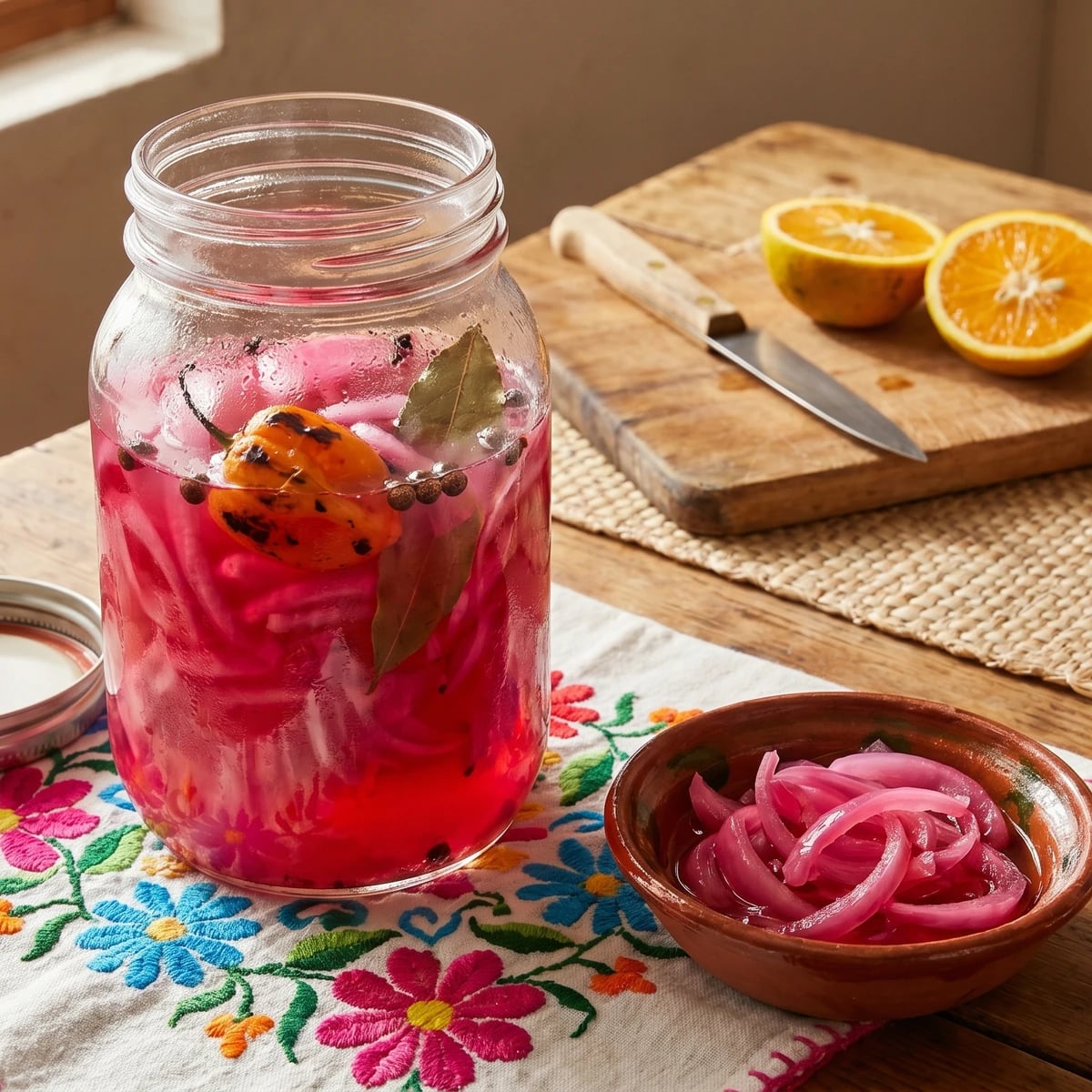
Yucatán's pink pickled red onions, blanched and steeped in naranja agria with allspice, charred habanero, and oregano yucateco. The Peninsula's table garnish, in every fonda from Mérida to Tizimín.

Salads
Mexican
Make Ahead
Meal Prep
Freezer Friendly
15 min
Active Time
5 min cook20 min total
YieldAbout 3 cups (6 to 8 servings as a garnish)

These onions are from Yucatán. The whole Peninsula, Campeche, Yucatán, Quintana Roo, claims them, and they belong on the table next to cochinita pibil, panuchos, salbutes, and papadzules. Without them, those dishes are incomplete. With them, the plate is finished. This is not a condiment. This is part of the architecture of Peninsular eating.

The acid is naranja agria, the Seville sour orange that grows in courtyards from Mérida to Valladolid. It is not lime. It is not vinegar. It is a citrus with a bitter edge and a floral perfume that no substitute fully reproduces. If you cannot find it, blend lime with sweet orange juice, and know what you are missing. The habanero goes in whole, charred on the comal and pierced once. That is how the Peninsula uses it: perfuming, not punishing. If you chop the habanero in, you have made a different dish, and a more aggressive one than these onions are supposed to be.

Allspice is the spice of Yucatán. The Maya call the tree pimienta gorda and it grows wild across the Peninsula. Eight berries lightly cracked is what gives the escabeche its warm, faintly sweet backbone. With the oregano yucateco, the garlic, the bay leaves, you have the recado quietly built into every pickle jar in the region.

A señora from a courtyard kitchen in Mérida or a cantina in Tizimín will tell you the same thing I am telling you: thin slices, quick blanch, naranja agria, whole habanero. Saber cocinar es saber vivir.

Pickled onions in naranja agria are a colonial-era marriage of indigenous Maya ingredients, allspice (pimienta gorda), oregano yucateco, and chile habanero, with citrus and red onions introduced by the Spanish in the 16th century via the Caribbean trade routes that made Mérida and Campeche provisioning ports. The Seville sour orange (naranja agria) arrived in the Yucatán Peninsula early enough that it took root in domestic patios and was incorporated wholesale into the regional recado tradition, becoming inseparable from cochinita pibil, escabeche oriental, and papadzules. The technique of escabeche itself traces to the Persian 'sikbaj' and arrived via Arab-influenced Spanish cooking, but the Yucatán version, distinguished by its naranja agria base rather than the vinegar typical of central Mexican escabeches, is a Peninsular signature that no other region replicates.

The technique, the tradition, and the story behind every dish.

Discover Culinary Explorer

Ingredients

red onions

Quantity

2 large (about 1.5 pounds)

peeled and sliced into thin half-moons

naranja agria juice (Seville sour orange)

Quantity

1 cup

freshly squeezed, or 2/3 cup lime juice plus 1/3 cup sweet orange juice as a bridge

kosher salt

Quantity

1 teaspoon

plus a pinch for the blanching water

whole allspice berries

Quantity

8

lightly cracked

whole black peppercorns

Quantity

8

dried Mexican oregano

Quantity

1 teaspoon

preferably oregano yucateco

garlic cloves

Quantity

4

peeled and smashed

bay leaves

Quantity

2

chile habanero

Quantity

1 whole

lightly charred on a comal and pierced once with a knife

ground cumin (optional)

Quantity

1/2 teaspoon

Mérida-style addition

white vinegar (optional)

Quantity

1 tablespoon

only as a bridge if naranja agria is unavailable

Equipment Needed

  • Sharp chef's knife or mandoline for thin slicing
  • Cast iron comal or heavy skillet for charring and toasting
  • Medium pot for blanching
  • Glass jar or non-reactive ceramic bowl with a lid

Instructions

  1. 1

    Slice the onions thin

    Peel the red onions and cut them in half from root to tip. Lay each half flat side down and slice into thin half-moons, no thicker than the edge of a coin. Thin is the rule. Thick slices stay sharp in the middle and never take on the pink color all the way through. The señoras at the Mercado Lucas de Gálvez in Mérida cut them paper-thin without thinking about it.

    Use red onion, never yellow or sweet. The anthocyanins in the red skin are what turn the brine pink when they meet the acid of the naranja agria. That color is the visual signature of the Peninsula.
  2. 2

    Blanch and shock

    Bring a medium pot of water to a rolling boil with a generous pinch of salt. Drop the sliced onions in and count to fifteen. No longer. Drain immediately into a colander and rinse briefly under cold water to stop the cooking. The onions should be limp at the edges but still have bite in the center. This blanch knocks down the raw bite and lets the brine penetrate. Skip it and your onions taste like raw onions in pink water.

  3. 3

    Toast the spices

    While the onions drain, heat a dry comal or small skillet over medium-low. Add the allspice berries, peppercorns, and oregano. Toast for about 45 seconds, shaking the pan, until the allspice releases its scent. The kitchen will smell like the spice stalls at the back of any Yucatecan market. That smell is the recado waking up. Pull the spices off the heat the moment they are fragrant. Burned allspice turns the brine bitter.

  4. 4

    Char the habanero

    On the same comal, lay the whole habanero and let it blister on all sides, about two minutes total. The skin should darken in spots, not turn black. Pierce it once with the tip of a knife. Leaving it whole controls the heat. A pierced whole habanero perfumes the brine; a chopped one will burn the tongue of every guest at the table. Yucatán cooks with habanero respectfully. So do you.

  5. 5

    Build the escabeche

    In a clean glass jar or non-reactive bowl, combine the blanched onions, toasted spices, smashed garlic, bay leaves, charred habanero, and the teaspoon of salt. Pour the naranja agria juice over everything. The liquid should cover the onions; press them down with a spoon. Within a minute the brine begins to turn pink. Within ten minutes it is fuchsia. Do not panic. That is the dish telling you it is working.

    Naranja agria does the work of vinegar here. It carries sour, bitter, and a faint floral note that no other acid replicates. If you cannot find it, blend two parts fresh lime juice with one part fresh sweet orange juice. A substitution is a compromise, not an upgrade.
  6. 6

    Rest before serving

    Cover and let the onions sit at room temperature for at least 30 minutes before serving. One hour is better. Overnight in the refrigerator is best. The flavor deepens, the heat from the habanero settles into the brine without dominating, and the pink reaches its full color. Taste before serving and adjust salt if needed. Serve cold or at room temperature on cochinita pibil, panuchos, salbutes, papadzules, tacos de pavo, frijoles colados, or anything that wants a bright, sharp counterpoint. Cada estado, su propia cocina, and this one belongs to the Peninsula.

Chef Tips

  • Naranja agria is sold fresh in Latin markets, especially Caribbean and Mexican groceries, from late fall through spring. The juice freezes well in ice cube trays. Buy when you see it and keep a supply.
  • These onions improve for the first three days and hold for about a week in the refrigerator. Past that the texture softens too much and the brine loses its brightness. Make them in small batches.
  • Do not use balsamic, rice, or apple cider vinegar to bridge the acid. If you must substitute, lime and sweet orange is the only acceptable compromise. White vinegar in a tablespoon dose can reinforce the bite, but it should never be the main acid. No me vengas con atajos.
  • Save the pink brine when the onions are gone. It is the best dressing for a jícama, radish, and cucumber salad you will ever taste.

Advance Preparation

  • These onions are designed to be made ahead. They reach full flavor at 12 hours and hold for one week refrigerated.
  • The brine and toasted spices can be combined a day in advance, refrigerated, and the blanched onions added at the last minute for a fresher bite.
  • Freeze fresh naranja agria juice in ice cube trays during the season (late fall through spring) so you have authentic acid year-round.

Frequently Asked Questions

Nutrition Information

1 serving (about 90g)

Calories
50 calories
Total Fat
0 g
Saturated Fat
0 g
Trans Fat
0 g
Unsaturated Fat
0 g
Cholesterol
0 mg
Sodium
260 mg
Total Carbohydrates
12 g
Dietary Fiber
2 g
Sugars
6 g
Protein
1 g

Note: Chef personas and recipes are created with AI assistance. Cook with care: follow safe food-handling practices, check doneness with a thermometer when needed, and adapt for allergies and your kitchen.

Where cooking meets culture.

Culinary guides, cultural storytelling, and the editorial depth that makes cooking meaningful.

Discover Culinary Explorer

More from Yucatecan Salads & Curtidos

Browse the full collection