
Chef Takumi
Agedashi Tofu (揚げ出し豆腐)
Agedashi tofu looks like a fryer test. It is only drained tofu, potato starch, clean oil, and a hot dashi broth waiting nearby.
A cooking platform built around craft, culture, and the stories behind what we eat.
Created by
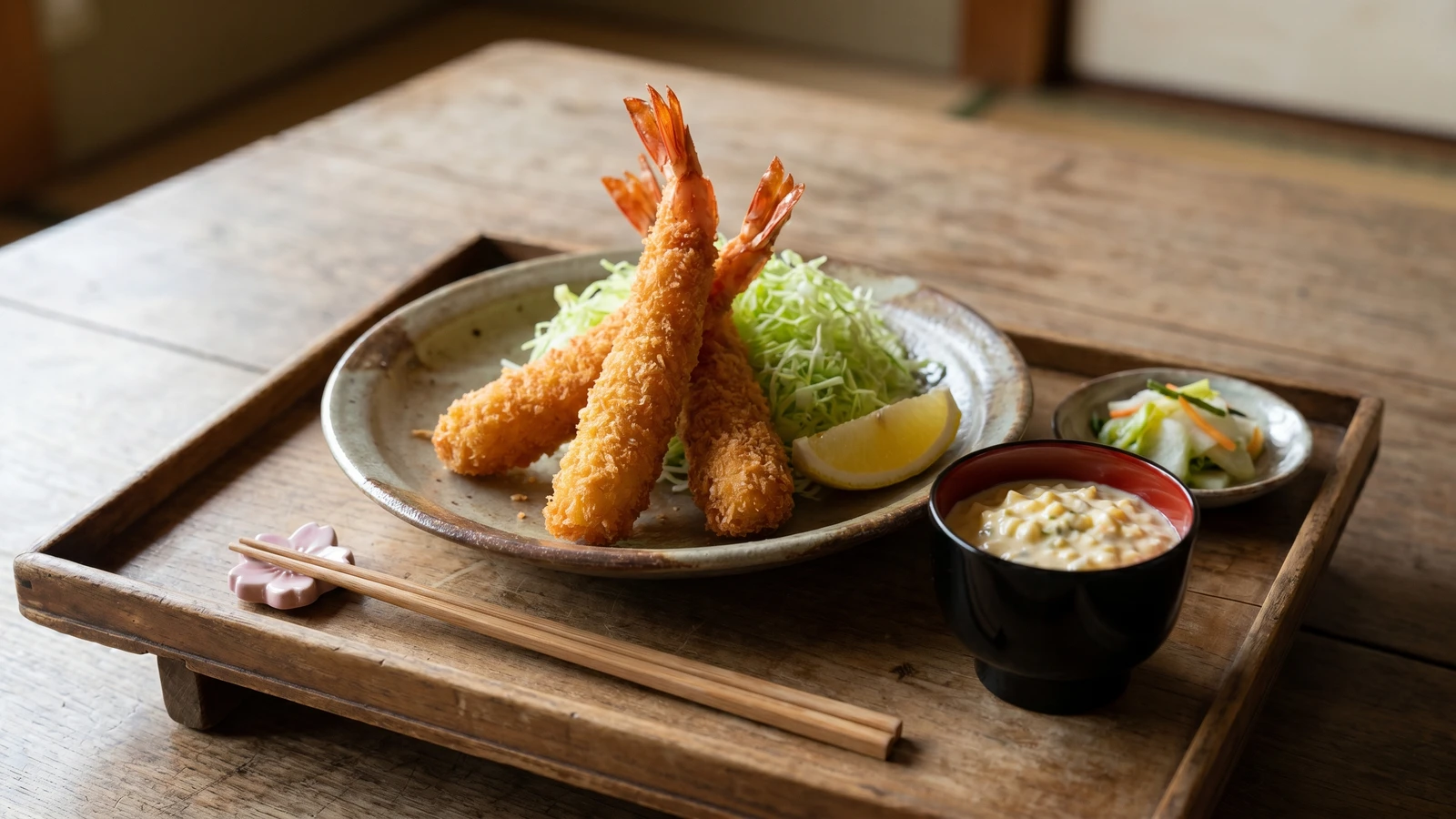
Ebi fry is decided before the oil: clean, dry prawns, straightened gently, coated lightly, then fried just long enough for the panko to turn crisp and gold.
Fried prawns make nervous cooks stand very solemnly over a pot of oil, as if the prawns were taking an examination. They aren't. Ebi fry is yōshoku, Western-style food that Japan took in and made plain: a sweet prawn, a light coat of flour, egg, and panko, and sauce kept on the side.
The one detail that decides it happens before the breading. Clean the prawn, dry it well, cut shallow notches along the belly, then press it straight until you feel the little give in the muscle. It will want to curl in hot oil because the proteins tighten. You've simply taught it another posture. Trim the watery tail tip too, unless you enjoy oil answering back. A kitchen should have some dignity.
Freshness comes first. The prawns should smell clean and faintly sweet, never sharp, and the flesh should feel firm, not slack. If what you bought is tired, don't bury it under tartare. Cook another dish. With good prawns, the panko only protects what is already there: crisp outside, sweet inside, nothing hidden.
On the table, ebi fry sits easily with shredded cabbage, rice, and miso soup, the yōshoku plate settling into the Japanese meal without fuss. Serve an odd number on the plate if you can, with the sauce beside it and a little empty space around the prawns. Leave it room. Even fried food should know how to behave.
Ebi fry belongs to yōshoku, the Western-style Japanese cooking that grew after the Meiji Restoration of 1868, when breaded frying and restaurant dining became part of urban food culture. The word furai came to mean foods coated in bread crumbs and fried in oil, and by the Taishō and early Shōwa periods prawn fry, oyster fry, and pork cutlet were familiar dishes in city yōshoku shops and department-store restaurants. Nagoya's oversized ebi furai is a later regional association, famous enough to stick, but the dish's roots are broader than one city.
Quantity
12 (about 500g)
headless, shell-on
Quantity
1 teaspoon
divided
Quantity
2 tablespoons
for cleaning
Quantity
1/4 teaspoon
Quantity
1/3 cup
Quantity
1 large
Quantity
1 tablespoon
Quantity
2 cups
fresh panko if available
Quantity
about 4 cups
for 5 cm depth
Quantity
2 cups
finely shredded
Quantity
1
cut into wedges
Quantity
1
finely chopped
Quantity
3 tablespoons
Quantity
1 tablespoon
minced, rinsed, squeezed dry
Quantity
1 tablespoon
minced
Quantity
1 teaspoon
Quantity
for serving
| Ingredient | Quantity |
|---|---|
| large prawnsheadless, shell-on | 12 (about 500g) |
| fine sea saltdivided | 1 teaspoon |
| potato starch (katakuriko) or cornstarchfor cleaning | 2 tablespoons |
| white pepper | 1/4 teaspoon |
| all-purpose flour | 1/3 cup |
| egg | 1 large |
| cold water | 1 tablespoon |
| panko (Japanese bread crumbs)fresh panko if available | 2 cups |
| neutral oilfor 5 cm depth | about 4 cups |
| green cabbagefinely shredded | 2 cups |
| lemoncut into wedges | 1 |
| hard-boiled eggfinely chopped | 1 |
| Japanese mayonnaise | 3 tablespoons |
| onionminced, rinsed, squeezed dry | 1 tablespoon |
| rakkyo (Japanese pickled scallion) or cucumber pickleminced | 1 tablespoon |
| lemon juice | 1 teaspoon |
| tonkatsu sauce (optional) | for serving |
Stir together the chopped egg, Japanese mayonnaise, rinsed onion, rakkyo or pickle, lemon juice, and a small pinch of salt. Keep it cold while you prepare the prawns. Rinsing and squeezing the onion matters because raw onion can bully the sweet prawn, and this sauce is here to accompany, not cover.
Peel the prawns, leaving the tail shells attached. Remove the dark vein with a bamboo skewer or the tip of a small knife. Rub the prawns with 1/2 teaspoon salt and the potato starch until the surface feels tacky, then rinse quickly under cold water and pat them very dry. The starch lifts grit and odor from the surface; the drying keeps the coating from sliding off.
Snip the pointed tips from the tail fans, then press the tail gently with the back of a knife to squeeze out any trapped water. Wipe again with paper towels. Water hidden in the tail turns to angry spitting in hot oil, which is a poor way to learn this lesson.
Lay each prawn belly-side up and make three or four shallow crosswise cuts along the underside, barely halfway through. Turn it over and press gently along the back until you feel the muscle relax and the prawn lies mostly straight. Season with the remaining salt and the white pepper. The cuts stop the prawn curling tightly as it fries, and a straight prawn cooks more evenly under its coat.
Put the flour in one shallow tray. Beat the egg with the cold water in a second tray. Spread the panko in a third. Heat 5 cm of neutral oil in an agemono-nabe, a Japanese frying pot, or a heavy saucepan to 170 C. Having the line ready keeps your hands calm, and calm hands make a cleaner coat.
Hold each prawn by the tail and coat the flesh lightly in flour, shaking off every loose patch. Dip it in the egg, then lay it in the panko and press gently so the crumbs cling in an even layer. Rest the breaded prawns on a rack for five minutes. Thin flour gives the egg something to grip; too much flour makes a pasty layer that slips away in the oil.
Fry three or four prawns at a time at 170 to 175 C, turning once, until the panko is golden and the prawn inside is opaque, about 2 to 3 minutes. If you use a thermometer, the center should reach 63 C. Don't crowd the pot. Crowding drops the oil temperature, and then the crumb drinks oil instead of crisping around the prawn.
Lift the prawns to a wire rack, tail up if you can manage it, and let the surface settle for a minute. A rack keeps the underside crisp; paper towels trap moisture against the crumb. Serve with shredded cabbage, lemon wedges, and tartare or tonkatsu sauce on the side.
1 serving (about 230g)
Culinary guides, cultural storytelling, and the editorial depth that makes cooking meaningful.
Discover Culinary ExplorerChef Takumi
Agedashi tofu looks like a fryer test. It is only drained tofu, potato starch, clean oil, and a hot dashi broth waiting nearby.

Chef Takumi
Aspara-bacon is late-spring asparagus treated with common sense: thin bacon, hot grill, and a last brush of shōyu and mirin so the spear stays sweet while the wrap crisps.

Chef Takumi
This is Osaka street food at its plainest and best: good beef cut small, a thin batter, fine panko, hot beef tallow, and one clean dip in sauce.

Chef Takumi
Buta-bara is not a trick of the grill. Good pork belly, even cutting, steady heat, and the patience to let the fat turn glossy do most of the work.