Culinary Explorer

A cooking platform built around craft, culture, and the stories behind what we eat.
Discover Culinary Explorer
Dulce de Calabaza en Tacha

Dulce de Calabaza en Tacha

Created by

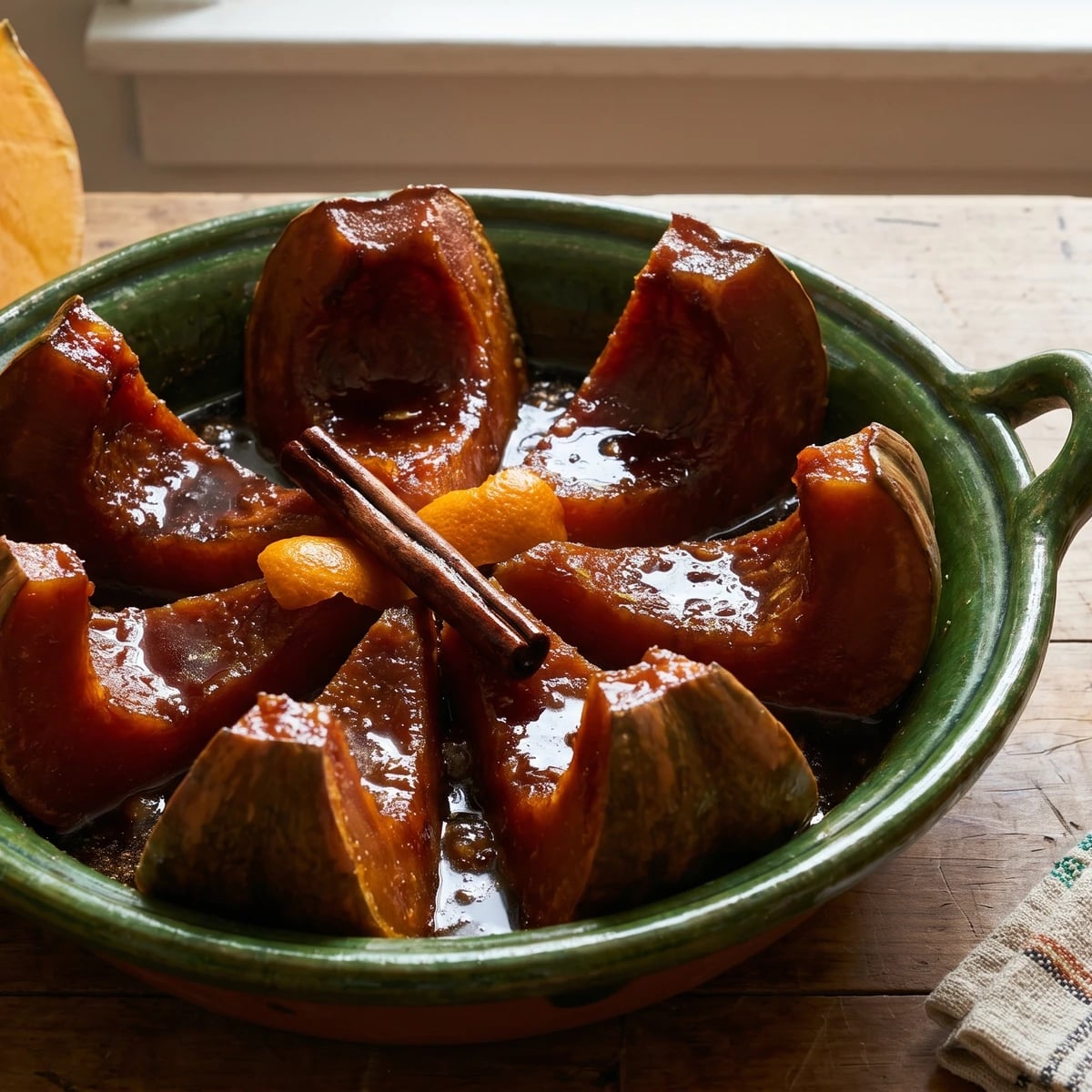
Estado de Mexico's Day of the Dead calabaza, slow-cooked in piloncillo syrup with cinnamon, clove, and orange until the rind softens and the flesh turns dark, glossy, and sweet.

Desserts
Mexican
Holiday
Comfort Food
20 min
Active Time
1 hr 45 min cook2 hr 5 min total
Yield8 servings

Estado de Mexico, especially the Toluca Valley and the towns around Metepec, knows this dish as food for the ofrenda before it is food for the table. Calabaza de Castilla comes in after the rainy season, heavy and ribbed, the kind of pumpkin that sits in the mercado looking like it has work to do. That is the pumpkin you want. Not pie pumpkin. Not canned puree. No me vengas con atajos.

The technique is patient and domestic: big pieces of calabaza, rind on, simmered slowly in piloncillo until the syrup darkens and the flesh drinks it in. Cinnamon and clove belong here, but they do not shout. The piloncillo is the authority. It turns the pumpkin mahogany, sticky at the edges, tender enough to cut with a spoon while the skin holds the piece together. That balance is the dish.

I learned this version from a woman in the Mercado 16 de Septiembre in Toluca who sold calabazas by the wedge in October. She told me: do not stir like you are making soup. Move the pot, tilt it, baste it. If you break the pumpkin, you made mash. The señoras who perfected this were not decorating altars for photographs. They were feeding the dead and then feeding the living. Saber cocinar es saber vivir.

Calabaza de Castilla belongs to the milpa tradition of central Mexico, where squash, corn, beans, and chiles were grown together long before the Spanish conquest. The name "en tacha" comes from the copper or metal tachos used in colonial sugar mills to reduce cane juice, a technique that shaped sweets across central and southern Mexico after piloncillo became common. By the 19th century, calabaza en tacha was firmly tied to Dia de Muertos offerings in Estado de Mexico, Puebla, Michoacan, and Mexico City, with each region adjusting the syrup with orange, guava, tejocote, or spices.

The technique, the tradition, and the story behind every dish.

Discover Culinary Explorer

Ingredients

calabaza de Castilla

Quantity

4 pounds

scrubbed, seeded, and cut into large 3-inch wedges with the rind left on

piloncillo

Quantity

1 1/2 pounds

chopped or broken into pieces

water

Quantity

3 cups

Mexican cinnamon sticks (canela)

Quantity

2

whole cloves

Quantity

4

orange peel

Quantity

2 strips

white pith removed

kosher salt

Quantity

1/2 teaspoon

fresh lime juice

Quantity

1 tablespoon

whole milk or evaporated milk (optional)

Quantity

for serving

Equipment Needed

  • Wide 5-quart clay cazuela or heavy Dutch oven
  • Sharp heavy knife for cutting calabaza de Castilla
  • Large metal spoon for basting
  • Shallow barro bowls for serving

Instructions

  1. 1

    Cut the pumpkin

    Scrub the calabaza well because the rind stays on. Cut it into large wedges, about 3 inches wide, and scrape out the seeds and stringy fibers. Do not peel it. The rind holds the flesh together while the syrup works its way in. Save the seeds if you want to toast them later with salt.

  2. 2

    Build the syrup

    Put the piloncillo, water, canela, cloves, orange peel, salt, and lime juice into a wide heavy pot or clay cazuela. Set over medium heat and cook until the piloncillo dissolves, stirring only enough to help it along. The syrup should smell like cane, cinnamon, and orange, not like burned sugar.

    Piloncillo is unrefined cane sugar with minerals and depth. Brown sugar is a compromise, not an upgrade. If you must use it, choose dark muscovado before ordinary supermarket brown sugar.
  3. 3

    Arrange the calabaza

    Nestle the pumpkin wedges into the syrup, rind side down when possible. They should sit in one snug layer or as close as your pot allows. Spoon syrup over the top, cover the pot, and lower the heat until the syrup bubbles gently. This dish is candied slowly. A hard boil breaks the pumpkin and makes the syrup muddy.

  4. 4

    Simmer and baste

    Cook covered for 45 minutes, basting every 15 minutes with the syrup. Do not stir the pieces. Tilt the pot or use a spoon to bathe them from above. After 45 minutes, the flesh should be softening and the color should move from orange to amber.

  5. 5

    Reduce uncovered

    Uncover the pot and continue simmering for 35 to 50 minutes more, basting often, until the syrup thickens and the pumpkin turns deep mahogany at the edges. The pieces should hold their shape but give easily when pressed with a spoon. If the syrup reduces too fast before the pumpkin is tender, add hot water two tablespoons at a time. Control the pot. That is cooking.

  6. 6

    Rest in syrup

    Turn off the heat and let the calabaza rest in the syrup for at least 30 minutes. This rest matters. The pumpkin absorbs more piloncillo as it cools, and the surface becomes glossy and candied. Remove the cinnamon, cloves, and orange peel before serving if you do not want them on the table.

  7. 7

    Serve warm

    Serve the calabaza warm or at room temperature in shallow bowls, spooning extra syrup over each piece. In central Mexico, many families pour a little cold milk or evaporated milk around it at the table. The milk cuts the sweetness and makes the syrup taste deeper. Recetas probadas y garantizadas.

Chef Tips

  • Buy calabaza de Castilla in October and early November when the mercado is full of it. If the pumpkin is pale, watery, or cut so long ago that the flesh looks dry, leave it there. Preguntale a las señoras del mercado.
  • The rind stays on. People peel it because they are nervous. Do not. The rind keeps the wedge intact and gives the syrup time to candy the flesh without collapsing it.
  • Use Mexican canela, the soft, flaky cinnamon sold in bundles, not hard cassia sticks if you can avoid them. Canela gives warmth without making the syrup taste harsh.
  • This dessert is not supposed to be chile-hot. Not all Mexican food is about chile. Here the depth comes from squash, cane sugar, spice, and time. This is a 32-state cuisine.

Advance Preparation

  • Calabaza en tacha can be made one day ahead. Cool it in its syrup, refrigerate it covered, and rewarm gently over low heat with a splash of water if the syrup has thickened too much.
  • The flavor is often better the next day because the pumpkin continues absorbing the piloncillo. Hold the wedges carefully so they do not break.
  • Leftover syrup can be spooned over arroz con leche, plain yogurt, or warm corn atole. Do not throw it away. That syrup is the work.

Frequently Asked Questions

Nutrition Information

1 serving (about 250g)

Calories
375 calories
Total Fat
0 g
Saturated Fat
0 g
Trans Fat
0 g
Unsaturated Fat
0 g
Cholesterol
0 mg
Sodium
110 mg
Total Carbohydrates
96 g
Dietary Fiber
3 g
Sugars
83 g
Protein
2 g

Note: Chef personas and recipes are created with AI assistance. Cook with care: follow safe food-handling practices, check doneness with a thermometer when needed, and adapt for allergies and your kitchen.

Where cooking meets culture.

Culinary guides, cultural storytelling, and the editorial depth that makes cooking meaningful.

Discover Culinary Explorer

More from Central Mexican Desserts

Browse the full collection