
Chef Jeong-sun
Aehobak-guk (애호박국, Korean Zucchini Soup)
A clean summer soup of Korean zucchini and salted shrimp, built on quick anchovy-kelp broth and finished before the half-moons lose their shape on a weeknight table.
A cooking platform built around craft, culture, and the stories behind what we eat.
Created by
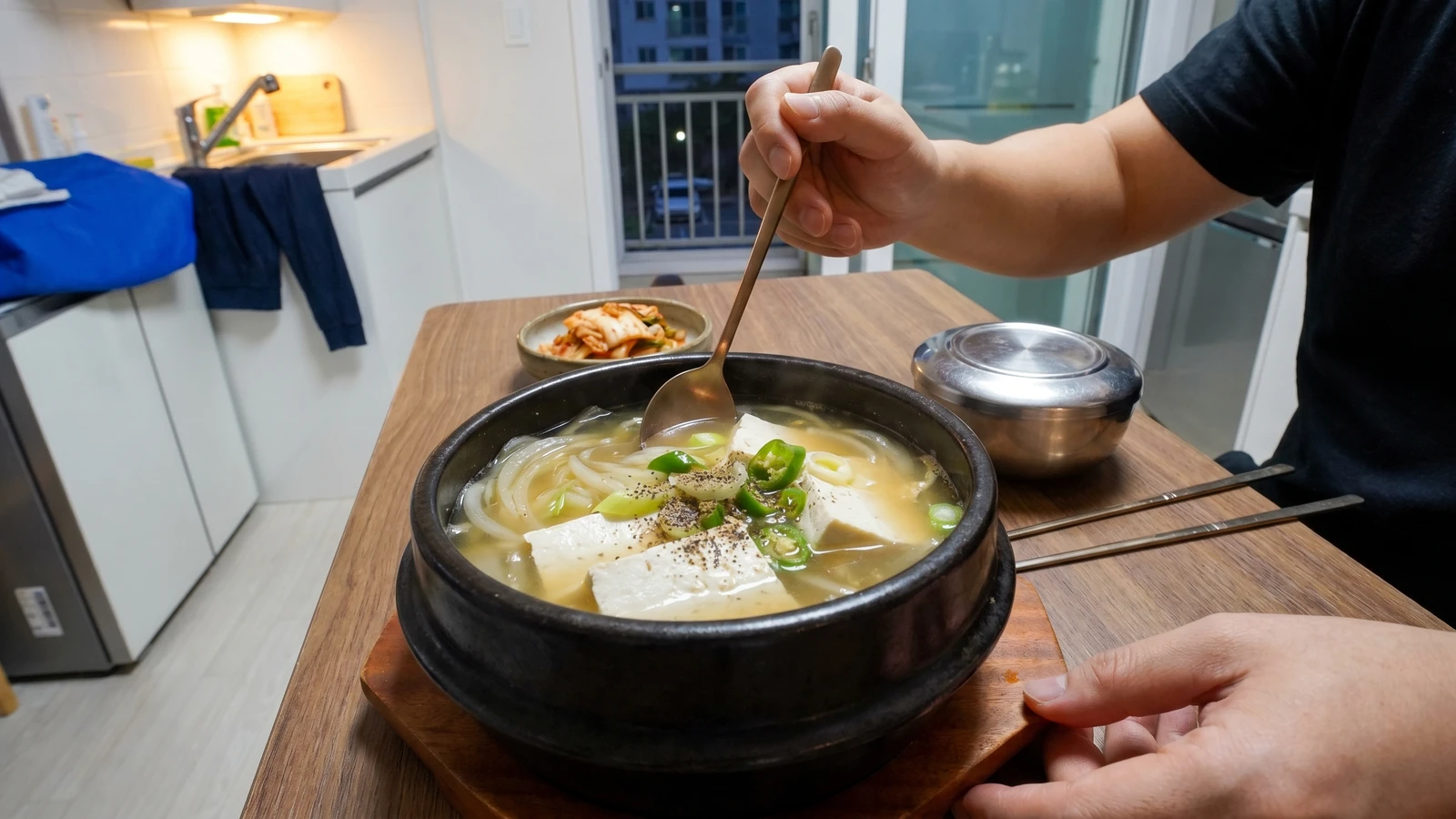
Plain firm tofu gets the lead in this clear, gentle stew, where anchovy broth, salted shrimp or soy, scallion, and a whisper of garlic carry a weeknight meal.
Dubu-jjigae lives or dies by restraint. People see tofu and think it needs rescuing with red paste, sugar, and noise. It doesn't. Good tofu has a soybean sweetness, faint and clean, and your job tonight is to make enough broth around it that the tofu can still speak.
My teacher, Master Seong-nyeo, used to say the plainest pot shows the cook first. This stew asks for a clear anchovy-kelp broth, tofu cut thick enough not to break, and seasoning added in small measured amounts. Salted shrimp, saeujeot (fermented tiny shrimp), gives the old home-table taste. Soup soy sauce, guk-ganjang, is the quieter second road. Either way, don't boil the tofu hard. Let it warm through and tremble a little in the spoon.
This is not a feast dish. It is the pot you make when the rice is done, the refrigerator is thin, and everyone still needs to eat properly. Write it down. Memory is a borrowed bowl. Once you learn how little seasoning this stew needs, you'll understand why Korean cooking keeps so many small, clear dishes beside the louder ones.
Dubu (tofu) entered Korean cooking through the long history of soybean cultivation and Buddhist temple food, where bean curd gave protein without meat and became part of both temple and household tables. Everyday tofu stews like dubu-jjigae do not come from palace ceremony; they belong to home cooking, especially the pantry style of clear broth, tofu, scallion, garlic, and a salty fermented seasoning such as saeujeot or soup soy sauce. The dish is close to many regional home pots, changing by family rather than by a single recorded origin.
Quantity
2 1/2 cups
Quantity
1 piece, about 3 inches square
Quantity
6
heads and guts removed
Quantity
1 block (about 400g)
cut into 1/2-inch thick slabs
Quantity
1/2
thinly sliced
Quantity
1 small
sliced on the diagonal
Quantity
1 teaspoon, plus 1/2 teaspoon more if needed
finely chopped
Quantity
1 teaspoon
Quantity
1 small clove (about 1/2 teaspoon)
minced
Quantity
1
sliced on the diagonal
Quantity
1/2 teaspoon
Quantity
1/8 teaspoon
| Ingredient | Quantity |
|---|---|
| water | 2 1/2 cups |
| dried kelp (dasima) | 1 piece, about 3 inches square |
| large dried anchovies (myeolchi)heads and guts removed | 6 |
| firm tofucut into 1/2-inch thick slabs | 1 block (about 400g) |
| small onionthinly sliced | 1/2 |
| Korean green chili or mild green chili (optional)sliced on the diagonal | 1 small |
| salted shrimp (saeujeot)finely chopped | 1 teaspoon, plus 1/2 teaspoon more if needed |
| soup soy sauce (guk-ganjang) | 1 teaspoon |
| garlicminced | 1 small clove (about 1/2 teaspoon) |
| scallionsliced on the diagonal | 1 |
| toasted sesame oil (optional) | 1/2 teaspoon |
| ground black pepper (optional) | 1/8 teaspoon |
Put the water, kelp, and prepared anchovies in a small heavy pot or ttukbaegi over medium heat. When the water reaches a gentle simmer, pull out the kelp right away. Kelp gives body quickly, then turns the broth slick and bitter if you leave it too long. Simmer the anchovies 8 minutes more, then lift them out.
Cut the tofu into slabs about 1/2 inch thick, then into wide rectangles if your block is large. Don't cut it into tiny cubes. This stew is about tofu, and small pieces break before they can carry the broth.
Add the sliced onion, chopped saeujeot, soup soy sauce, and minced garlic to the broth. Simmer 3 minutes, just until the onion begins to soften. The salted shrimp gives savor and salt at the same time, so measure it. One teaspoon seasons the pot without making it taste like shrimp.
Slide the tofu into the pot in one layer or a loose stack. Spoon a little broth over the top and simmer gently for 5 to 6 minutes. Keep the boil low. A hard boil knocks the tofu around, clouds the broth, and makes the pieces look tired before they reach the table.
Taste the broth before adding anything else. If it tastes flat, add another 1/2 teaspoon chopped saeujeot or a pinch of salt. Scatter in the scallion and green chili, if using, and simmer 30 seconds. Turn off the heat and add the sesame oil and black pepper only if you want them. They are finishing touches, not the dish.
Carry the pot straight to the table with hot rice and one or two banchan. Spoon carefully so the tofu stays whole. The broth should be clear, lightly savory, and gentle enough that you still taste the soybean in the tofu. Let it taste like itself.
1 serving (about 380g)
Culinary guides, cultural storytelling, and the editorial depth that makes cooking meaningful.
Discover Culinary ExplorerChef Jeong-sun
A clean summer soup of Korean zucchini and salted shrimp, built on quick anchovy-kelp broth and finished before the half-moons lose their shape on a weeknight table.
Chef Jeong-sun
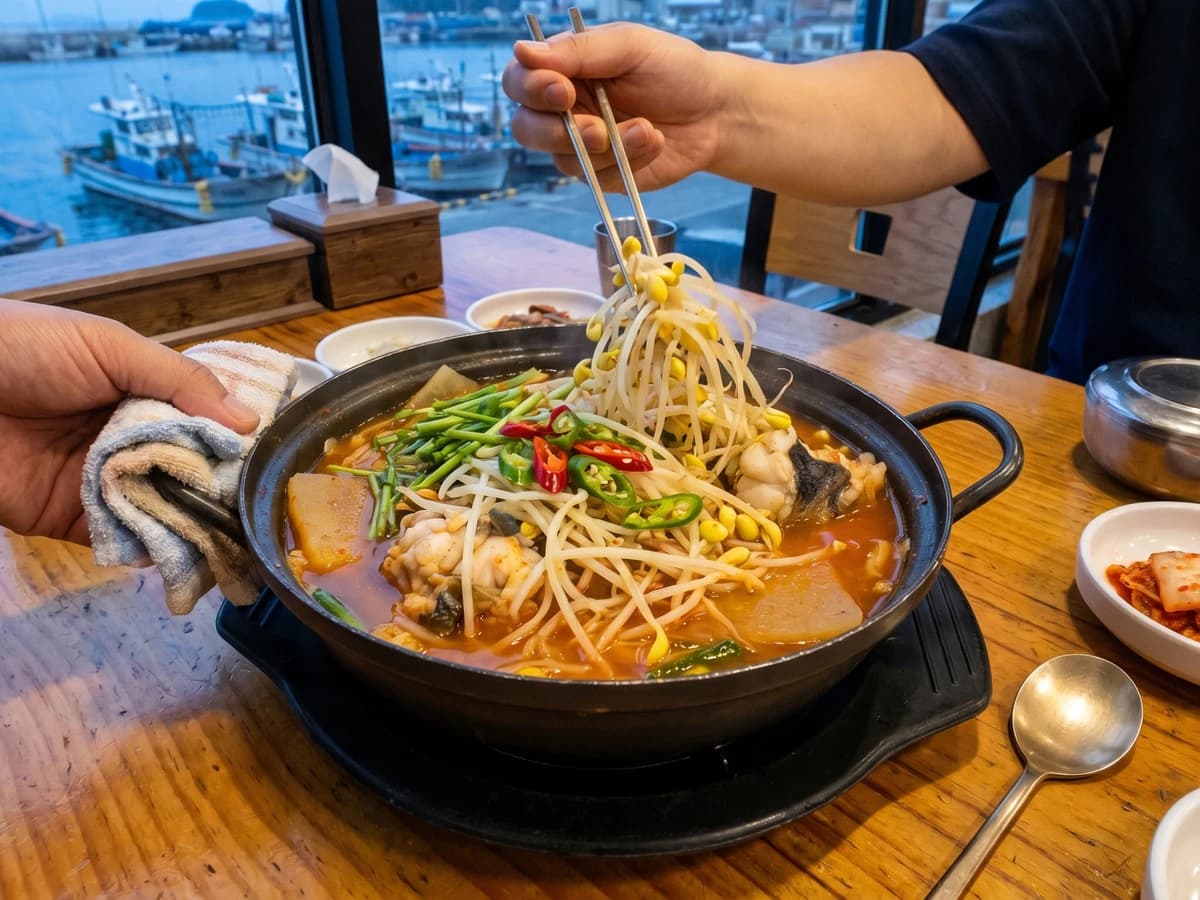
A Masan coast monkfish stew with firm white meat, gelatin at the bones, soybean sprouts for crunch, and a red broth seasoned to carry the fish, not bury it.

Chef Jeong-sun
A weeknight fish roe stew with radish and crown daisy in a clean spicy broth, where the whole success depends on adding the roe late enough that it sets tender, not chalky.

Chef Jeong-sun
Late-summer mallow leaves rubbed with salt until the bitter green water runs off, then simmered in a clean doenjang broth with dried shrimp, the quiet soup a Korean weeknight deserves.