
Chef Jeong-sun
Aehobak-guk (애호박국, Korean Zucchini Soup)
A clean summer soup of Korean zucchini and salted shrimp, built on quick anchovy-kelp broth and finished before the half-moons lose their shape on a weeknight table.
A cooking platform built around craft, culture, and the stories behind what we eat.
Created by
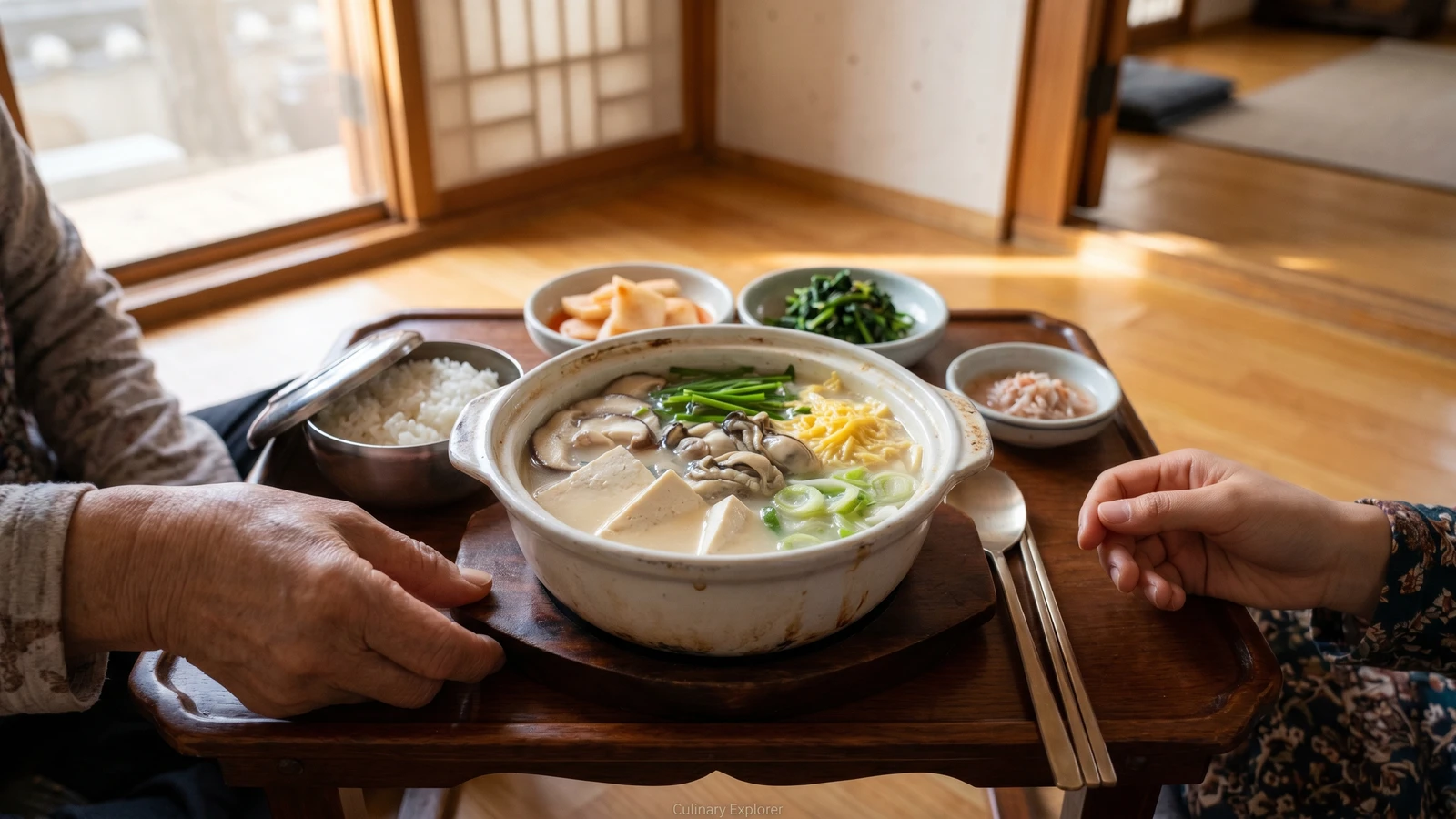
A court-and-home tofu stew in pale beef broth, seasoned with clear jeotguk from salted shrimp, where the discipline is restraint: no chili, no shouting, just tofu, mushrooms, and careful salt.
People see the word jjigae and reach for gochujang. Put it down. Dubu-jeotguk-jjigae is a white stew, and if you make it red, you've walked into another kitchen. My teacher, Master Seong-nyeo, used to say the pale dishes show your habits fastest, because there is nowhere for careless salt or muddy broth to hide.
This dish belongs to the quieter side of the Korean table, court-touched but not trapped there: tofu, clear beef broth, mushrooms, and jeotguk, the brine from saeujeot (salted shrimp). The work is restraint. Strain the brine so the broth stays clean, blanch the tofu so it loses its raw bean smell, and simmer gently so the white stays white.
I won't tell you this is difficult. It asks for attention, not strength: skim the broth, taste before adding the last spoon of brine, and leave chili out completely. In winter, good oysters make the pot fuller; in warm months, omit them and let mushroom and tofu carry it. 손맛 is real; I measure it anyway, because a pale stew punishes guessing.
Dubu-jeotguk-jjigae belongs to Seoul and royal-cuisine lineages in which pale jjigae were seasoned with jeotguk, the clear brine from jeotgal such as saeujeot, instead of chili paste. In the modern record of Joseon royal court cuisine, transmitted from court attendant Han Hui-sun and documented by Hwang Hye-seong after the 1971 designation of Important Intangible Cultural Property No. 38, this tofu stew is preserved as a clean white dish rather than a red one. At home, the same brine-seasoning habit also lives in Seoul and Gyeonggi soups, steamed eggs, and radish dishes, where a spoon of salted shrimp gives salt and depth at once.
Quantity
1 block (400g)
drained and cut into 1-inch rectangles
Quantity
120g
left whole for broth, then thinly sliced
Quantity
5 cups
Quantity
1 piece, about 4 inches square
Quantity
100g
peeled and cut into thin rectangles
Quantity
2 tablespoons
mashed with 3 tablespoons warm water or broth and strained
Quantity
1 teaspoon
minced
Quantity
4
stems removed and caps thinly sliced
Quantity
12 small (about 150g)
rinsed gently and drained
Quantity
2
cut into 1-inch lengths
Quantity
1/2 cup
cut into 2-inch lengths
Quantity
1 large
separated for jidan garnish
Quantity
1 teaspoon
for the jidan
Quantity
1/4 teaspoon
only if needed after tasting
| Ingredient | Quantity |
|---|---|
| medium-firm tofu (dubu)drained and cut into 1-inch rectangles | 1 block (400g) |
| lean beef brisket (yangji)left whole for broth, then thinly sliced | 120g |
| water | 5 cups |
| dried kelp (dasima) | 1 piece, about 4 inches square |
| Korean radish (mu)peeled and cut into thin rectangles | 100g |
| saeujeot (salted shrimp)mashed with 3 tablespoons warm water or broth and strained | 2 tablespoons |
| garlicminced | 1 teaspoon |
| fresh shiitake mushroomsstems removed and caps thinly sliced | 4 |
| fresh oysters (optional)rinsed gently and drained | 12 small (about 150g) |
| scallionscut into 1-inch lengths | 2 |
| minari (Korean water dropwort) (optional)cut into 2-inch lengths | 1/2 cup |
| eggseparated for jidan garnish | 1 large |
| neutral oilfor the jidan | 1 teaspoon |
| fine sea salt (optional)only if needed after tasting | 1/4 teaspoon |
Put the saeujeot in a fine sieve set over a small bowl. Add 3 tablespoons warm water or warm broth, mash the shrimp with the back of a spoon, and let the cloudy liquid fall through. You should have about 3 tablespoons jeotguk. Use the liquid for this stew and save the solids for steamed egg or fried rice. Whole shrimp bits would cloud the broth and season unevenly, so strain them out here.
Cut the tofu into neat 1-inch rectangles, about 1/2 inch thick. Pour boiling water over the pieces, let them sit 2 minutes, then drain. This small step removes the raw bean smell and firms the surface, so the tofu stays clean-edged in the pot instead of breaking into crumbs.
Put the beef, water, kelp, and radish in a 2.5-quart pot. Bring it slowly to a bare simmer over medium heat. Pull the kelp out as soon as small bubbles gather at the edge, usually 7 to 8 minutes, before it turns the broth slick and bitter. Skim the gray foam, lower the heat, and simmer gently for 30 minutes. Lift out the beef, slice it thinly across the grain, and return it to the pot. You want about 4 cups clear broth; add a little water if it reduced too far.
While the broth simmers, beat the egg yolk and white separately with a tiny pinch of salt. Wipe a small skillet with neutral oil and cook each one over low heat into a thin sheet. Cut into fine threads. This garnish is not fuss for fuss's sake; a white stew needs small, clear color, and jidan gives it without chili.
Add the garlic and shiitake mushrooms to the broth and simmer 4 minutes. Stir in 1 1/2 tablespoons of the strained jeotguk, then taste the broth before adding more. Add the remaining brine 1 teaspoon at a time, up to about 2 1/2 tablespoons total. It should taste seasoned and rounded, not fishy, and the broth should still read pale. Add the measured sea salt only if the broth is still flat after the brine has gone in.
Slide the tofu into the pot in one layer and spoon broth over the top. Simmer gently for 4 minutes without stirring hard. If using oysters, add them now and simmer 2 to 3 minutes, just until the edges curl and the centers turn opaque. A hard boil breaks the tofu and tightens the oysters, and then the dish has lost its manners.
Add the scallions and minari, then turn off the heat. Arrange the jidan threads on top and carry the pot to the table with rice and mild banchan. Let the first spoon be broth before kimchi or anything sharp. This jjigae is quiet by design, and the cook's job is to let the white read white.
1 serving (about 470g)
Culinary guides, cultural storytelling, and the editorial depth that makes cooking meaningful.
Discover Culinary ExplorerChef Jeong-sun
A clean summer soup of Korean zucchini and salted shrimp, built on quick anchovy-kelp broth and finished before the half-moons lose their shape on a weeknight table.
Chef Jeong-sun
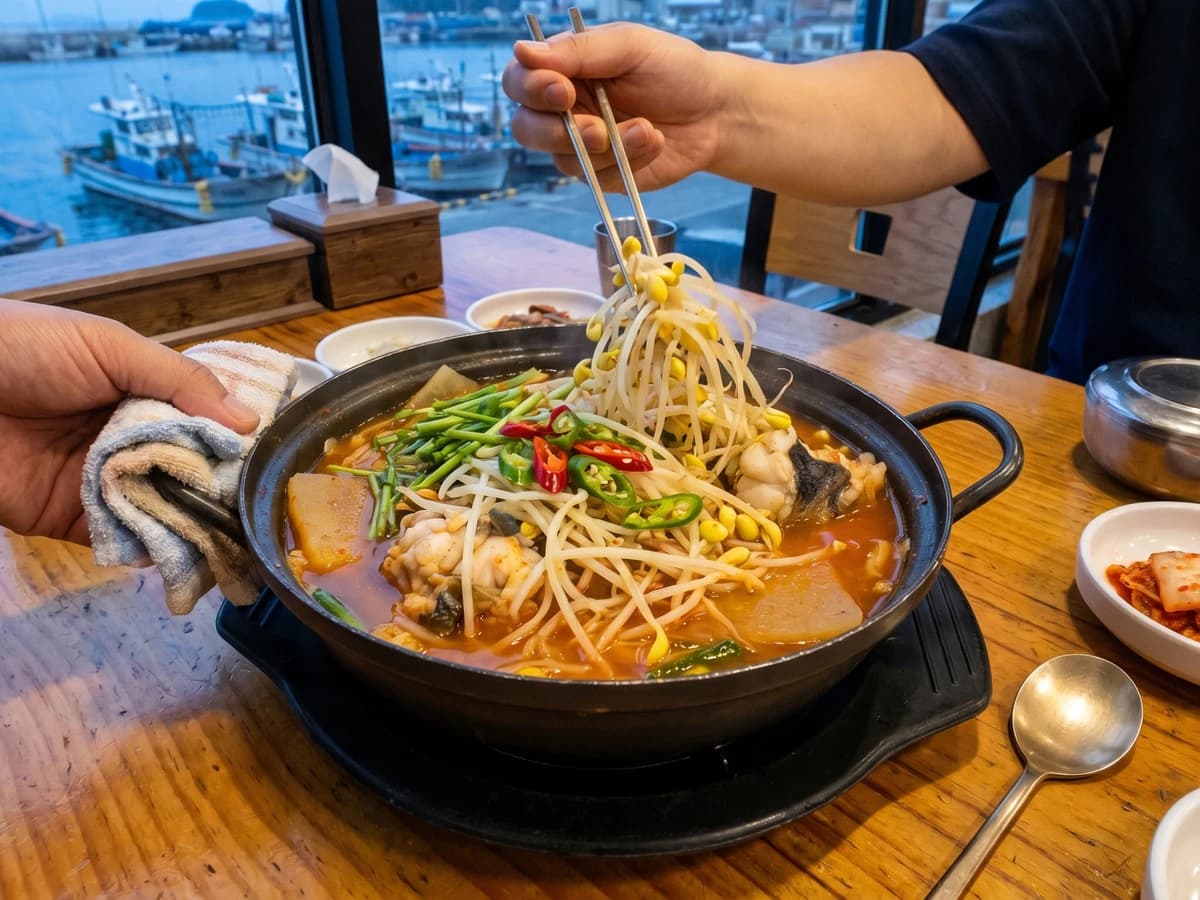
A Masan coast monkfish stew with firm white meat, gelatin at the bones, soybean sprouts for crunch, and a red broth seasoned to carry the fish, not bury it.

Chef Jeong-sun
A weeknight fish roe stew with radish and crown daisy in a clean spicy broth, where the whole success depends on adding the roe late enough that it sets tender, not chalky.

Chef Jeong-sun
Late-summer mallow leaves rubbed with salt until the bitter green water runs off, then simmered in a clean doenjang broth with dried shrimp, the quiet soup a Korean weeknight deserves.