
Chef Dean
Bacon Egg and Cheese on a Roll
The iconic New York bodega breakfast: shattering-crisp bacon, a golden-yolked fried egg, and molten American cheese tucked into a soft kaiser roll. This is the sandwich that built a city.
A cooking platform built around craft, culture, and the stories behind what we eat.
Created by
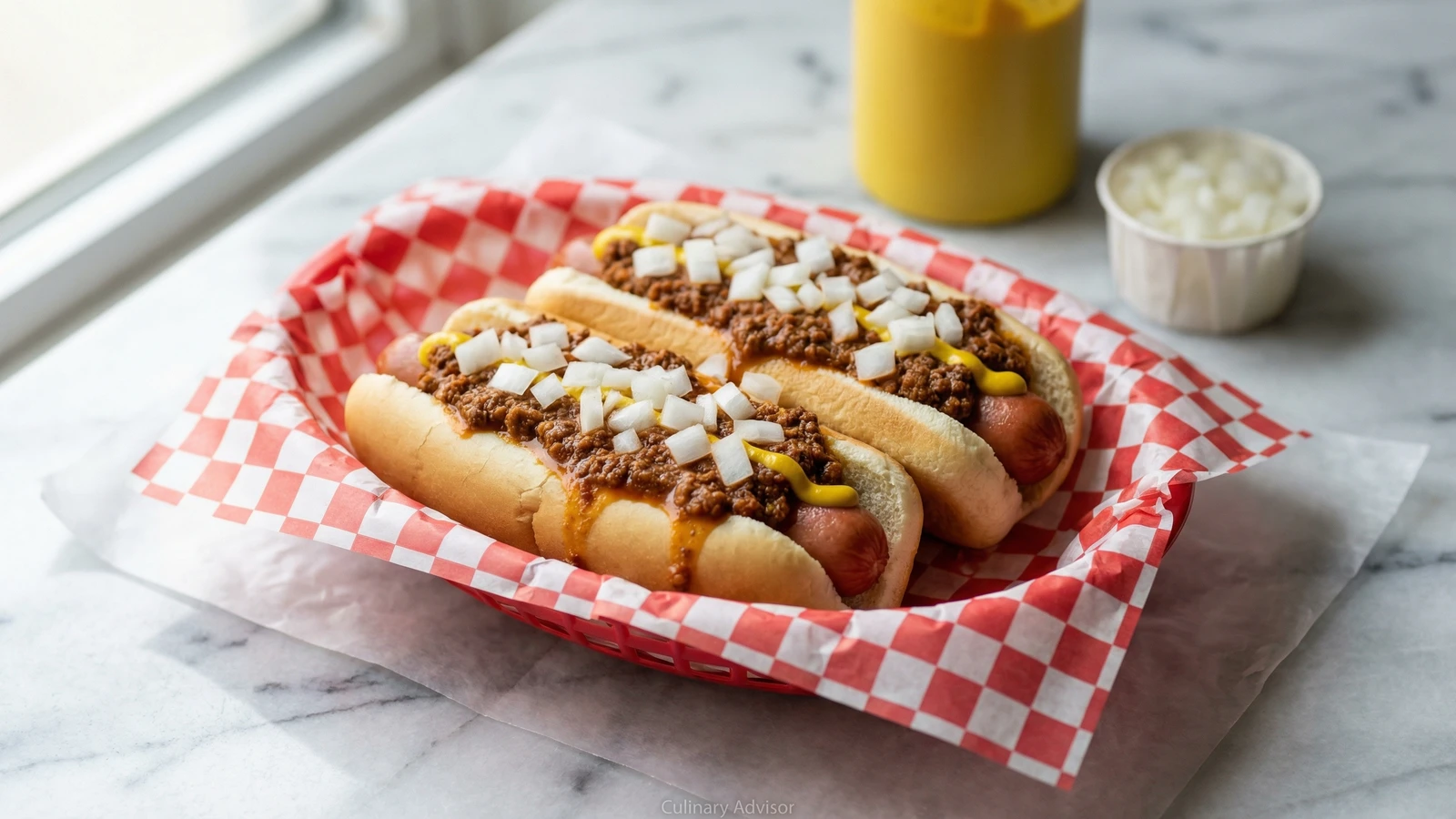
The Motor City's beloved street food: a snappy natural-casing frank buried under savory, all-beef coney sauce, bright yellow mustard, and a snowfall of raw onion, all cradled in a steamed bun that yields to the bite.
Detroit has two religions: automobiles and coney dogs. Since 1917, American Coney Island and Lafayette Coney Island have stood side by side on Michigan Avenue, their rivalry fierce enough to divide families. Both serve essentially the same thing, yet loyalties run deep. This is tribalism expressed through chili sauce.
The coney dog traveled to Detroit with Greek and Macedonian immigrants who adapted their homeland's meat sauces for American palates. What emerged bears no resemblance to Texas chili or Cincinnati's cinnamon-laced variety. Detroit coney sauce is all beef, finely ground almost to a paste, seasoned with cumin, paprika, and garlic, loose enough to ladle but thick enough to cling. It sits atop a natural-casing hot dog whose snap when you bite through is half the pleasure.
The construction follows strict protocol: mustard first, applied in a single stripe down the length of the dog. Then the sauce, generous but not drowning. Finally, diced raw white onion, scattered with abandon. The bun must be steamed until it practically dissolves against the roof of your mouth. This is not delicate eating. This is lunch counter food meant to be consumed standing up, talking with your mouth full, arguing about whether Lafayette's sauce has more cumin.
Quantity
1 1/2 pounds
80/20 blend
Quantity
1 cup
Quantity
1 medium
finely minced
Quantity
4 cloves
minced
Quantity
2 tablespoons
Quantity
2 tablespoons
Quantity
1 tablespoon
Quantity
2 teaspoons
Quantity
1 teaspoon
Quantity
1/2 teaspoon
Quantity
1 teaspoon
Quantity
1/2 teaspoon
freshly ground
Quantity
1 tablespoon
Quantity
12
Quantity
12
Quantity
for serving
Quantity
1 medium
finely diced, for topping
| Ingredient | Quantity |
|---|---|
| ground beef80/20 blend | 1 1/2 pounds |
| water | 1 cup |
| yellow onionfinely minced | 1 medium |
| garlicminced | 4 cloves |
| tomato paste | 2 tablespoons |
| yellow mustard | 2 tablespoons |
| chili powder | 1 tablespoon |
| ground cumin | 2 teaspoons |
| paprika | 1 teaspoon |
| cayenne pepper | 1/2 teaspoon |
| kosher salt | 1 teaspoon |
| black pepperfreshly ground | 1/2 teaspoon |
| white vinegar | 1 tablespoon |
| natural-casing beef hot dogs | 12 |
| top-split hot dog buns | 12 |
| yellow mustard | for serving |
| white onionfinely diced, for topping | 1 medium |
Crumble the ground beef into a heavy-bottomed pot or Dutch oven. Add the water immediately, before applying any heat. Use a potato masher or sturdy wooden spoon to break the meat into the finest possible texture, working it against the bottom of the pot until no large chunks remain. The goal is an almost paste-like consistency. This takes several minutes of aggressive mashing.
Set the pot over medium heat and bring to a gentle simmer, stirring frequently. Continue mashing and breaking apart any bits that try to clump together. The mixture will look gray and unpromising. Cook, stirring often, for about fifteen minutes until the water has mostly evaporated and the meat begins to sizzle in its own rendered fat.
Add the minced yellow onion and garlic to the pot. Cook, stirring constantly, until the onion softens and turns translucent, about five minutes. The kitchen will begin to smell like a proper coney joint. Push the mixture to one side and add the tomato paste to the cleared space, letting it toast against the hot surface for thirty seconds before stirring it in.
Add the two tablespoons of yellow mustard, chili powder, cumin, paprika, cayenne, salt, and black pepper. Stir thoroughly to distribute the spices evenly through the meat. The sauce will deepen to a rust-brown color. Add one cup of fresh water, scraping up any fond from the bottom of the pot.
Reduce heat to low and simmer uncovered for forty-five minutes to one hour, stirring every ten minutes or so. The sauce should reduce to a thick but still spoonable consistency. It will coat a spoon but drip off slowly. Add the vinegar in the final five minutes. Taste and adjust salt. The sauce should be savory, slightly tangy, with a gentle background heat.
Bring a large pot of water to a simmer. Do not boil violently or the casings may split. Add the natural-casing hot dogs and heat for five to seven minutes until warmed through. You'll hear a distinct snap when you bite into a properly heated natural-casing dog. That snap is non-negotiable.
While the dogs heat, steam the buns. Place them in a steamer basket over simmering water for two to three minutes, or wrap them in damp paper towels and microwave for twenty seconds. The buns should be soft, almost pillowy, yielding completely to pressure. A crusty bun fights back. You don't want that.
Nestle a hot dog into each steamed bun. Apply a single stripe of yellow mustard down the length of the dog. Ladle a generous portion of coney sauce over the mustard, enough to nearly bury the frank but not so much that it overflows the bun. Crown with a liberal scattering of raw diced white onion. Serve immediately. A coney dog waits for no one.
1 serving (about 165g)
Culinary guides, cultural storytelling, and the editorial depth that makes cooking meaningful.
Discover Culinary ExplorerChef Dean
The iconic New York bodega breakfast: shattering-crisp bacon, a golden-yolked fried egg, and molten American cheese tucked into a soft kaiser roll. This is the sandwich that built a city.

Chef Dean
Buffalo's proudest sandwich: silky rare roast beef mounded on a crusty roll showered with caraway and coarse salt, the top dipped in warm jus, the whole thing demanding horseradish and a cold beer.

Chef Dean
Shatteringly crisp beer-battered halibut piled on a buttery bun with tangy homemade tartar sauce and crunchy coleslaw. This is the Pacific Northwest on a plate, the kind of sandwich worth driving to the coast for.
Chef Dean
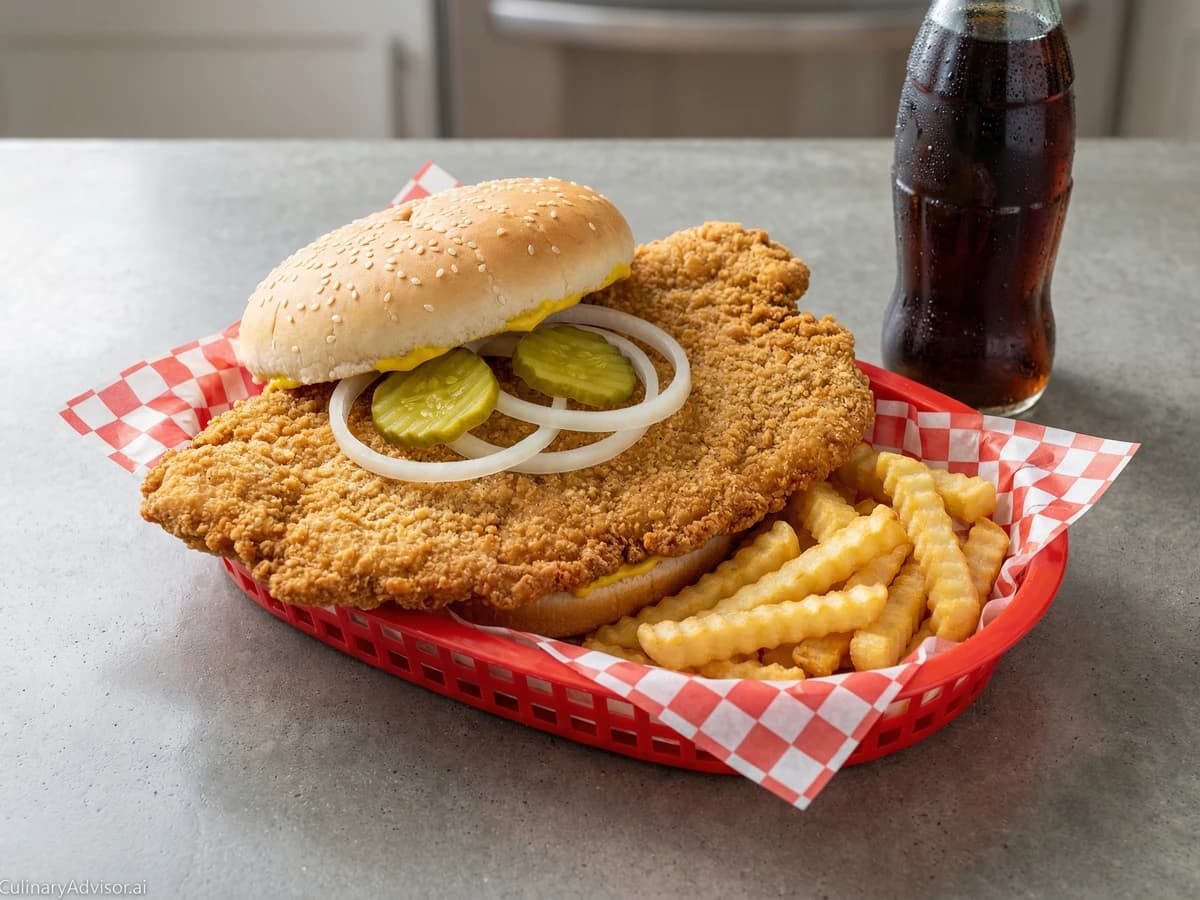
A pork cutlet pounded thin as a playing card, coated in seasoned cracker crumbs, and fried until it sprawls gloriously past the edges of its bun. This is Indiana on a plate.