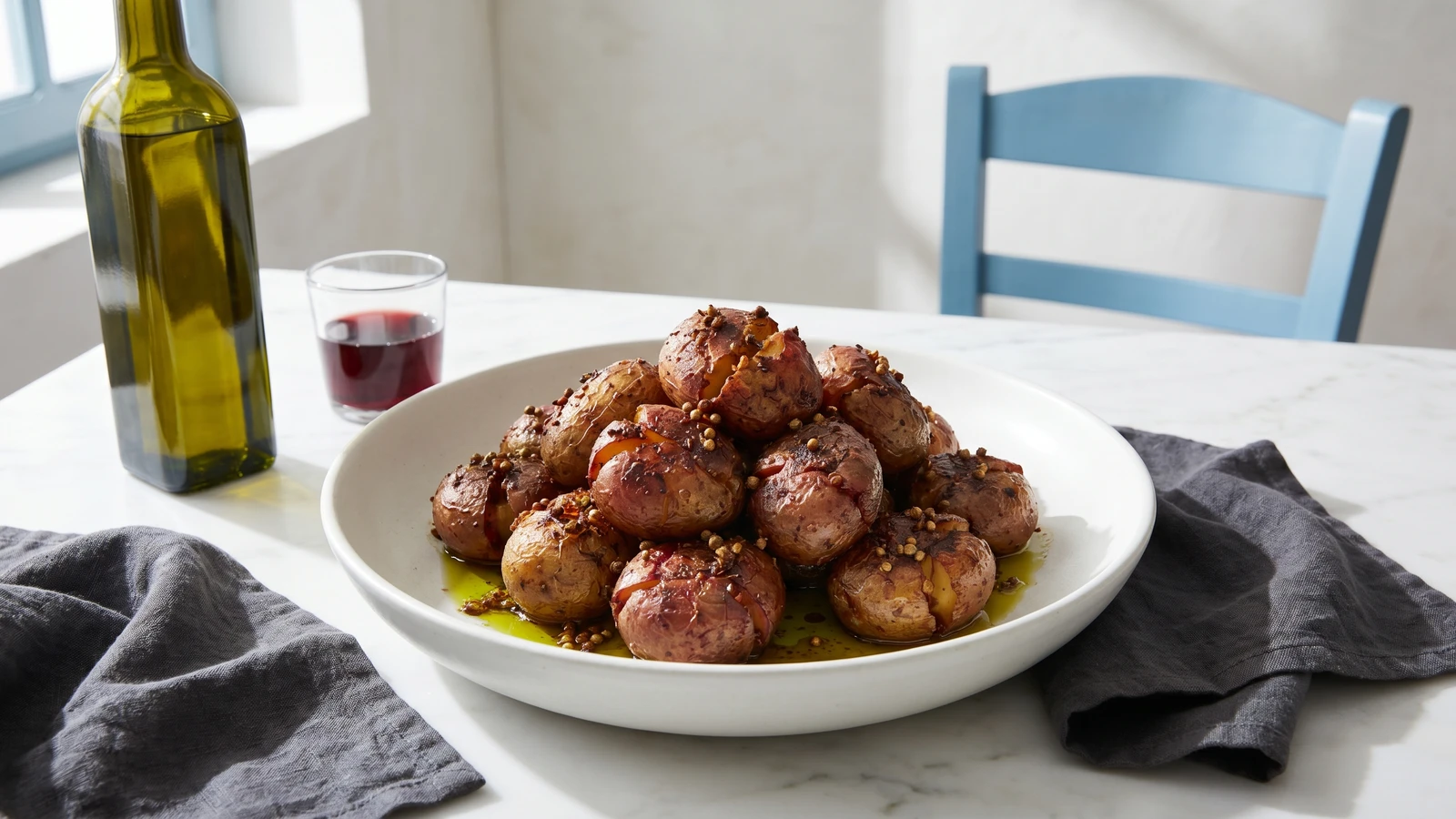
Cyprus gives these potatoes their name and method: small waxy potatoes cracked in their skins, fried in olive oil, then shaken with red wine and crushed coriander.
Side Dishes
Greek
Comfort Food
Dinner Party
Budget Friendly
15 min
Active Time
35 min cook•50 min total
Yield4 to 6 servings
Patates Antinahtes belong to Cyprus, and their surname is in the motion. Small potatoes are left in their skins, cracked open, fried in olive oil, then hit with red wine and crushed coriander seed until the pan turns dark and glossy.
Patates Antinahtes are a Cypriot potato dish whose name comes from the verb antinasso, to shake or toss. The method belongs to the island's meze and fasting tables: unpeeled potatoes are cracked, fried, then shaken with wine and coriander rather than stirred. Coriander seed has deep roots in Cypriot cooking and trade, and here it marks the dish as Cypriot as clearly as the red earth marks the island's potatoes.
The technique, the tradition, and the story behind every dish.
small waxy potatoes, preferably Cyprus potatoesscrubbed and left unpeeled
1kg
extra virgin olive oilplus more if needed for shallow frying
180ml
coriander seedscoarsely crushed
2 tsp
dry red wine
150ml
fine sea salt
1 1/2 tsp
red wine vinegar (optional)only if the wine is soft
1 tbsp
Equipment Needed
•wide heavy frying pan with tight-fitting lid, 28 to 30cm
•pestle or flat-bottomed glass for cracking the potatoes
•mortar and pestle for the coriander seeds
Instructions
1
Crack the potatoes
Scrub the potatoes well and dry them hard with a towel. Leave the skins on. Put each potato on a board and press it with the bottom of a glass, a pestle, or the flat side of a heavy knife until it cracks but does not fall apart. This crack is the whole dish: it gives the wine and coriander somewhere to go.
Use potatoes about the size of a walnut or small egg. If yours are larger, halve them after cracking, but keep the skins.
2
Start the fry
Warm the olive oil in a wide heavy pan over medium heat. Add the potatoes in one layer, cracked sides down where you can, and fry gently for 15 minutes, turning the pan now and then so the oil reaches every potato. They should begin to blister and color, not scorch.
3
Cook until tender
Turn the potatoes with tongs, cover the pan loosely, and cook for another 12 to 15 minutes, until a knife slips into the largest one. If the pan looks dry before the potatoes are tender, add another spoonful of olive oil. Salt them while they are hot.
4
Add coriander
Scatter in the crushed coriander seeds and shake the pan for 30 seconds. You want the seeds to wake in the hot oil and smell citrusy and warm, not burn black at the bottom.
5
Shake with wine
Pour in the red wine, and the vinegar if using. Cover the pan at once and shake it firmly over the heat for 2 to 3 minutes, holding the lid tight. Do not stir. The potatoes knock against each other, the cracked edges roughen, and the wine reduces into a dark, syrupy coat.
6
Serve glossy
Uncover and let the last spoonfuls of wine bubble down until the potatoes look lacquered and the oil shines around them. Taste for salt. Serve warm, with the coriander clinging to the skins and the cracked edges stained red.
Chef Tips
•Cyprus potatoes are ideal because they are waxy, thin-skinned, and hold their shape. If you can't get them, choose the smallest new potatoes you can find. Floury potatoes break apart before the wine has done its work.
•Crush the coriander seed roughly, not to powder. Powder tastes dusty here and disappears into the oil. You want little cracked seeds on the potato skins.
•This is nistisimo, proper fasting food, not a substitute dish. Put it beside olives, tahini, horta, grilled mushrooms, or a tomato salad, and you've got a Cypriot table that knows exactly what it is.
Advance Preparation
•Scrub and dry the potatoes up to 4 hours ahead, but crack them just before frying so they do not discolor.
•Crush the coriander seeds earlier in the day and keep them covered. Do not use ground coriander as the main seasoning.
•The dish is best served straight from the pan, but leftovers rewarm well in a covered skillet with a spoonful of water and a small splash of wine.
Frequently Asked Questions
Nutrition Information
1 serving (about 210g)
Calories
460 calories
Total Fat
33 g
Saturated Fat
5 g
Trans Fat
0 g
Unsaturated Fat
28 g
Cholesterol
0 mg
Sodium
700 mg
Total Carbohydrates
36 g
Dietary Fiber
5 g
Sugars
2 g
Protein
4 g
Where cooking meets culture.
Culinary guides, cultural storytelling, and the editorial depth that makes cooking meaningful.