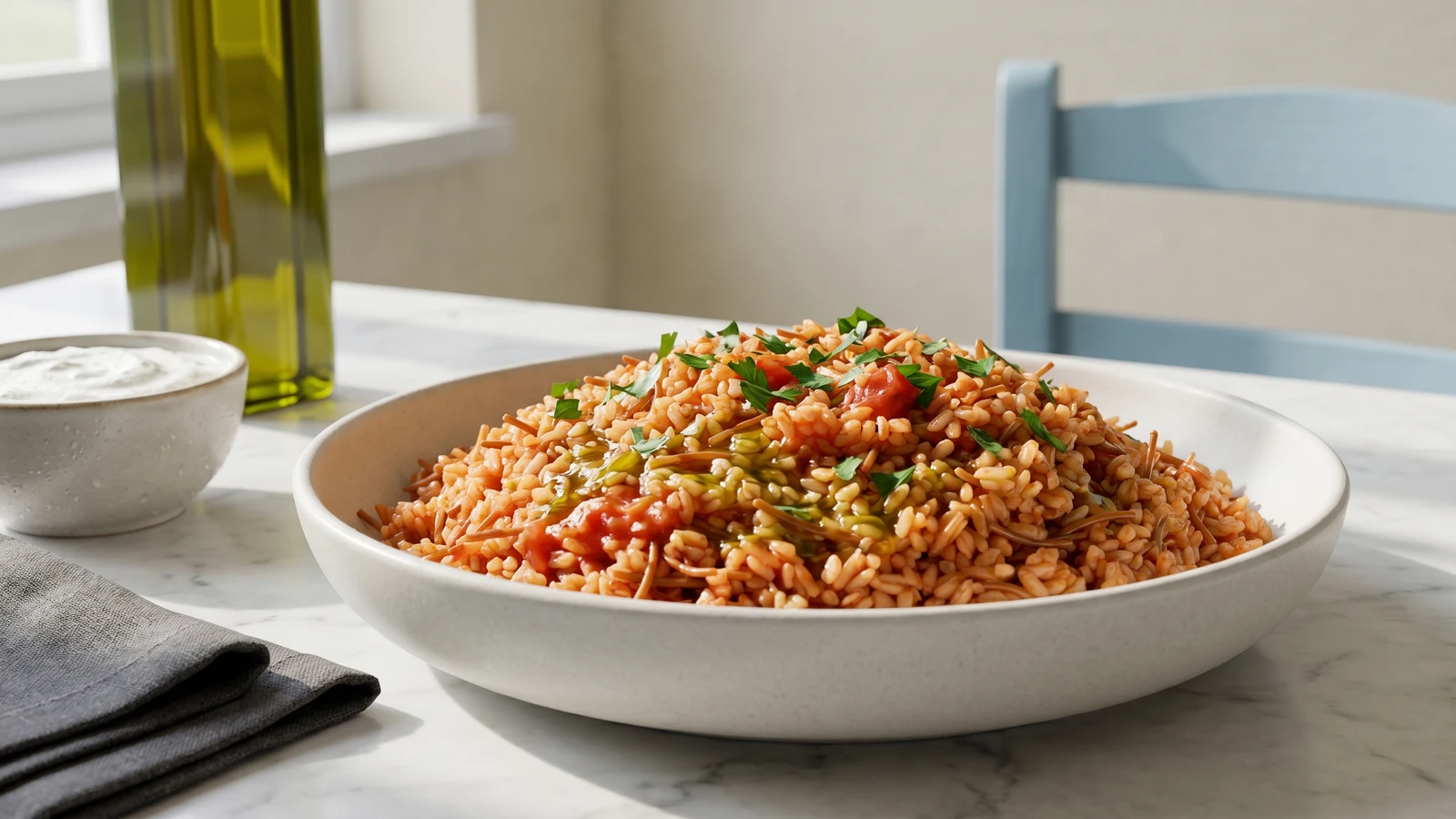
Cyprus gives pilafi to pourgouri, not rice: coarse bulgur cooked with tomato and browned fide, simple enough for Tuesday and serious enough to remember.
Side Dishes
Greek
Weeknight
Budget Friendly
Comfort Food
10 min
Active Time
25 min cook•35 min total
Yield4 to 6 servings
Pourgouri pilafi is Cyprus by surname: coarse bulgur cooked with browned fide, onion, and tomato until the grains sit separate and glossy. It is not rice pretending to be pilaf. It is the island's everyday grain pot, cheap, filling, and good with yogurt beside it.
The one method is the browning of the fide. Let the little broken noodles go properly golden in olive oil before the onion and tomato enter the pan. That toasted taste carries through the whole pot, so the bulgur becomes warm and nutty instead of merely boiled.
I keep this one plain because that is its dignity. A good tomato in season, or honest crushed tomato when the calendar says no, and pourgouri coarse enough not to turn mushy. Your grandmother cooked by eye because she'd made it a thousand times. Here are the numbers until you have.
Pourgouri pilafi belongs to the Greek Cypriot table, where bulgur remained a daily grain long after polished rice became more common in many mainland Greek kitchens. The browned fide reflects Ottoman and Levantine pilaf habits, but Cyprus made the dish its own with tomato and the island habit of serving it beside yogurt or legumes. It is also naturally suited to the Orthodox fasting calendar when cooked with water or vegetable broth.
The technique, the tradition, and the story behind every dish.
fine vermicelli or angel hair pasta (fide)broken into 3cm pieces
60g
extra virgin Koroneiki olive oil
60ml
medium onionfinely chopped
1
tomato paste
2 tablespoons
ripe tomatograted, or 120g canned crushed tomato
1
hot vegetable broth, chicken broth, or water
600ml
fine sea saltplus more to taste
1 teaspoon
freshly ground black pepper
1/2 teaspoon
small cinnamon stick (optional)
1
flat-leaf parsley (optional)chopped
2 tablespoons
Greek or Cypriot strained yogurt (optional)for serving
as needed
Equipment Needed
•wide lidded saucepan, 24cm
•fine sieve
•box grater for fresh tomato
Instructions
1
Rinse the pourgouri
Put the pourgouri in a fine sieve and rinse it briefly under cool water. Let it drain while you start the pot. You want it clean and damp, not soaked.
2
Brown the fide
Warm the olive oil in a wide lidded saucepan over medium heat. Add the broken fide and stir until it turns deep golden brown, 3 to 5 minutes. This is the step that decides the pilaf. If the pasta stays pale, the whole pot tastes flat; if it browns properly, it gives the pourgouri its nutty backbone.
Stay at the stove here. Fide moves from gold to burnt quickly, and burnt pasta makes the whole pilaf bitter.
3
Soften the onion
Add the onion to the browned fide and cook for 4 to 5 minutes, stirring often, until the onion softens and turns sweet at the edges. Keep the heat moderate so the fide does not darken too far.
4
Cook the tomato
Stir in the tomato paste and cook for 1 minute, until it stains the oil red. Add the grated tomato, salt, pepper, and cinnamon stick if using. Let it bubble for 2 minutes so the raw tomato taste settles.
5
Simmer the pilaf
Add the drained pourgouri and stir until every grain is glossy. Pour in the hot broth or water, bring it to a steady simmer, then lower the heat and cover the pan. Cook for 12 minutes without stirring.
6
Rest and fluff
Take the pan off the heat and leave it covered for 10 minutes. Remove the cinnamon stick, then fluff the pilaf gently with a fork. The grains should be tender but separate, with the vermicelli showing through like little browned threads.
7
Serve warm
Taste for salt and finish with parsley if you like. Serve warm, with strained yogurt beside it if this is not a fasting table. For nistisima, keep the broth vegetable or use water, and the dish needs no apology.
Chef Tips
•Use coarse pourgouri, not fine bulgur. Fine bulgur drinks too fast and turns soft before the tomato has done its work.
•If tomatoes are poor, use good canned crushed tomato. The right method on a sad tomato still gives you a sad dish.
•Serve it with yogurt, grilled halloumi, lentils, or a plate of olives. On fasting days, leave the dairy aside and the dish still belongs exactly where it is.
Advance Preparation
•Break the fide and measure the pourgouri up to a day ahead.
•Leftovers keep covered in the refrigerator for 3 days. Rewarm gently with a splash of water so the grains loosen.
Frequently Asked Questions
Nutrition Information
1 serving (about 225g)
Calories
340 calories
Total Fat
12 g
Saturated Fat
2 g
Trans Fat
0 g
Unsaturated Fat
10 g
Cholesterol
0 mg
Sodium
900 mg
Total Carbohydrates
51 g
Dietary Fiber
10 g
Sugars
3 g
Protein
9 g
Where cooking meets culture.
Culinary guides, cultural storytelling, and the editorial depth that makes cooking meaningful.