
Chef Graziella
Peperoni Ripieni alla Calabrese
Sweet peppers from Calabria's sun-drenched hills, filled with the Mediterranean pantry's treasures and baked until the filling turns golden and the peppers yield to a fork.
A cooking platform built around craft, culture, and the stories behind what we eat.
Created by
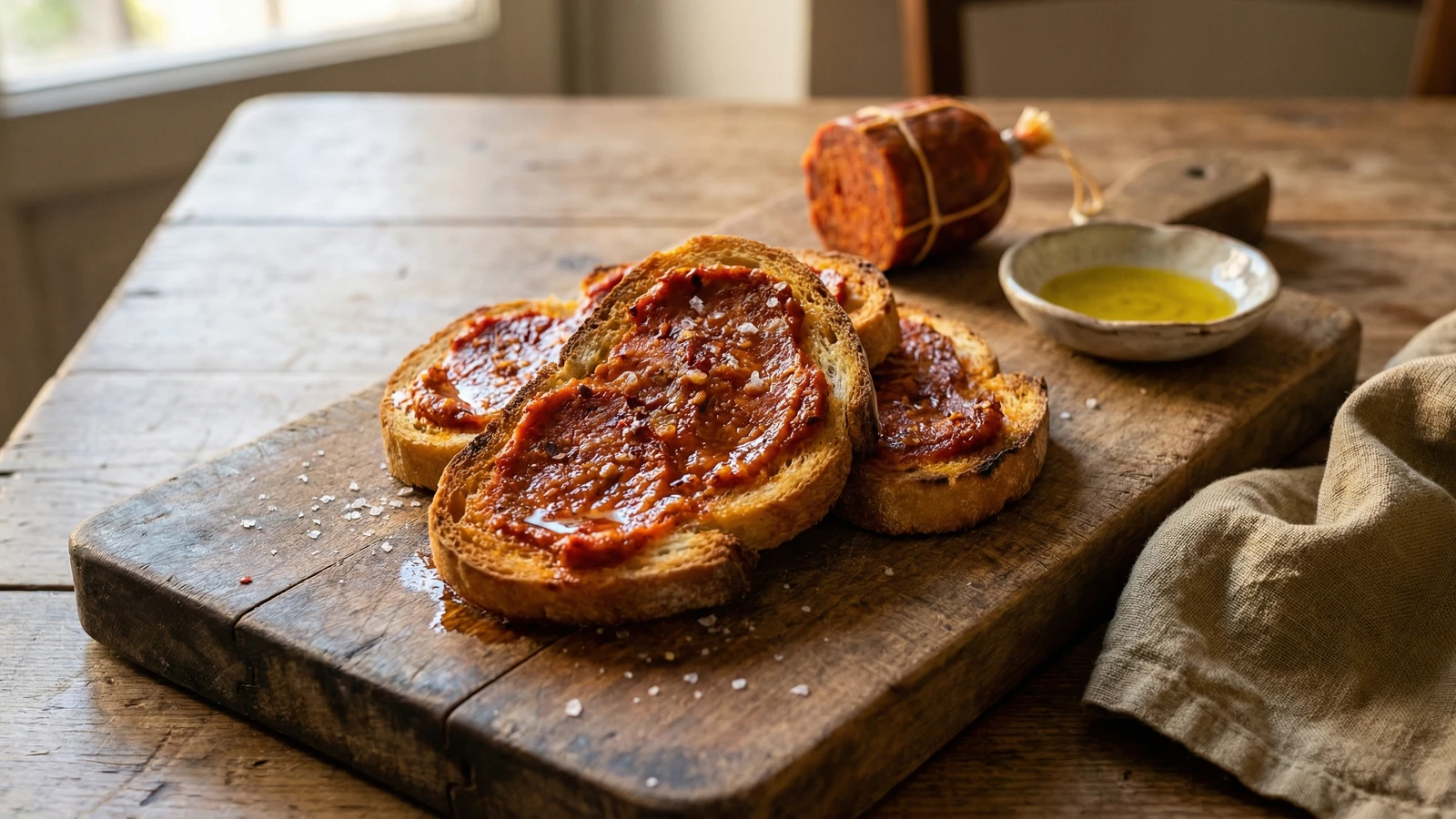
Warm bread, spreadable fire. Calabria's most assertive salume demands nothing more than heat and good bread to reveal its character.
Nduja is not for everyone, and that is precisely the point. This spreadable salame from Calabria contains so much peperoncino that it glows orange-red, so much pork fat that it melts on contact with warm bread. It is aggressive, unapologetic, and utterly Calabrese.
The preparation could not be simpler. Toast good bread. Spread nduja while the bread is warm. Eat. There is nothing to add, nothing to improve. The nduja contains all the salt, all the heat, all the flavor you need. What you keep out is as significant as what you put in, and here you keep out everything.
Americans want to complicate things. They add ricotta, they drizzle honey, they pile on other toppings. These additions reveal a misunderstanding. Nduja is complete. It needs only warm bread to carry it to your mouth.
Nduja originated in the mountain town of Spilinga in Calabria, where pork butchers developed the recipe to use every part of the pig. The namelikely derives from the French 'andouille,' a linguistic remnant of the Napoleonic occupation in the early 1800s. For two centuries it remained virtually unknown outside Calabria, until Italian chefs rediscovered it in the early 2000s and introduced it to the wider world.
Quantity
6 ounces
Quantity
12 slices
sliced 1/2 inch thick
Quantity
for brushing
Quantity
to taste
| Ingredient | Quantity |
|---|---|
| nduja Calabrese | 6 ounces |
| baguette or rustic Italian breadsliced 1/2 inch thick | 12 slices |
| extra virgin olive oil | for brushing |
| flaky sea salt | to taste |
Preheat your oven to 400°F or heat a grill pan over medium-high heat. Brush both sides of each bread slice with olive oil, using a light hand. The oil helps the bread crisp evenly.
Arrange the bread slices on a baking sheet or place them directly on the grill pan. Toast until golden and crisp at the edges but still slightly soft within, about 3 minutes per side. The bread should have structure. It must support the nduja without shattering.
While the crostini are still warm, spread a generous tablespoon of nduja on each slice. Use the back of a spoon or a small offset spatula. The warmth of the bread softens the nduja, allowing the pork fat to begin melting into the surface. You will see the edges grow glossy. This is correct.
Scatter a few flakes of sea salt over each crostino. Serve immediately while the bread is warm and the nduja glistens. These wait for no one.
1 serving (about 75g)
Culinary guides, cultural storytelling, and the editorial depth that makes cooking meaningful.
Discover Culinary ExplorerChef Graziella
Sweet peppers from Calabria's sun-drenched hills, filled with the Mediterranean pantry's treasures and baked until the filling turns golden and the peppers yield to a fork.

Chef Juliette
Tiny éperlans, lightly floured and fried until their tails stand crisp, arrive in a generous heap on a napkin with fried parsley and grooved lemon, a weeknight lesson in heat and restraint.

Chef Juliette
Brandade de Morue turns salt cod, warm olive oil, and milk into a pale, silky emulsion: keep everything warm and add the oil slowly, then crown the generous dome with butter-fried bread.

Chef Juliette
Salt cod worked warm with cream, one patient spoonful at a time, until the rough flakes become a glossy Nîmes paste, domed generously and ringed with butter-fried croutons for the table.