Culinary Explorer

A cooking platform built around craft, culture, and the stories behind what we eat.
Discover Culinary Explorer
Cretan Vlita Vrasta (Βλήτα Βραστά)

Cretan Vlita Vrasta (Βλήτα Βραστά)

Created by

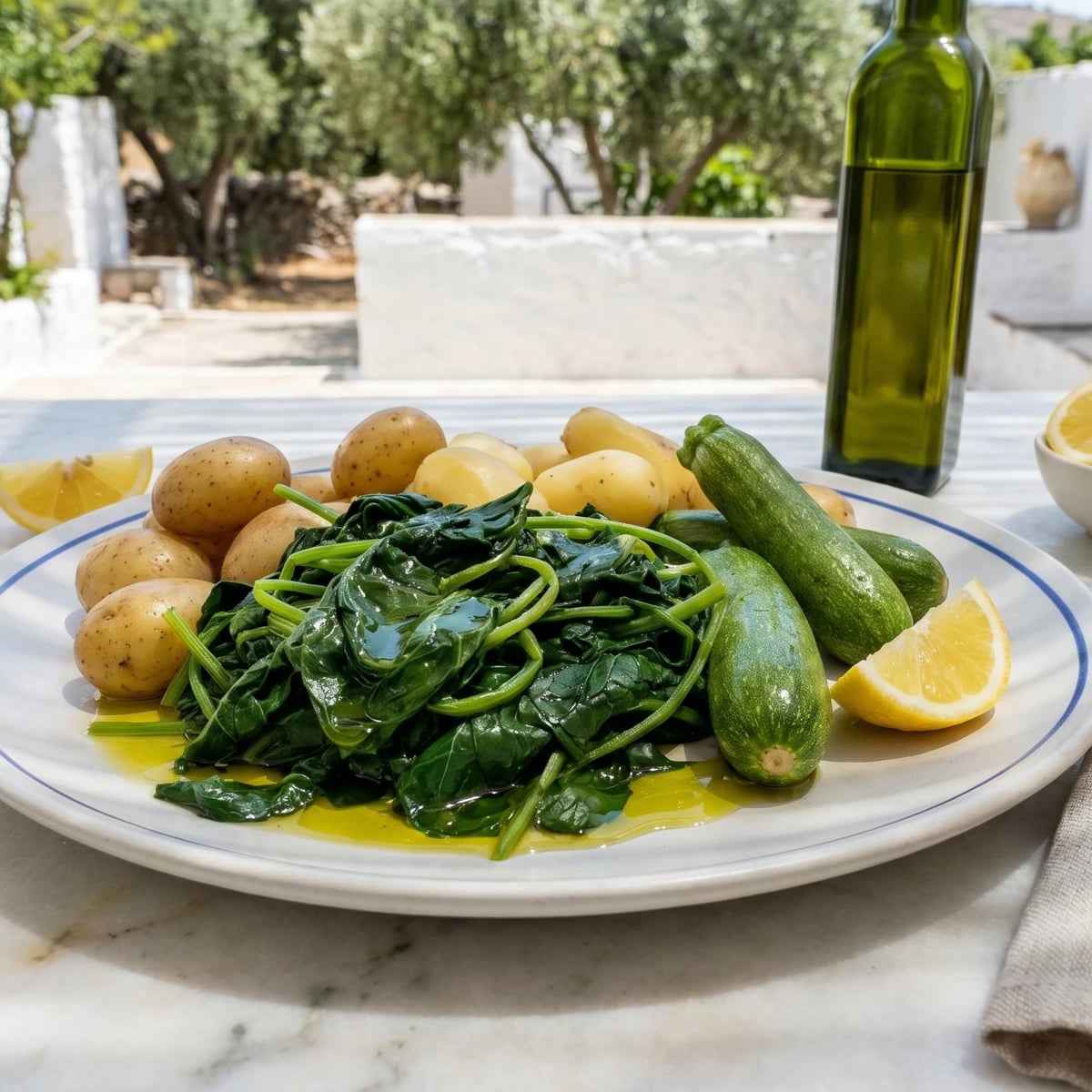
Crete's summer horta: soft amaranth greens, tender stalks, potatoes, and small zucchini, dressed while warm with sharp lemon and green-gold olive oil, the way a weeknight table actually eats them.

Salads
Greek
Weeknight
Budget Friendly
Outdoor Dining
20 min
Active Time
25 min cook45 min total
Yield4 servings

Cretan vlita vrasta are the summer horta of Crete: amaranth shoots boiled until the stalks turn sweet, then dressed warm with lemon and green-gold olive oil. The region is the dish's surname here. The Cretan table often brings the vlita out with potatoes and small zucchini from the same pot, not as decoration, but because a small field of vegetables can become supper.

The one thing that decides it is tenderness. Vlita is not spinach, and it isn't a raw salad pretending to be cooked. The stems need to bend easily between your fingers and lose their grassy squeak. Start the potatoes first, add the zucchini, then the cleaned greens, and salt the water well so the whole plate tastes seasoned before the oil touches it.

I dress them while still warm, with enough oil to gloss the leaves and enough lemon to wake them up. Eat the stalks too. My mother Sofia would watch children leave them behind and say nothing for half a minute, which in Thessaloniki meant the lecture was already cooking.

With bread, olives, or a piece of feta outside a fast, this is a complete summer plate. During nistia, the fasting days, it needs no apology. Good olive oil, and patience.

Vlita is the market name in Greece for tender amaranth greens, one of the summer horta that appear when dandelion and chicories have gone tough. In Crete and many Aegean island kitchens, the greens are commonly boiled with small zucchini and potatoes from the same garden, then dressed with oil and lemon as a meatless main or salad. The useful correction is botanical and culinary: this is the leaf and stem of amaranth, not the amaranth grain sold for porridge and not any kind of fava bean.

The technique, the tradition, and the story behind every dish.

Discover Culinary Explorer

Ingredients

fresh vlita (βλήτα, amaranth greens)

Quantity

800g

root ends trimmed

waxy potatoes

Quantity

450g

peeled and cut into 4cm chunks

small zucchini (κολοκυθάκια)

Quantity

500g

scrubbed, left whole if small or halved lengthwise

water

Quantity

2.5 litres

fine sea salt

Quantity

18g

plus more to finish

extra virgin Koroneiki olive oil

Quantity

80ml

fresh lemon juice

Quantity

45ml

lemon wedges (optional)

Quantity

1 lemon

cut into wedges

Equipment Needed

  • large wide pot, 6 litre
  • wide colander
  • shallow serving platter, 30cm

Instructions

  1. 1

    Wash the vlita

    Trim off the sandy root ends and any thick, woody pieces. Keep tender stems attached, because the stalk is part of the pleasure here. Wash the vlita in three changes of cold water, lifting the greens out each time so the grit stays behind.

    If the stems are very thick, separate them from the leafy tops. They can go into the pot first and catch up gently.
  2. 2

    Boil the potatoes

    Bring 2.5 litres of water to a strong boil in a large pot. Add 18g salt and the potatoes. Boil for 10 to 12 minutes, until the edges are just softening but the centers still resist a knife.

  3. 3

    Add the zucchini

    Add the zucchini to the same pot and boil for 5 to 7 minutes, depending on their size. A knife should enter without forcing. You want them tender, not collapsed.

  4. 4

    Cook the greens

    Add thick vlita stems first, if you separated them, and cook for 2 minutes. Add the leaves and tender stems, pressing them under the water with tongs. Boil uncovered for 6 to 9 minutes, until the stems bend easily and taste sweet. This is the dish's one test: vlita eaten too early is grassy and squeaky; properly cooked, the stalk is as welcome as the leaf.

  5. 5

    Drain and arrange

    Lift the vegetables into a wide colander and let them drain for 5 minutes. Don't squeeze the greens. Arrange them while warm on a shallow platter, with the vlita in a loose pile and the potatoes and zucchini tucked around it.

  6. 6

    Dress and serve

    Pour over the olive oil and lemon juice. Turn gently with two spoons so the oil glosses the leaves without breaking the vegetables. Taste for salt, add lemon wedges, and serve warm or at room temperature.

Chef Tips

  • Buy vlita when the stems are thin, juicy, and still springy. Late spring through summer is its real season. If you can't find amaranth greens, make horta with chard or beet greens and keep the name honest.
  • Do not rinse the cooked greens under cold water. You wash away salt and flavor, and then no amount of oil fixes it. Drain well, let the heat settle, and dress while the leaves are still warm.
  • As written, this is nistisimo, suitable for the fasting table. Outside the fast, serve it beside grilled sardines, a slab of feta, or just bread and olives. Λίγα και καλά.

Advance Preparation

  • Wash the vlita up to 1 day ahead, wrap it loosely in a clean towel, and refrigerate.
  • Boil the vegetables up to 1 day ahead and refrigerate them undressed. Bring them back to room temperature before adding the oil and lemon.
  • For outdoor dining, dress just before serving and keep the platter out of hard heat once it reaches the table.

Frequently Asked Questions

Nutrition Information

1 serving (about 410g)

Calories
320 calories
Total Fat
19 g
Saturated Fat
3 g
Trans Fat
0 g
Unsaturated Fat
16 g
Cholesterol
0 mg
Sodium
700 mg
Total Carbohydrates
32 g
Dietary Fiber
8 g
Sugars
3 g
Protein
9 g

Note: Chef personas and recipes are created with AI assistance. Cook with care: follow safe food-handling practices, check doneness with a thermometer when needed, and adapt for allergies and your kitchen.

Where cooking meets culture.

Culinary guides, cultural storytelling, and the editorial depth that makes cooking meaningful.

Discover Culinary Explorer

More from Greek Salads & Horta

Browse the full collection