
Chef Dimitra
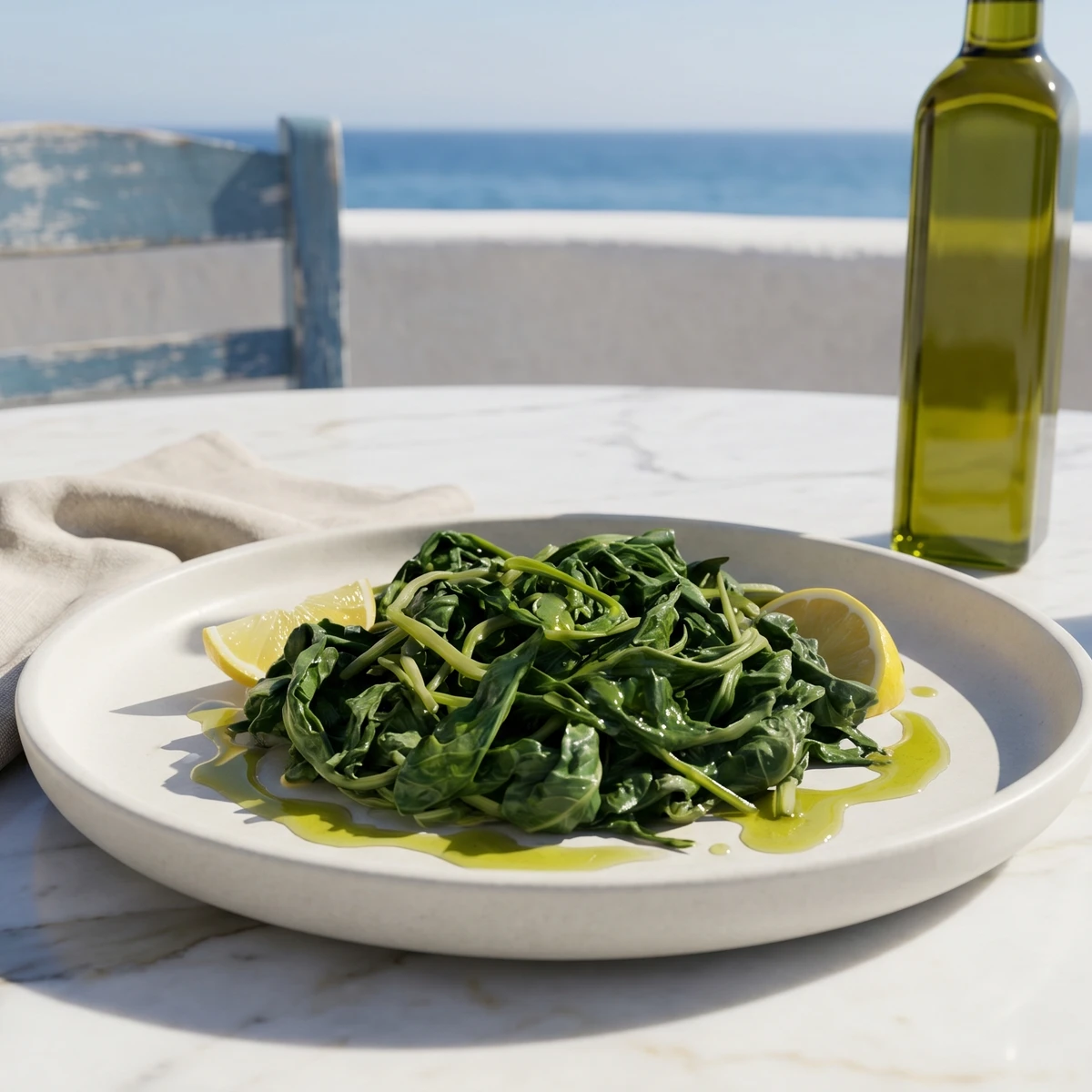
Cretan Vlita Vrasta (Βλήτα Βραστά)
Crete's summer horta: soft amaranth greens, tender stalks, potatoes, and small zucchini, dressed while warm with sharp lemon and green-gold olive oil, the way a weeknight table actually eats them.
A cooking platform built around craft, culture, and the stories behind what we eat.
Created by
Epirote horta vrasta are boiled wild greens dressed warm with lemon and olive oil, plain as a stone and better for it.
Horta vrasta of Epirus are boiled wild greens, dandelion, chicory, sow thistle, whatever the mountain market gives you, served warm under lemon and olive oil. This is not a garnish pretending to be a salad. It is the green plate that sits beside beans, fish, feta, or bread, and in fasting weeks it can stand at the center of the table without apology.
The whole dish depends on washing well and dressing while warm. Boil the greens uncovered until the stems yield, then oil and lemon go on before the heat has left them. Warm leaves take in the olive oil. Cold leaves shed it, and you get a slick plate with tired greens underneath. That is the little truth here.
Use the bitter greens if you can find them. Λίγα και καλά, a few things, and good ones. In my Thessaloniki kitchen I cook horta all winter, but the Epirote plate is the one I return to when I want the taste of hills after rain: mineral, sharp, and honest.
Horta vrasta belong to the everyday cooking of mainland Greece and the islands, but Epirus is especially tied to gathered greens because its mountain villages cooked from pasture, field edges, and market bundles before cultivated salad leaves became common. During the Orthodox fasting calendar, boiled greens dressed with oil and lemon became one of the simplest nistisima plates, dairy-free and meat-free without needing alteration. The regional difference is often in the greens themselves: Epirus favors bitter mountain leaves, while Crete may reach for stamnagathi and the islands for whatever grows after the first rains.
Quantity
1kg
dandelion, chicory, sow thistle, chard, or beet greens
Quantity
3L
Quantity
18g
plus more to finish
Quantity
80ml
Quantity
45ml
plus more to taste
Quantity
1 small
cut into wedges
| Ingredient | Quantity |
|---|---|
| mixed wild greens (horta)dandelion, chicory, sow thistle, chard, or beet greens | 1kg |
| water | 3L |
| fine sea saltplus more to finish | 18g |
| extra virgin Koroneiki olive oil | 80ml |
| fresh lemon juiceplus more to taste | 45ml |
| lemoncut into wedges | 1 small |
Sort the horta by hand. Pull away yellow leaves, tough lower stems, and any roots with grit clinging to them. Keep tender stems attached, because they give the plate its bite. If the stems are thick, split them lengthwise so they cook with the leaves.
Fill a deep basin with cold water and swish the greens hard. Lift them out, leaving grit behind, then change the water and repeat twice more. Don't pour the dirty water over the greens or you put the hillside back on the plate.
Bring 3L water to a full boil in a wide pot and add the salt. The pot should look too big. Horta need room so the leaves collapse quickly and stay green instead of stewing in their own dull water.
Add the greens by the handful, pressing them under the water as they soften. Boil uncovered for 8 to 12 minutes, depending on the greens, until the stems bend easily but the leaves still have life. Bitter winter greens may need the full time. Tender chard may need less.
Lift the greens out with tongs into a colander and let them drain for 2 minutes. Save a cup of the dark green cooking liquid if you like it the old way, warm with lemon. That pot liquor is not waste.
Move the warm greens to a shallow serving dish. Pour over the olive oil and lemon juice, then turn them gently with tongs so the oil coats the leaves and settles into the stems. This is the method that decides the dish: dress them warm, not cold, so the greens drink the oil instead of wearing it on the surface.
Let the horta sit for 5 minutes, then taste for salt and lemon. Serve warm or at room temperature with lemon wedges. On an Epirote table, this can be a salad, a fasting plate, or dinner beside bread and feta.
1 serving (about 190g)
Culinary guides, cultural storytelling, and the editorial depth that makes cooking meaningful.
Discover Culinary Explorer
Chef Dimitra
Crete's summer horta: soft amaranth greens, tender stalks, potatoes, and small zucchini, dressed while warm with sharp lemon and green-gold olive oil, the way a weeknight table actually eats them.

Chef Dimitra
In the Cyclades, mavromatika salata is the Lenten bean salad that needs no plan: black-eyed peas boiled tender, dressed warm with lemon, oil, onion, parsley, and little else.

Chef Dimitra
Dakos Kritis is Crete's barley rusk salad, softened with grated ripe tomato and finished with mizithra, oregano, olives, and green-gold oil.

Chef Dimitra
Kefalonia's beet salad is roots and greens, dressed warm with vinegar and olive oil, then covered with aliada, the island's potato skordalia, sharp with garlic and made for fasting tables.