Chef Graziella
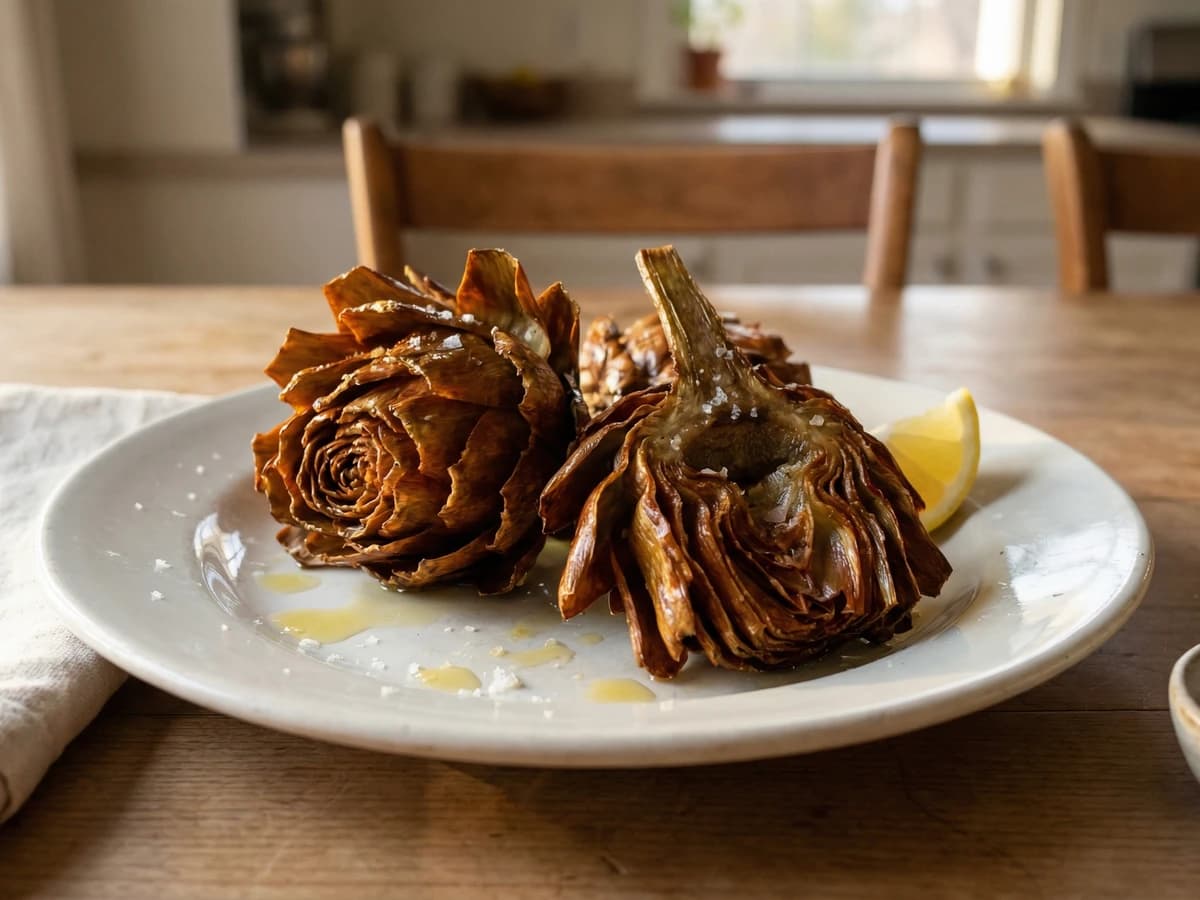
Carciofi alla Giudia
The legendary fried artichokes of Rome's Jewish quarter, each leaf crisp enough to shatter between your teeth, the heart tender as butter. Four ingredients. Technique is everything.
A cooking platform built around craft, culture, and the stories behind what we eat.
Created by
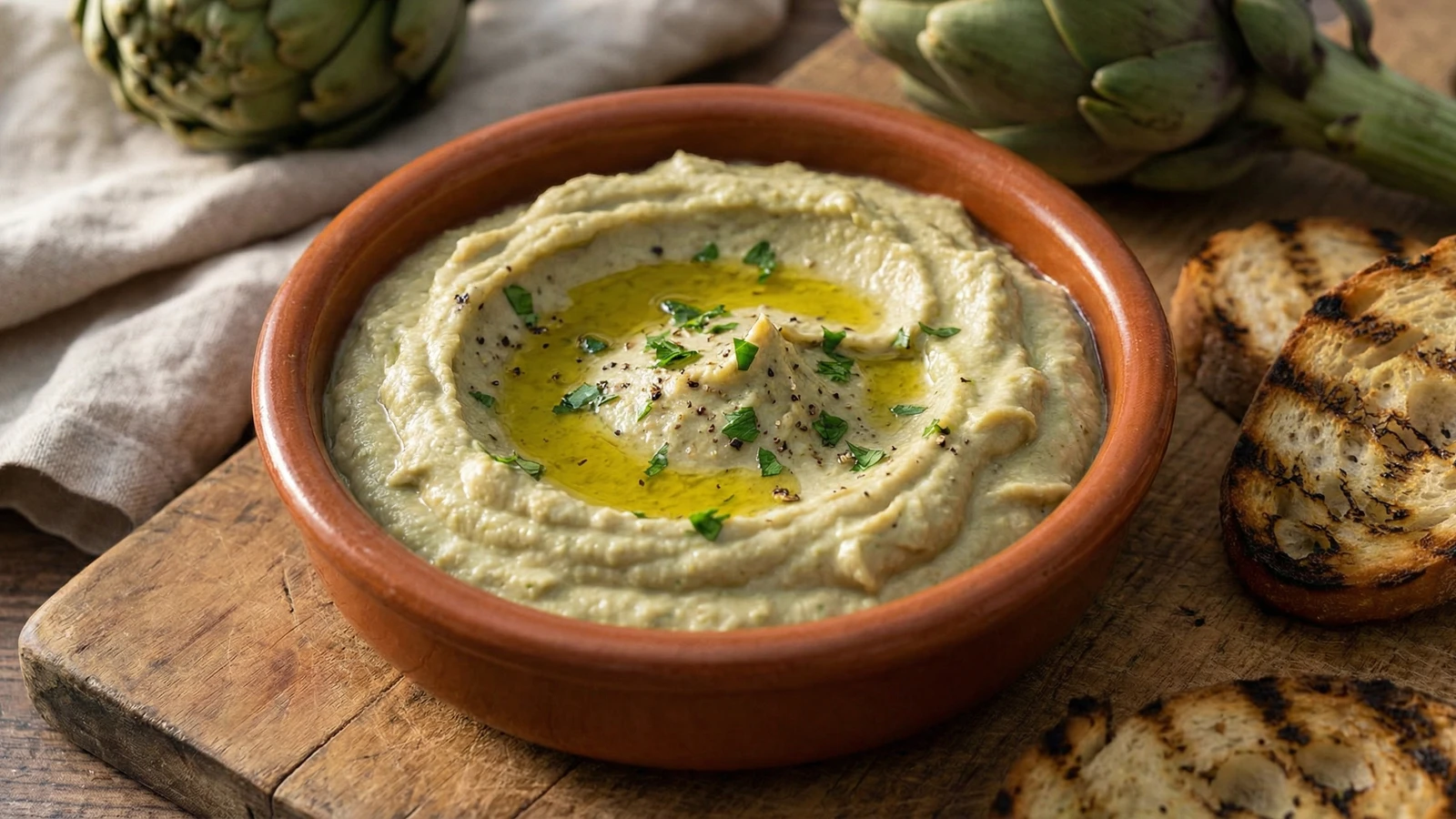
Roman artichokes pureed with sharp pecorino and bright lemon, spread onto warm bread or scooped with crisp vegetables. This is spring on the table.
Romans understand artichokes in a way other Italians do not. The carciofi romanesco, with its purple-tinged leaves and tender heart, appears in March and the city loses its collective mind. Vendors stack them in pyramids at Campo de' Fiori. Trattorias write them on chalkboards. For a few weeks, artichokes are everywhere, cooked every possible way.
This crema captures that obsession in its simplest form. You braise the hearts until they surrender completely, then puree them with pecorino and lemon. What emerges is something between a spread and a dip, equally at home on toasted bread or beside a pile of raw fennel.
The garlic here is a suggestion, not a presence. You cook two cloves in the oil to perfume it, then discard them before pureeing. What remains is warmth without aggression. The pecorino provides salt and sharpness, the lemon provides brightness. The artichoke provides everything else.
Artichokes arrived in Rome through Naples in the 15th century, likely brought by Filippo Strozzi from Florence. The Roman Jewish community developed signature preparations, but artichokes quickly became the property of all Romans. This crema reflects the modern Roman approach: taking ancient ingredients and adapting them for contemporary tables without sacrificing their essential character.
Quantity
2 pounds (about 4 large)
or 14 ounces frozen artichoke hearts, thawed
Quantity
1
halved, for cleaning artichokes
Quantity
3 tablespoons, plus more for drizzling
Quantity
2
smashed
Quantity
1/2 cup
Quantity
1/2 cup
Quantity
1/2 cup
finely grated
Quantity
2 tablespoons
Quantity
1 tablespoon
chopped fine
Quantity
to taste
Quantity
to taste
freshly ground
Quantity
for serving
| Ingredient | Quantity |
|---|---|
| fresh artichokesor 14 ounces frozen artichoke hearts, thawed | 2 pounds (about 4 large) |
| lemonhalved, for cleaning artichokes | 1 |
| extra virgin olive oil | 3 tablespoons, plus more for drizzling |
| garlic clovessmashed | 2 |
| dry white wine | 1/2 cup |
| water | 1/2 cup |
| Pecorino Romanofinely grated | 1/2 cup |
| fresh lemon juice | 2 tablespoons |
| flat-leaf parsleychopped fine | 1 tablespoon |
| kosher salt | to taste |
| black pepperfreshly ground | to taste |
| grilled or toasted bread | for serving |
Fill a bowl with cold water and squeeze in the juice of half a lemon. Working with one artichoke at a time, snap off the dark outer leaves until you reach the pale yellow-green inner leaves. Cut off the top third of the artichoke. Trim the stem, leaving about one inch, and peel away the tough outer layer. Halve the artichoke lengthwise and scrape out the fuzzy choke with a spoon. Cut each half into quarters and drop immediately into the lemon water to prevent browning.
Drain the artichokes and pat dry. In a wide skillet with a lid, warm the olive oil over medium heat. Add the smashed garlic cloves and cook until fragrant, about one minute. The garlic must not brown. Add the artichokes, stir to coat with oil, and cook for two minutes. Pour in the wine and let it bubble until reduced by half. Add the water, season lightly with salt, and cover. Reduce heat to medium-low and braise until the artichokes are completely tender when pierced with a knife, 15 to 20 minutes. If the pan becomes dry, add a splash more water. Remove and discard the garlic.
Transfer the artichokes and any liquid remaining in the pan to a food processor. Add the Pecorino Romano and lemon juice. Pulse several times, then process until the mixture forms a smooth, spreadable cream. The texture should be similar to hummus: not perfectly smooth, with a bit of body remaining. Taste and adjust salt and pepper. The pecorino is salty, so you may need very little additional salt.
Scrape the crema into a shallow bowl. Stir in the chopped parsley, reserving a pinch for garnish. Drizzle generously with your best olive oil. Serve at room temperature with grilled or toasted bread. The crema can also accompany raw vegetables: fennel, radishes, celery hearts.
1 serving (about 55g)
Culinary guides, cultural storytelling, and the editorial depth that makes cooking meaningful.
Discover Culinary ExplorerChef Graziella
The legendary fried artichokes of Rome's Jewish quarter, each leaf crisp enough to shatter between your teeth, the heart tender as butter. Four ingredients. Technique is everything.
Chef Graziella
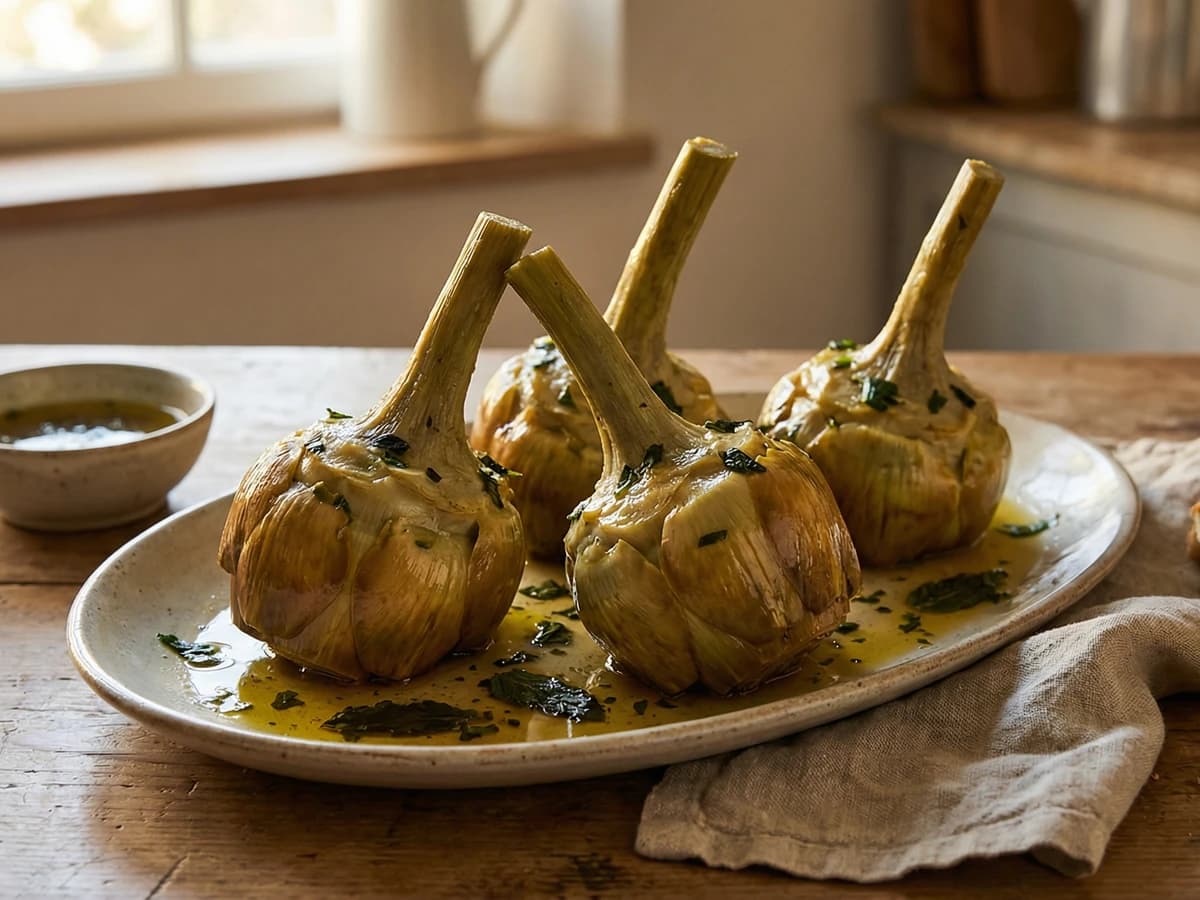
Rome's springtime ritual: whole artichokes stuffed with mint and garlic, braised upside-down until the leaves pull away like butter. The technique is precise, the reward profound.

Chef Graziella
Rome's beloved fried zucchini blossoms, stuffed with mozzarella that stretches and anchovy that provides salt and depth. A fleeting summer pleasure that rewards those who seek out perfect ingredients.
Chef Graziella
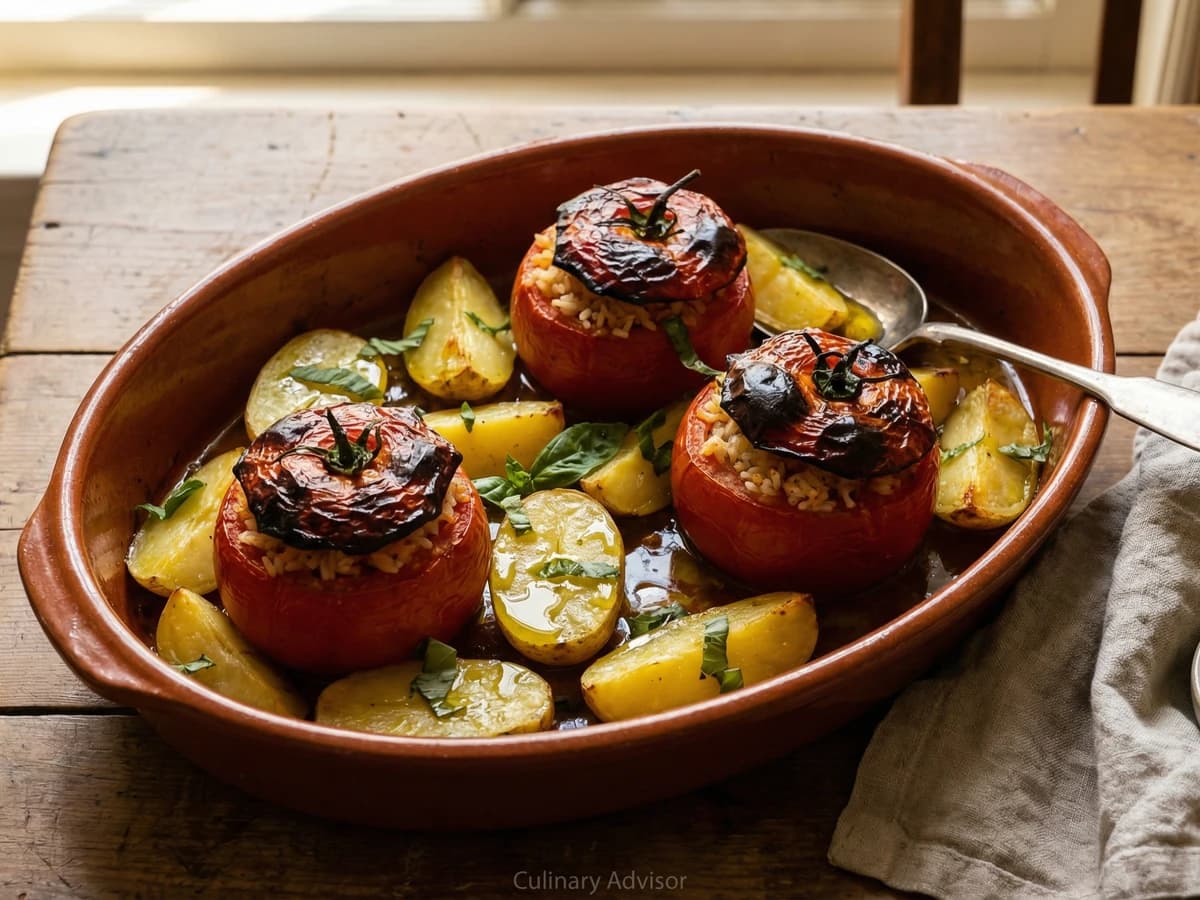
Roman stuffed tomatoes, baked until the lids char and the rice drinks in every drop of summer. Served at room temperature, as tradition demands, these are the taste of August in Rome.