
Chef Graziella
Agnello al Forno con Patate
The Sunday lamb of Puglia, roasted with potatoes until they absorb every precious drop of rendered fat. In this dish, the potatoes become the reason you came to the table.
A cooking platform built around craft, culture, and the stories behind what we eat.
Created by
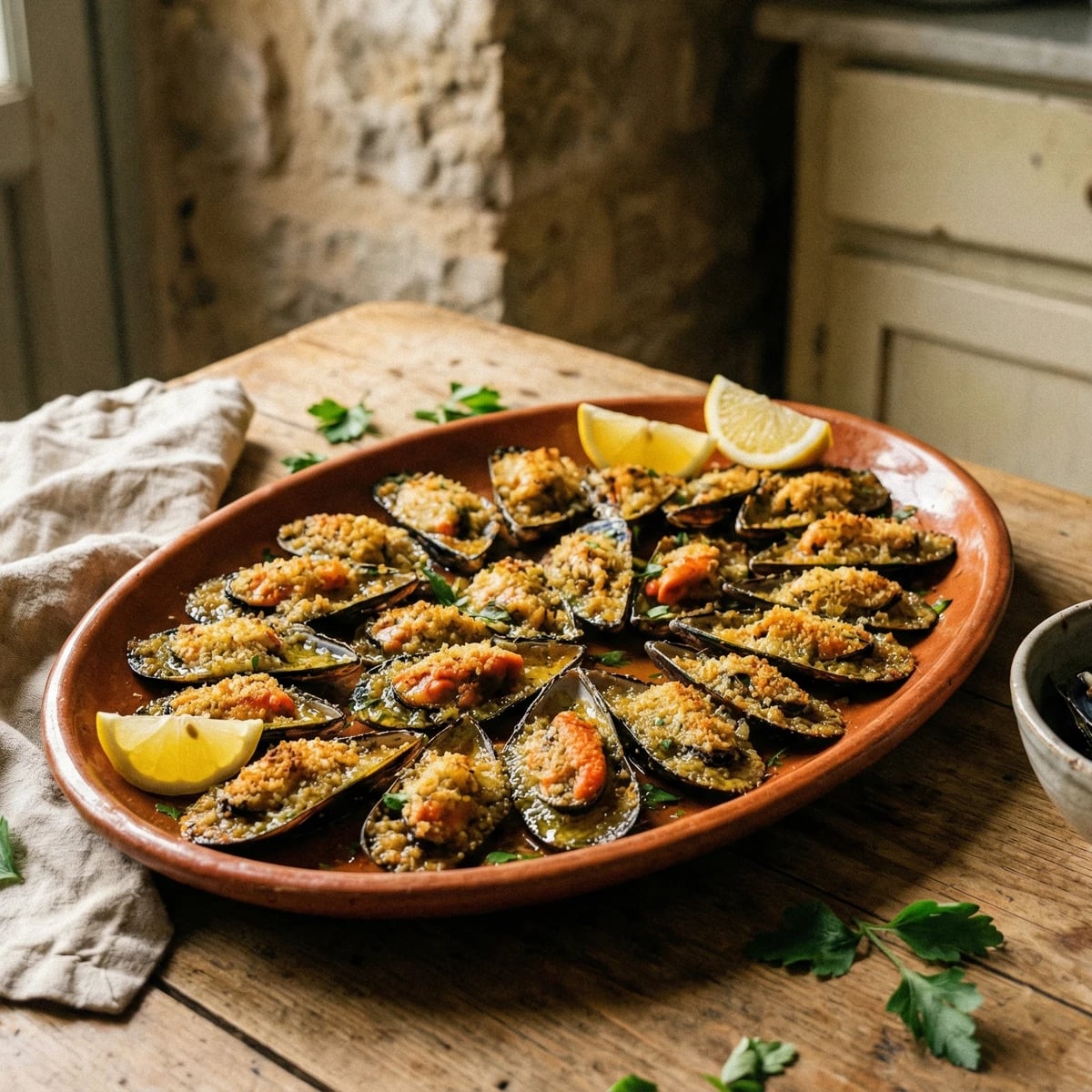
Puglia's beloved gratinated mussels, where briny shellfish meet a golden crust of breadcrumbs, pecorino, and parsley. Simple enough for a weeknight, impressive enough to close a dinner party.
The fishermen of Taranto have understood mussels for centuries. They know that when the shellfish is this good, you do not bury it under sauce. You give it a crust, a contrast, something to make the sweetness of the mussel sing against salt and crunch.
Cozze gratinate is peasant food from a coastline where mussels grow fat on the nutrients where two seas meet. The topping is nothing more than stale bread, ground fine, mixed with pecorino, parsley, and enough olive oil to bind it. You press this mixture onto each mussel, slide the tray into a hot oven, and wait for the transformation.
What emerges is alchemy: the mussel releases its liquor into the crumb, which absorbs it while crisping on top. You get brine underneath and crunch above. This is not restaurant cooking with its architectural presentations. This is what a Pugliese grandmother makes when the catch is good and she wants to show her family she loves them.
Taranto, nestled between the Mar Grande and Mar Piccolo on Puglia's Ionian coast, has cultivated mussels since the time of the ancient Greeks. The city's particular geography creates ideal growing conditions, and gratinata became the standard preparation because it stretched precious seafood while honoring its quality. Every family along the coast has their own version, arguing about pecorino versus Parmigiano, the proper ratio of crumb to cheese.
Quantity
3 pounds
scrubbed and debearded
Quantity
1 cup
Quantity
1 1/2 cups
Quantity
1/2 cup
finely grated
Quantity
3 tablespoons
minced
Quantity
2
minced very fine
Quantity
1/3 cup, plus more for drizzling
Quantity
to taste
freshly ground
Quantity
1
cut into wedges
| Ingredient | Quantity |
|---|---|
| fresh musselsscrubbed and debearded | 3 pounds |
| dry white wine | 1 cup |
| fine dry breadcrumbs | 1 1/2 cups |
| Pecorino Romanofinely grated | 1/2 cup |
| flat-leaf parsleyminced | 3 tablespoons |
| garlic clovesminced very fine | 2 |
| extra virgin olive oil | 1/3 cup, plus more for drizzling |
| black pepperfreshly ground | to taste |
| lemoncut into wedges | 1 |
Examine each mussel. Discard any with cracked shells or shells that remain open when tapped sharply. The mussel must be alive. Pull away the beard, that fibrous tuft protruding from the shell. Scrub each shell under cold running water. A small stiff brush is useful. Work over a bowl to catch any grit.
Put the wine in a large pot and bring to a boil. Add the mussels, cover tightly, and cook over high heat for 3 to 4 minutes, shaking the pot once or twice. The mussels will open. Remove them as they open to avoid overcooking. Discard any that refuse to open after 5 minutes. These were dead before cooking and are not safe to eat.
When cool enough to handle, remove and discard the top shell from each mussel, leaving the meat attached to the bottom shell. Arrange the mussels in a single layer on a rimmed baking sheet. They should sit level, cradled by the curve of their shells. If they tip, nestle them against their neighbors for support.
In a bowl, combine the breadcrumbs, pecorino, parsley, and garlic. Add the olive oil gradually, mixing with your fingers until the crumbs are evenly moistened and hold together when pressed. The mixture should be sandy, not wet. Season with pepper. Salt is unnecessary; the cheese and mussel provide enough.
Spoon a small mound of the breadcrumb mixture onto each mussel, pressing gently so it adheres. The topping should cover the meat generously but not spill over the shell edges. Do not pack it too tightly or it will not crisp properly.
Position a rack in the upper third of your oven and heat to 450°F. Drizzle the topped mussels lightly with additional olive oil. Bake until the crumbs are deep golden and crisp, 10 to 12 minutes. Watch carefully in the final minutes. The crumbs can go from golden to burnt quickly.
Transfer the mussels to a warm platter or serve directly from the baking sheet, which has a certain rustic honesty. Arrange lemon wedges alongside. The mussels must be eaten hot, while the crumb is still crackling. A squeeze of lemon is traditional but not mandatory. Let each person decide.
1 serving (about 165g)
Culinary guides, cultural storytelling, and the editorial depth that makes cooking meaningful.
Discover Culinary Explorer
Chef Graziella
The Sunday lamb of Puglia, roasted with potatoes until they absorb every precious drop of rendered fat. In this dish, the potatoes become the reason you came to the table.

Chef Graziella
The little hollowed shells of Puglia and Molise, shaped with nothing more than two fingers and a wooden board. The motion takes practice. The result catches sauce like nothing else.

Chef Graziella
Where the Adriatic meets the wheat fields of Puglia: briny mussels, creamy cannellini, and chewy cavatelli dressed in nothing but good olive oil and the juice the shellfish surrender.

Chef Graziella
The pasta of Puglia, shaped one ear at a time by dragging semolina dough across a wooden board. No machine can replicate this texture. Your hands are the only tools that matter.