Chef Isabel
Abanico Ibérico a la Plancha
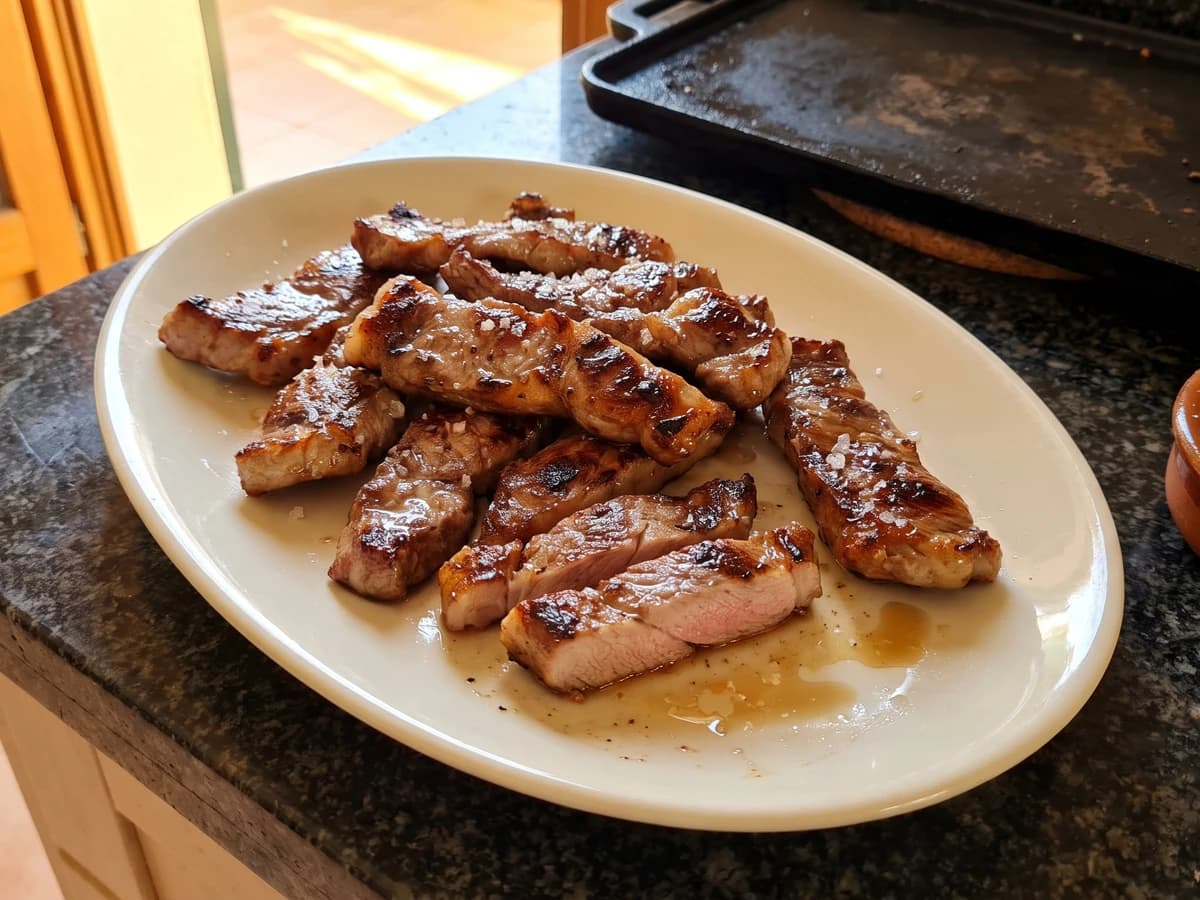
Extremadura's dehesa gives us this fan-shaped, marbled rib cut: salt it at the last moment, lay it on a fierce plancha, and count in seconds so the centre stays juicy.
A cooking platform built around craft, culture, and the stories behind what we eat.
Created by
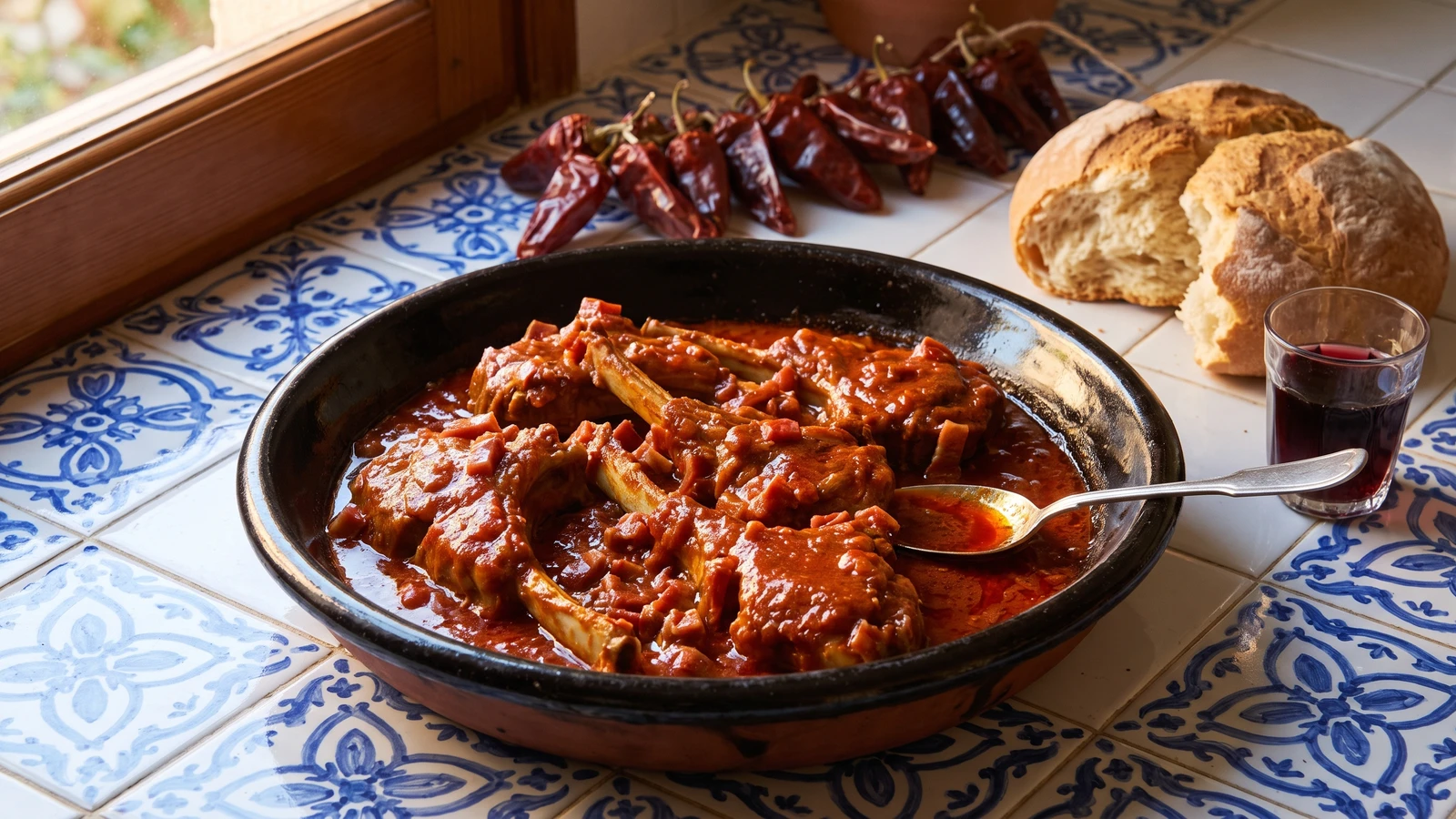
Cordero al Chilindrón is the Ebro border lamb braise of Aragón, Navarra, and La Rioja: browned lamb, slow onion, garlic, and choricero pepper pulp cooked until the red sauce clings.
Cordero al Chilindrón belongs to Aragón, Navarra, and La Rioja, that Ebro border kitchen where lamb meets the dried red pepper larder. What makes it this dish and not a neighbour's lamb stew is the choricero pepper: soaked, scraped from its skin, and cooked into the onion until the sauce turns brick red and thick. No tomato here. A lamb stew with tomato can be good, but it is not the one I am giving you today.
The method that decides it is the pepper pulp. Cook the onion low until it goes dark gold and sweet, then stir in the choricero pulp and let it fry gently in the oil for a few minutes before the wine goes in. Raw pepper pulp tastes dusty. Scorched pepper tastes bitter. Cooked patiently, it gives the sauce its body, its colour, and that quiet sweetness that clings to the lamb.
If you can't find pimientos choriceros where you are, use jarred carne de pimiento choricero, or dried ñoras from a Spanish shop. Ñoras are sweeter and a little softer, so the sauce will be gentler, but it will still be honest. No hace falta haber pisado España. My Margin beside this one says only: scrape the skins, don't blend them. Siempre sale, si lo sigues.
Cordero al chilindrón belongs to the Ebro valley borderlands of Aragón, Navarra, and La Rioja, where sheep country met the dried-pepper larder kept through the year. The choricero pepper, dried whole and rehydrated when needed, gave winter stews colour and body before a ripe tomato was something a cook could count on. Houses differ over tomato and fresh red pepper, but the older pepper-led version rests on lamb, onion, garlic, jamón if the larder allows, and the scraped pulp of the dried pepper.
Quantity
1.2kg
cut into 4-5cm pieces
Quantity
8g
plus more only if needed
Quantity
8 (about 35g)
stemmed and seeded
Quantity
100g
use instead of dried peppers if needed
Quantity
500ml
for soaking the peppers
Quantity
60ml
Quantity
80g
finely diced
Quantity
350g
finely chopped
Quantity
5
finely chopped
Quantity
150ml
Quantity
1
Quantity
250ml
| Ingredient | Quantity |
|---|---|
| bone-in lamb shoulder or legcut into 4-5cm pieces | 1.2kg |
| fine sea saltplus more only if needed | 8g |
| dried pimientos choricerosstemmed and seeded | 8 (about 35g) |
| jarred carne de pimiento choricero (optional)use instead of dried peppers if needed | 100g |
| hot waterfor soaking the peppers | 500ml |
| extra virgin olive oil | 60ml |
| jamón serrano (optional)finely diced | 80g |
| yellow onionsfinely chopped | 350g |
| garlic clovesfinely chopped | 5 |
| dry white wine | 150ml |
| bay leaf | 1 |
| reserved pepper soaking water or unsalted stock | 250ml |
Stem the dried choricero peppers, shake out the seeds, and put them in a bowl with 500ml hot water. Leave them 30 minutes, until the flesh softens. Open each pepper flat and scrape the red pulp from the skin with a teaspoon or the back of a small knife. You want about 100g pulp. Keep 250ml of the soaking water, leaving any grit at the bottom of the bowl.
Season the lamb with 6g of the salt. Warm the olive oil in a wide heavy cazuela or Dutch oven over medium-high heat and brown the lamb in two batches, about 4 minutes per side, until well coloured. Do not crowd the pot, or the meat stews before it browns. Lift the lamb to a plate.
Lower the heat to medium-low. Add the jamón, if using, and let it give up a little fat for 1 minute. Add the onions and the remaining 2g salt, then cook slowly for 18 to 22 minutes, stirring now and then, until the onion is dark gold, soft, and almost jammy. Stir in the garlic for 1 minute. This is the sofrito, the slow onion base, and rushing it gives you a thin sauce.
Add the scraped choricero pulp to the onion and stir it through the oil for 3 minutes. Keep the heat gentle; the colour should deepen to brick red and the smell should turn sweet, not sharp. Pour in the white wine, scrape the bottom of the pot, and let it reduce by about half.
Return the lamb and any juices to the pot. Add the bay leaf and 250ml reserved pepper water or unsalted stock. The liquid should come about halfway up the meat, not cover it. Bring to a low bubble, cover partly, and cook gently for 1 hour 15 minutes, turning the pieces once or twice. Uncover and cook 15 to 20 minutes more, until the lamb is tender and the sauce is thick enough to cling to a spoon.
Turn off the heat and let the stew rest 10 to 15 minutes. Taste for salt only at the end, because the jamón, if used, has been seasoning the pot all along. Serve with fried potatoes, plain boiled potatoes, or good bread for the sauce. The sauce should sit thick and red on the lamb, not run like soup.
1 serving (about 285g)
Culinary guides, cultural storytelling, and the editorial depth that makes cooking meaningful.
Discover Culinary ExplorerChef Isabel
Extremadura's dehesa gives us this fan-shaped, marbled rib cut: salt it at the last moment, lay it on a fierce plancha, and count in seconds so the centre stays juicy.
Chef Isabel
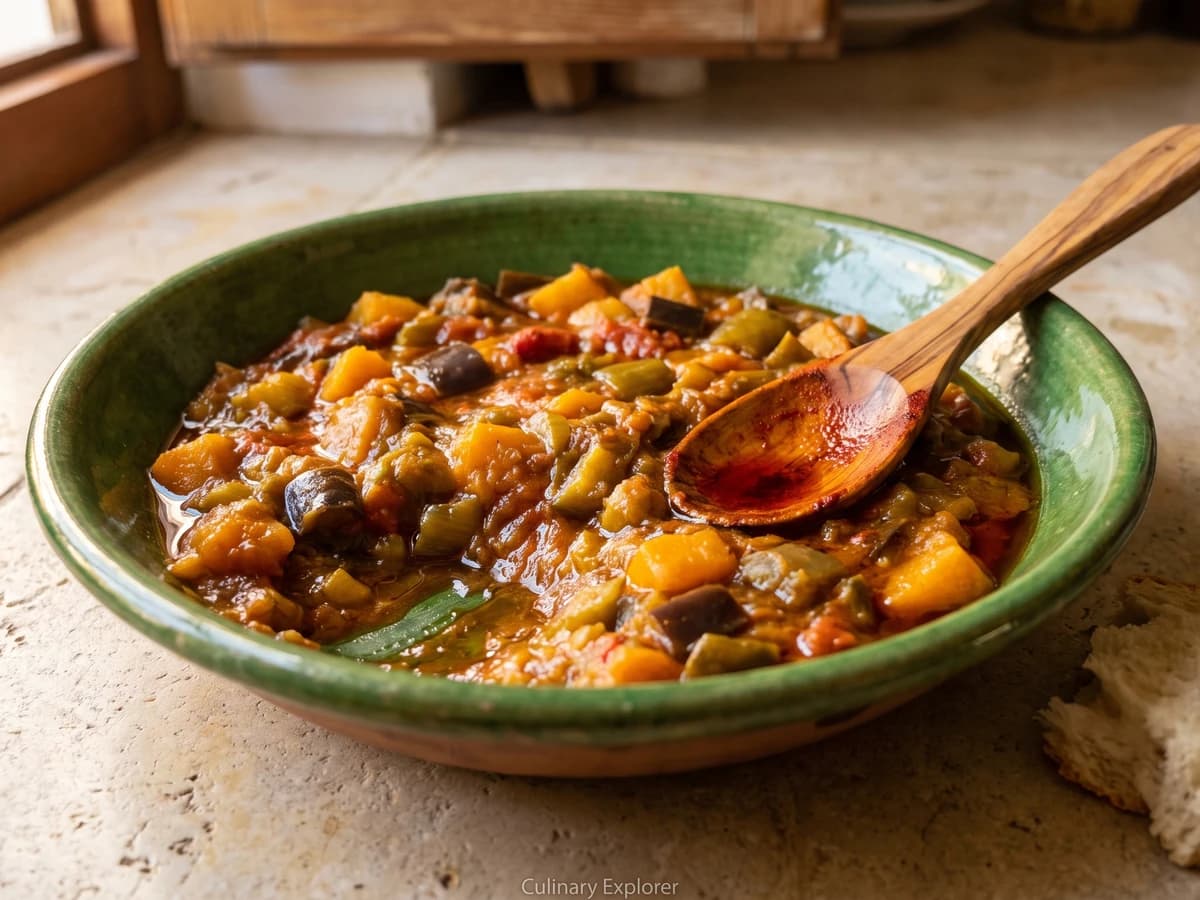
Alboronía is Andalucía's old pumpkin and aubergine stew, deepened with tomato, pimentón, and cumin, then cooked without hurry until the vegetables settle into a glossy, sweet, spoon-soft whole.

Chef Isabel
Aletría Murciana is Murcia's humble noodle guiso: fine fideos, pork ribs, potato, saffron, and a dark sweet sofrito. Get that base right and the pot knows where it's going.
Chef Isabel
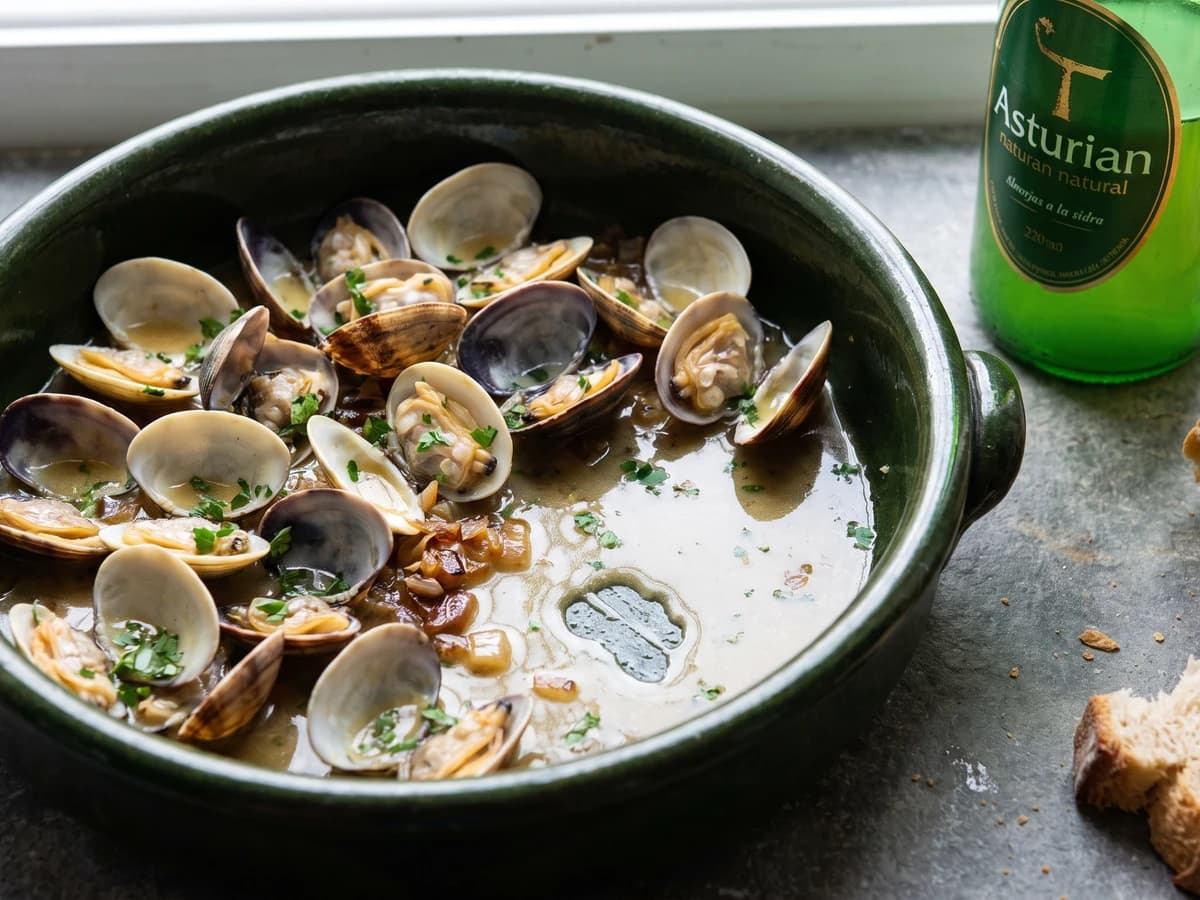
Asturias opens clams in tart natural cider over a slow onion and garlic sofrito, making a bright, briny sauce that asks for bread and rewards one rule: lift each clam as it opens.