Chef Isabel
Abanico Ibérico a la Plancha
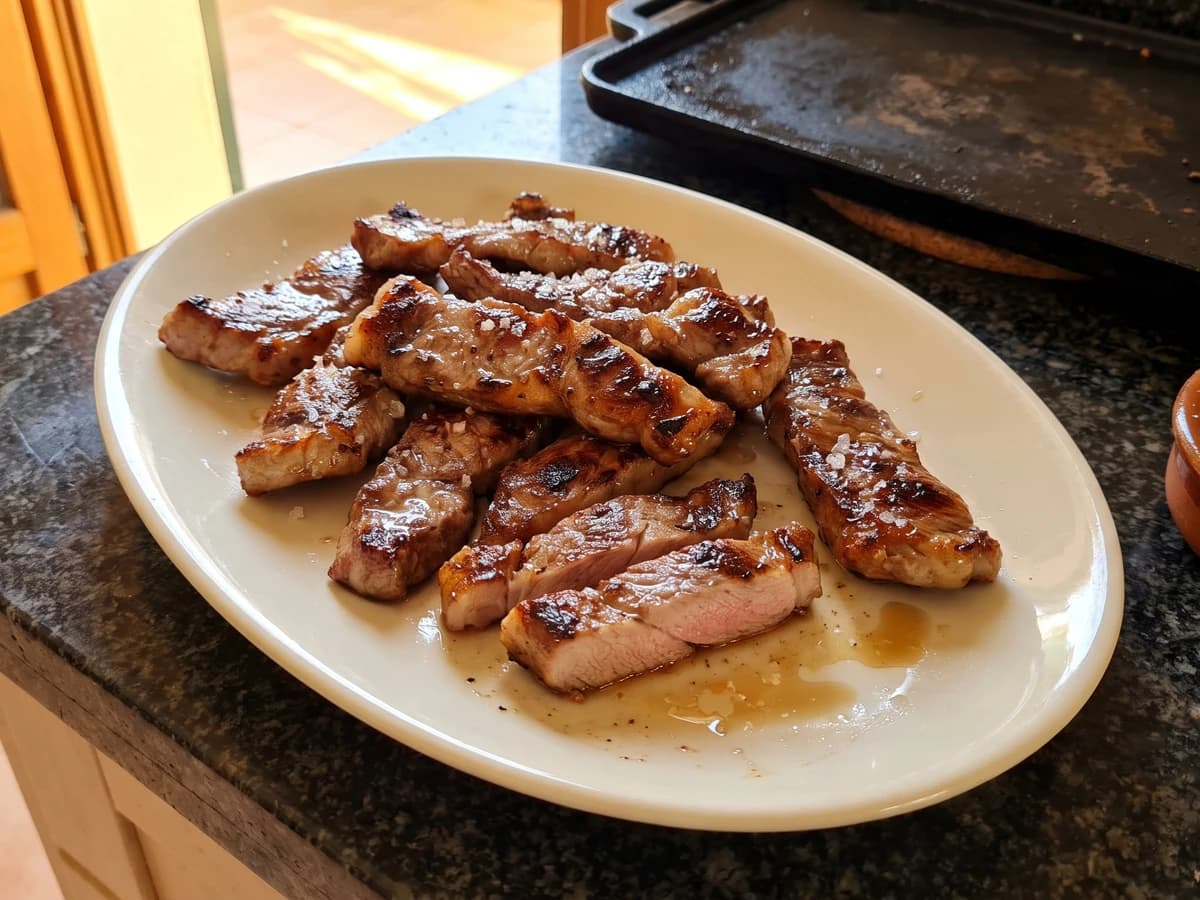
Extremadura's dehesa gives us this fan-shaped, marbled rib cut: salt it at the last moment, lay it on a fierce plancha, and count in seconds so the centre stays juicy.
A cooking platform built around craft, culture, and the stories behind what we eat.
Created by
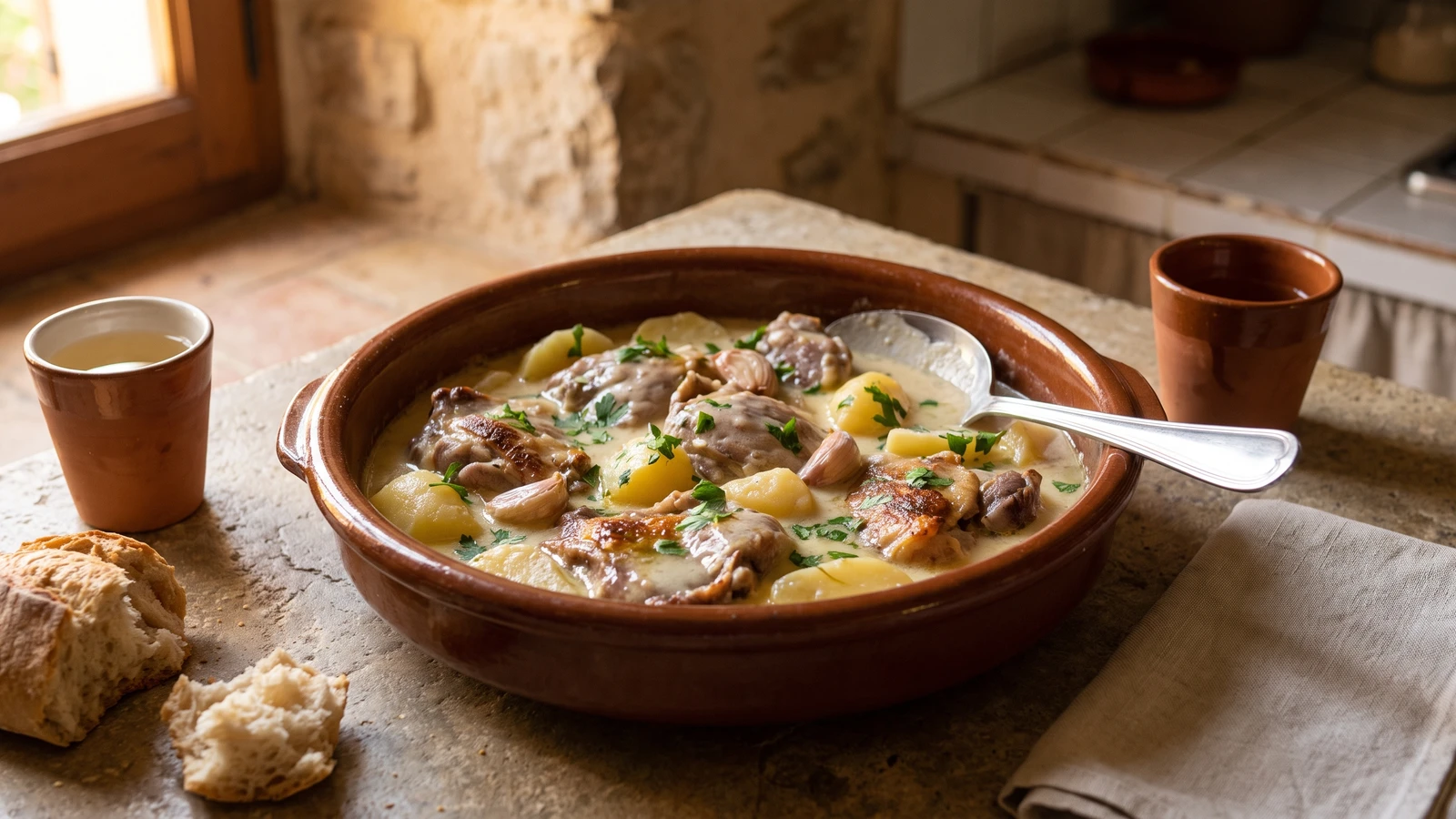
Cordero a la Pastora is Aragonese mountain food: lamb, potatoes, garlic, herbs, milk, and vinegar cooked gently until the meat softens and the sauce turns pale, tangy, and comforting.
Cordero a la Pastora is Aragonese, and it belongs to the sheep country: lamb cut small, potatoes to stretch it, garlic and herbs, then that old shepherd's trick of milk with a little vinegar. It sounds odd until you eat it. The milk softens the lamb's edge, the vinegar keeps the sauce awake, and the potatoes take in both.
The method that decides it is the heat after the milk goes in. Keep it low and steady. If you boil it hard, the milk breaks harshly and the lamb tightens; if you let it barely murmur, the sauce turns mild and grainy in the good way, like country food that knows exactly what it is. This is cocina de cuchara, spoon food, and it wants patience more than cleverness.
Use young lamb if you can, ternasco de Aragon if the market is kind to you. Far from Aragon, shoulder or neck of young lamb is the honest substitute; it will need a little longer than small ternasco pieces, but it gives you the same tender, giving meat. No hace falta haber pisado Espana. Cut evenly, season properly, and don't rush the pot.
In the Margin beside this one I keep the same warning every time: add the vinegar to the milk before it goes in, then lower the heat. That is the little hinge. Siempre sale, si lo sigues, it turns out if you follow it.
Cordero a la Pastora belongs to inland Aragon, where sheep and transhumant grazing shaped the mountain and valley table as much as wheat and olive oil did. The dish uses lamb, potatoes, garlic, herbs, milk, and vinegar, the kind of plain provisions a shepherd could carry or find close to hand. Its gentle sour-milk sauce is the point: not a city gravy, but a practical country way to soften young lamb and make a small pot feed well.
Quantity
1.2kg
cut into 5cm pieces
Quantity
700g
peeled and cut into rough 4cm chunks
Quantity
1 medium
finely chopped
Quantity
5
3 minced and 2 left whole
Quantity
45ml
Quantity
250ml
Quantity
45ml
Quantity
150ml
Quantity
150ml
Quantity
1
Quantity
1 teaspoon
Quantity
1 teaspoon
lightly crushed
Quantity
10g
chopped
Quantity
10g, plus more to taste
Quantity
1/2 teaspoon
| Ingredient | Quantity |
|---|---|
| bone-in young lamb shoulder or neckcut into 5cm pieces | 1.2kg |
| waxy potatoespeeled and cut into rough 4cm chunks | 700g |
| onionfinely chopped | 1 medium |
| garlic cloves3 minced and 2 left whole | 5 |
| extra virgin olive oil | 45ml |
| whole milk | 250ml |
| white wine vinegar | 45ml |
| dry white wine | 150ml |
| water or light lamb stock | 150ml |
| bay leaf | 1 |
| dried thyme | 1 teaspoon |
| dried rosemarylightly crushed | 1 teaspoon |
| flat-leaf parsleychopped | 10g |
| fine salt | 10g, plus more to taste |
| freshly ground black pepper | 1/2 teaspoon |
Pat the lamb dry and season it with the 10g salt and the black pepper. Let it sit while you cut the potatoes and onion. Pésalo, no lo adivines: enough salt now seasons the meat through, not just the sauce at the end.
Warm the olive oil in a wide heavy pot over medium heat. Brown the lamb in two batches, turning until the edges take on good color, 8 to 10 minutes per batch. Do not crowd the pot or the meat stews before it browns. Lift the lamb to a plate.
Lower the heat and add the onion to the same oil with a pinch of salt. Cook it slowly for 10 to 12 minutes, scraping the bottom, until it is soft, dark gold, and sweet. Add the 3 minced garlic cloves and cook for 1 minute more, just until they smell warm, not burnt.
Return the lamb and its juices to the pot. Add the wine and let it bubble for 2 minutes, scraping up the browned bits. Add the water or light stock, bay leaf, thyme, rosemary, and the 2 whole garlic cloves. Cover, lower the heat, and cook at a gentle murmur for 45 minutes.
Add the potatoes and tuck them down among the lamb. Cover again and cook for 25 minutes, shaking the pot now and then by the handles instead of stirring hard. The potatoes should begin to soften but not collapse.
Stir the vinegar into the milk in a jug, then pour it into the pot. Drop the heat to low at once and keep the liquid barely moving for 25 to 35 minutes, uncovered, until the lamb is tender and the potatoes are fully soft. This is the step that decides the dish: low heat keeps the sauce gentle and lets the milk and vinegar turn into a pale, tangy cooking liquor instead of a broken mess.
Take the pot off the heat and let it rest 10 minutes. Taste the sauce and correct the salt. Scatter over the parsley and serve from the pot, with the softened whole garlic cloves pressed into the sauce if you like. The sauce should be pale, lightly sharp, and spoonable, not thick like a restaurant gravy. Tal como se hace alli.
1 serving (about 475g)
Culinary guides, cultural storytelling, and the editorial depth that makes cooking meaningful.
Discover Culinary ExplorerChef Isabel
Extremadura's dehesa gives us this fan-shaped, marbled rib cut: salt it at the last moment, lay it on a fierce plancha, and count in seconds so the centre stays juicy.
Chef Isabel
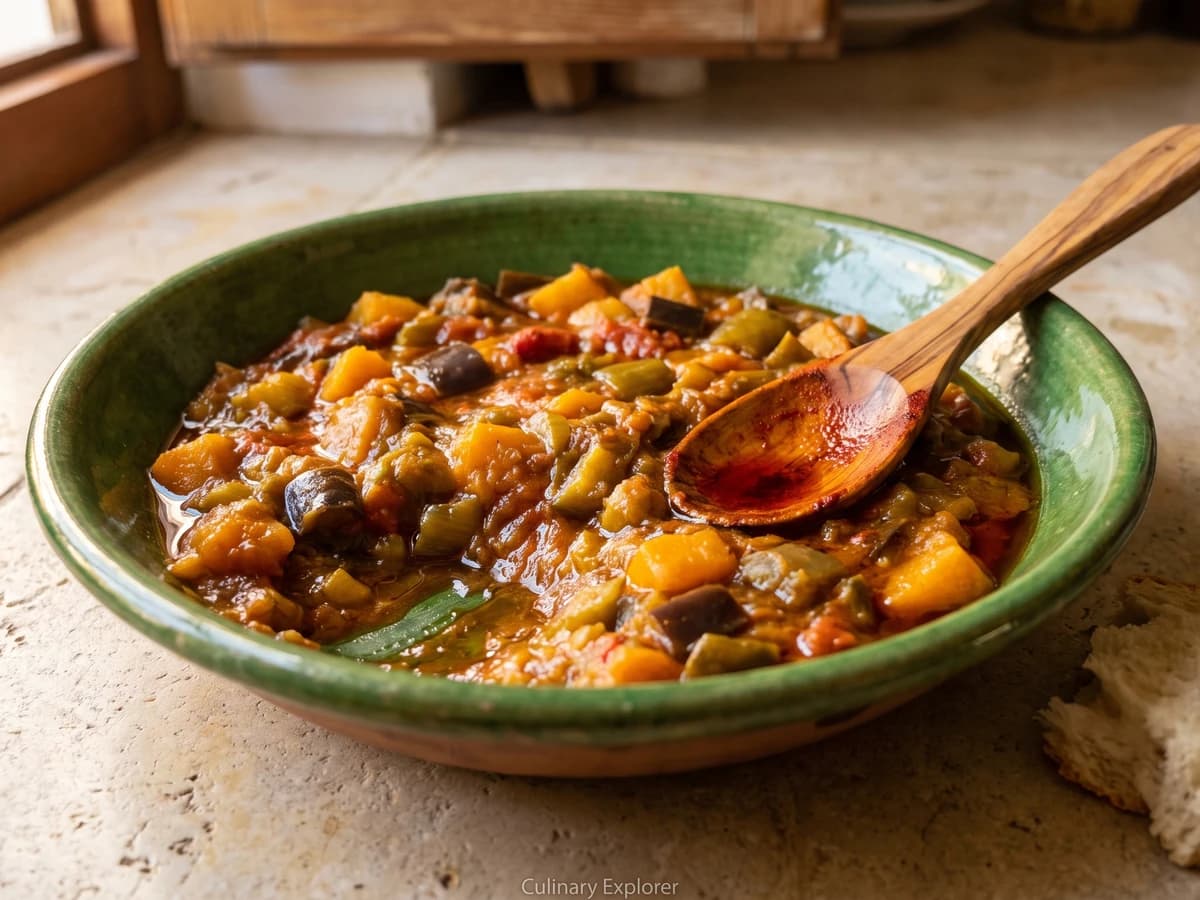
Alboronía is Andalucía's old pumpkin and aubergine stew, deepened with tomato, pimentón, and cumin, then cooked without hurry until the vegetables settle into a glossy, sweet, spoon-soft whole.

Chef Isabel
Aletría Murciana is Murcia's humble noodle guiso: fine fideos, pork ribs, potato, saffron, and a dark sweet sofrito. Get that base right and the pot knows where it's going.
Chef Isabel
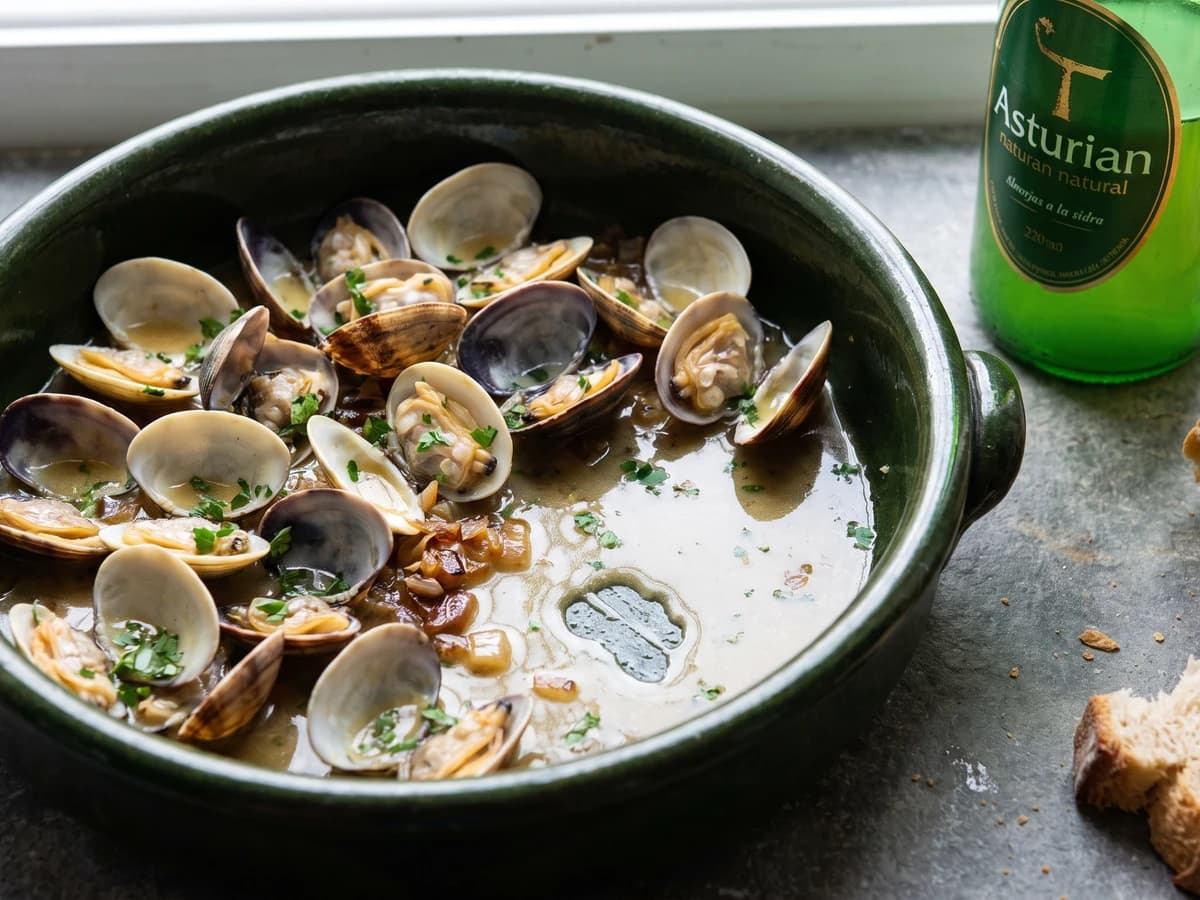
Asturias opens clams in tart natural cider over a slow onion and garlic sofrito, making a bright, briny sauce that asks for bread and rewards one rule: lift each clam as it opens.