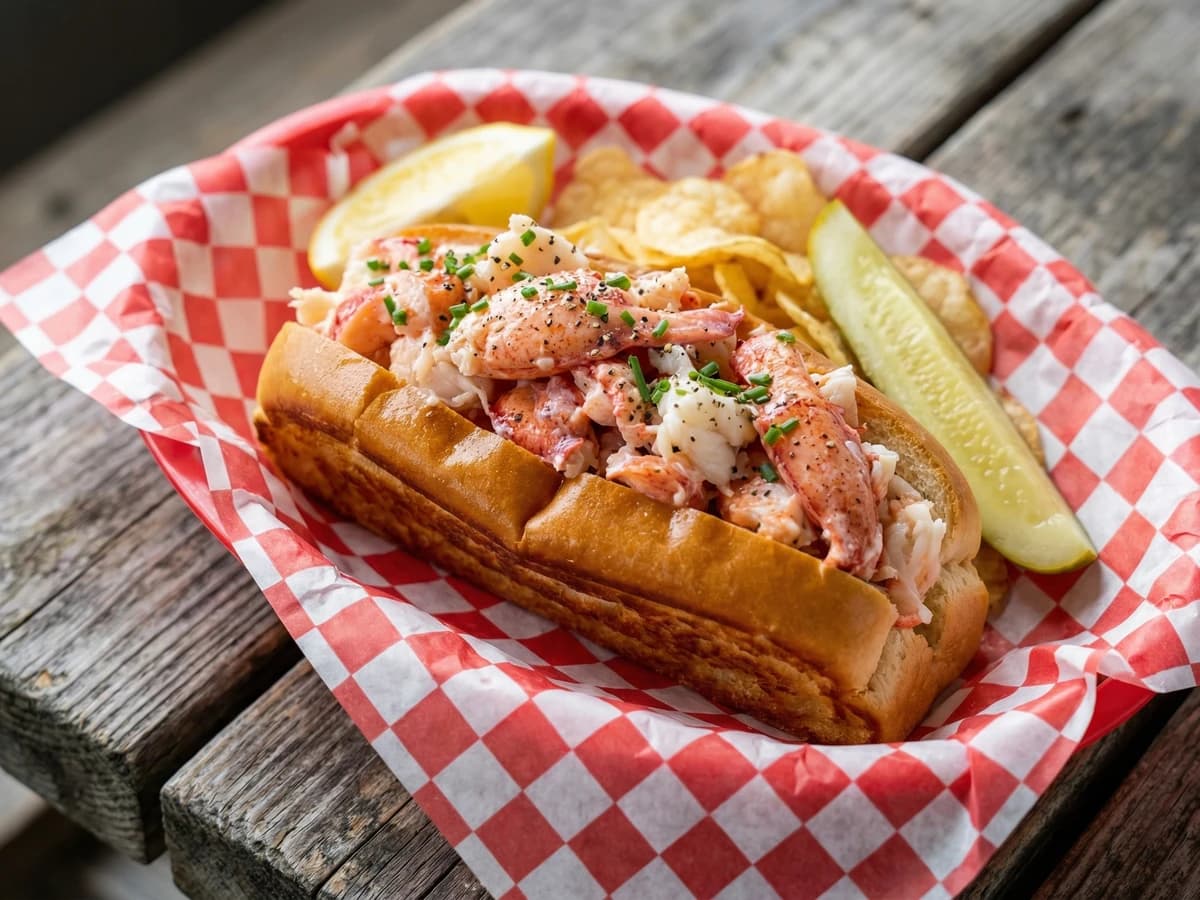
Sweet chunks of warm lobster meat glistening with drawn butter, piled into a crisp, golden-toasted split-top bun. This is Connecticut's gift to American cookery: pure luxury without pretension.
Sandwiches & Wraps
New England
Special Occasion
Date Night
30 min
Active Time
15 min cook•45 min total
Yield4 servings
There are two kinds of lobster rolls in New England, and choosing between them reveals something about your character. Maine serves its lobster cold, dressed in mayonnaise, sometimes with celery for crunch. Connecticut takes another path entirely. Here, warm lobster meat meets melted butter in an embrace that requires no embellishment. The Connecticut style is the older preparation, the one that trusts the lobster to carry the dish.
I've eaten lobster rolls from Westbrook to Noank, standing at weathered counters overlooking Long Island Sound while butter dripped down my wrists. The best versions share a common philosophy: use excellent lobster, keep it warm, bathe it in good butter, and serve it in a proper split-top bun toasted until golden. That's the whole recipe. The technique lives in the details.
The split-top bun is non-negotiable. These New England-style rolls have flat sides that toast beautifully in butter, creating a crisp exterior that contrasts with the soft interior. Standard hot dog buns, with their rounded sides and hinged bottoms, simply won't do. If your supermarket doesn't stock them, a good bakery can help, or you can order them online. This is not the place to compromise.
Cooking your own lobsters produces the sweetest, most tender meat. But if time or nerve fails you, quality pre-cooked lobster from a reputable fishmonger will serve. What matters is freshness. Lobster should smell of the sea, clean and briny. Anything with a hint of ammonia has seen better days.
The technique, the tradition, and the story behind every dish.
Fill your largest pot with enough water to submerge the lobsters completely. Salt it generously, about two tablespoons per quart. The water should taste like the sea. Bring to a vigorous rolling boil over high heat. Grasp each lobster firmly behind the claws and plunge headfirst into the water. Cover immediately. Once the water returns to a boil, cook for 8 minutes for 1 1/4-pound lobsters, 10 minutes for 1 1/2-pounders. The shells will turn bright red and the antennae will pull away easily when done.
If you're squeamish about live lobsters, place them in the freezer for 15 minutes before cooking. This sedates them and makes the process more humane for everyone involved.
2
Prepare the ice bath
While lobsters cook, fill a large bowl or clean sink with ice water. The moment the lobsters finish cooking, transfer them to the ice bath using tongs. Let them cool just long enough to handle comfortably, about five minutes. You want the meat warm but manageable. Don't chill them completely or you'll lose that essential warmth.
3
Extract the meat
Twist the tail from the body. Use kitchen shears to cut along the underside of the tail shell, then push the meat out in one piece. Remove the dark vein running along the tail. Crack the claws with the back of a heavy knife or a nutcracker, extracting the meat in large pieces. Pull the meat from the knuckles as well. This is tedious but worthwhile. Cut the tail meat into generous chunks, keeping claw meat whole if possible. You should have about 1 1/2 pounds of meat from four lobsters.
Work over a bowl to catch any juices. This lobster liquor is liquid gold. Add it to your drawn butter.
4
Make the drawn butter
Melt the butter in a small saucepan over medium-low heat. As it melts, white milk solids will sink to the bottom while foam rises to the top. Skim off the foam with a spoon. Let the butter simmer gently for two to three minutes until the solids begin to turn golden on the bottom. Carefully pour the clear golden liquid through a fine-mesh strainer lined with cheesecloth, leaving the browned solids behind. This is drawn butter: pure butterfat with a clean, rich flavor that won't overwhelm the lobster.
Watch the butter carefully. The line between golden brown milk solids and burnt bitterness is measured in seconds.
5
Toast the buns
Heat a large skillet or griddle over medium heat. Take two tablespoons of your drawn butter and brush it generously on the flat sides of each split-top bun. Place the buns buttered-side down in the pan and cook until deep golden brown and crisp, about two minutes per side. The buns should be crunchy on both flat surfaces while the interior remains soft. Work in batches if needed. Keep toasted buns warm in a low oven.
6
Warm the lobster
Add the lobster meat to the remaining drawn butter in the saucepan. Warm gently over low heat, turning the pieces to coat them thoroughly in butter. This should take only two to three minutes. You're warming, not cooking further. Season with half a teaspoon of salt and a bare whisper of cayenne if you like. The lobster should glisten and feel warm throughout but remain tender. Overheating toughens the meat.
7
Assemble and serve
Open each toasted bun and pile generously with butter-warmed lobster, using a slotted spoon to let excess butter drain slightly. Divide the claw meat among the rolls, placing one beautiful claw piece prominently atop each. Drizzle a spoonful of the remaining drawn butter over each roll. Scatter with chives if using. Serve immediately with lemon wedges alongside and napkins at the ready. This is not delicate eating, and that is the point.
Serve the remaining drawn butter in small ramekins for dipping. Some will want more, and they should have it.
Chef Tips
•The lobsters from cold waters taste best. Look for hard-shell lobsters, typically available from late fall through spring. Soft-shell summer lobsters have less meat and more water, which dilutes the flavor.
•If buying pre-cooked lobster meat, purchase it the same day you plan to serve. Warm it gently in butter just before assembling. Never microwave lobster meat.
•New England split-top buns are sometimes labeled as 'frankfurter rolls' or 'top-loader buns.' Pepperidge Farm makes a widely available version, though a local bakery's fresh rolls are worth seeking out.
•For transporting to a picnic or beach, keep the components separate: lobster meat in drawn butter in a thermos, toasted buns wrapped in foil, assembly at the destination. The rolls lose their crispness if assembled ahead.
Advance Preparation
•Lobsters can be cooked and the meat extracted up to one day ahead. Store the meat covered in the refrigerator, then warm gently in drawn butter before serving.
•Drawn butter can be made several days ahead and refrigerated. It will solidify but melts quickly over low heat.
•Buns should be toasted just before serving. They lose their crispness within minutes of leaving the pan.
Frequently Asked Questions
Nutrition Information
1 serving (about 285g)
Calories
610 calories
Total Fat
47 g
Saturated Fat
29 g
Trans Fat
0 g
Unsaturated Fat
18 g
Cholesterol
49 mg
Sodium
480 mg
Total Carbohydrates
19 g
Dietary Fiber
1 g
Sugars
2 g
Protein
24 g
Where cooking meets culture.
Culinary guides, cultural storytelling, and the editorial depth that makes cooking meaningful.