
Chef Isabel
Aguaillo de la Sierra de Cadiz
Aguaillo is from the Sierra de Cadiz: cold water, stale bread, garlic, oil and vinegar, closer to a field drink than a bowl of soup, and sharp enough to wake you in the heat.
A cooking platform built around craft, culture, and the stories behind what we eat.
Created by
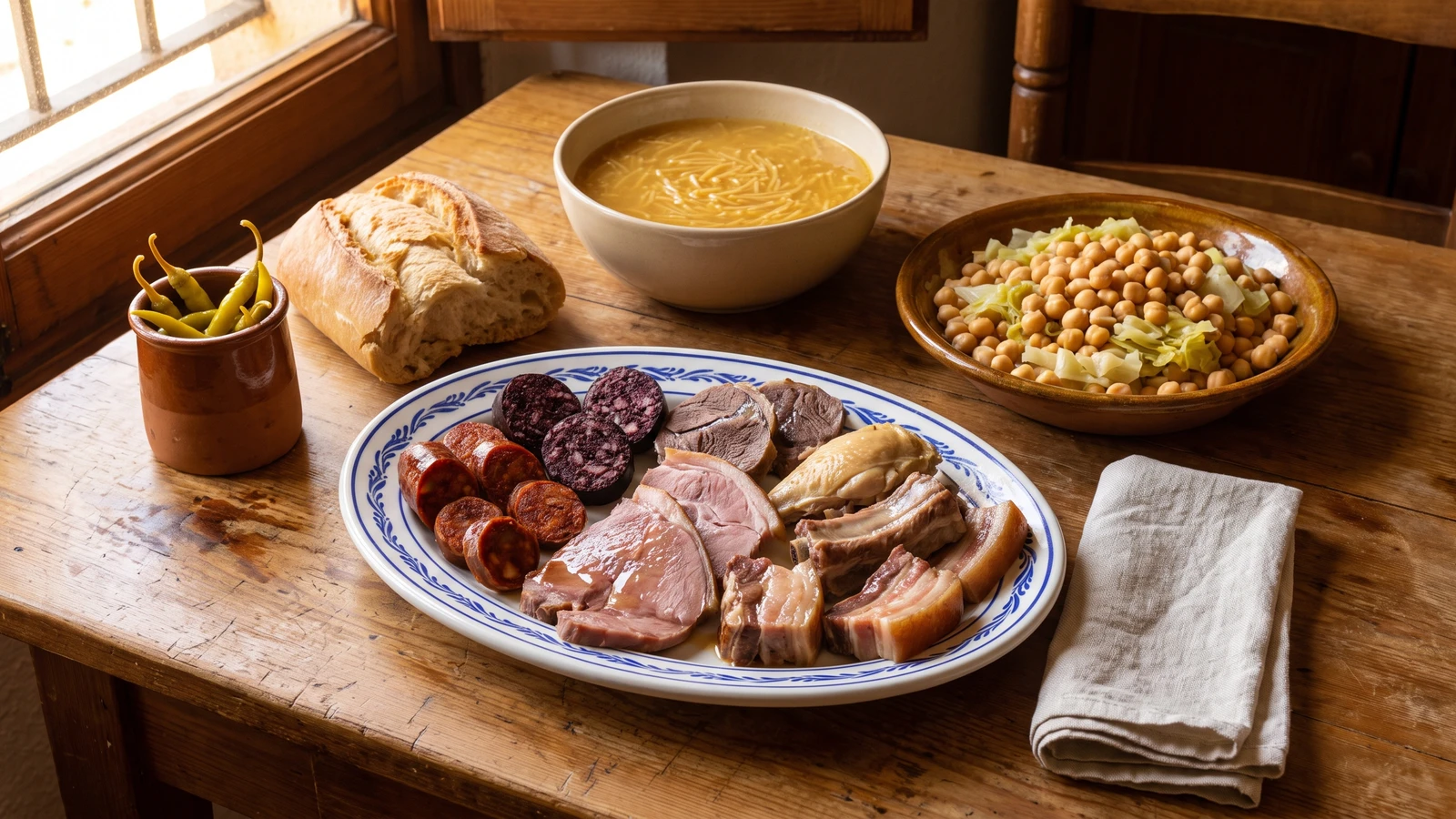
Leon's Maragateria cocido is served meat first, then chickpeas and cabbage, then the fideo soup. Build the broth slowly and serve it in vuelcos, the old order.
Cocido Maragato belongs to Leon's Maragateria, and it is not just another cocido with more meat. What marks it out is the order: the meats first, then the chickpeas with cabbage, and the fideo soup last. Backwards, people say. But for a table that worked hard, meat first made sense.
Cocido Maragato belongs to the Maragateria, the comarca around Astorga in Leon, where arrieros, muleteers who carried goods across long routes, needed a meal that fed strength before comfort. Its famous order, the vuelcos served in reverse, is tied to that working table: the meats came first while they were hot and fortifying, then the chickpeas and vegetables, then the soup. The dish also reflects the household larder of inland Castile and Leon, where cured pork, chickpeas, and cabbage made a winter table from what could be stored.
Quantity
500g
soaked overnight
Quantity
400g
in one piece
Quantity
300g
Quantity
250g
soaked if very salty
Quantity
200g
fresh or lightly cured
Quantity
150g
in one piece
Quantity
2, about 220g total
Quantity
1, about 180g
Quantity
1
Quantity
2
Quantity
1 large
peeled
Quantity
1
cleaned
Quantity
1 small
peeled
Quantity
2
Quantity
1 teaspoon
Quantity
1.2kg
cored and chopped into large pieces
Quantity
500g
peeled and cut into large chunks
Quantity
3 tablespoons
Quantity
3 cloves
thinly sliced
Quantity
1 teaspoon
Quantity
100g
Quantity
to taste
| Ingredient | Quantity |
|---|---|
| dried chickpeassoaked overnight | 500g |
| morcillo or beef shinin one piece | 400g |
| hen or chicken leg quarters | 300g |
| lacón or cured pork shouldersoaked if very salty | 250g |
| pork ribfresh or lightly cured | 200g |
| panceta or tocinoin one piece | 150g |
| chorizo de León or Spanish cooking chorizo | 2, about 220g total |
| morcilla de León or onion morcilla | 1, about 180g |
| ham bone or cured pork bone | 1 |
| marrow bones or beef bones | 2 |
| carrotpeeled | 1 large |
| leekcleaned | 1 |
| onionpeeled | 1 small |
| bay leaves | 2 |
| black peppercorns | 1 teaspoon |
| green cabbagecored and chopped into large pieces | 1.2kg |
| potatoespeeled and cut into large chunks | 500g |
| olive oil | 3 tablespoons |
| garlicthinly sliced | 3 cloves |
| sweet pimentón de la Vera | 1 teaspoon |
| fine fideo noodles | 100g |
| salt | to taste |
The night before, cover the chickpeas with plenty of cold water and leave them to soak at least 12 hours. If the lacón or cured pork is very salty, soak it separately in cold water too, changing the water once. Pésalo, no lo adivines: chickpeas that soak fully cook evenly, and this dish has no patience for chalky centers.
Put the beef, chicken, lacón, pork rib, panceta, ham bone, marrow bones, carrot, leek, onion, bay leaves, and peppercorns in a large heavy pot. Cover with 4 liters cold water and bring it up slowly. Skim the grey foam as it rises, then lower the heat until the surface barely trembles.
Drain the soaked chickpeas and add them to the pot once the broth is hot. Keep the simmer gentle for about 2 hours, until the chickpeas are tender but still whole and the meats yield when pierced. This low tremble is the step that decides the dish: boil it hard and the broth goes cloudy, the chickpeas split, and the meats turn dry before they soften.
Add the chorizos for the last 35 minutes of cooking. Add the morcilla for the last 15 to 20 minutes only, so it warms through without bursting. If the pot looks crowded, cook the morcilla in a small ladleful of broth in a separate pan. Nobody gives a medal for exploded morcilla.
Lift 1 liter of broth into a second pot and cook the cabbage and potatoes in it until tender, about 25 minutes. In a small pan, warm the olive oil with the sliced garlic until the garlic is pale gold, then pull it off the heat and stir in the pimentón. Spoon this ajada, the garlic and pimentón oil, over the drained cabbage and potatoes. Taste for salt.
Strain about 1.5 liters of broth into a clean pot. Bring it to a steady boil, taste for salt, and add the fideos. Cook until tender, usually 5 to 7 minutes, depending on the noodle. Keep the soup loose; it is the last vuelco, not a noodle stew.
Lift out the meats and slice them into generous pieces: beef, chicken, lacón, rib, panceta, chorizo, and morcilla. Serve them first on a warm platter, with a little broth spooned over so they glisten. Then serve the chickpeas with the cabbage and potatoes. Last comes the fideo soup. That is Cocido Maragato, tal como se hace allí. Siempre sale, si lo sigues.
1 serving (about 950g)
Culinary guides, cultural storytelling, and the editorial depth that makes cooking meaningful.
Discover Culinary ExplorerChef Isabel
Aguaillo is from the Sierra de Cadiz: cold water, stale bread, garlic, oil and vinegar, closer to a field drink than a bowl of soup, and sharp enough to wake you in the heat.

Chef Isabel
Ajilimojili is Jaen's tomato-free cold soup: potato, roasted red pepper, garlic, olive oil, and vinegar pounded into a cool, silky spoonful.

Chef Isabel
Ajo carretero is Soriano, from the pine country of Soria: lamb cooked in a plain garlicky broth, then served the old way, meat first and bread-soaked soup after.

Chef Isabel
Ajoblanco Extremeño is the poor-kitchen cold soup of Extremadura: bread, garlic, oil, egg yolk, vinegar, and icy water, with no almonds. Whisk it slowly and serve it bien fresquito.