
Chef Isabel
Aguaillo de la Sierra de Cadiz
Aguaillo is from the Sierra de Cadiz: cold water, stale bread, garlic, oil and vinegar, closer to a field drink than a bowl of soup, and sharp enough to wake you in the heat.
A cooking platform built around craft, culture, and the stories behind what we eat.
Created by
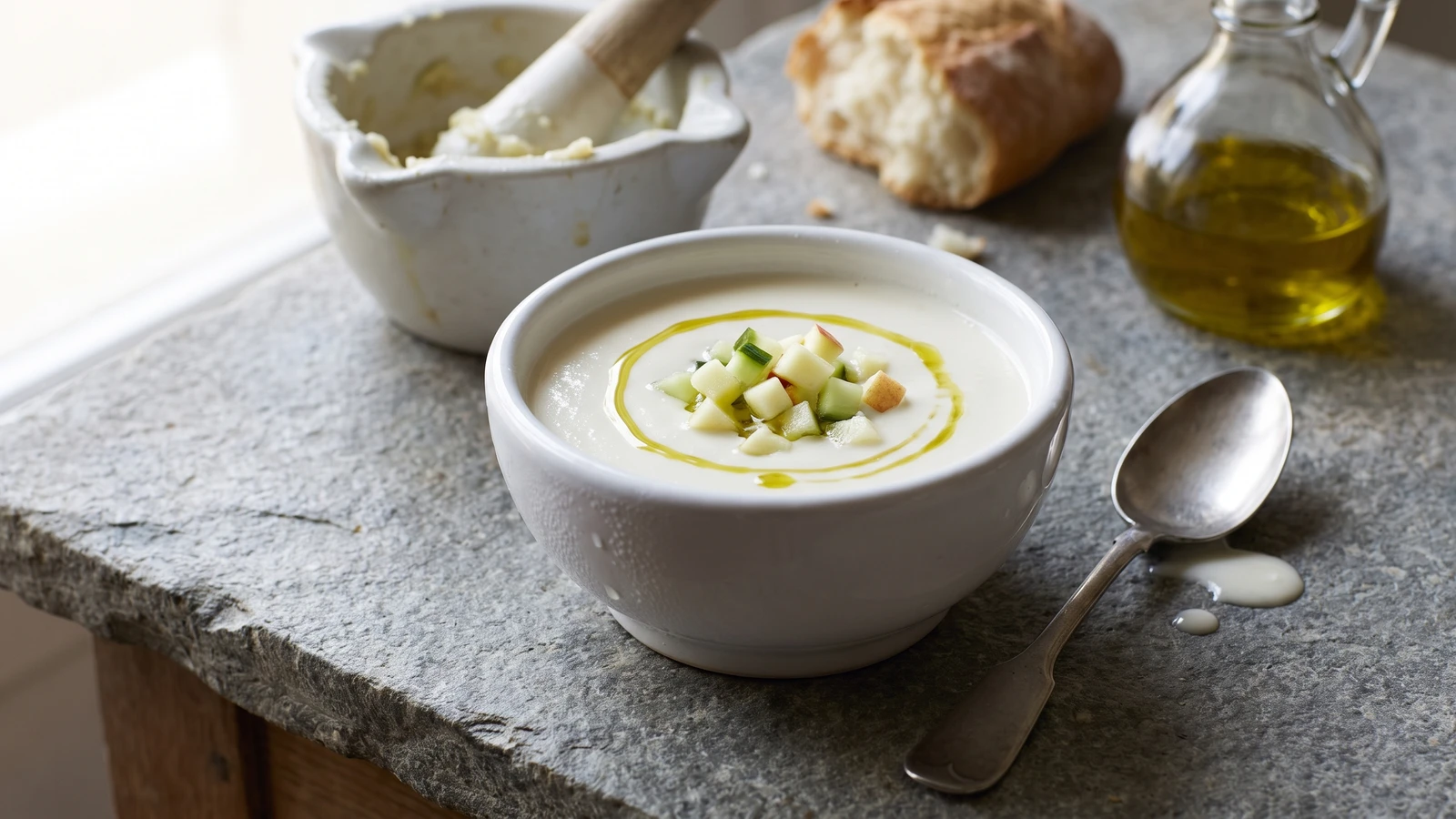
Ajoblanco Extremeño is the poor-kitchen cold soup of Extremadura: bread, garlic, oil, egg yolk, vinegar, and icy water, with no almonds. Whisk it slowly and serve it bien fresquito.
Ajoblanco Extremeño belongs to Extremadura, and it is not the almond ajoblanco of Málaga. This one is poorer and sharper: day-old bread, garlic, olive oil, egg yolk, vinegar, salt, and icy water. No almonds. Add them and you have made another good soup, but not this one.
The method that decides it is the emulsion. Mash the garlic and salt first, work in the soaked bread and egg yolk, then add the olive oil slowly, as if you were beginning an allioli, the garlic-oil sauce. If you pour the oil in all at once, it floats and tastes raw. Go slowly and the soup turns pale, smooth, and held together.
If you're far from Extremadura, use a plain country loaf with a tight crumb, not sliced sandwich bread if you can help it. Sherry vinegar is good here; a mild white wine vinegar works if that's what the cupboard gives you, though the edge will be plainer. Chill it hard, taste it cold, and serve it bien fresquito, very cold. Siempre sale, si lo sigues.
Ajoblanco Extremeño comes from the hot inland kitchens of Extremadura, where stale bread, garlic, oil, vinegar, and water made a cold meal without lighting a fire. Unlike the Andalusian almond version around Málaga and Granada, the Extremaduran bowl is built on bread and egg yolk, a humbler emulsion from a larder that had to stretch. It belongs to the family of white gazpachos and bread soups that fed field workers through summer heat with little more than yesterday's loaf and good oil.
Quantity
120g
crust removed and torn
Quantity
2 small cloves
peeled
Quantity
1
very fresh
Quantity
80ml
Quantity
2 tablespoons, plus more to taste
Quantity
600ml, plus more to loosen
Quantity
8g, plus more to taste
Quantity
150g
peeled and diced
Quantity
1 small
diced
| Ingredient | Quantity |
|---|---|
| day-old country breadcrust removed and torn | 120g |
| garlicpeeled | 2 small cloves |
| large egg yolkvery fresh | 1 |
| extra virgin olive oil | 80ml |
| vinagre de Jerez (sherry vinegar) | 2 tablespoons, plus more to taste |
| very cold water | 600ml, plus more to loosen |
| fine sea salt | 8g, plus more to taste |
| cucumberpeeled and diced | 150g |
| crisp apple (optional)diced | 1 small |
Put the torn bread in a bowl and cover it with 200ml of the very cold water. Let it sit for 10 minutes, then squeeze it lightly so it is wet through but not dripping. This is what gives the soup body; dry bread leaves little lumps that never quite disappear.
In a mortar, pound the garlic with the salt until it becomes a smooth paste. Take your time here. A hidden piece of raw garlic bites harder in a cold soup than it does in a hot stew.
Add the soaked bread to the mortar and work it into the garlic until thick and even. Beat in the egg yolk until the paste turns creamy and pale. Pésalo, no lo adivines: the bread and oil are what hold the texture steady.
Add the olive oil a little at a time, beating steadily with the pestle or a whisk after each spoonful. This slow addition is the point of the recipe: the yolk, bread, and garlic catch the oil and make a smooth white soup instead of oily water.
Whisk in the vinegar, then gradually add the remaining 400ml very cold water until the soup is pourable but still has body, like thin cream. Taste for salt and vinegar. It should be cold, garlicky, and bright, not sour enough to make you blink.
Cover and chill for at least 1 hour. Stir well before serving, because a bread soup settles as it rests. Serve in cold bowls with diced cucumber, and apple if you like the old sweet-crisp contrast. Add a thin thread of olive oil only at the table.
1 serving (about 290g)
Culinary guides, cultural storytelling, and the editorial depth that makes cooking meaningful.
Discover Culinary ExplorerChef Isabel
Aguaillo is from the Sierra de Cadiz: cold water, stale bread, garlic, oil and vinegar, closer to a field drink than a bowl of soup, and sharp enough to wake you in the heat.

Chef Isabel
Ajilimojili is Jaen's tomato-free cold soup: potato, roasted red pepper, garlic, olive oil, and vinegar pounded into a cool, silky spoonful.

Chef Isabel
Ajo carretero is Soriano, from the pine country of Soria: lamb cooked in a plain garlicky broth, then served the old way, meat first and bread-soaked soup after.

Chef Isabel
Ajoblanco Malagueño is Andalucía before the tomato: raw almonds, bread, garlic, oil, vinegar, and cold water blended smooth enough to drink, then served with sweet muscatel grapes.