
Chef Isabel
Aguaillo de la Sierra de Cadiz
Aguaillo is from the Sierra de Cadiz: cold water, stale bread, garlic, oil and vinegar, closer to a field drink than a bowl of soup, and sharp enough to wake you in the heat.
A cooking platform built around craft, culture, and the stories behind what we eat.
Created by
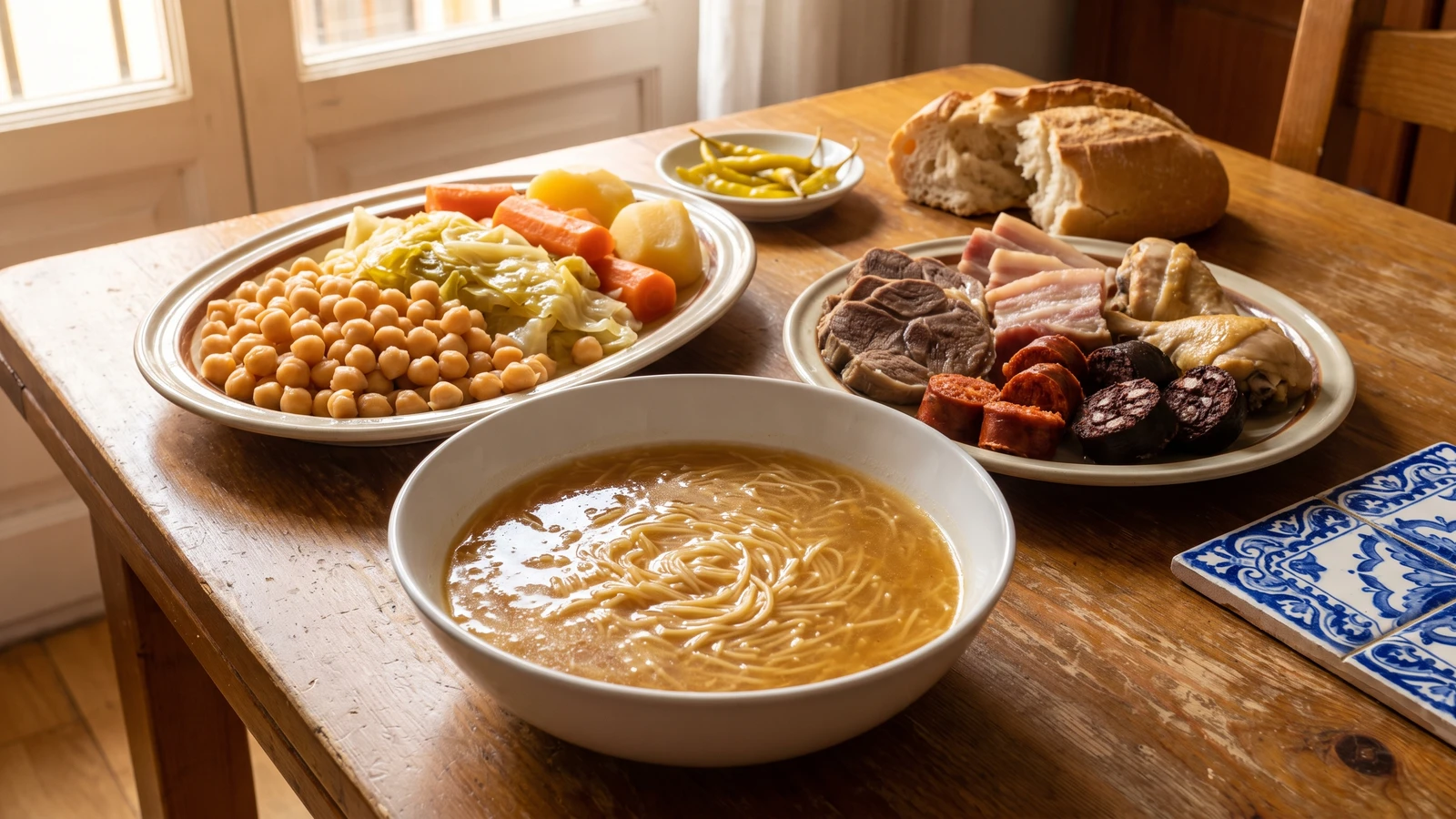
Cocido Madrileño is Madrid's winter pot: chickpeas, beef, hen, pork, cabbage, and fideos served in three vuelcos. Keep it at a bare simmer and the broth stays clear.
Cocido Madrileño is Madrid's chickpea pot, and what makes it Madrid's is the service as much as the pot: three vuelcos, three turns at the table. First the fideo soup, then the garbanzos with cabbage, potato, and carrot, then the meats, beef shin, hen, tocino, chorizo, morcilla, and jamón. Many regions have a cocido. This one belongs to Madrid, tal como se hace allí.
There's no sofrito hiding here and no browning to flatter the cook. The method that decides it is the simmer. Start the meats in cold water, skim well, add the soaked chickpeas only once the water is hot, and then keep the pot at a bare tremble. Boil it hard and the broth clouds, the chickpeas crack, and the meats turn stringy. Low heat gives you clear soup and chickpeas with their skins still decent.
If you're far from Madrid, no hace falta haber pisado España. Use a large dried chickpea, a kabuli if that is what your market has; it will be a touch less creamy than garbanzo castellano but still right if it is fresh and soaked. Beef shin is morcillo by another name. A prosciutto bone or unsmoked ham hock can stand in for jamón, though a smoked hock will make the broth smokier than Madrid asks for.
Serve it in the three vuelcos and don't rush the table. In the Margin beside mine I wrote: "caldo claro, fuego bajo," clear broth, low heat. That is the whole warning. Siempre sale, si lo sigues.
Cocido Madrileño grew from the central Spanish olla, a chickpea pot that turned cured cuts, bones, vegetables, and legumes into several courses for a household table. Madrid, fed by the roads of Castile, made the service its own in los tres vuelcos: soup first, garbanzos with vegetables second, and meats last. The pork in the pot marks the Christian household version of a wider Iberian family of chickpea stews; adafina, the Sephardic Sabbath pot, used chickpeas, meat, and long, slow heat without pork.
Quantity
500g
soaked overnight in warm salted water
Quantity
10g, plus more to season
Quantity
600g
in 2 large pieces
Quantity
500g
skin-on
Quantity
250g
Quantity
200g
Quantity
2, about 300g total
Quantity
1, about 180g
Quantity
1, about 180g
Quantity
2 large, about 200g
peeled
Quantity
3 medium, about 450g
peeled
Quantity
1 small, about 700g
cored and cut into wedges
Quantity
3 cloves
thinly sliced
Quantity
3 tablespoons
Quantity
1 teaspoon
Quantity
100g
Quantity
4.5 litres, plus hot water as needed
| Ingredient | Quantity |
|---|---|
| dried garbanzos, preferably garbanzo castellano or Fuentesaúcosoaked overnight in warm salted water | 500g |
| fine salt | 10g, plus more to season |
| beef shin or beef shank (morcillo)in 2 large pieces | 600g |
| hen (gallina) or chicken leg quartersskin-on | 500g |
| cured jamón bone or jamón end | 250g |
| unsmoked salt pork or tocino salado | 200g |
| beef marrow bones | 2, about 300g total |
| Spanish cooking chorizo | 1, about 180g |
| Spanish morcilla de cebolla or de arroz | 1, about 180g |
| carrotspeeled | 2 large, about 200g |
| waxy potatoespeeled | 3 medium, about 450g |
| green cabbagecored and cut into wedges | 1 small, about 700g |
| garlicthinly sliced | 3 cloves |
| olive oil | 3 tablespoons |
| sweet pimentón de la Vera | 1 teaspoon |
| fine fideos (No. 0 or No. 1), or broken angel hair | 100g |
| cold water | 4.5 litres, plus hot water as needed |
The night before, put the garbanzos in a large bowl with 2.5 litres warm water and the 10g salt. Soak 12 hours, then drain and rinse. If your jamón bone or tocino is very salty, soak it separately in cold water for 1 hour and drain it before it goes in the pot; Madrid cocido should taste deep, not harsh.
Put the beef shin, hen, jamón bone, tocino, and marrow bones in an 8 to 10 litre heavy pot with 4.5 litres cold water. Bring it up slowly over medium heat, uncovered, and skim the grey foam as it rises. Do not rush this first half hour; the clear broth you want later is made now.
When the pot is at a gentle boil and mostly skimmed, add the drained chickpeas, ideally tied in a mesh bag so they lift out cleanly. Bring back to a simmer, then lower the heat until the surface only trembles. From here, any extra water must be hot; cold water shocks chickpeas and they can stay stubborn in the middle.
Cook the chickpeas at that bare simmer until nearly tender, usually 2 to 2 1/2 hours from the moment they go in. Add the carrots after 90 minutes. Add the potatoes and chorizo for the last 35 to 40 minutes. Salt only when the chickpeas are tender, because the jamón and tocino have already been salting the pot while you weren't looking.
While the pot simmers, boil the cabbage wedges in salted water until tender but not slumped, 12 to 15 minutes. Drain well. Warm the olive oil in a wide frying pan, cook the sliced garlic until pale gold, then take the pan off the heat and stir in the pimentón for a few seconds. Toss in the cabbage and coat it in the garlic oil. Pimentón burns fast, so off the heat means off the heat.
Put the morcilla in a small pan, cover it with water or a ladleful of broth, and hold it just below a boil for 12 to 15 minutes. Keep it whole until serving. If morcilla bursts in the main pot, it darkens the broth and takes over, and this is cocido, not a punishment.
When the chickpeas are creamy and the beef yields to a fork, lift out the chickpeas, vegetables, and meats and keep them covered. Strain the broth through a fine sieve into a saucepan and skim off as much fat as you like. Measure 1.5 litres broth for the soup, adding hot water if you are short, bring it to a lively boil, and cook the fideos for 4 to 5 minutes until tender. Taste for salt at the end.
Serve the first vuelco as the fideo soup in deep bowls. For the second, put the garbanzos on a platter with the cabbage, carrots, and potatoes. For the third, slice the beef, hen, tocino, chorizo, and morcilla thickly, and set out the marrow bones for anyone with bread and good sense. That order is not decoration; it is the dish.
1 serving (about 820g)
Culinary guides, cultural storytelling, and the editorial depth that makes cooking meaningful.
Discover Culinary ExplorerChef Isabel
Aguaillo is from the Sierra de Cadiz: cold water, stale bread, garlic, oil and vinegar, closer to a field drink than a bowl of soup, and sharp enough to wake you in the heat.

Chef Isabel
Ajilimojili is Jaen's tomato-free cold soup: potato, roasted red pepper, garlic, olive oil, and vinegar pounded into a cool, silky spoonful.

Chef Isabel
Ajo carretero is Soriano, from the pine country of Soria: lamb cooked in a plain garlicky broth, then served the old way, meat first and bread-soaked soup after.

Chef Isabel
Ajoblanco Extremeño is the poor-kitchen cold soup of Extremadura: bread, garlic, oil, egg yolk, vinegar, and icy water, with no almonds. Whisk it slowly and serve it bien fresquito.