Chef Isabel
Abanico Ibérico a la Plancha
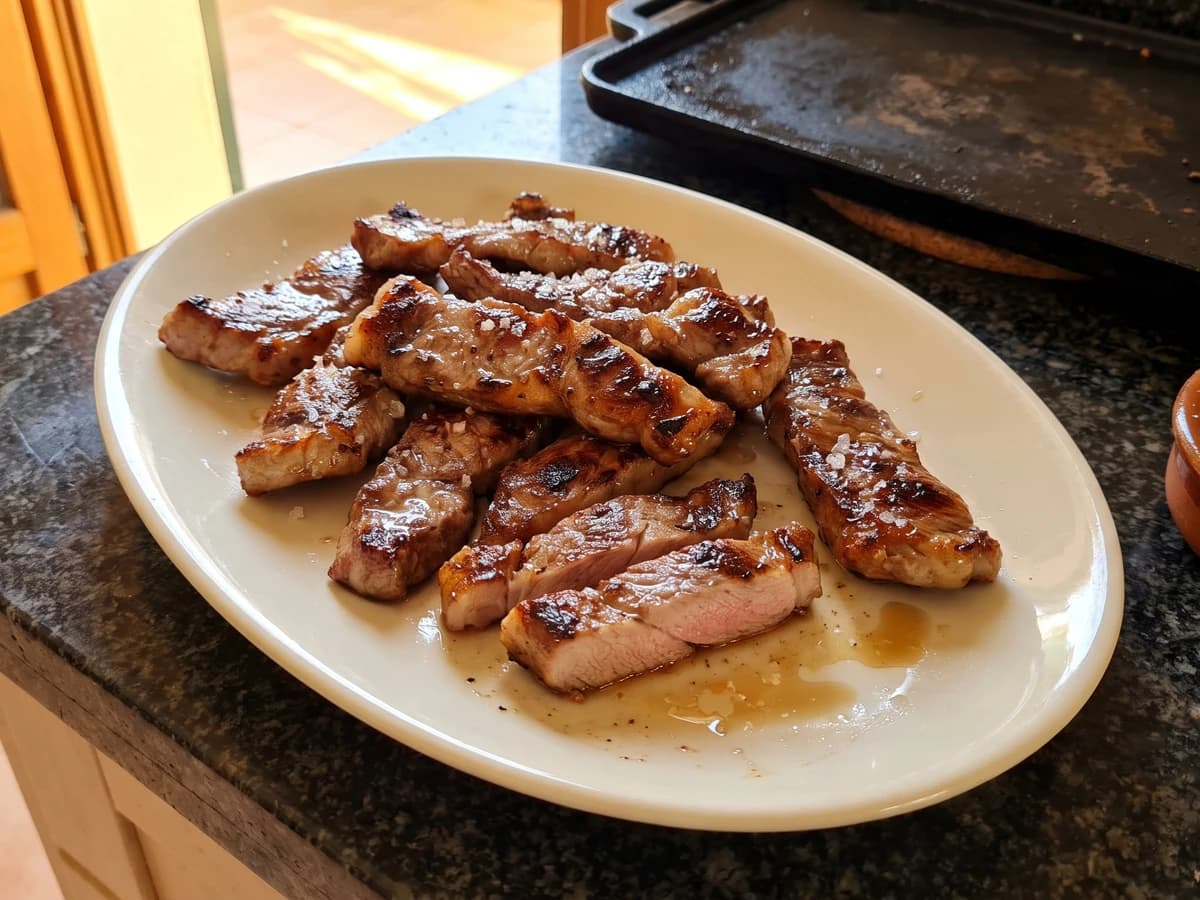
Extremadura's dehesa gives us this fan-shaped, marbled rib cut: salt it at the last moment, lay it on a fierce plancha, and count in seconds so the centre stays juicy.
A cooking platform built around craft, culture, and the stories behind what we eat.
Created by
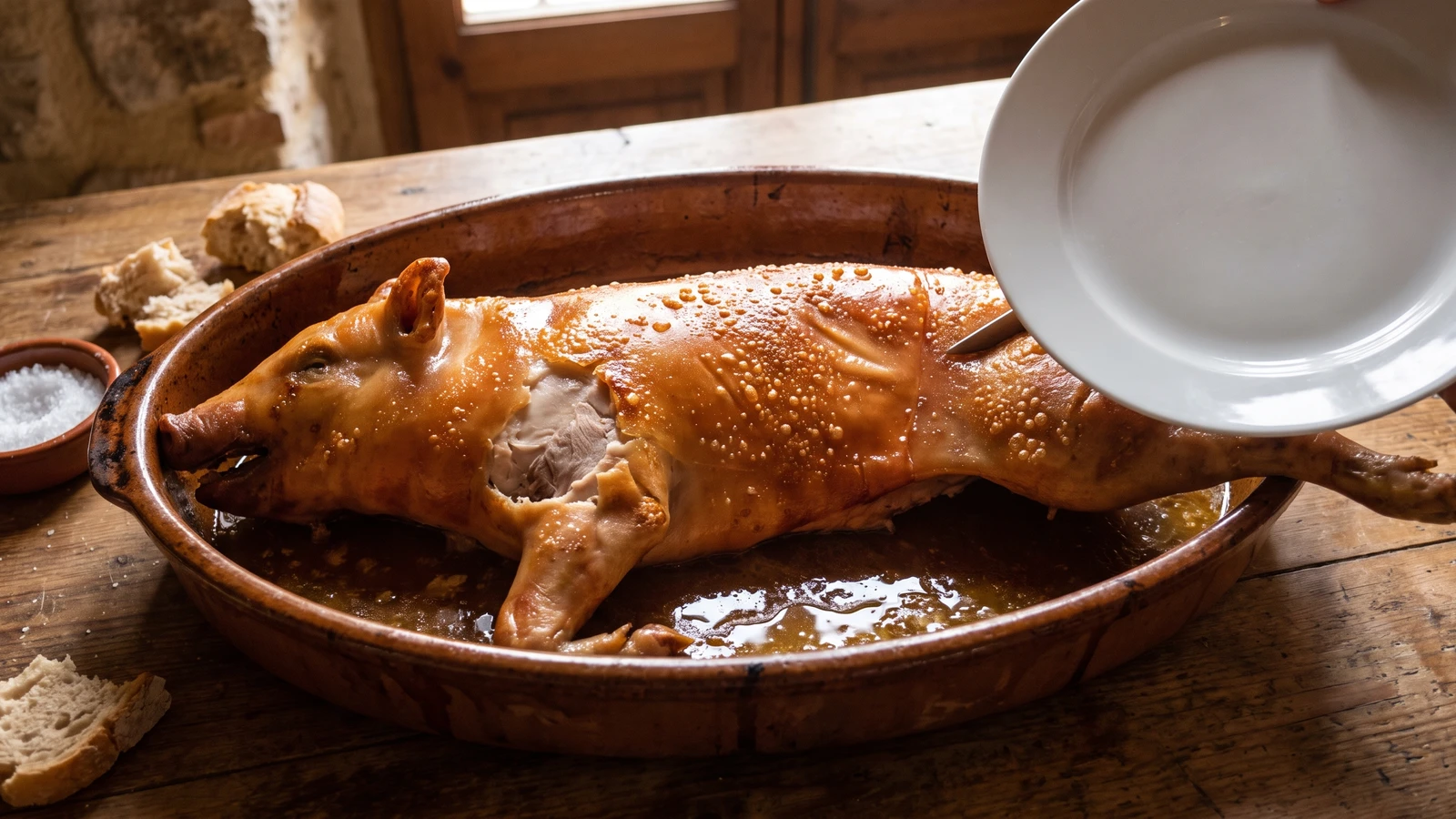
Cochinillo Asado de Segovia is Castilian celebration food: a milk-fed piglet, salt, lard, water, and patient roasting until the skin is crisp enough to cut with a plate.
Cochinillo Asado de Segovia belongs to Segovia, in Castilla y León, and it is severe in the best way: a very young milk-fed piglet, salt, lard, water, and the oven. No garlic paste, no herbs, no sweet glaze. The piglet is the dish. If it isn't small and tender, no clever hand will rescue it.
The method that decides it is the turn. First the piglet roasts flesh-side up, with water below so the meat softens without drying. Then you turn it skin-side up, prick the skin, brush it with lard, and finish it until the crackling tightens and blisters. That last stretch is where Segovia gets its famous skin, crisp enough to give under the edge of a plate.
If you are far from Segovia, ask a good butcher for a whole suckling pig of about 4 to 5.5 kg, split through the backbone and cleaned, still with head and feet if possible. If you cannot get the whole animal, use a suckling-pig shoulder or leg and know what changes: the meat will be right, the ceremony will be smaller, and the skin needs the same dry salt, lard, and patience. No hace falta haber pisado España. You do need the right animal and an oven you trust.
My margin note beside this one is blunt: dry the skin. Wet skin steams itself soft, and soft skin is not Segovian cochinillo. Salt it, give it time in the oven, and don't fuss with it. Siempre sale, si lo sigues.
Cochinillo Asado belongs to Segovia and the wider Castilian roasting tradition, where wood ovens and simple seasoning made young lamb and suckling pig the feast dishes of inns, family tables, and holy days. The piglet is traditionally milk-fed and slaughtered very young, which gives the pale, tender meat and thin skin that can crisp without a long cure. Segovia's plate-cutting ritual is not a kitchen trick but a public proof of tenderness: the roasted pig should yield without a knife.
Quantity
1, 4 to 5.5kg
split through the backbone and cleaned
Quantity
30g
Quantity
80g
softened
Quantity
400ml
Quantity
1 tablespoon
for the skin
| Ingredient | Quantity |
|---|---|
| whole suckling pigsplit through the backbone and cleaned | 1, 4 to 5.5kg |
| fine sea salt | 30g |
| pork lardsoftened | 80g |
| water | 400ml |
| coarse sea saltfor the skin | 1 tablespoon |
Heat the oven to 170°C. Pat the piglet very dry, especially the skin. Rub the flesh side and the cavity with the fine salt, then leave the skin mostly alone for now. Pésalo, no lo adivines: the size matters because a larger pig takes longer and loses the tender point of this dish.
Pour the water into a large roasting dish or cazuela. Set a rack, wooden slats, or crossed spoons over the water so the piglet is held above it, not sitting in it. Lay the piglet flesh-side up, skin down, and roast for 1 hour and 15 minutes. The water below keeps the meat gentle while the first side cooks through.
Take the dish out and carefully turn the piglet skin-side up. Prick the skin all over with the tip of a sharp knife, only through the skin, not deep into the meat. Brush the skin with the softened lard and sprinkle with the coarse salt. This is the step that decides the dish: dry skin, a little fat, and steady heat give crackling; wet skin gives you leather.
Return the piglet to the oven and roast for 45 to 60 minutes more, still at 170°C, until the skin is golden, tight, and crisp, and the shoulder meat yields easily when pressed. Add a little water to the dish if it dries out, but do not pour it over the skin.
If the skin needs more crisping, raise the oven to 220°C for the final 8 to 12 minutes and watch it closely. Rest the cochinillo for 10 minutes, uncovered, then cut it at the table. In Segovia they use the edge of a plate. At home, use a sharp knife if you must. The point is tenderness, not theatre.
1 serving (about 500g)
Culinary guides, cultural storytelling, and the editorial depth that makes cooking meaningful.
Discover Culinary ExplorerChef Isabel
Extremadura's dehesa gives us this fan-shaped, marbled rib cut: salt it at the last moment, lay it on a fierce plancha, and count in seconds so the centre stays juicy.
Chef Isabel
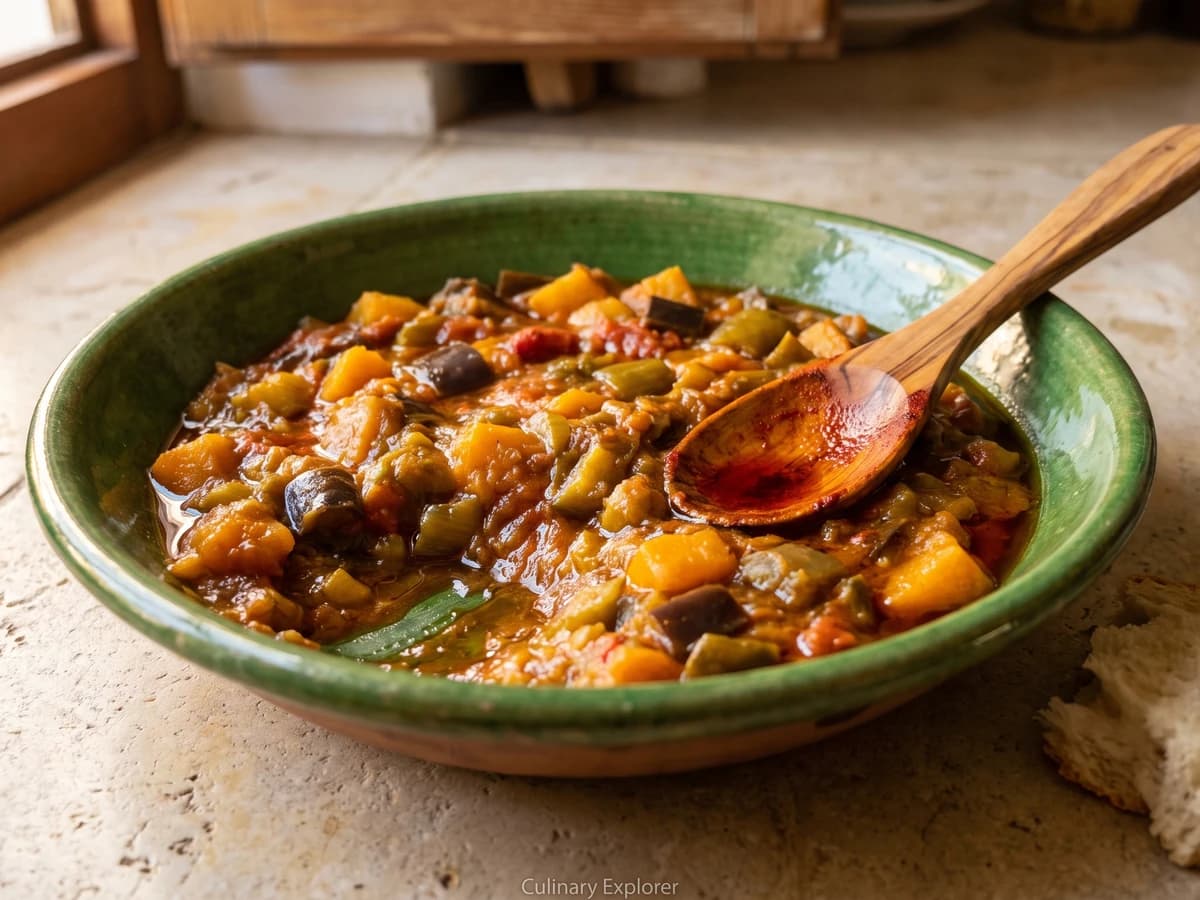
Alboronía is Andalucía's old pumpkin and aubergine stew, deepened with tomato, pimentón, and cumin, then cooked without hurry until the vegetables settle into a glossy, sweet, spoon-soft whole.

Chef Isabel
Aletría Murciana is Murcia's humble noodle guiso: fine fideos, pork ribs, potato, saffron, and a dark sweet sofrito. Get that base right and the pot knows where it's going.
Chef Isabel
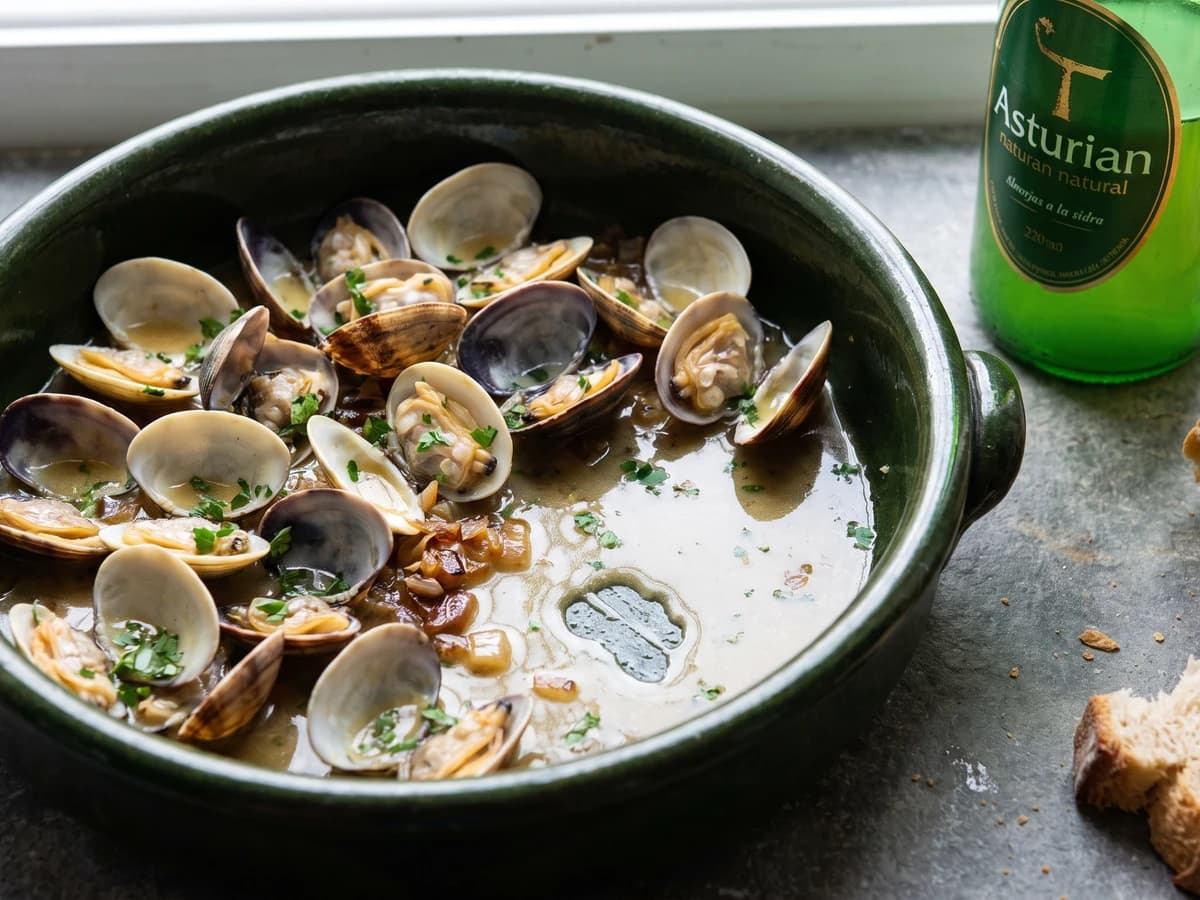
Asturias opens clams in tart natural cider over a slow onion and garlic sofrito, making a bright, briny sauce that asks for bread and rewards one rule: lift each clam as it opens.